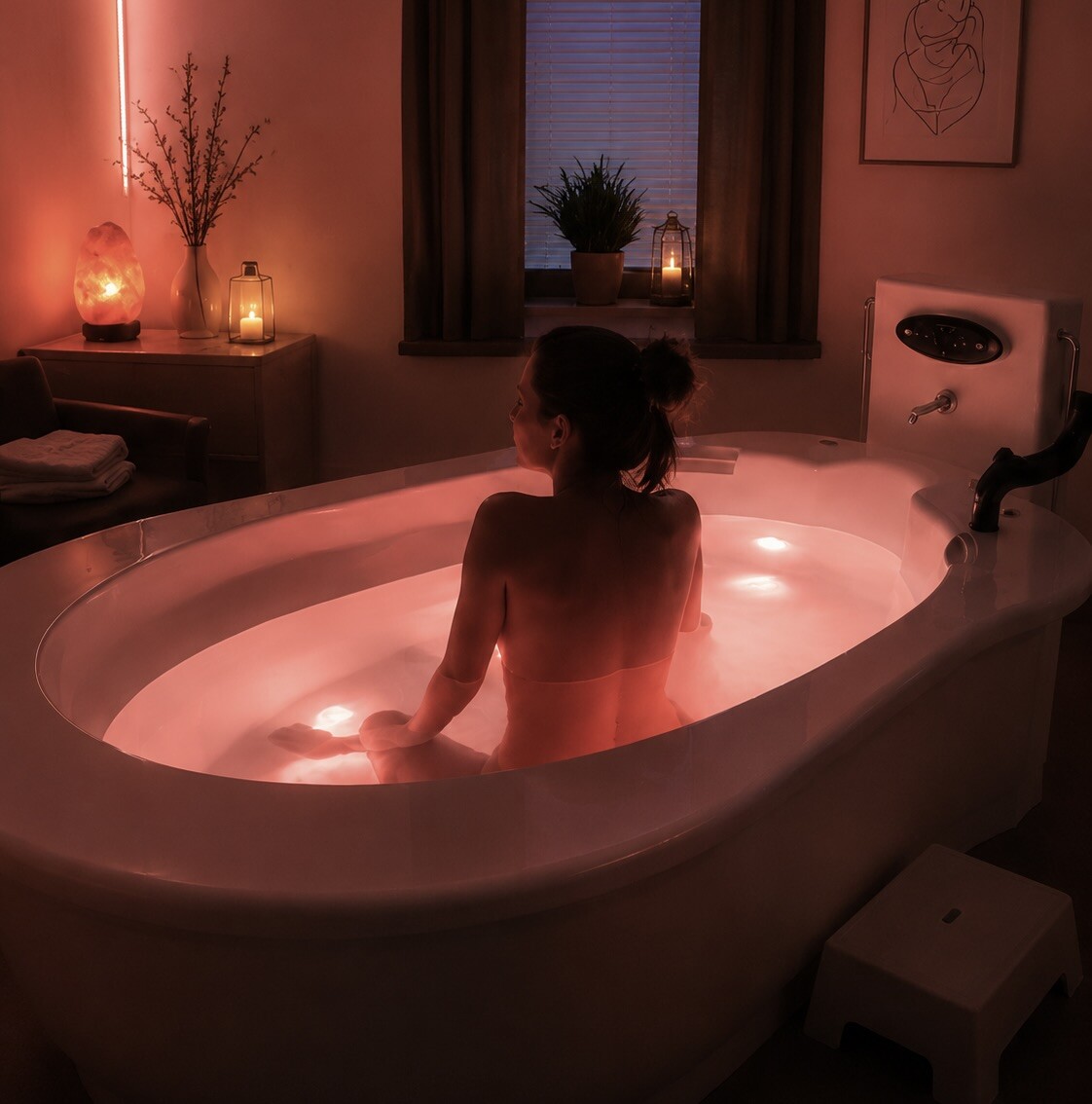
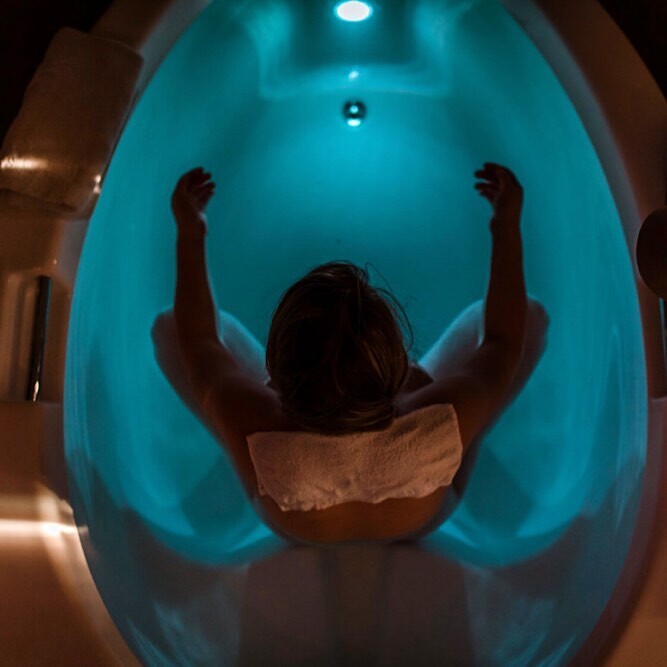
Multi-colour LED lighting and integrated Bluetooth® sound help transform the area around the birth pool into a calmer, more private and personalised space for physiological labour and water birth.
A calm, private and low-stimulation environment can make an important difference to how a woman feels during labour.
Around a birth pool, the atmosphere of the room matters just as much as the pool itself.
Light, sound, privacy and personal control all help shape whether the space feels clinical and exposed, or protective, calm and supportive.
Active Birth Pools’ Chromotherapy Multi-Colour LED Lighting and Integrated Bluetooth® Sound have been designed to help maternity teams create a more personalised sensory environment for water birth.
Soft, adjustable lighting can reduce the institutional feel of the room, while integrated Bluetooth® sound enables women to use music, hypnobirthing tracks, affirmations, guided relaxation or familiar audio to support focus, rhythm and reassurance.
The Birth Environment and Physiological Labour
Physiological labour depends on a finely balanced interaction between the woman’s body, mind and environment.
Oxytocin, endorphins, catecholamines and other hormonal responses all play a role in labour progress, pain perception, relaxation and birth.
A woman who feels safe, private, undisturbed and well supported is more likely to relax into labour.
A woman who feels exposed, observed, anxious or overwhelmed may find it harder to do so.
The birthing-room environment can therefore either support or disturb the physiological conditions of labour.
Bright lights, noise, unfamiliar equipment, interruptions and a strongly clinical atmosphere may contribute to stress or a sense of exposure.
In contrast, a calm, low-stimulation space can help the woman feel safer, more settled and more able to follow her body’s natural rhythm.
This is particularly important in water birth.
Warm water already helps create a sense of enclosure, buoyancy and privacy.
When the surrounding room also supports calm, focus and personal control, the pool can become the emotional centre of the birth space — a place where the woman can withdraw from external distractions and concentrate on labour.
Multi-Colour LED Lighting: Softening the Clinical Environment
Hospital lighting is usually designed for visibility, examination, cleaning and clinical safety.
These requirements are essential, but the same lighting may not always be ideal for established labour, when privacy, calm and relaxation are especially important.
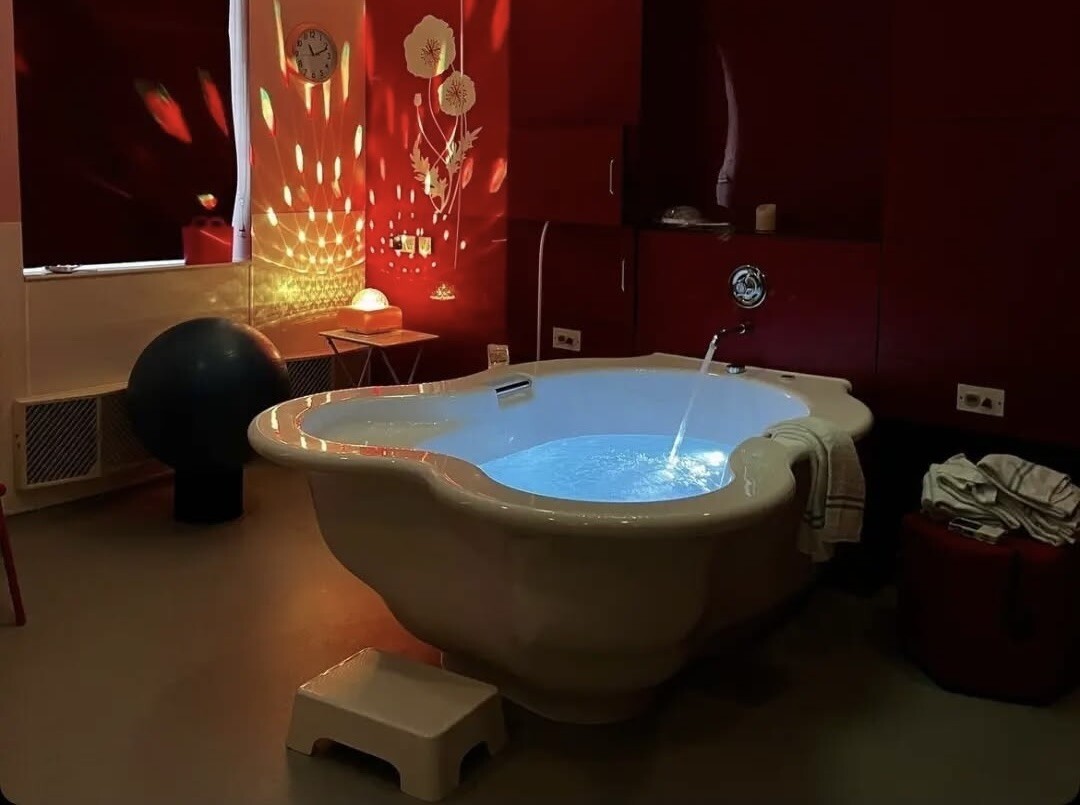
Chromotherapy Multi-Colour LED Lighting allows the atmosphere around the pool to be adjusted according to the woman’s preferences and the stage of labour.
Softer, lower-level lighting can reduce the feeling of exposure and make the room feel less like a treatment bay and more like a protected birth space.
Different colours and intensities can be used to create a gentler sensory environment, while brighter clinical lighting remains available whenever it is needed for care, assessment or emergency response.

Integrated Bluetooth® Sound: Supporting Rhythm, Reassurance and Personal Control
Sound is one of the most immediate ways to change the atmosphere of a room. In labour, the right sound can help a woman breathe, focus, relax and feel emotionally supported.
For some women this may be music.
For others it may be hypnobirthing tracks, guided relaxation, affirmations, nature sounds, spiritual music or familiar audio chosen in advance.
Integrated Bluetooth® Sound allows women and birth partners to personalise the birth-room atmosphere without relying on improvised portable speakers in a wet clinical environment.
The sound source can be selected by the woman, helping her maintain a sense of ownership over the space.
Music and sound can also support rhythm.
Labour often has its own pattern: contractions rise and fall, breathing deepens, movement becomes instinctive and the woman may turn inward.
Familiar or calming audio can help reinforce that rhythm and reduce external distraction.
Creating a Personalised Sensory Space Around the Pool
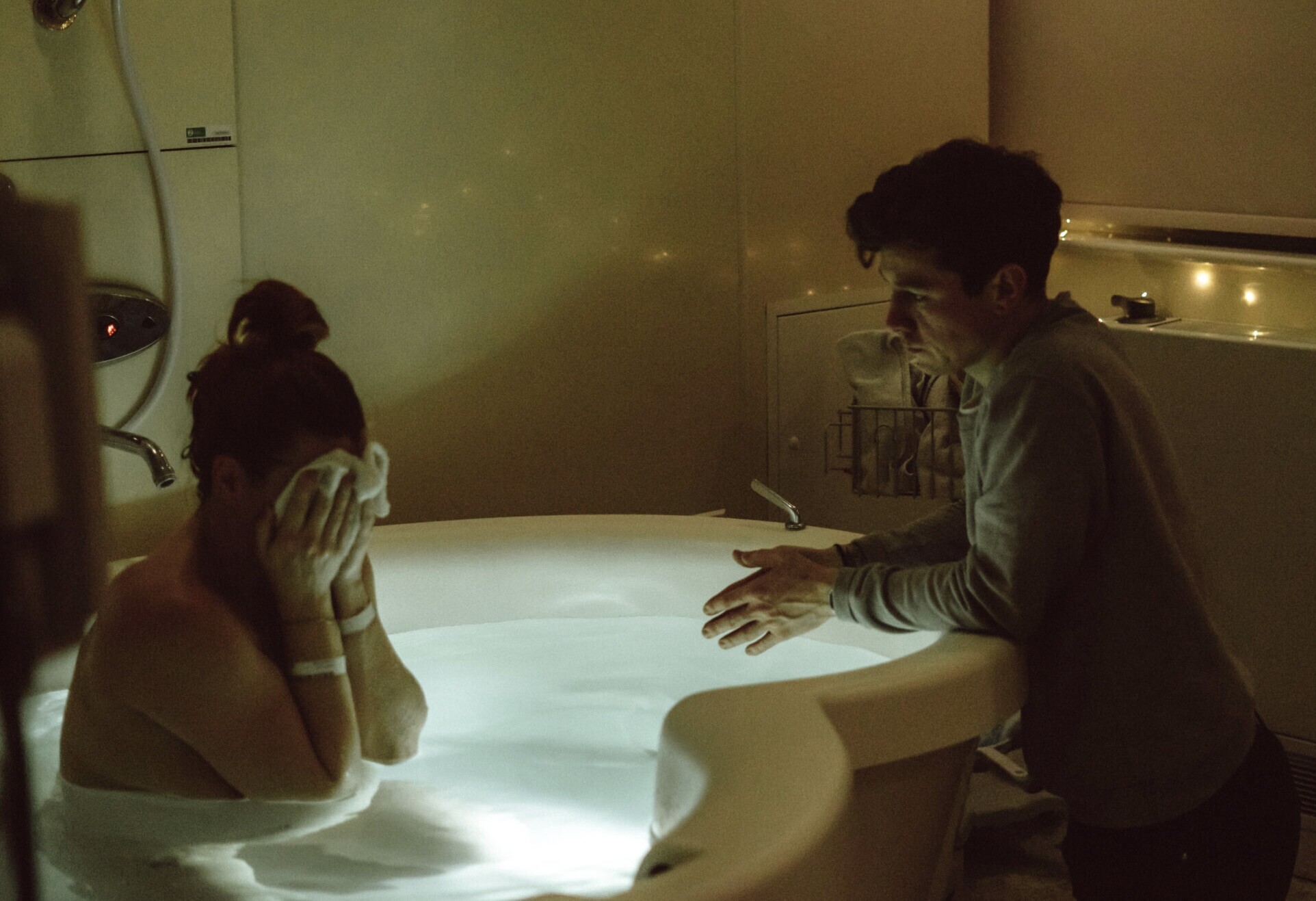
The combination of warm water, adjustable lighting and integrated sound can help transform the pool area into a more supportive sensory environment.
This is important because women do not experience the birth pool in isolation.
They experience the pool within the room: the light, sound, privacy, temperature, people, equipment and overall atmosphere.
Chromotherapy Multi-Colour LED Lighting and Integrated Bluetooth® Sound help maternity teams make that environment more adaptable.
The room can remain clinically safe and functional, but it can also become softer, quieter and more personal when appropriate.

Supporting Privacy, Calm and the Hormonal Conditions of Labour
A calm birth environment is not simply a matter of comfort.
Privacy, reassurance and a sense of safety are closely connected with physiological labour.
When women feel safe and undisturbed, the body is more able to remain in a parasympathetic, relaxed state.
When women feel watched, rushed, frightened or overstimulated, stress responses may increase and labour may become more difficult.
The Room4Birth research programme describes how loud noise, bright light and unfamiliar surroundings may activate fear and defence responses, while a safe, friendly and inviting environment may support oxytocin release and relaxation.
Lighting and sound are two of the most practical ways to influence that environment.
They help shape the emotional tone of the room and can support the woman’s sense of privacy, control and inward focus.
Benefits for Maternity Teams and Birthing-Room Design
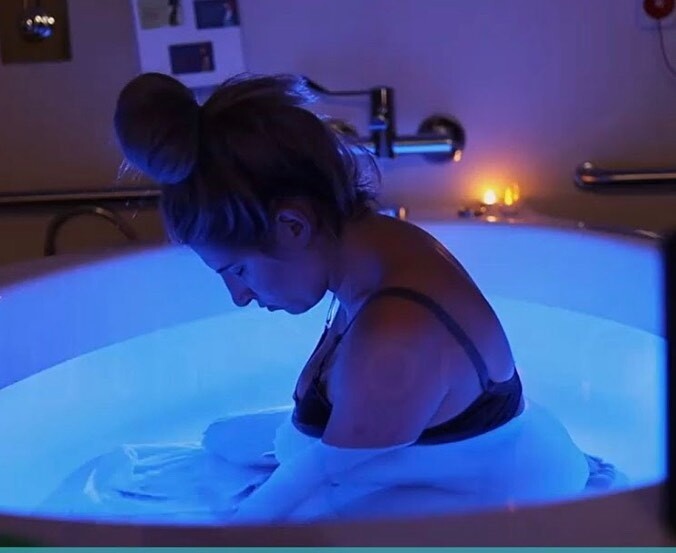
For maternity teams, integrated lighting and sound offer a practical way to create a more woman-centred birth space.
These features can help staff prepare the room for physiological labour and water birth while retaining the clinical flexibility required in a hospital or birth-centre setting.
The benefits include:
These features are particularly valuable in rooms that must serve more than one function.
A maternity room may need to feel calm and intimate during labour, but bright, practical and clinically accessible when staff need to assess, clean, monitor or respond quickly.
Adjustable lighting and integrated sound help the same room perform both roles.
Chromotherapy Multi-Colour LED Lighting and Integrated Bluetooth® Sound support the creation of a calming, personalised sensory birth environment.
By helping women feel safer, more relaxed, less exposed and more in control, these features may support the physiological conditions associated with labour, coping and natural birth.
The design of the birthing room matters.
A woman’s surroundings can influence how safe, private, calm and in control she feels during labour. For physiological labour and water birth, these qualities are especially important.
Active Birth Pools’ Chromotherapy Multi-Colour LED Lighting and Integrated Bluetooth® Sound help transform the area around the pool into a more personalised and supportive birth space.
Adjustable lighting softens the clinical feel of the room, while integrated sound enables women to use music, relaxation tracks or familiar audio to support focus, rhythm and reassurance.
Together, these features help maternity teams create an atmosphere that is more conducive to relaxation, privacy and physiological birth — while preserving the clinical functionality required in modern maternity care.
Available for 230V and 120V installations
The lighting and sound systems can be supplied for both 230V and 120V electrical installations.
This makes the system suitable for hospital projects world-wide when correctly specified, installed and commissioned.
Electrical installation notes
The lighting and sound systems should be specified as part of the complete birth-room electrical installation.
The LED lighting system should be protected by a 6 amp RCD with 30–32 mA sensitivity.
The LED is transformed down to 12 volts and has a power rating of 12 watts. A separate means of isolation should be provided for future maintenance.
The water level must be above the light fitting before the lighting system is activated.
The system incorporates a sensor that protects the light fitting from damage by turning the light off if the water level is not at the correct depth.
The Bluetooth® sound system should be connected to a circuit breaker and then to the power supply, with operation by remote switch to cut power if required.
References