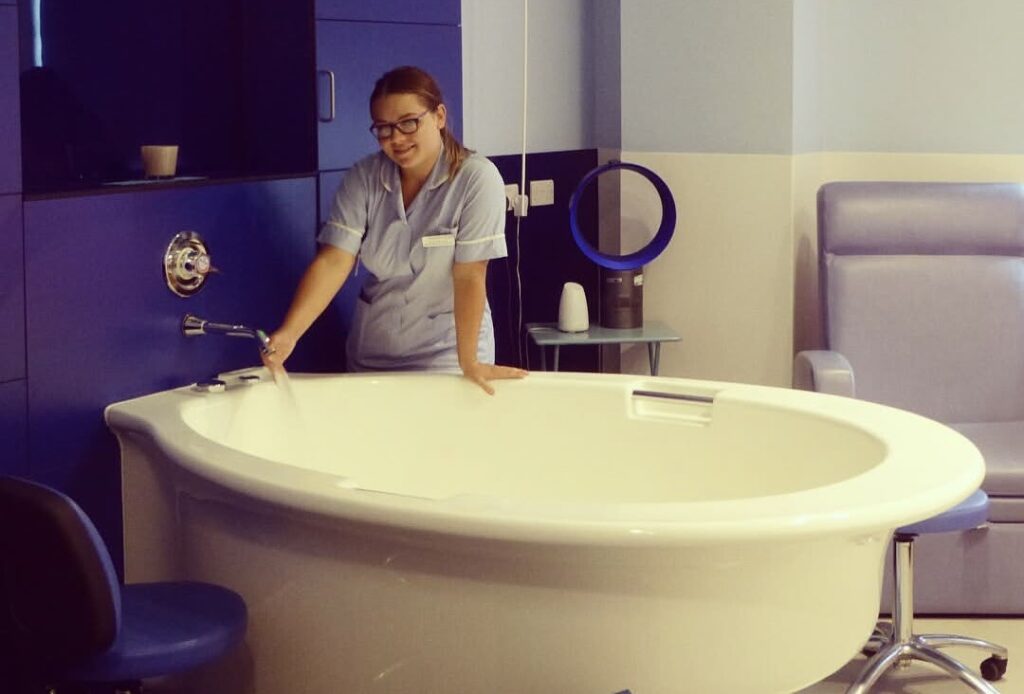

I first heard this idea from Michel Odent at the Active Birth Centre in London in the late 1980s.
It stayed with me because it made immediate, instinctive sense.
Birth and lovemaking are not the same experience, of course. But they are governed by some of the same deep physiological needs: privacy, safety, warmth, intimacy, low light, freedom from observation, and the ability to let go.
These are not luxuries. They are conditions that help the body work as nature intended.
Birth is affected by the environment
A woman in labour is exquisitely sensitive to her surroundings.
Bright lights, noise, interruptions, unfamiliar equipment, people coming and going, and the feeling of being watched can all disturb the quiet, instinctive state that supports physiological labour.
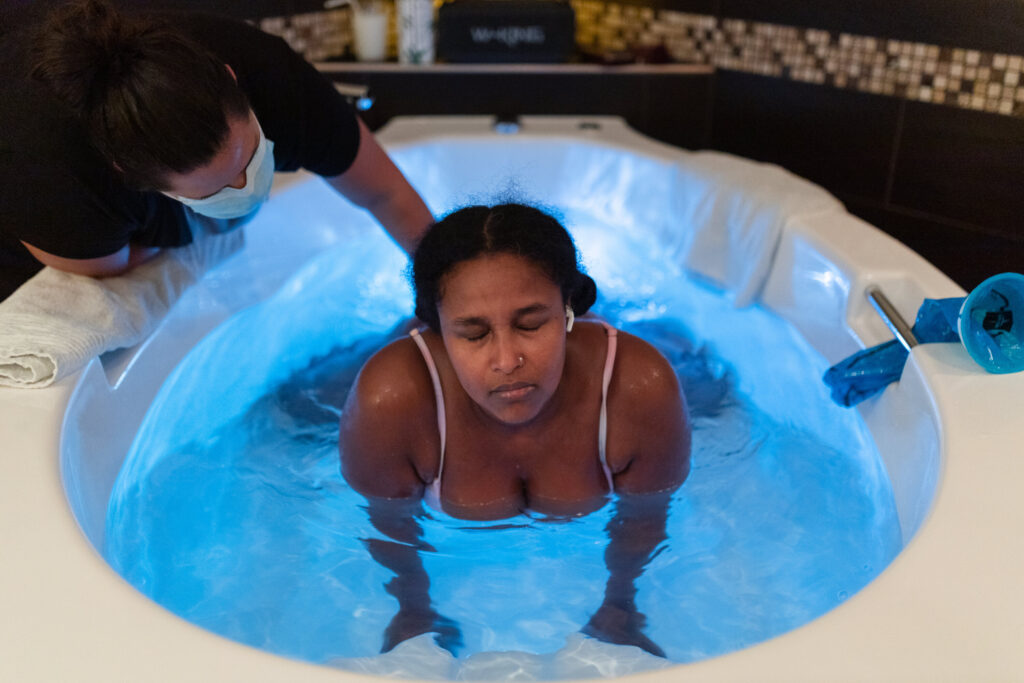
A calm, private, softly lit room can have the opposite effect. It helps the mother feel safe. It supports relaxation. It encourages the release of the natural hormones involved in labour, birth and bonding. [1,2]
This is why the birth room matters.
It is not simply a clinical space where birth happens. It is part of the birth process itself.

Privacy supports physiology
Michel Odent often spoke about the importance of protecting the labouring woman from unnecessary stimulation.
His central message was simple: when a woman feels private, safe and undisturbed, her body is more able to release oxytocin — the hormone that helps labour progress. When she feels anxious, exposed or scrutinised, stress hormones may rise and the normal rhythm of labour can be disrupted. [1]
This is one reason the comparison with the room where love is made is so powerful.
The ideal birth environment should not feel exposed, institutional or impersonal. It should feel intimate, protected and emotionally safe.
A homely room is not a cosmetic choice
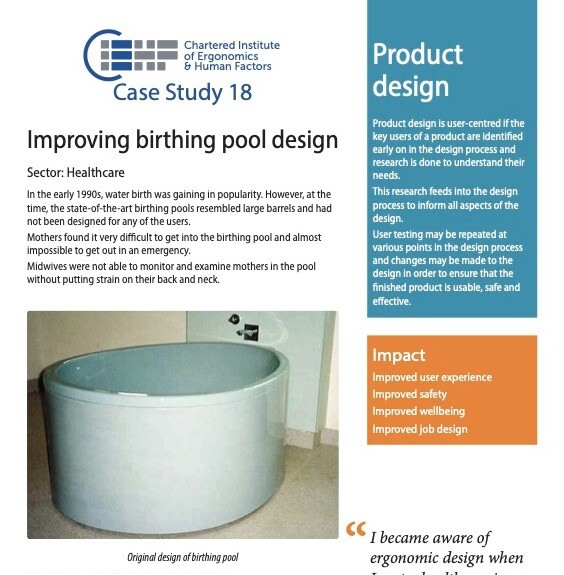
Research into birth environments supports what midwives have long observed: the design of the room can influence how women move, how they feel, and how they experience labour.
Alternative or homelike birth settings have been associated with reduced use of some interventions, increased spontaneous vaginal birth, greater maternal satisfaction, and a more positive experience of care. [3,4]

Good birth room design is therefore not about decoration alone.
It is about creating a space that supports normal physiology, active birth, privacy, dignity and confidence.
The mother needs to move
The bed should not dominate the room.
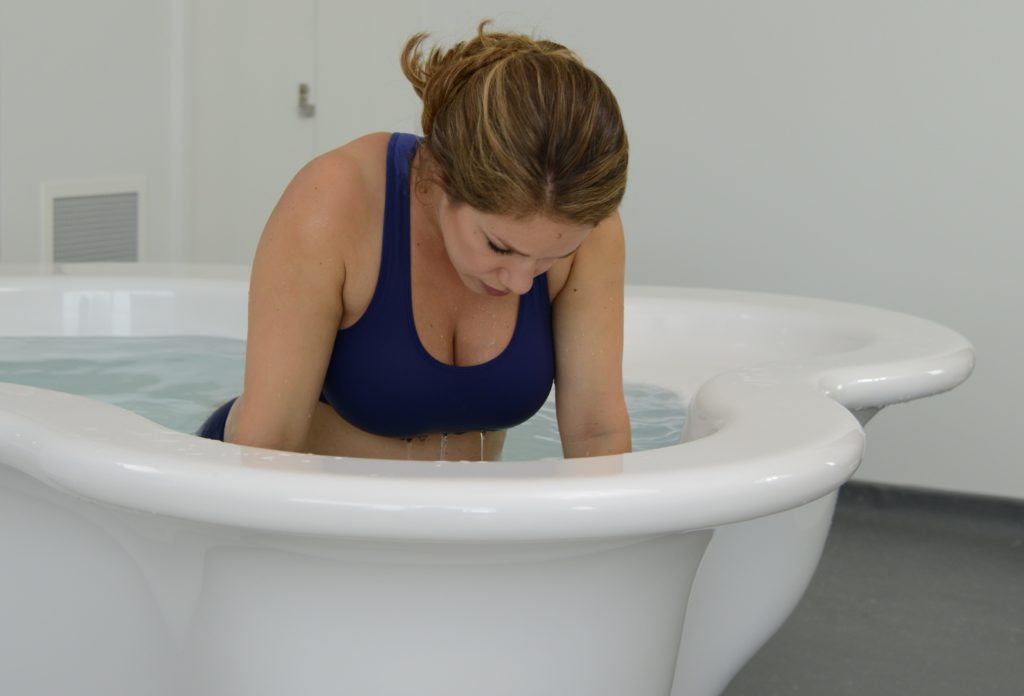
When the bed is the central feature, it silently suggests that the mother should lie down and become a patient. But in physiological labour, the mother needs freedom to move, lean, kneel, squat, rest, change position and follow her body.
A well-designed birth room should make movement feel natural.
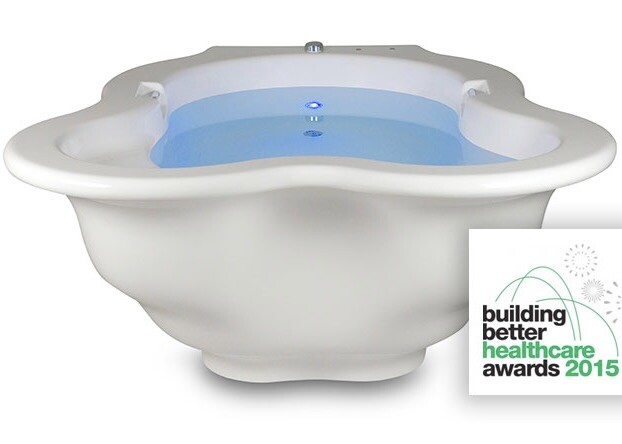
This is one of the reasons water birth pools are so valuable. Warm water gives the mother buoyancy, comfort and freedom. It allows her to change position easily, conserve energy, and remain active without feeling unsupported.
The room, the pool, the lighting, the furniture and the people present should all give the same message:
– You are safe.
– You are private.
– You are free to move.
– Your body knows what to do.

The details matter
A supportive birth environment should include:
These features are not decorative extras. They help create the conditions in which physiological birth is more likely to unfold well. [5,6]
The birth room should invite confidence
When a woman enters the birth room, she should not feel that she has entered a theatre, a treatment bay or an emergency setting.
She should feel that she has entered a protected space prepared for one of the most intimate and powerful events of her life.
The room should help her soften, breathe, move, rest, focus inward and trust herself.
In that sense, the room you give birth in really should share something with the room you made love in.
– It should be private.
– It should be warm.
– It should feel safe.
– It should allow instinct to take over.
And it should honour the simple truth that birth, like lovemaking, belongs first to the body.
References
[1] Odent, M. (selected writings and lectures on physiological birth, privacy, oxytocin, dim light and homelike birth environments). See also The Guardian obituary summarising Odent’s work on protecting labour from unnecessary disturbance. https://www.theguardian.com/lifeandstyle/2025/sep/11/michel-odent-obituary
[2] World Health Organization. WHO recommendations: intrapartum care for a positive childbirth experience. Geneva: WHO, 2018. This guideline frames a positive childbirth experience around respectful, woman-centred care, dignity, privacy, emotional support, informed choice and safety. https://www.who.int/publications/i/item/9789241550215
[3] Hodnett, E. D., Downe, S., & Walsh, D. Alternative versus conventional institutional settings for birth. Cochrane Database of Systematic Reviews. The review reports that alternative institutional birth settings are associated with lower rates of some medical interventions and higher maternal satisfaction. https://www.cochrane.org/evidence/CD000012_alternative-versus-conventional-institutional-settings-birth
[4] Goldkuhl, L. et al. Impact of Birthing Room Design on Maternal Childbirth Experience: Results From the Room4Birth Randomized Trial. HERD: Health Environments Research & Design Journal, 2023. The Room4Birth trial found improved self-reported childbirth experience in a specially designed, more person-centred birthing room. https://pubmed.ncbi.nlm.nih.gov/36239523/
[5] Jenkinson, B., Josey, N., & Kruske, S. BirthSpace: An evidence-based guide to birth environment design. Queensland Centre for Mothers & Babies, 2014. The guide reviews evidence on design features that may reduce maternal stress and support physiological birth. https://espace.library.uq.edu.au/view/UQ:339451
[6] NHS England. Health Building Note 09-02: Maternity care facilities. This guidance covers planning and design considerations for maternity care facilities, including birthing rooms, privacy, dignity, daylight, acoustics and the clinical environment. https://www.england.nhs.uk/publication/maternity-care-facilities-planning-and-design-hbn-09-02/