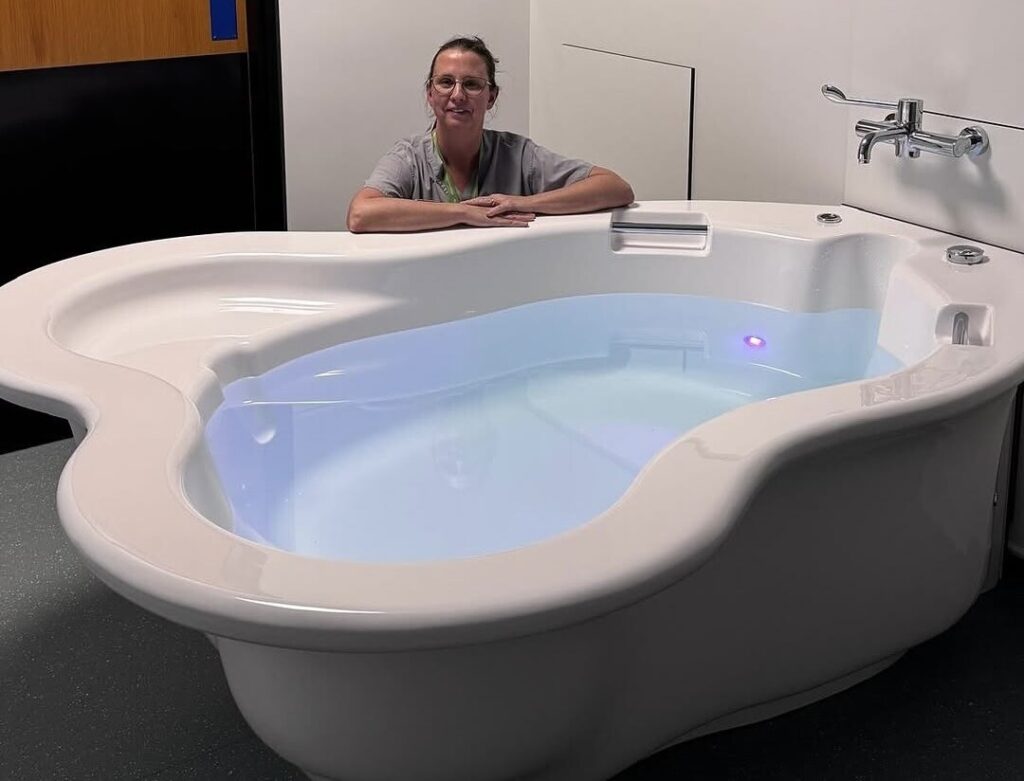

One of the clearest lessons from active birth is that labour works best when the mother is able to respond to her body. Movement, upright posture, rest, support and instinctive changes of position are not extras. They are part of the physiology of labour.
That is why Active Birth Pools are designed to help mothers use upright and forward-leaning positions in water, with the support they need to move freely, conserve energy and remain actively involved in the birth of their baby. [1]
The aim is simple: to create a birth environment that supports natural movement rather than restricting it.
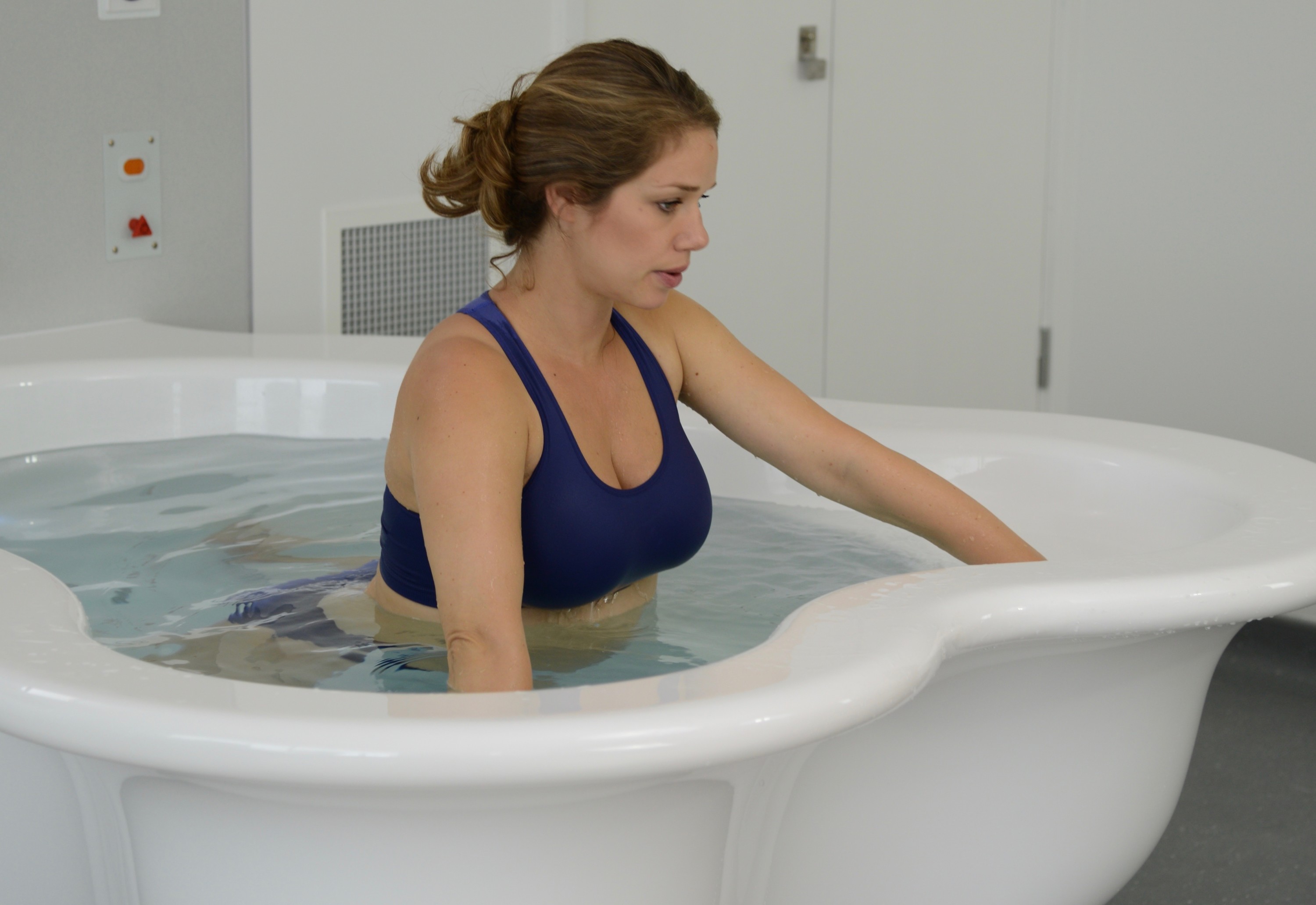
Why upright positions matter
Evidence supports the value of allowing women to adopt positions that feel right to them in labour and birth. Cochrane evidence on positions in the first stage of labour found that upright and mobile positions were associated with a shorter first stage, lower use of epidural analgesia and fewer caesarean births compared with recumbent positions. [2]
Evidence on the second stage is more nuanced. Reviews have found that upright positions may reduce episiotomy and assisted vaginal birth in women without epidural analgesia, while also noting possible trade-offs such as increased second-degree tears or blood loss in some studies. For women with epidural analgesia, the evidence is less clear, and some high-quality trials have not shown the same advantage for upright positions. [3,4]
The practical conclusion is not that one position is best for every mother. It is that women should be encouraged and supported to find the positions that are most comfortable, effective and appropriate for their individual labour. [2,3]
The word upright can include many positions: standing, kneeling, supported squatting, semi-squatting, leaning forward, sitting upright, or moving between these positions as labour progresses.
For birth, squatting and kneeling positions are often described as physiological because they work with gravity and allow the mother to use her body dynamically. However, few women want or need to hold one posture continuously. Labour is rhythmic and changing. A mother may need to lean, rest, float, kneel, turn, hold, release and move again. [3]
This is why good birth pool design should not prescribe a single birth position. It should make many positions easier to use.
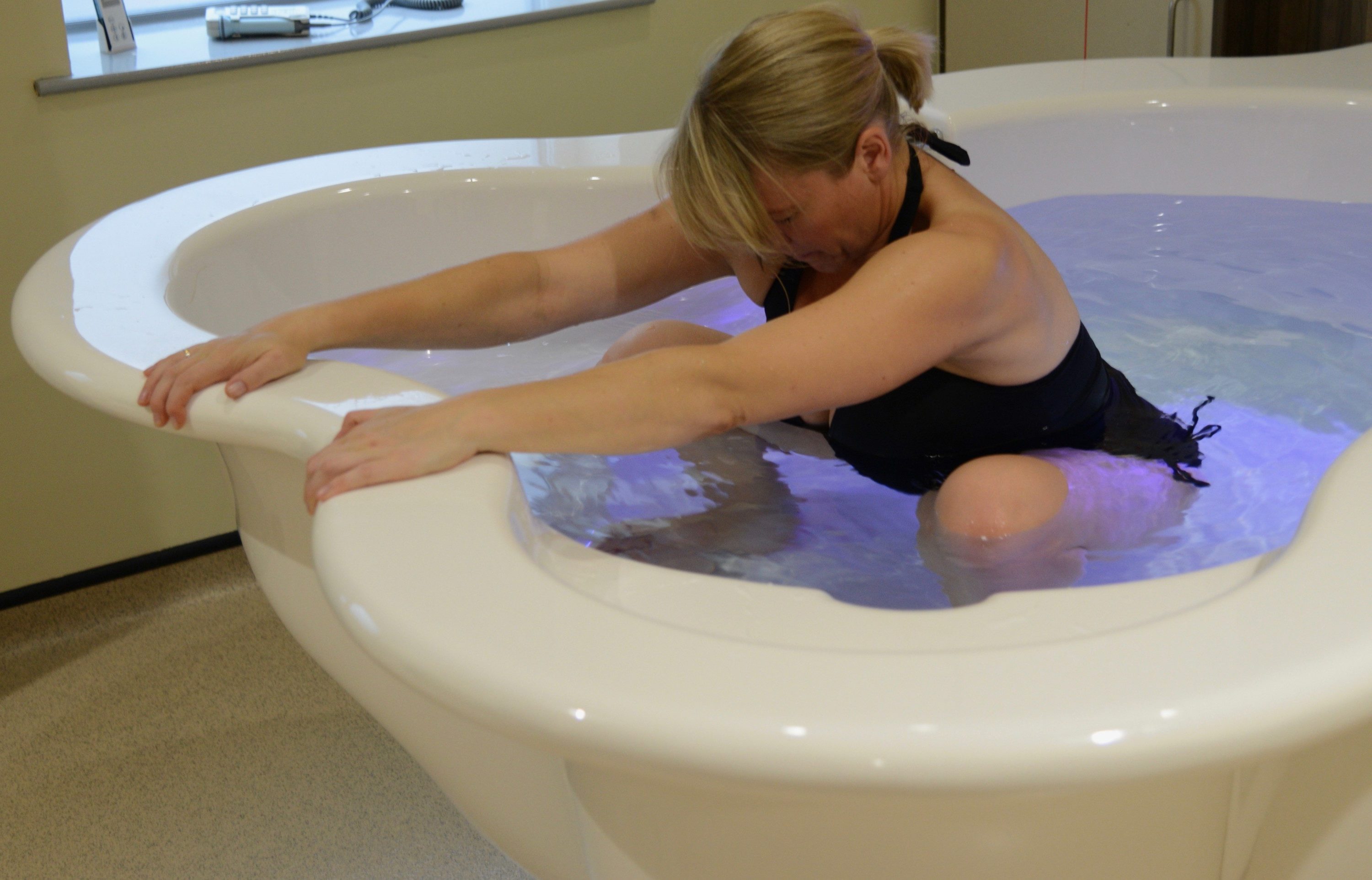
Why water makes movement easier
Warm water is widely recognised as an effective form of comfort and pain relief in labour. NICE recommends offering women the opportunity to labour in water for pain relief, and Cochrane evidence suggests that immersion in water during labour may reduce the use of epidural analgesia, without evidence of increased adverse outcomes for mothers or babies in the trials reviewed. [5,6]
Water changes the way the body feels. Through buoyancy, the body is supported by the water it displaces. This can reduce the strain of bearing weight, making it easier for the mother to change position, rest between contractions and explore upright or forward-leaning postures that may feel more difficult on land. [7]
For many mothers, entering the pool can bring a renewed sense of energy, privacy and focus. The water supports the body, while the pool should support movement.
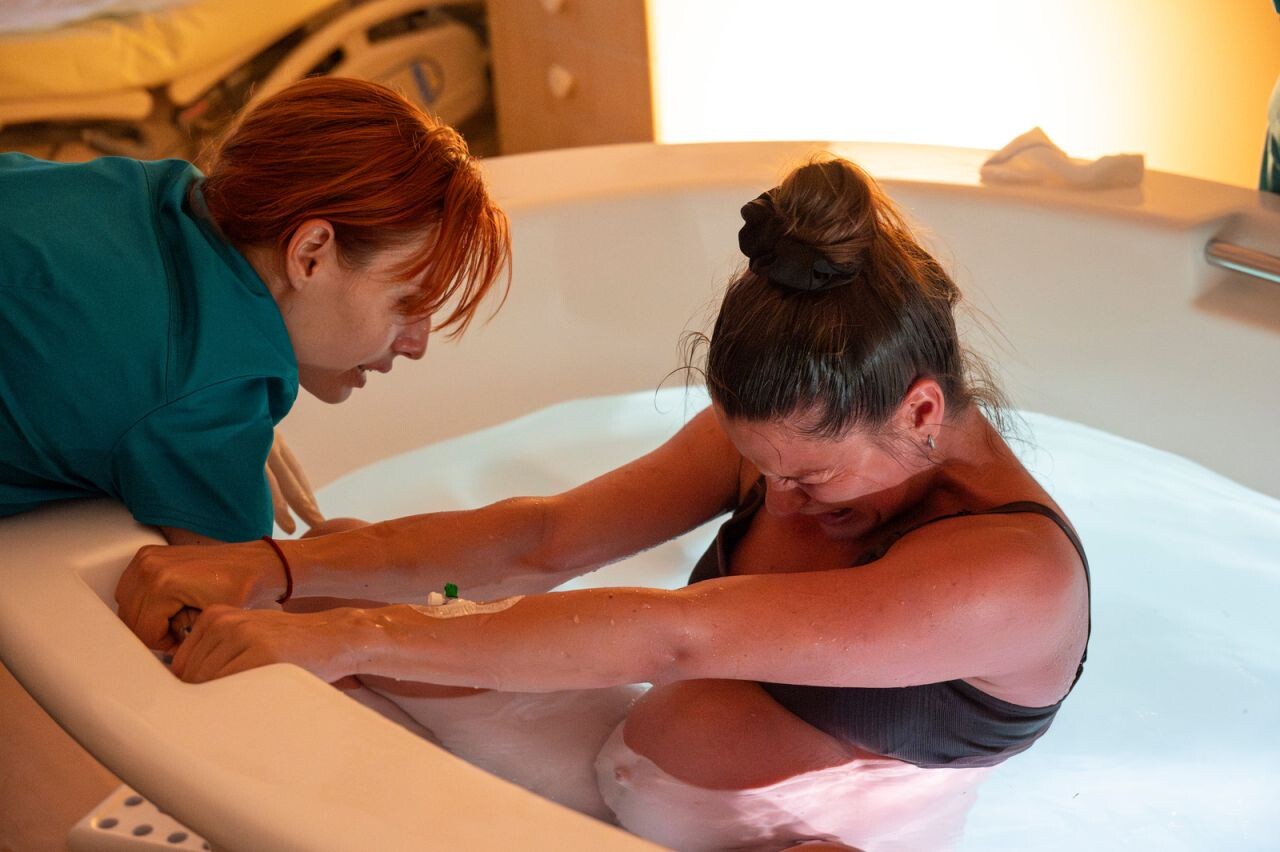
Designed to support active birth
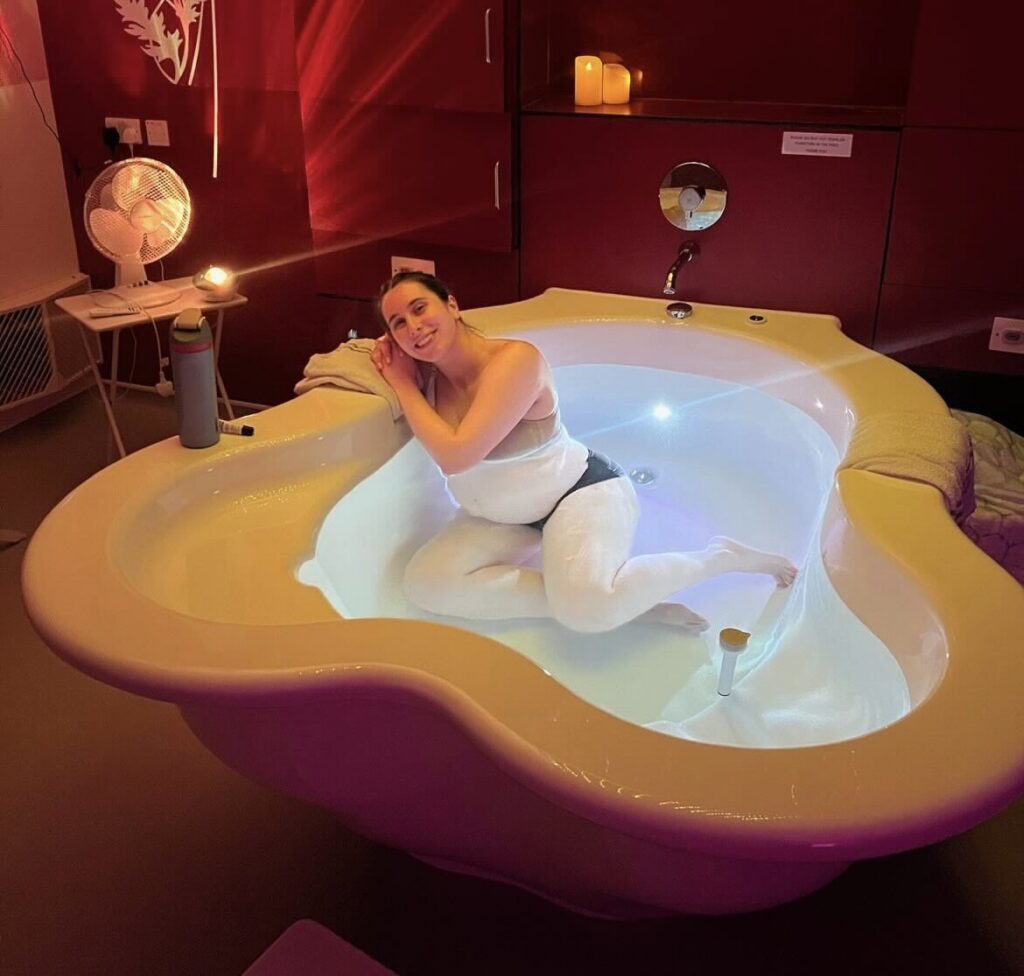
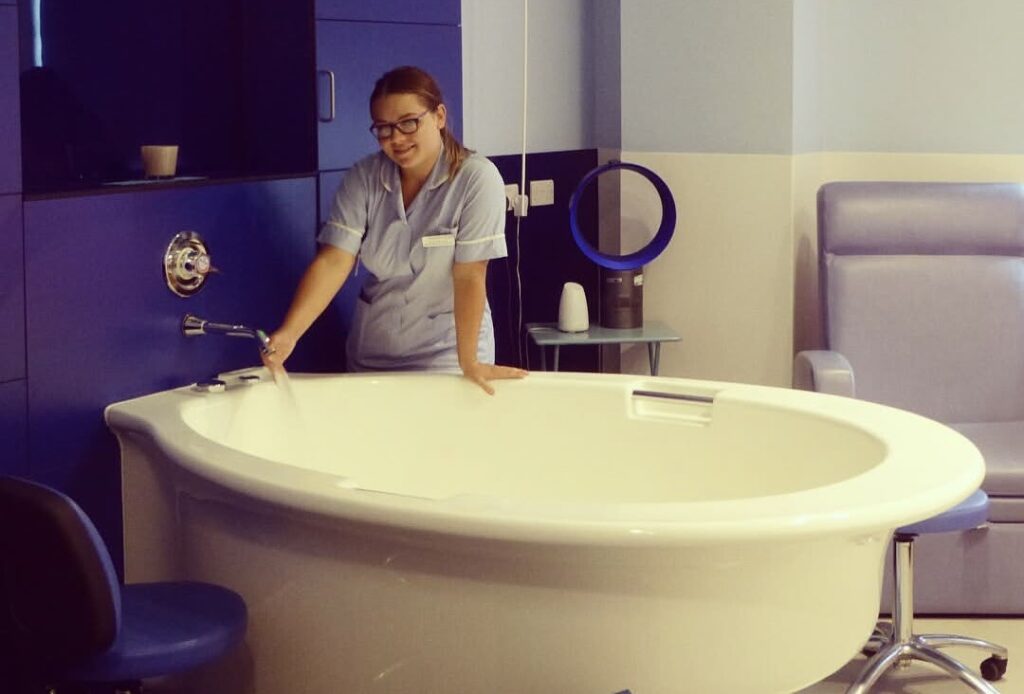
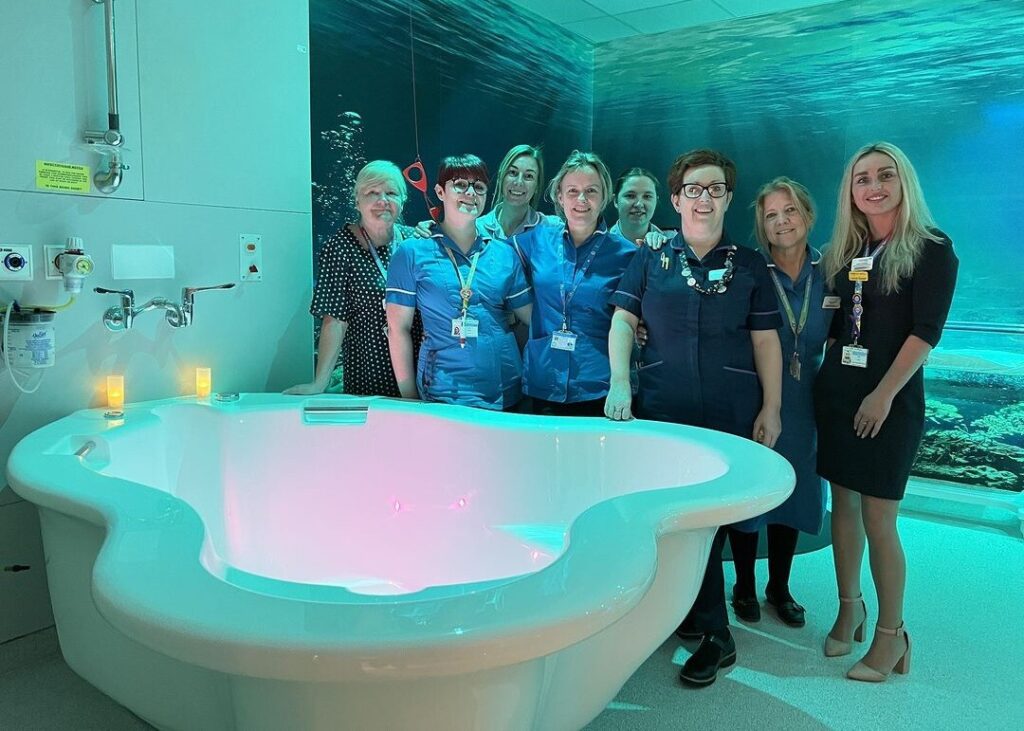
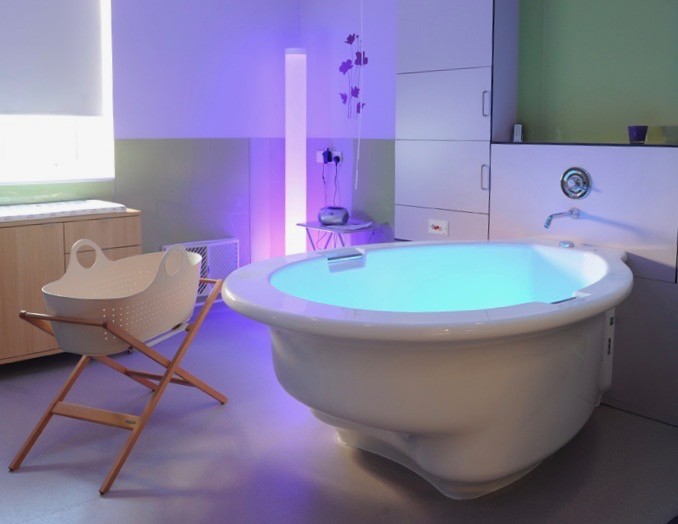
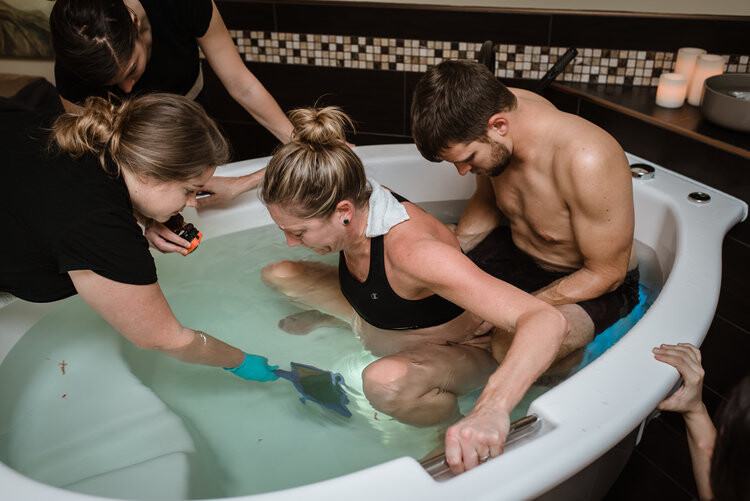
Active Birth Pools are designed around the mother in motion. The recessed handgrips, broad rounded rim, Labour Support Seat, Safety Seat and Lumbar Support are not intended to hold the mother in one position. They are there to give her more choices. [1]
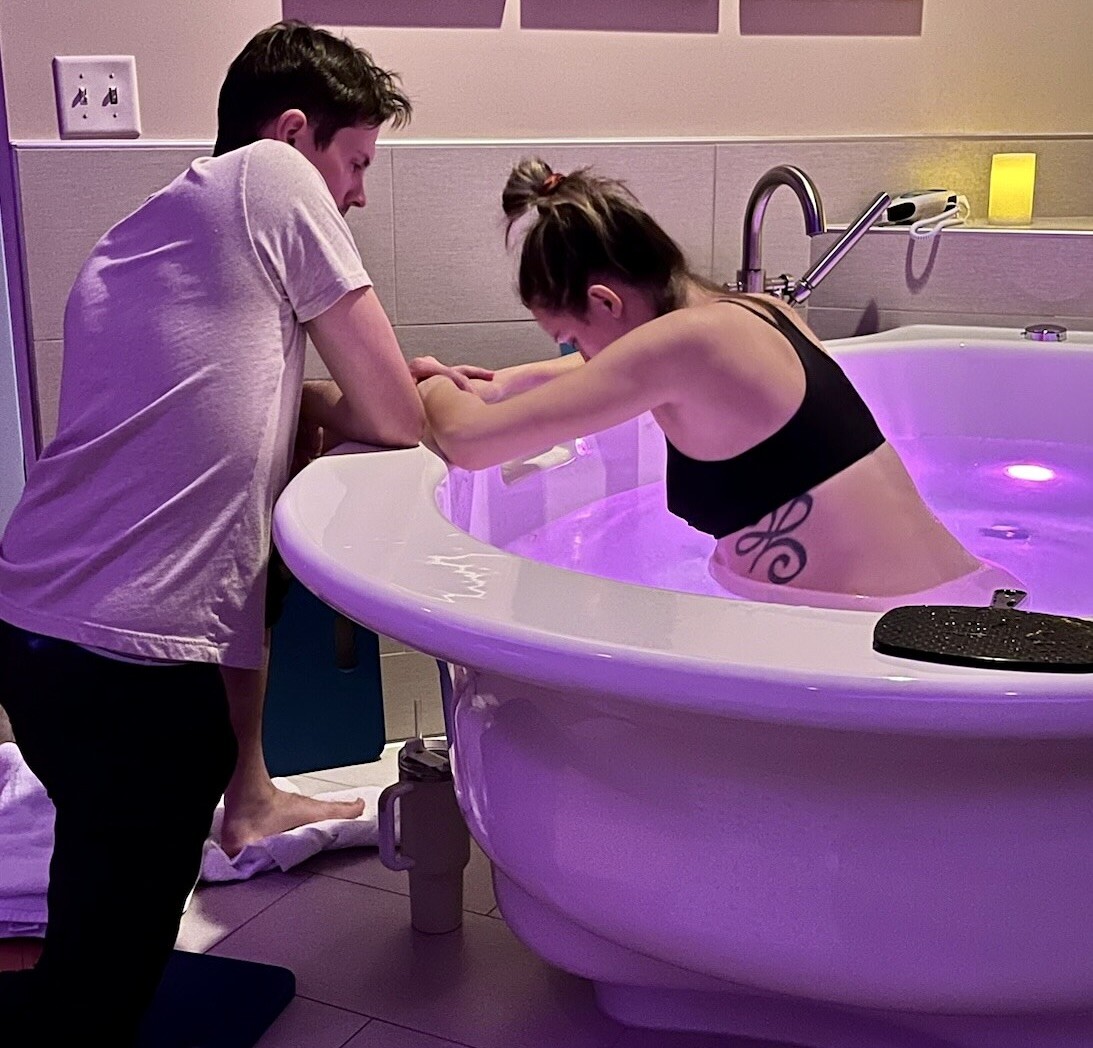
She can hold the recessed handgrips for stability, lean into the wrap-around rim, rest briefly on a support seat, or use the internal features to help her move safely from one position to another. The design allows her to find what works for her body as labour changes. [1]
This matters because a poorly designed pool can restrict the very movement water birth is meant to encourage. If the mother is pushed into a semi-recumbent posture, or if the internal shape limits her ability to turn, kneel or lean forward, the pool may recreate the limitations of a bed-based birth in water.
Birth is a dynamic process. The pelvis, sacrum and soft tissues respond to posture, movement and pressure. Forward-leaning, kneeling and upright positions can help the mother create space and use gravity, while also allowing her to adjust instinctively as the baby descends and rotates. [3]
The role of the pool is to protect that freedom. It should support the mother without fixing her in place. It should make it easier for her to move when she needs to move, and easier to rest when she needs to rest.
This principle is at the heart of Active Birth Pool design.

Helping mothers conserve energy
Many women do not have the stamina to remain upright on land for long periods, especially as labour intensifies. In water, buoyancy reduces physical effort and gives the mother more ways to use upright postures without becoming exhausted. [7]
This is especially important during the later stages of labour, when the mother may need both mobility and rest. A well-designed birth pool can help her alternate between active positions and supported rest, without leaving the water or losing the benefits of warmth and buoyancy.
In this way, water can help mothers remain active for longer, not by demanding more effort, but by reducing unnecessary strain.
Designed for better births
When women are free to move, supported in water and able to follow their instincts, they are more likely to feel involved, confident and in control. This aligns with the World Health Organization’s description of a positive childbirth experience, which includes practical and emotional support, safety, dignity and a sense of personal achievement. [8]
Active Birth Pools are designed to support that experience. They help mothers use the upright and active positions natural to labour, while giving midwives access and giving partners the opportunity to remain close and supportive. [1]
The result is a pool that does more than contain water. It creates a birth environment shaped around movement, comfort, support and choice.
Conclusion
Mothers have better births when they are supported to remain active participants in labour and birth.
That is the purpose behind every Active Birth Pool: to make it easier for mothers to move freely, use upright postures, conserve energy and benefit from the comfort of warm water without being restricted by the pool itself.
Because a birth pool should not tell a mother how to give birth. It should help her listen to her body and do what comes naturally.
References
[1] Active Birth Pools. “The keyword that defines our approach to design is Active.” Active Birth Pools. Accessed 11 June 2026. Source
[2] Lawrence A, Lewis L, Hofmeyr GJ, Styles C. “Maternal positions and mobility during first stage labour.” Cochrane Database of Systematic Reviews 2013, Issue 10. Art. No.: CD003934. DOI: 10.1002/14651858.CD003934.pub4. Source
[3] Gupta JK, Sood A, Hofmeyr GJ, Vogel JP. “Position in the second stage of labour for women without epidural anaesthesia.” Cochrane Database of Systematic Reviews 2017, Issue 5. Art. No.: CD002006. DOI: 10.1002/14651858.CD002006.pub4. Source
[4] Kibuka M, Thornton JG. “Position in the second stage of labour for women with epidural anaesthesia.” Cochrane Database of Systematic Reviews 2018, Issue 11. Art. No.: CD008070. DOI: 10.1002/14651858.CD008070.pub4. Source
[5] NICE. “Intrapartum care: Recommendations.” NICE guideline NG235, recommendation 1.6.10: offer women the opportunity to labour in water for pain relief. Updated/amended 2025. Source
[6] Cluett ER, Burns E, Cuthbert A. “Immersion in water during labour and birth.” Cochrane Database of Systematic Reviews 2018, Issue 5. Art. No.: CD000111. DOI: 10.1002/14651858.CD000111.pub4. Source
[7] Encyclopaedia Britannica. “Archimedes’ principle.” Explains buoyant force and the support created by displaced fluid. Source
[8] World Health Organization. “WHO recommendations: intrapartum care for a positive childbirth experience.” Guideline, 7 February 2018. Source