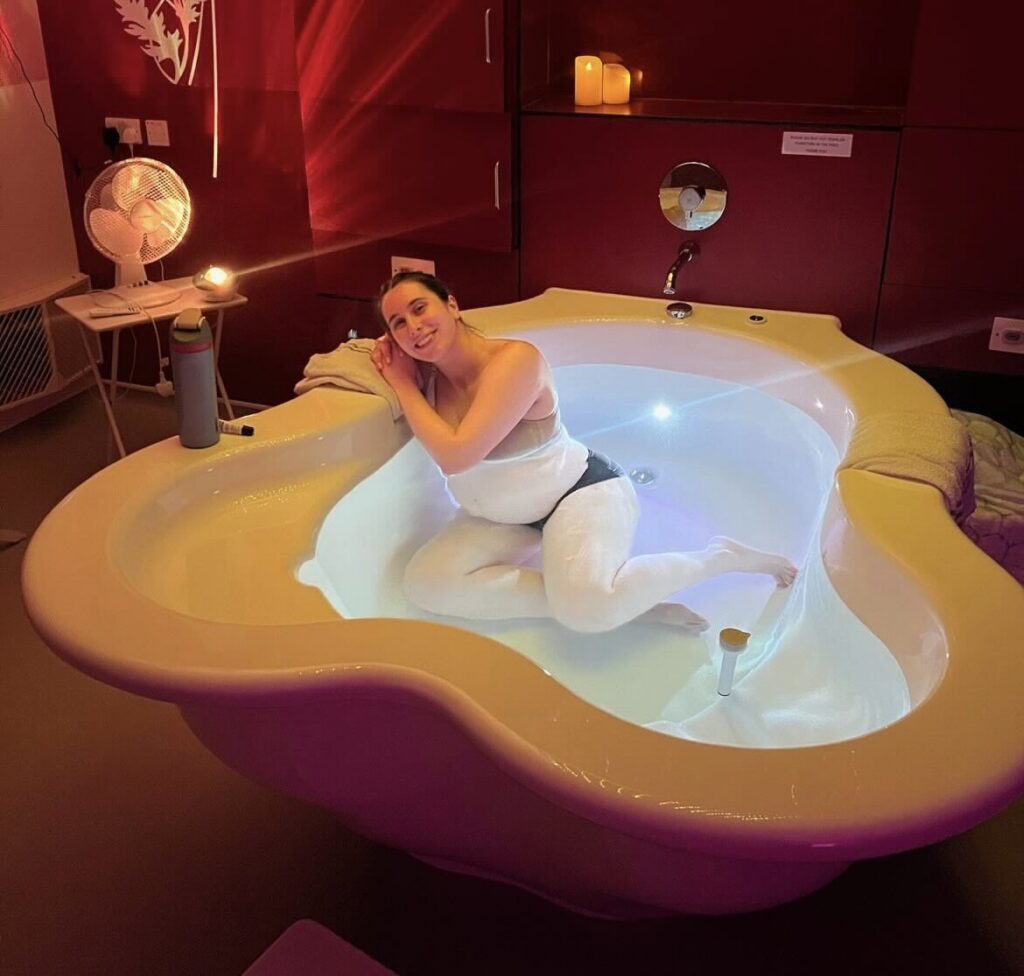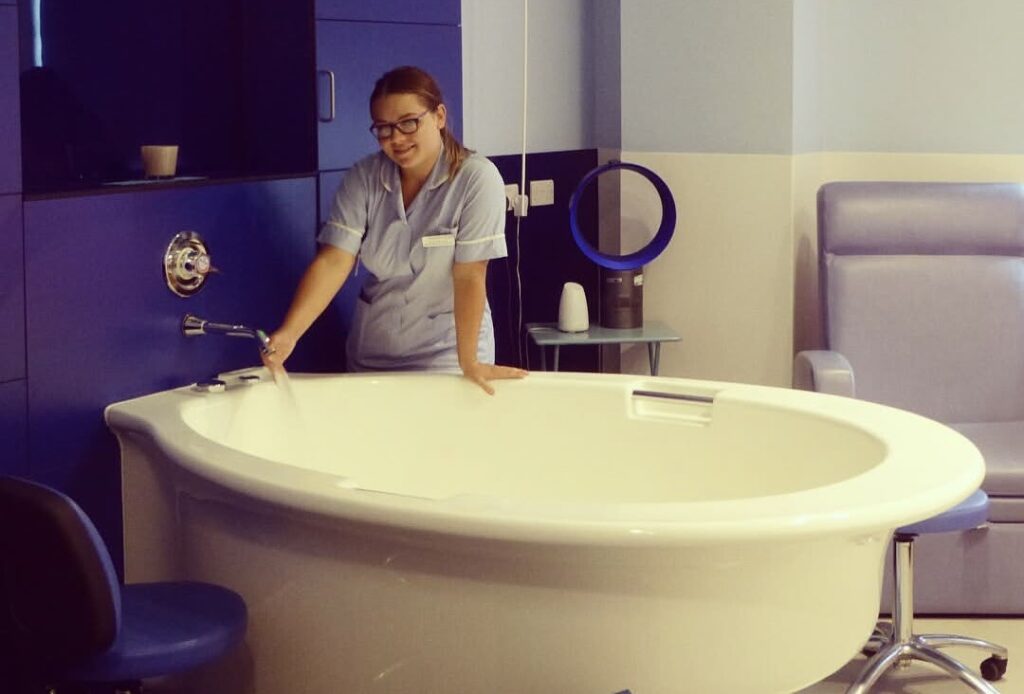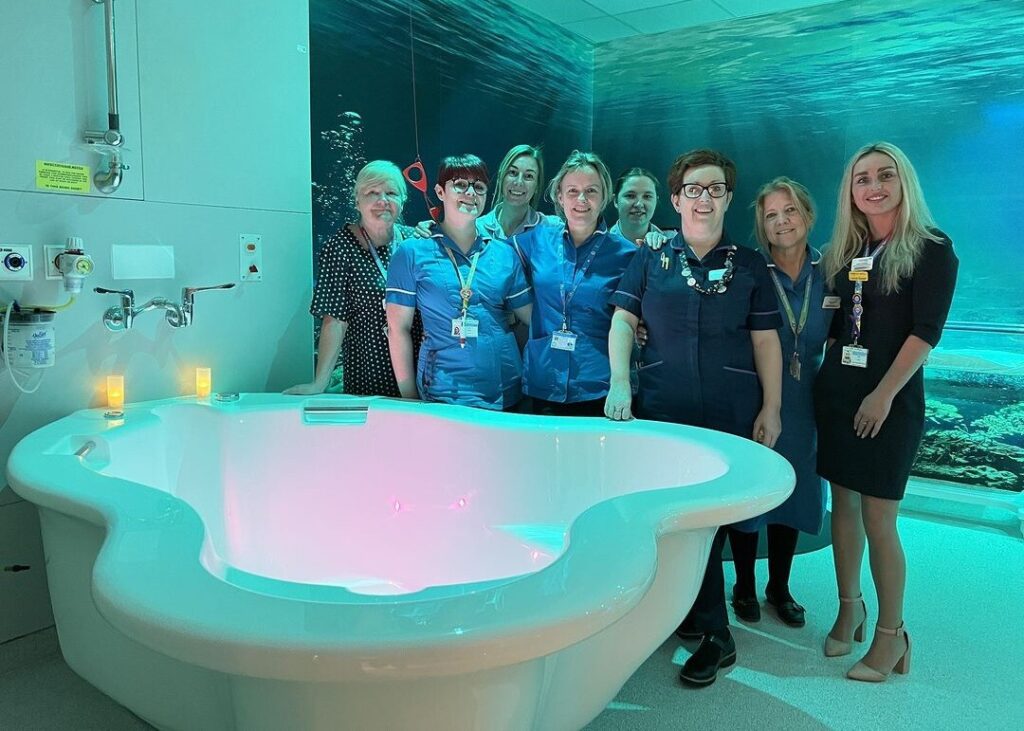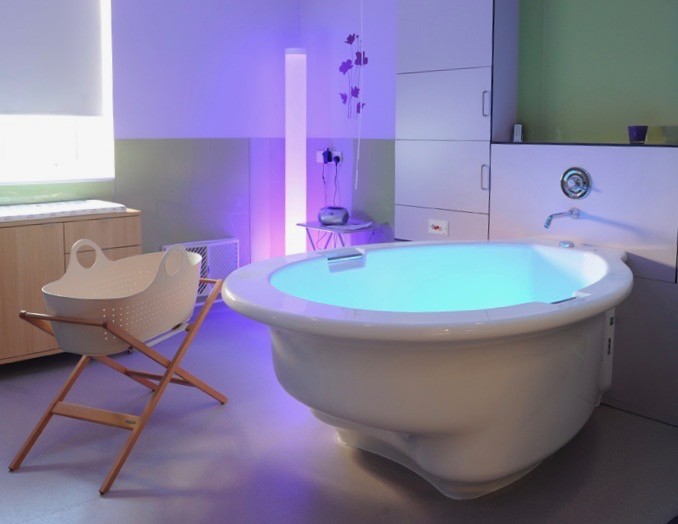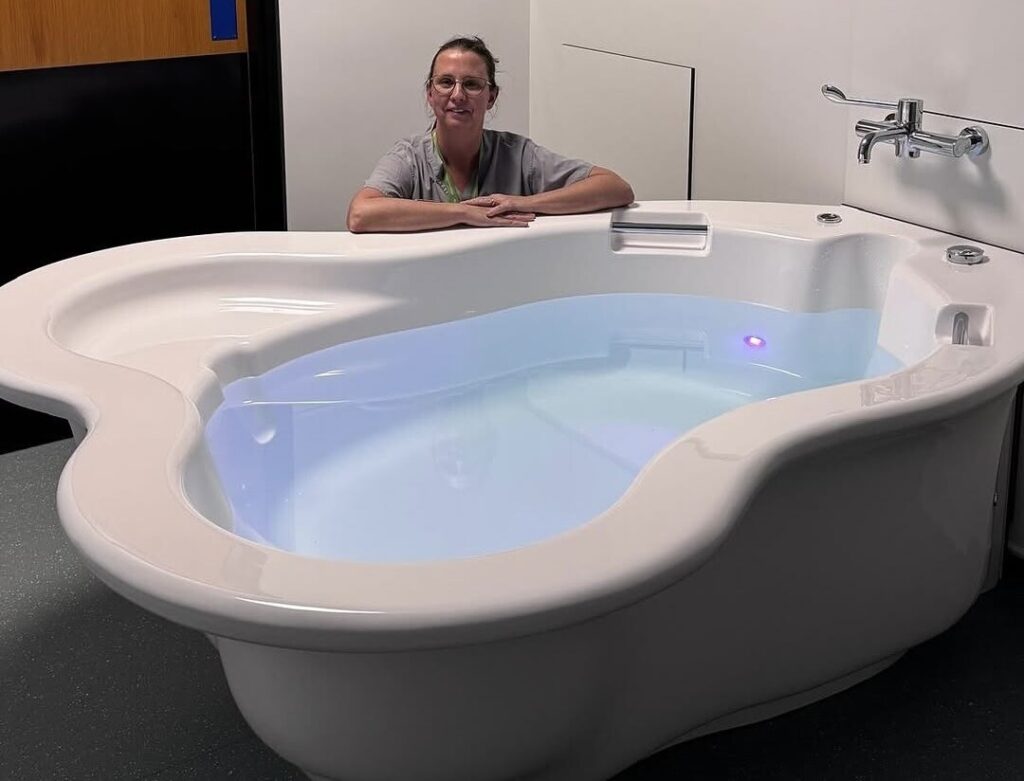

A water birth pool is not simply a vessel for warm water. In a maternity unit it becomes part of the care environment, part of the mother’s support system and part of the midwife’s working space.
Good ergonomic design recognises this. It considers how the mother moves, rests, leans, kneels, sits, rises and leaves the pool. It also considers how the midwife observes, listens, supports, monitors, cleans, records and responds if assistance is needed.
When ergonomics is treated as an afterthought, the pool may look acceptable but perform poorly. Mothers may have fewer safe positions to use. Midwives may be forced to bend, reach, twist or kneel for long periods. Cleaning may be harder than it should be. Emergency access may be compromised.
When ergonomics is built into the design from the beginning, the pool becomes a safer, calmer and more effective environment for labour and birth.
A well-designed birth pool supports instinctive movement for the mother and safe working posture for the midwife.
Supporting the physiology of labour
Water immersion is valued because it can help women relax, reduce the perception of pain and move more freely during labour. NICE recommends offering women the opportunity to labour in water for pain relief, with attention to water temperature, cleanliness and the manufacturer’s guidance for birthing pools. [2]
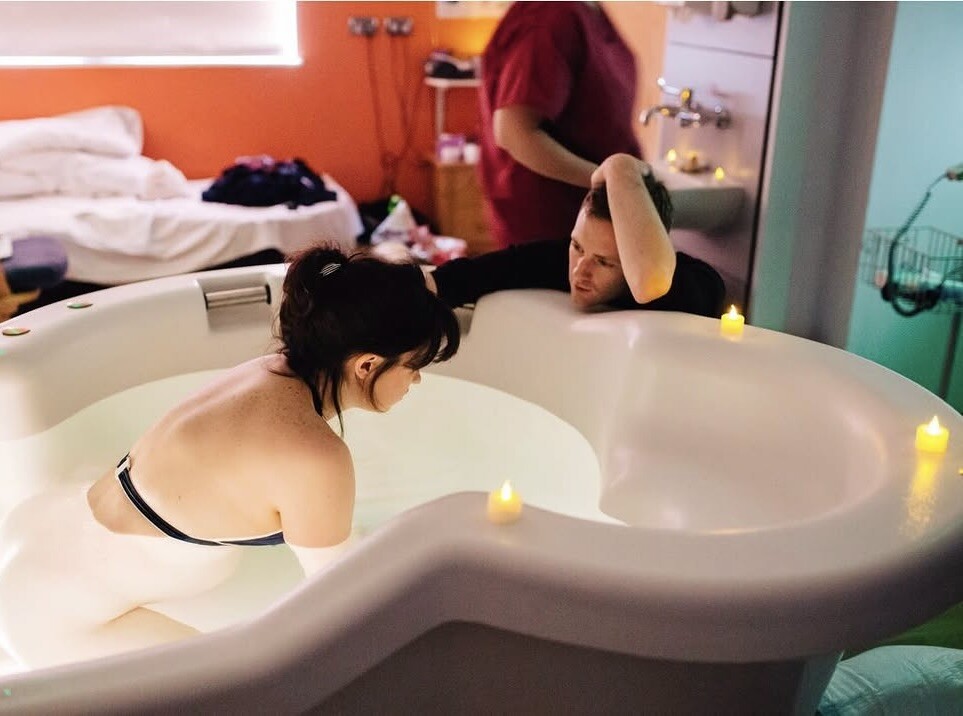
For these benefits to be realised fully, the pool must support the body rather than restrict it. The mother needs space to change position instinctively, freedom to use upright and forward-leaning postures, and secure surfaces that allow her to brace, rest and move with confidence.
An ergonomic birth pool should therefore provide generous internal space, appropriate water depth, comfortable contours, integrated handholds and supportive surfaces. These features encourage active birth rather than passive immersion.
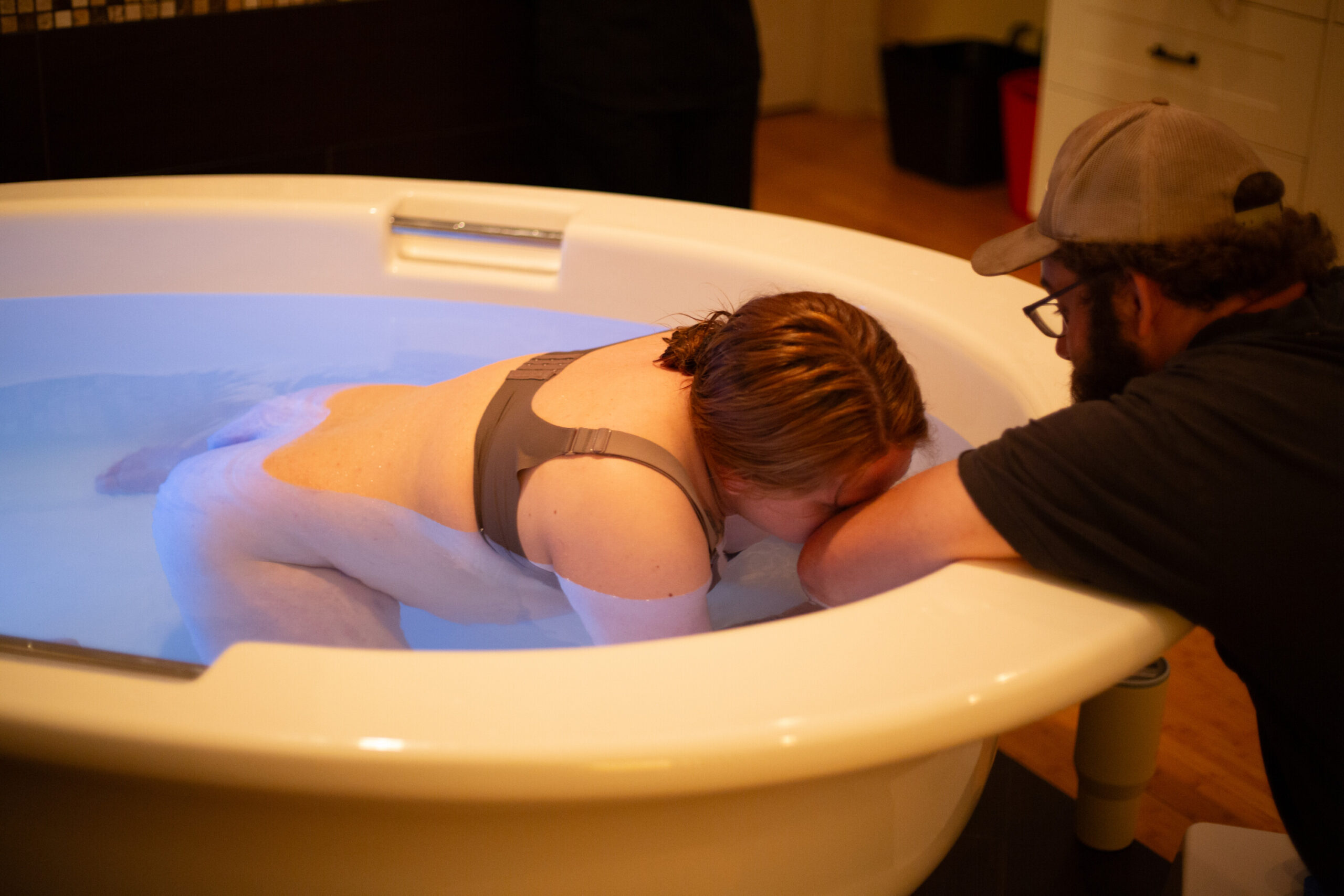
The aim is not to prescribe one correct labour position. It is to make many useful positions possible: kneeling, sitting, squatting, leaning forward, resting sideways, rotating through the pelvis, or rising from the pool when necessary.
Designing for mothers: comfort, confidence and control
Labour is physical, instinctive and highly individual. A mother should not have to fight the pool to find comfort. The internal shape should invite movement, not limit it.
Smooth transitions between surfaces help reduce pressure points and muscular strain. Supportive seats and ledges can give the mother places to rest between contractions without leaving the water. Integrated handholds can help her stabilise herself without relying on the midwife for every change of position.
This matters because control and confidence are central to a positive birth environment. When the pool supports the mother’s natural movements, she can respond more easily to the sensations of labour and remain actively involved in the birth process.
The design should also make entry and exit feel secure. Mothers may need to enter the pool during labour, leave for observations, change environment, use the toilet, or exit quickly if clinical circumstances change. Good ergonomic design anticipates these real situations.

The ergonomics of entering the pool: sit and swivel
Entering the pool should not require climbing, stepping down into water or relying heavily on the midwife for balance. The sit-and-swivel method allows the mother to sit securely on the extra-wide rim, turn her body and lower herself into the water in one controlled movement.
This reduces the risk of slips, over-reaching and awkward weight transfer at one of the most vulnerable moments of pool use. It also helps protect midwives by reducing the need to support the mother’s full body weight during entry.
For hospitals, this makes the pool easier to use consistently with women of different heights, body shapes, levels of mobility and stages of labour. Safe entry is not a minor detail; it is a central ergonomic requirement.
Designing for midwives: reducing strain and supporting good practice
Midwives are central to the safe use of water in labour and birth. Yet poorly designed pools can place unnecessary strain on their backs, shoulders, necks, wrists and knees.
The Health and Safety Executive identifies bending, crouching, stooping, stretching, twisting, reaching, repetitive work and prolonged tasks as risk factors for work-related musculoskeletal disorders. Employers must manage these risks where they arise. [5]
In a birth pool room, those risk factors can occur when the rim is too narrow, the pool is too deep to reach into comfortably, the surround obstructs access, or the midwife has no stable working surface. A poorly shaped pool can force the midwife into awkward postures at the very moments when calm, precise support is needed.
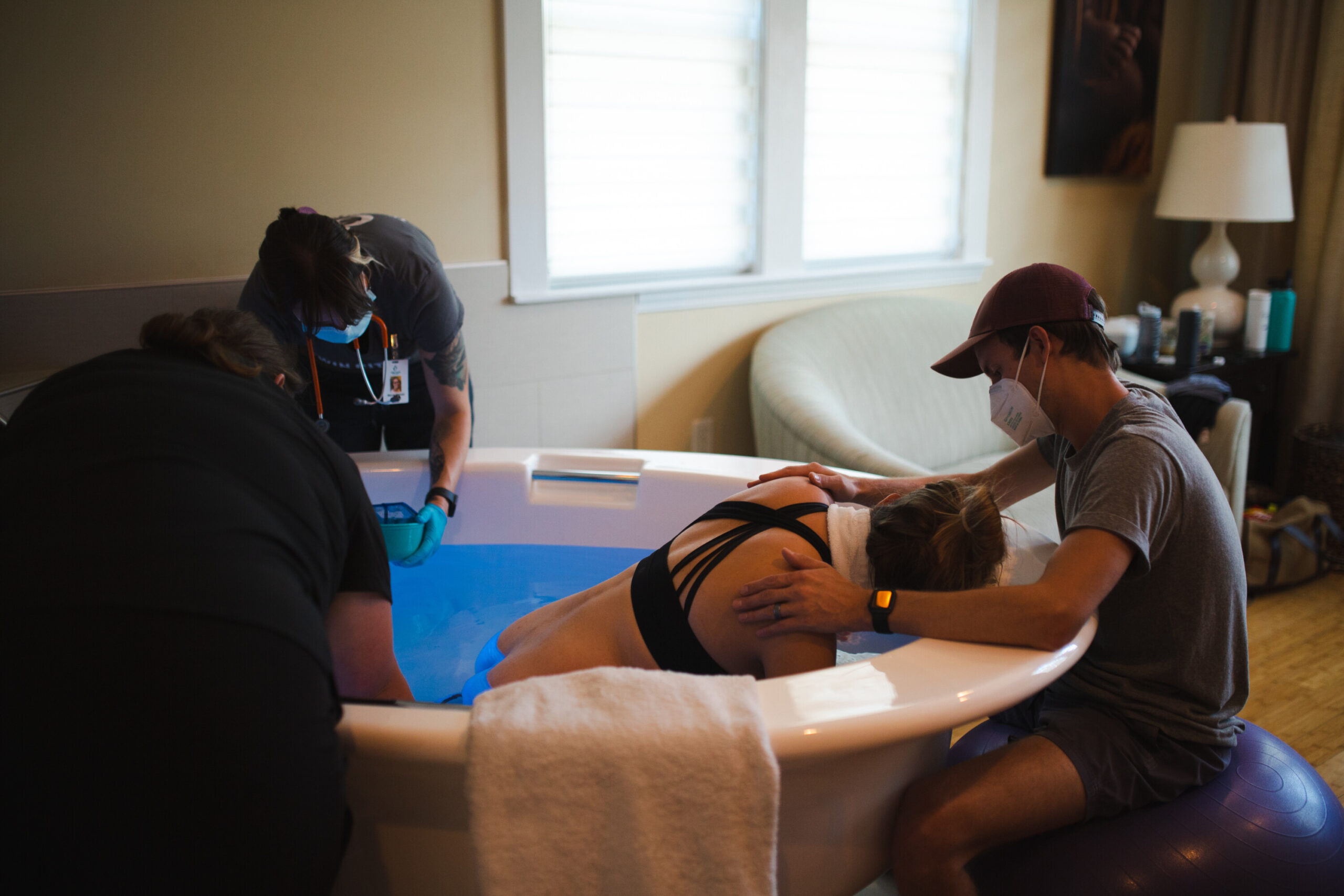
Ergonomic design helps reduce this risk. Wide, rounded rims allow the midwife to lean and support her forearms. Recessed surrounds allow closer access to the mother. Smooth external forms reduce obstruction. Clear access around the pool supports observation, auscultation, assistance and emergency response.
This is not only an occupational-health issue. A midwife who can work in a balanced, supported posture is better placed to give attentive, reassuring and clinically effective care.
A pool must work as part of the clinical environment
Hospital equipment has to work in real clinical rooms, not idealised drawings. The pool must integrate with plumbing, drainage, cleaning routines, room layout, emergency protocols, access requirements and infection-prevention procedures.
NICE advises that baths and birthing pools should be kept clean using agreed local microbiology or infection-control guidance and, for birthing pools, in accordance with the manufacturer’s guidelines. [2]
Ergonomic design therefore includes cleanability. Rounded edges, smooth surfaces, one-piece construction, accessible fittings and minimal dirt traps all make the pool easier to clean, inspect and maintain. A pool that is comfortable but difficult to clean is not a good maternity product.
Functionality also includes access for the midwife, the mother’s partner and additional staff if assistance is required. The pool should support normal physiological birth but also allow clinical teams to act promptly when circumstances change.
Access must be designed in, not improvised
Most water births are calm and straightforward, but every maternity environment must be prepared for the unexpected. Ergonomics is therefore closely linked to clinical safety.
A well-designed pool should allow the mother to be supported safely, repositioned when needed and assisted out of the water if the clinical situation requires it. There must be adequate working access around the pool and a rim geometry that supports staff without forcing unsafe posture.
Design details that appear small in a showroom can become critical in practice: the height of the rim, the depth of the water, the distance a midwife has to reach, the stability of handholds, the shape of the interior seats and the clarity of the floor area around the pool.
The best design is the one that makes good practice easier under pressure.
The ergonomics of emergency evacuation
Emergency evacuation must be planned into the shape of the pool, not solved by staff improvising under pressure. The rim, internal seat, handholds, working height and surrounding floor space all affect how quickly and safely a mother can be assisted from the water.
Active Birth Pools’ extra-wide rim and internal support features are designed to help staff raise and transfer the mother with the assistance of buoyancy, reducing unnecessary lifting where possible. Where local protocols require an evacuation net or sling, the pool room should provide clear access and enough staff working space to use it safely.
Good evacuation ergonomics protects everyone: the mother, the baby and the maternity team. It supports calm, coordinated action while reducing bending, twisting, reaching and hazardous manual handling for midwives.
Ergonomics and manual handling
Manual handling in healthcare includes supporting or moving people, not just lifting objects. NHS Employers notes that employers must protect staff from hazardous manual handling and follow a hierarchy of avoiding, assessing and reducing risk where hazardous handling cannot be avoided. [6]
This principle is directly relevant to water birth pool design. A pool should reduce unnecessary handling by helping mothers move independently where possible. Integrated handholds, supportive seats and secure internal surfaces allow mothers to reposition themselves with less physical intervention from staff.
At the same time, the design should reduce the physical demands placed on midwives when they do need to help. Access, working height, rim width, clear floor space and stable support points all influence the amount of reaching, bending and force required.
In other words, ergonomic design is a form of risk reduction. It does not replace training or local protocols, but it makes safer practice easier to achieve consistently.
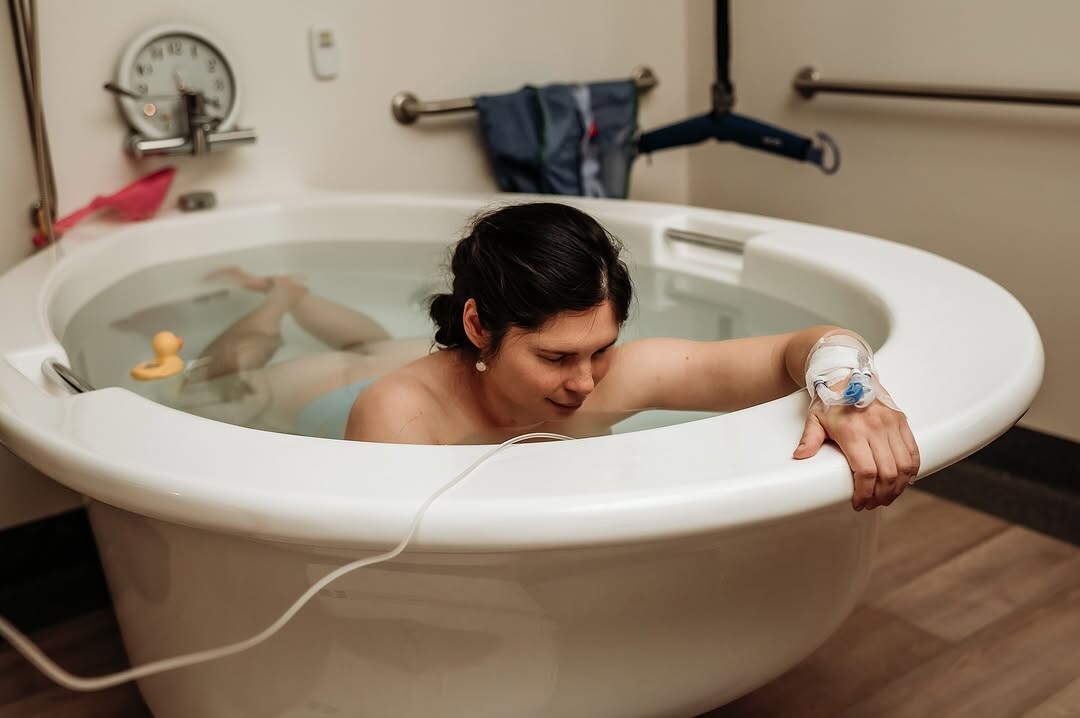
Why the internal design of the pool matters
The inside of a birth pool determines how the mother uses it. A simple open tub may allow immersion, but it does not necessarily support active labour. A purpose-designed water birth pool should provide a range of intuitive options.
Internal seats give the mother places to rest while remaining immersed. Handholds allow her to stabilise herself during contractions and position changes. Contoured walls support forward-leaning postures. Sufficient length, width and depth allow the pelvis to move freely.
These features must be integrated into the form of the pool, not added as awkward accessories. Integrated design is cleaner, stronger and more intuitive. It also reduces the number of separate components that could loosen, obstruct cleaning or create maintenance issues.
Why the external design matters just as much
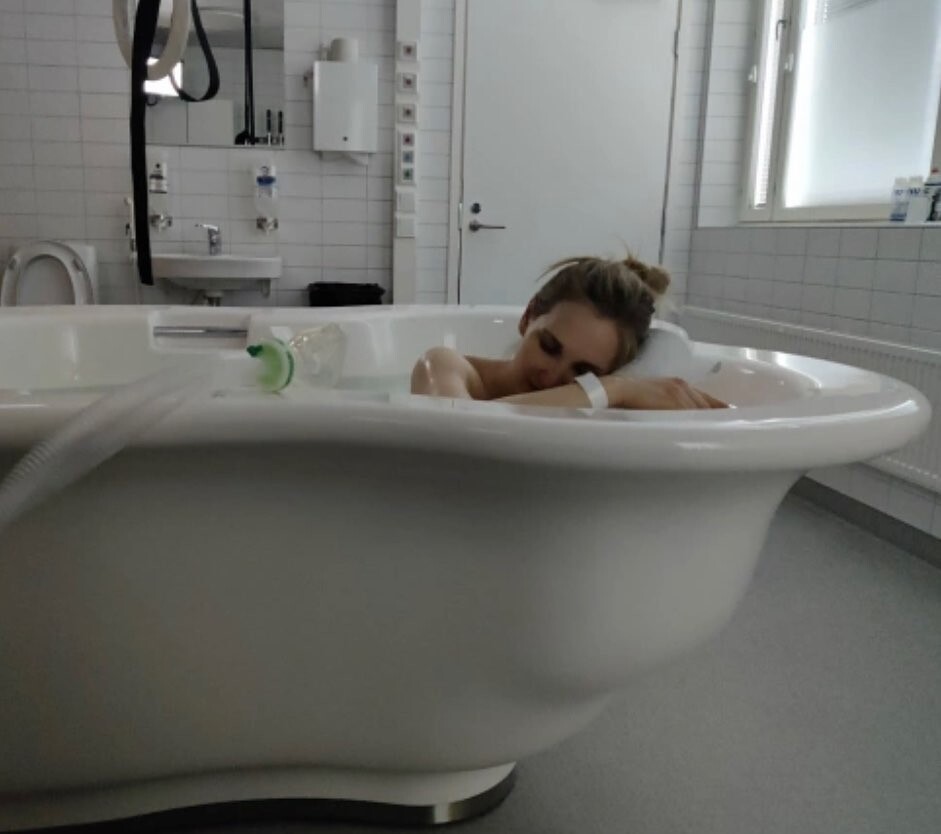
The outside of the pool affects the midwife’s body. If the rim is too thin, sharp or high, the midwife may not be able to work comfortably. If the base or surround prevents close access, she may have to lean further than is safe. If the room layout is not considered, staff may struggle to reach the mother quickly.
Active Birth Pools are designed around the mother and the midwife together. The pool must be beautiful, but beauty is not the main objective. The main objective is safe, effective, comfortable use throughout labour, birth, cleaning and maintenance.
This is why wide rounded rims, smooth external contours, recessed access, integrated support features and appropriate working heights are not optional refinements. They are core safety and usability features.
A better pool supports everyone in the room
Ergonomic design is sometimes misunderstood as a comfort feature. In water birth pool design it is much more important than that.
For mothers, it supports movement, rest, immersion, confidence and physiological labour. For midwives, it supports safer working posture, closer access and more effective care. For hospitals, it supports infection prevention, manual-handling risk reduction, efficient cleaning, room functionality and long-term value.
Recent evidence also reinforces the importance of supporting safe access to water immersion. NICE’s 2025 evidence review noted that new evidence on water birth in low-risk, term, singleton pregnancies was generally low to very low certainty, but consistent in direction for several potential benefits, with the committee considering the net benefit positive while also identifying the need to communicate specific risks such as umbilical cord snapping. [3]
The POOL cohort study similarly concluded that, among women using water immersion during labour, remaining in the pool to give birth was not associated with an increase in adverse primary maternal or neonatal outcomes. [4]
This makes the design of the pool itself even more important. If water immersion is to be offered safely and confidently, the product must be designed for real maternity use.
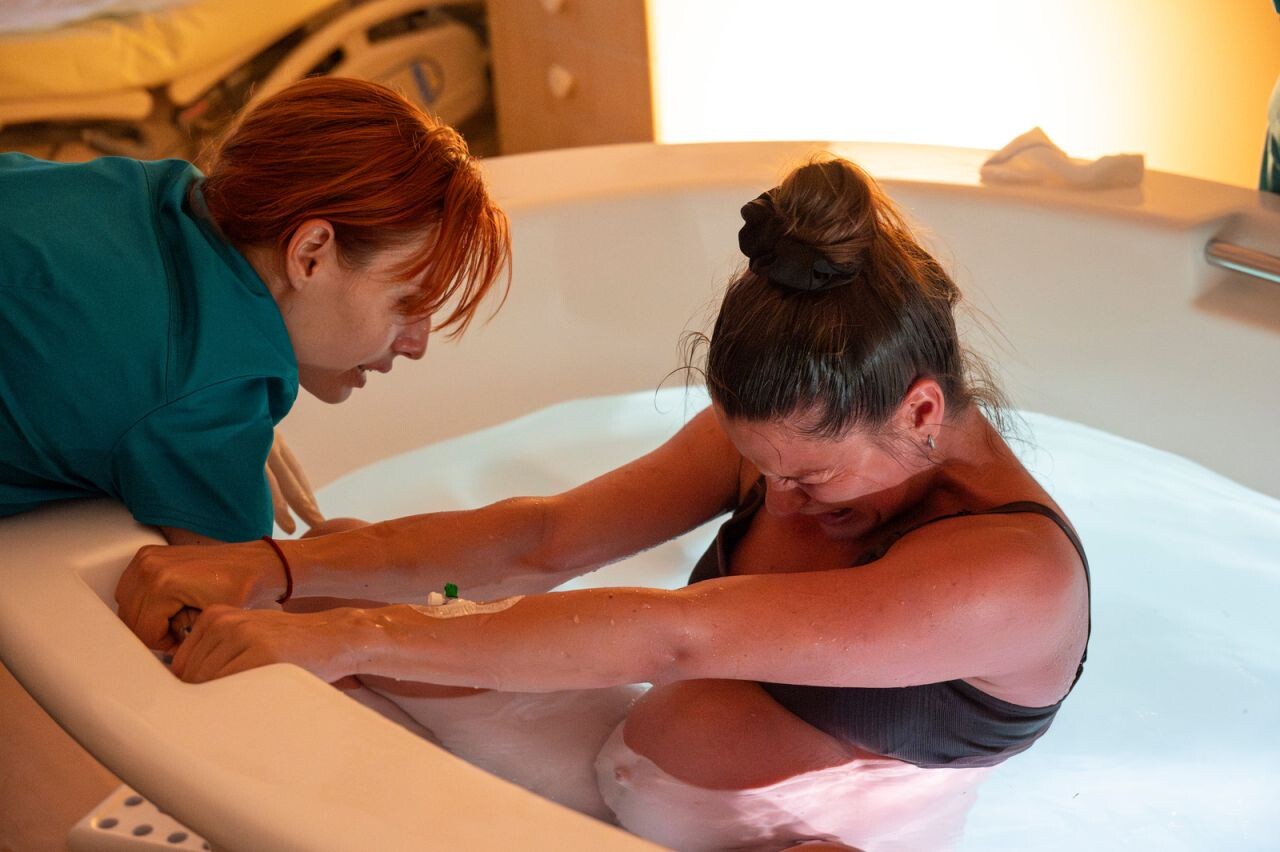
Ergonomics is not a luxury
Ergonomic design in water birth pools is not a luxury, cosmetic preference or marketing detail. It is fundamental to safety, comfort, dignity and good clinical practice.
A purpose-designed birth pool should help mothers move instinctively, help midwives work safely and help hospitals maintain a clean, efficient and clinically appropriate birth environment.
That is the design philosophy behind Active Birth Pools. Every curve, rim, seat, handhold, surface and access point should earn its place. The result is a water birth pool designed not simply to hold water, but to support the whole experience of labour and birth.
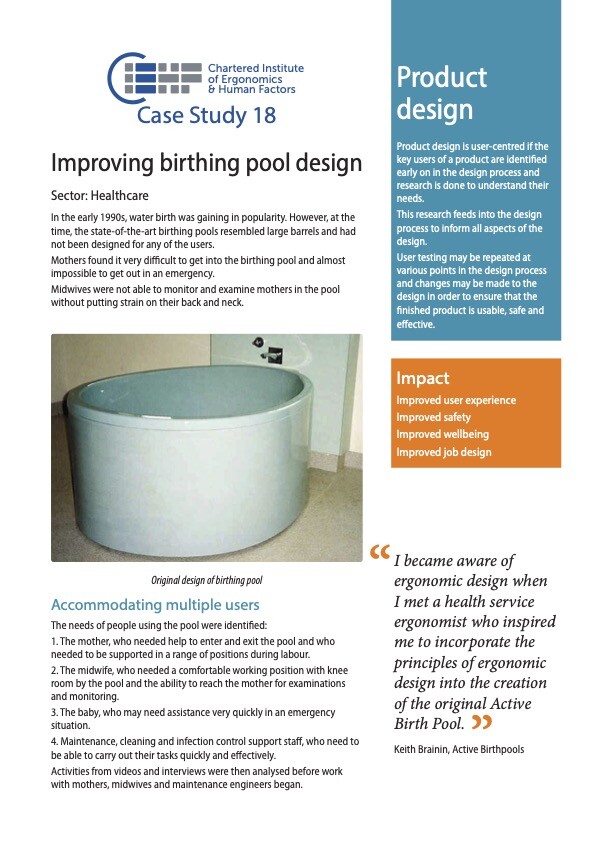
Improving Birth Pooling Design:
Case Study 18 – Chartered Institute of Ergonomics & Human Factors
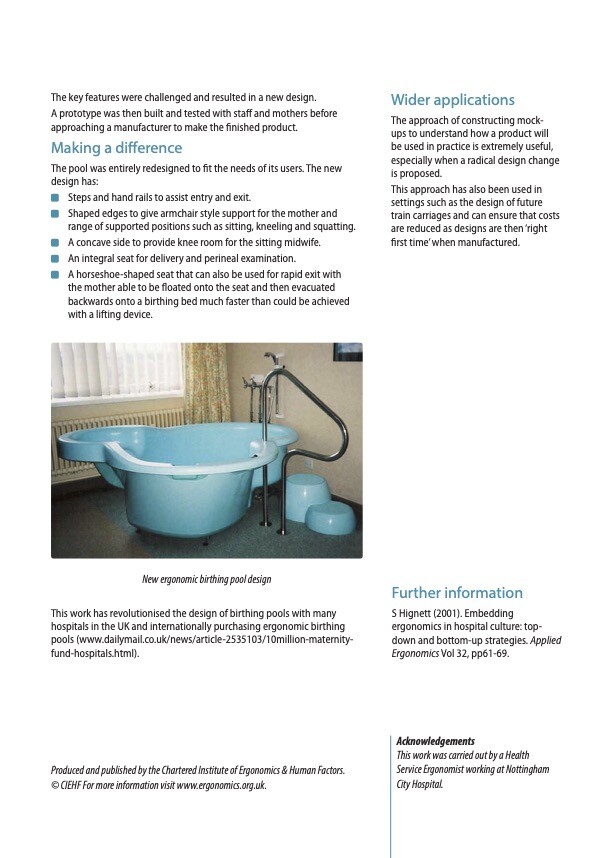
In 1995 we worked with a health service ergonomist and the midwives from Nottingham University Hospital to explore ways in which our water birth pools could be improved to better suit the needs of mothers and midwives.
The results are presented in this publication
References
[1] Active Birth Pools. The Importance of Applying Ergonomic Design Principles to Water Birth Pools. Published 11 June 2025. https://activebirthpools.com/the-importance-of-applying-ergonomic-design-principles-to-water-birth-pools/
[2] NICE. Intrapartum care: recommendations, NG235. Updated 2025 sections on labouring in water, temperature monitoring, cleaning and access for people with mobility issues. https://www.nice.org.uk/guidance/ng235/chapter/Recommendations
[3] NICE. Intrapartum care evidence review Q: effects and safety of water immersion during the second stage of labour. Final, November 2025. https://www.nice.org.uk/guidance/ng235/evidence/q-effects-and-safety-of-water-immersion-during-the-second-stage-of-labour-pdf-474720226461
[4] Sanders J, et al. The POOL cohort study: maternal and neonatal outcomes among spontaneous vaginal births occurring in or out of water following intrapartum water immersion. BJOG, 2024. https://pubmed.ncbi.nlm.nih.gov/38857898/
[5] Health and Safety Executive. Musculoskeletal disorders at work. https://www.hse.gov.uk/msd/msds.htm
[6] NHS Employers. Musculoskeletal health in the workplace. https://www.nhsemployers.org/publications/musculoskeletal-health-workplace
[7] Health and Safety Executive. Manual Handling Operations Regulations 1992: guidance on avoiding, assessing and reducing risk. https://www.hse.gov.uk/pubns/books/l23.htm
[8] Active Birth Pools. Sit and Swivel – The Natural Way to Enter the Pool. Published 5 December 2023. https://activebirthpools.com/sit-and-swivel-the-natural-way-to-enter-the-pool/
[9] Active Birth Pools. Manual handling risks associated with water birth pools. Published 3 December 2023. https://activebirthpools.com/manual-handling-risks-associated-with-water-birth-pools/
[10] Health and Safety Executive. Moving and handling in health and social care: manual handling in birthing pools. Updated 12 January 2026. https://www.hse.gov.uk/healthservices/moving-handling/birthing-pools.htm