
Why the inside of a birth pool matters
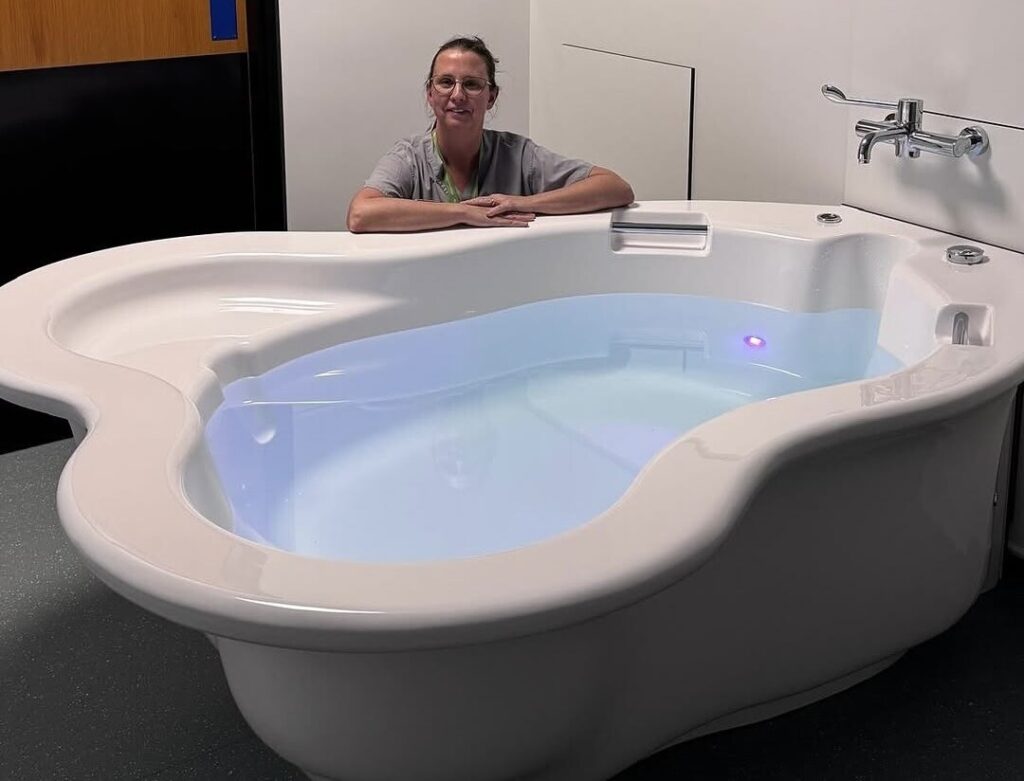
A water birth pool is not simply a container for warm water. In a maternity setting, it becomes part of the birth environment, part of the mother’s support system and part of the midwife’s working space. Its internal shape, rim, seats, handholds, water channel and surfaces all influence how freely a woman can move, how safely she can enter and leave the pool, how comfortably she can rest between contractions, and how effectively midwives can monitor, assist and respond when needed.
This is why the internal design of an Active Birth Pool has been developed around a central principle: the pool should actively support physiological labour and birth while reducing avoidable risks for mothers, babies, midwives and hospitals.
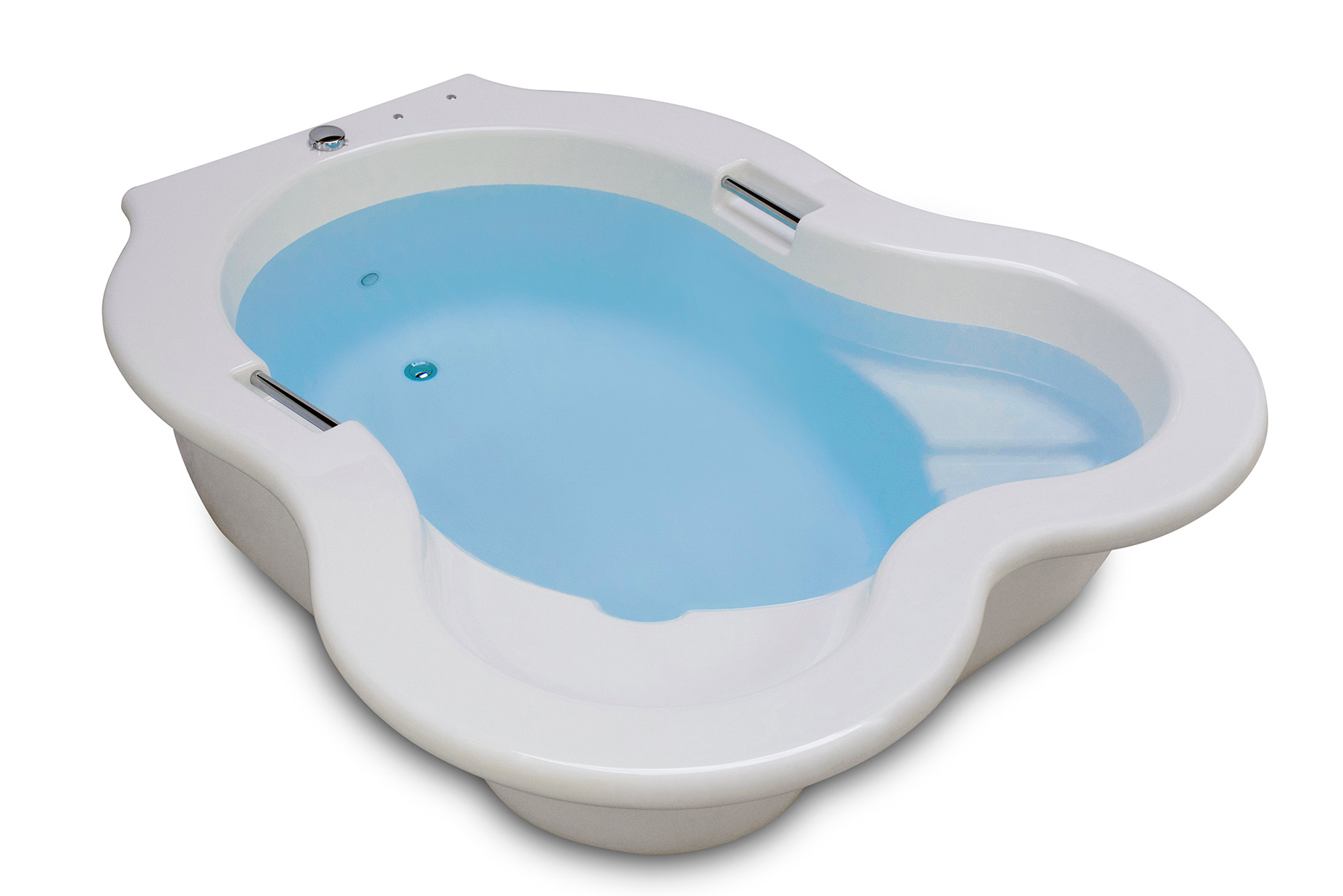
Every contour has a purpose. Every support point has a function. Every surface is designed to be smooth, hygienic and easy to clean. The result is a pool that enables mothers to move instinctively, adopt upright and forward-leaning positions, rest when they need to, and remain supported throughout labour and birth.
Four internal features are especially important to this design philosophy: the rim-level safety seat, the labour support seat, the recessed handrails and the keyhole-shaped water channel built into the back of the rim. Together, they transform the pool from a passive vessel into an ergonomic, clinically practical and user-centred birth environment.
Designed for active birth, not passive immersion
The name Active Birth Pools reflects a specific design intention. Labour in water is most effective when the mother is able to move, change position and respond instinctively to the sensations of labour. A well-designed birth pool should encourage mobility rather than restrict it.
In practice, this means the internal form of the pool must support a wide range of natural positions: kneeling, squatting, sitting, leaning forward, resting on the rim, holding the handrails, turning, rotating, floating, and moving from one position to another without obstruction. The mother should not feel trapped by the shape of the pool. She should feel held, supported and free.
This is the fundamental difference between a general-purpose bath and a purpose-designed birth pool. A bath is designed for washing and reclining. A birth pool must support movement, buoyancy, upright posture, pelvic mobility, maternal comfort, midwifery access, observation, hygiene, emergency evacuation and repeated clinical use.
Active Birth Pools are designed around these realities. The internal features are not decorative additions. They are built into the structure of the pool to support real use in real maternity settings.
The rim-level safety seat: support, rest, monitoring and emergency evacuation
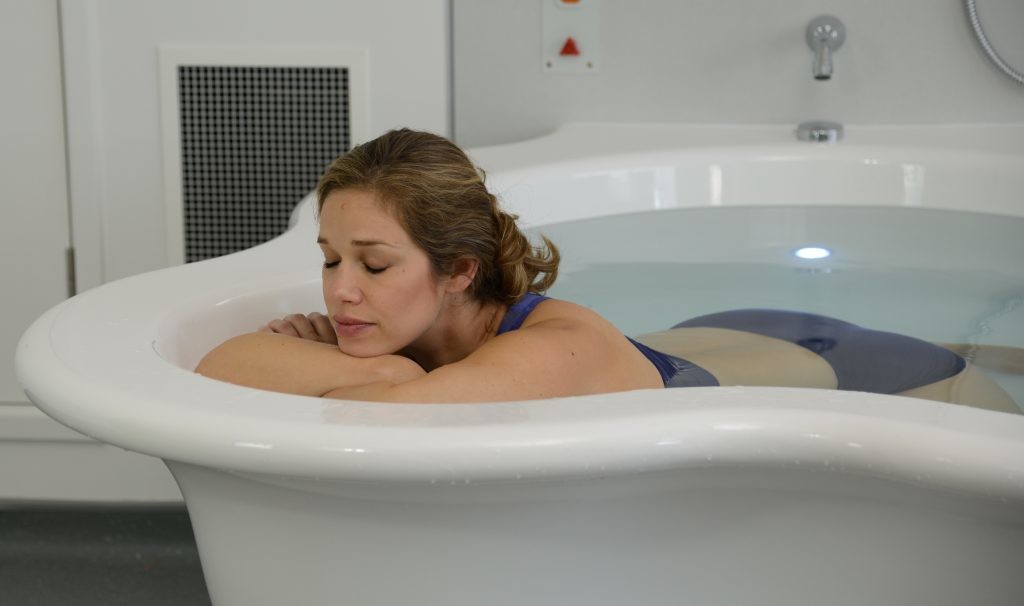
One of the most distinctive internal features of an Active Birth Pool is the rim-level safety seat. This seat is positioned high in the pool, level with the rim, creating a broad, secure platform that can be used in several important ways.
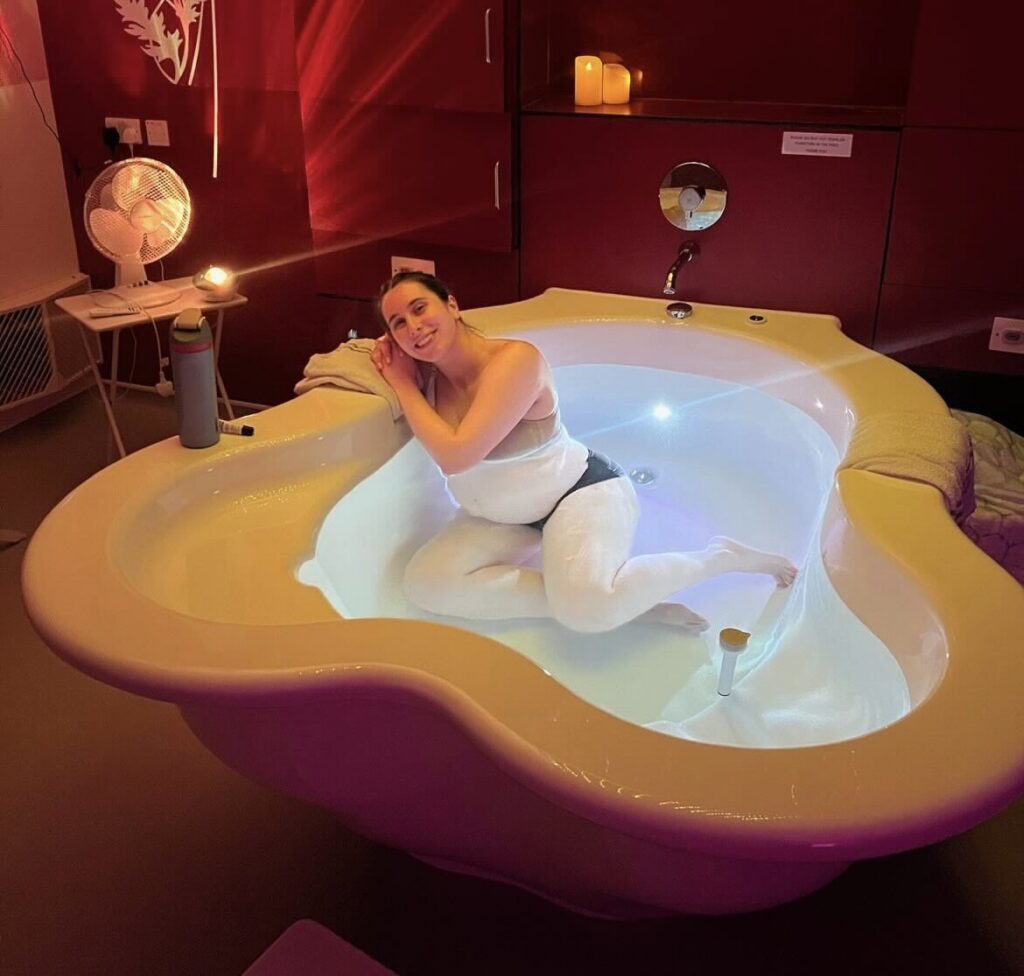
For the mother, the safety seat provides a comfortable place to lean, pause and recover between contractions. Labour is physically demanding, and women often need to move between activity and rest. The safety seat allows the mother to remain in the water while changing her posture and receiving support. She can lean forward onto the rim, rest her arms, or position herself securely while remaining connected to the warmth and buoyancy of the pool.
This matters because labour is not static. A mother may want to kneel during one contraction, sit back during the next, then lean forward as labour intensifies. The safety seat gives her another supported option without requiring her to leave the water or interrupt the rhythm of labour.
For midwives, the rim-level safety seat is equally important. It creates a practical platform for observation and monitoring without requiring the mother to stand up or climb out of the pool unnecessarily. In many birth pools, routine checks can become awkward because the mother is low in the water and the midwife has limited access. A rim-level seat helps bring the mother into a more accessible position while preserving her comfort, privacy and immersion.
The safety seat also has a critical role in emergency evacuation. Although most water births proceed without incident, every hospital-grade birth pool must be designed with the possibility of urgent assisted evacuation in mind. If a mother becomes faint, exhausted or unable to leave the pool unaided, midwives need safe and practical options. The rim-level safety seat gives staff a secure intermediate platform. Instead of trying to lift a mother directly from the bottom of the pool to the outside, the mother can be guided or assisted onto the seat and then onto the rim for transfer.
This staged movement reduces strain and helps support safer manual handling. It also protects maternal dignity because the pool itself becomes part of the evacuation pathway rather than an obstacle. In this way, the safety seat combines comfort, clinical practicality and risk reduction in one integrated feature.
The labour support seat: supporting physiology and instinctive movement
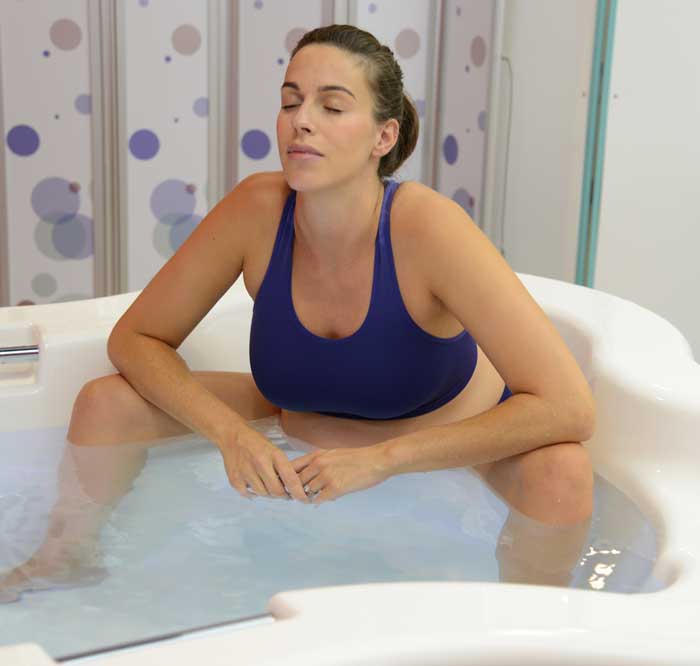
The labour support seat is another key internal design feature. Its role is different from the rim-level safety seat. Whereas the safety seat is positioned high for rest, monitoring and evacuation, the labour support seat is designed to support the mother lower in the pool during labour and birth.
The labour support seat helps the mother find stable, upright and open positions. In water, buoyancy reduces the effect of gravity on the body, making it easier for women to move and change posture. However, buoyancy alone is not enough. A mother also needs points of contact that allow her to stabilise herself, control her position and use her body effectively during contractions.
The labour support seat gives the mother a secure base from which she can move her pelvis, adjust her angle, lean forward, rotate or rest. This supports the principles of active birth, where the mother is encouraged to remain responsive to her body rather than being fixed in one position.
A well-designed labour support seat should not dominate the pool or restrict movement. It should be there when needed and unobtrusive when not in use. It should support rather than confine. The mother should be able to use it as a seat, a brace, a transition point or a place to rest briefly before moving again.
This kind of design recognises that labour is dynamic. The most useful support is not rigid prescription but flexible assistance. The labour support seat gives mothers options, and options are central to comfort, confidence and physiological labour.
For midwives, the labour support seat can also assist with care. It helps position the mother in ways that may make observation easier, while still allowing her to remain in the water. It can support safe assisted movement in the pool and contribute to a calmer, more controlled environment.
Recessed handrails: secure support without obstruction
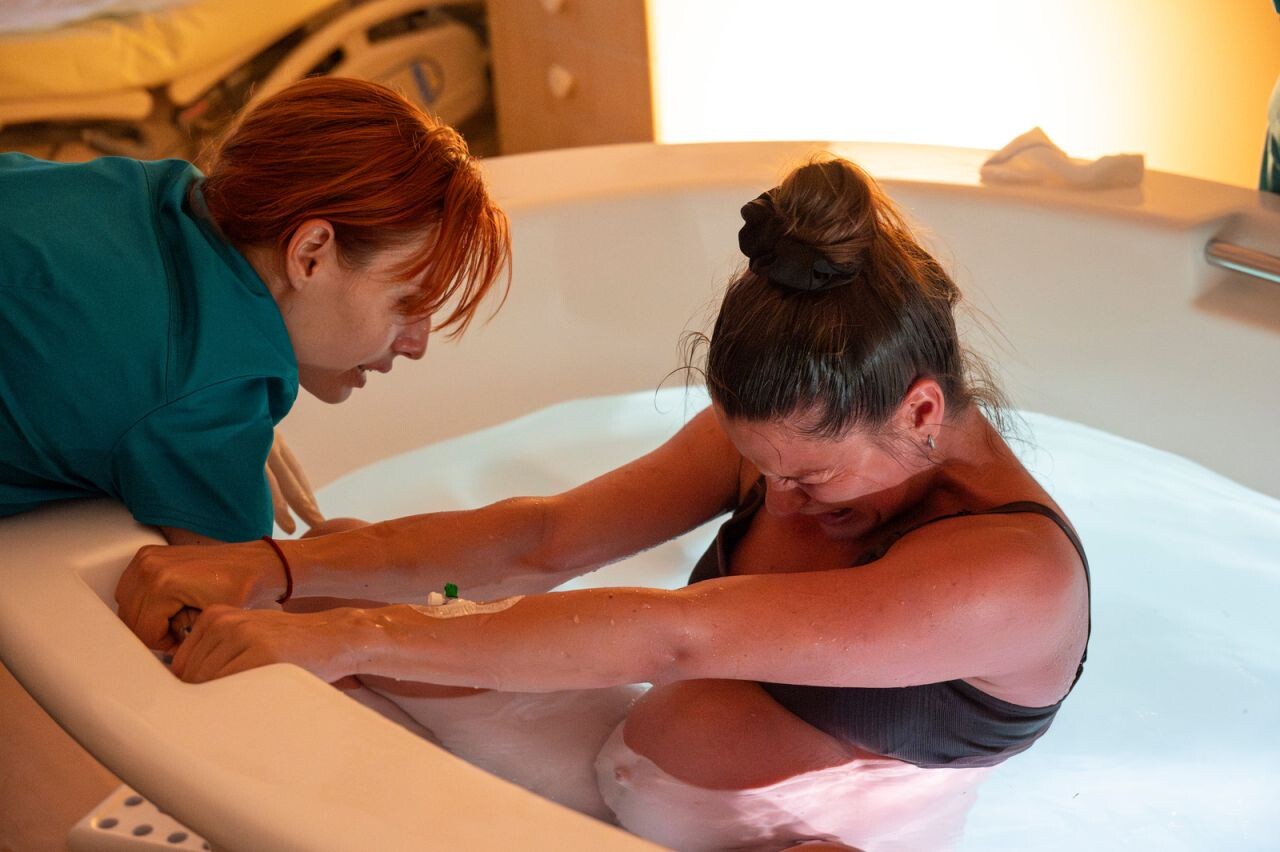
Hand support is essential in a birth pool. During labour, women instinctively reach for something to hold, pull against, lean on or use as a stabilising point. A good handhold can help a mother move from sitting to kneeling, brace during a contraction, rotate her body, lower herself into the water or rise from the pool.
However, handrails can also create problems if they are poorly designed. Surface-mounted metal rails may protrude into the pool, obstruct movement, create impact risks, interfere with cleaning and provide areas where contamination can collect. In a clinical environment, these issues are not minor. They affect safety, hygiene and usability.
Active Birth Pools address this by setting the stainless steel handrails into recesses in the rim and bonding them into the fabric of the pool. This design achieves several things at once.
First, it gives mothers a strong, reliable handhold exactly where they need it. The handrails are positioned so they can be used naturally during movement around the pool. Mothers can grip them while entering, leaving, turning, leaning, kneeling or changing position.
Second, the recessed design protects mothers from injury. Because the handrails are set into the rim rather than protruding into the pool, they are far less likely to be knocked, bumped or caught during movement. This is especially important in labour, when a woman may move suddenly or instinctively and may not be carefully watching where every fitting is positioned.
Third, the design supports freedom of movement. The interior remains smooth and uncluttered, allowing the mother to move around the pool without negotiating exposed metalwork. In a birth pool, open usable space is vital. Anything that obstructs movement can reduce the mother’s ability to respond naturally to labour.
Fourth, recessed bonded handrails improve hygiene. In any maternity unit, infection prevention is a core priority. Fittings that sit proud of the surface can create edges, joins and dirt traps. Bonding the handrails into the pool and integrating them into the design helps reduce areas where microorganisms may collect and makes the pool easier to clean between uses.
This is a good example of the Active Birth Pools design approach: one feature solving several problems at once. The handrails provide support, reduce impact risk, preserve internal space and improve cleanability.

The keyhole-shaped water channel: protecting mothers from protruding spouts
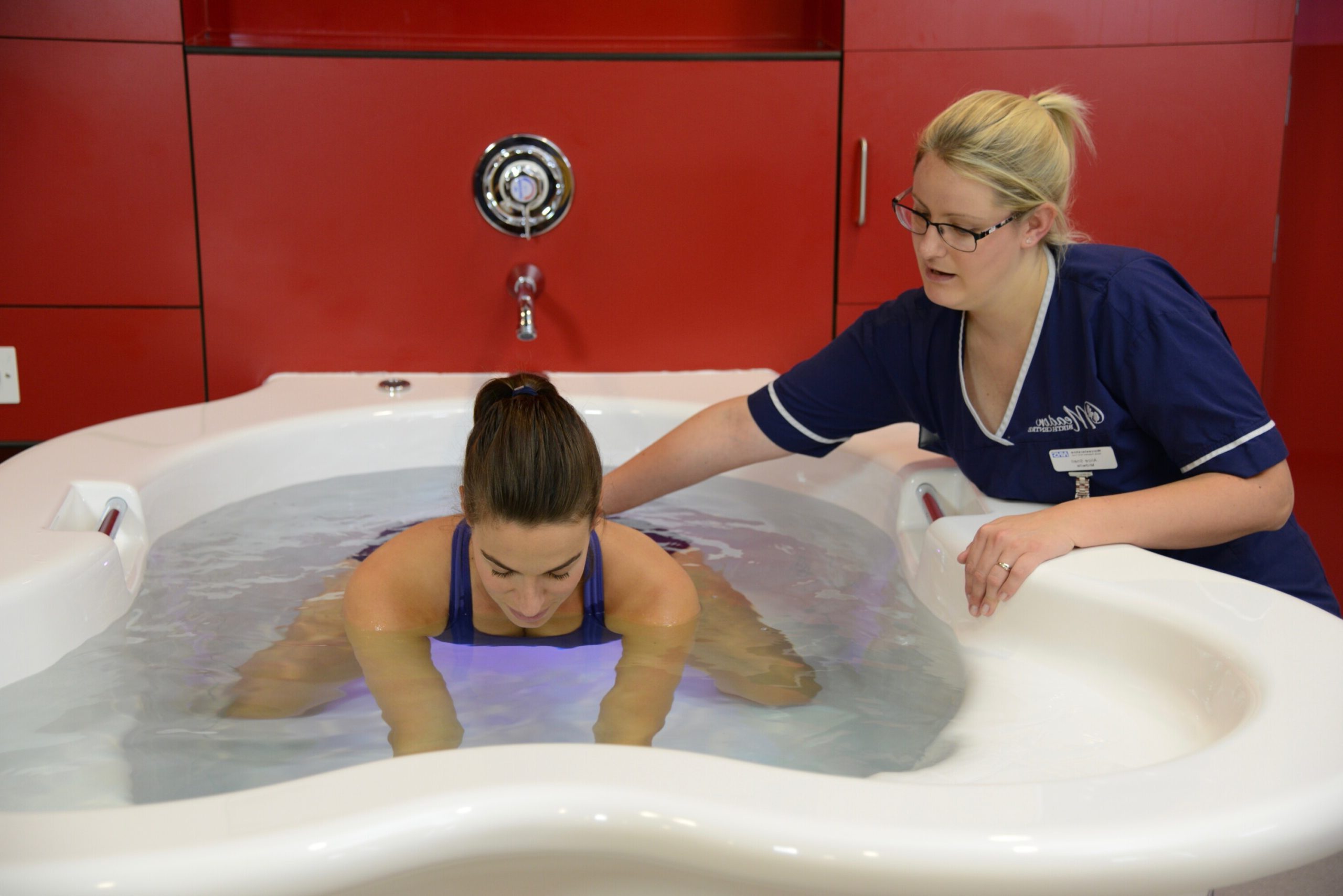
One of the most innovative design features is the keyhole-shaped water channel built into the back of the rim. At first glance, it may appear to be a simple detail. In practice, it is a major safety and usability improvement.
In many birth pool installations, the water supply is delivered through taps or spouts positioned near the pool. If these protrude into the mother’s movement area, they create a risk of impact, particularly to the head. During labour, women may lean back, turn quickly, float, kneel, rise or move unpredictably. A protruding spout in the wrong place can become a hazard.
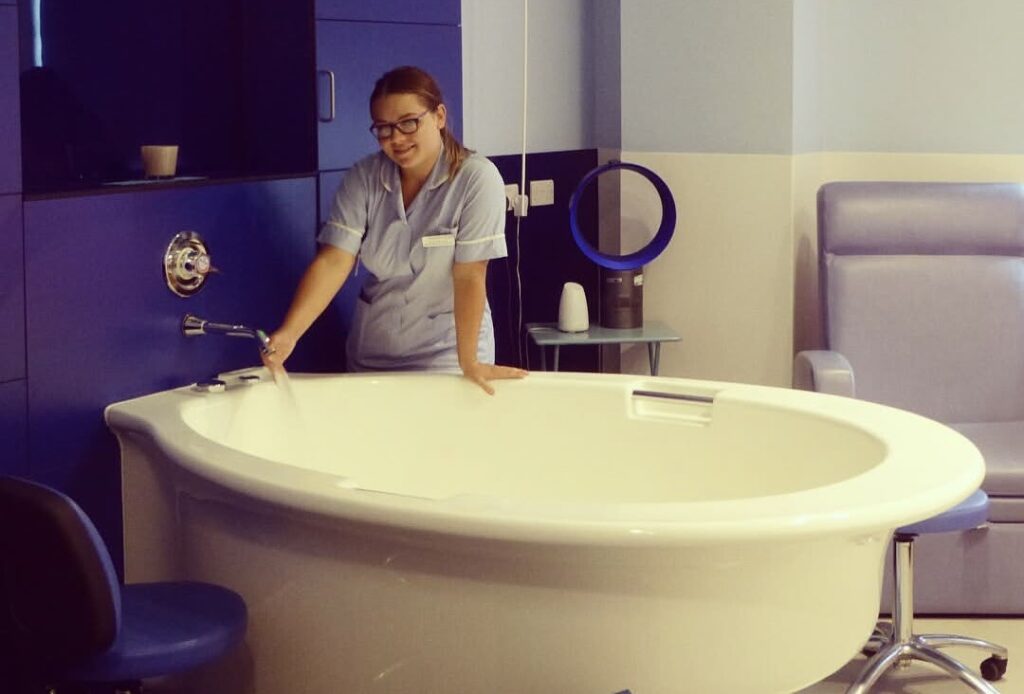
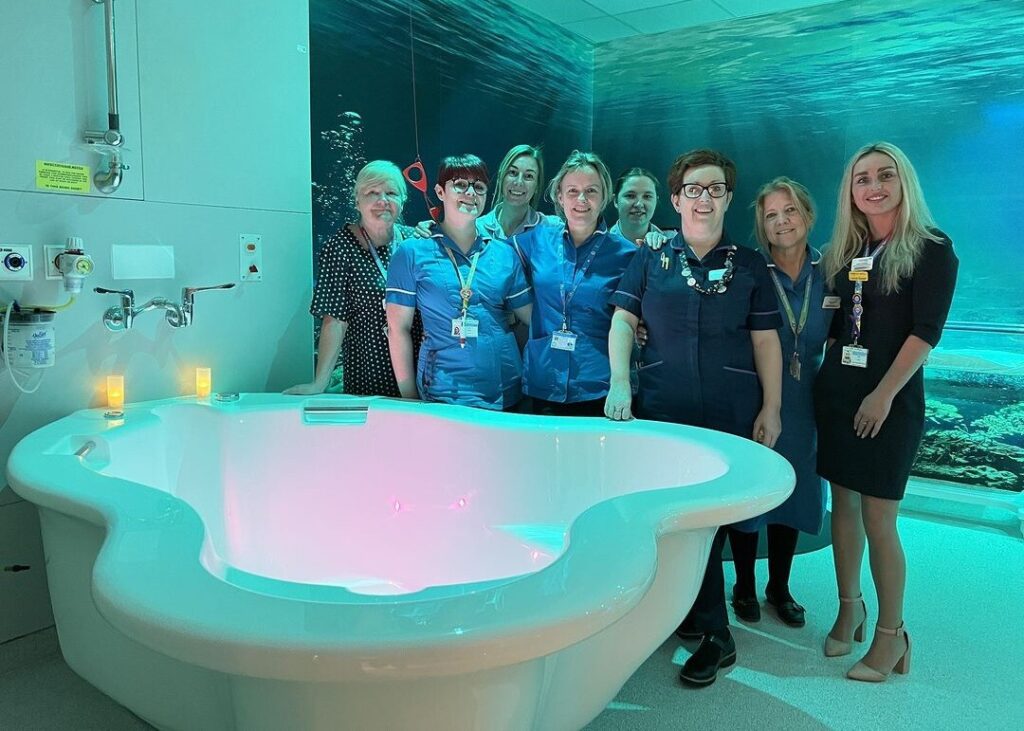
Active Birth Pools respond to this by incorporating a distinctive keyhole-shaped channel into the back rim of the pool. The channel works with wall-mounted taps and short spouts positioned so that the mother cannot come into contact with them. In other words, the water delivery system is accommodated without placing intrusive metalwork in the mother’s path.
This protects the mother from hitting her head on the spout and keeps the back of the pool open and usable. She can lean against the back of the pool, hold the recessed handgrips, use the rounded rim for support and move freely without being obstructed by plumbing.
The keyhole channel also contributes to a cleaner, simpler internal environment. By avoiding rim-mounted taps and unnecessary fittings, the pool reduces clutter around the rim. This benefits mothers, who need freedom of movement, and midwives, who need clear access. It also supports infection control by reducing the number of surface-mounted fittings where bacteria may collect.
The importance of this detail should not be underestimated. Good healthcare design often consists of removing risks before they occur. The keyhole-shaped water channel is a preventative design solution. It does not ask mothers or midwives to work around a hazard. It removes the hazard from the usable space.
The extra-wide rounded rim: the feature that links everything together
Although the article focuses on the internal features, the rim deserves special attention because it connects many of them. The extra-wide rounded rim is one of the most important support surfaces in the pool.
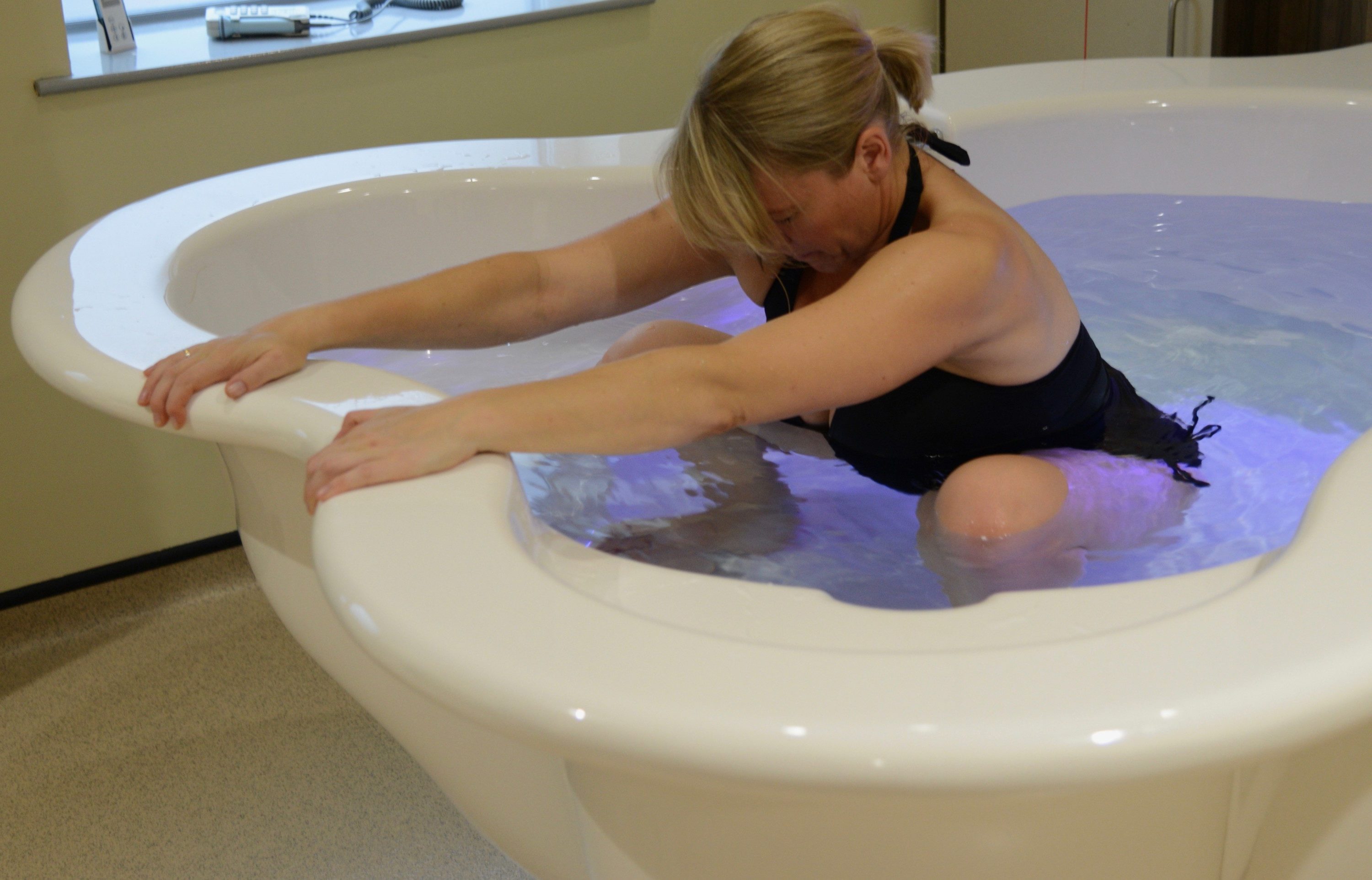
For mothers, the rim provides a place to lean forward, rest the arms, brace the body and maintain upright positions. Forward-leaning positions are widely used during labour because they can help the mother feel grounded, supported and in control. The rim must therefore be wide enough, smooth enough and comfortable enough to be used repeatedly and for extended periods.
A narrow or sharp rim is not adequate for this purpose. It may dig into the arms, restrict comfort or discourage the mother from using the position she naturally wants. A broad bullnose-shaped rim, by contrast, provides a tactile, supportive surface. It allows the mother to rest on her forearms, lean into contractions and move around the edge of the pool with confidence.
For midwives and partners, the rim also provides a practical support surface. They may lean on it while attending the mother, offering reassurance, monitoring progress or providing physical support. In this sense, the rim is not just a boundary. It is an active working surface.
The rim also supports entry and exit. Combined with the step unit and handholds, it helps mothers move safely into and out of the pool. This is especially important because wet surfaces, fatigue and advanced labour can all increase the need for stable support.
An uncluttered interior supports safer movement
A recurring theme in Active Birth Pools design is the absence of unnecessary surface-mounted metalwork. This is not only an aesthetic choice. It is a safety and hygiene decision.
The more fittings that are attached to the pool surface, the more potential obstruction points are created. Protruding taps, exposed rails, controls and other fittings can interfere with movement, create impact risks and complicate cleaning. They can also make the pool feel visually and physically cluttered.
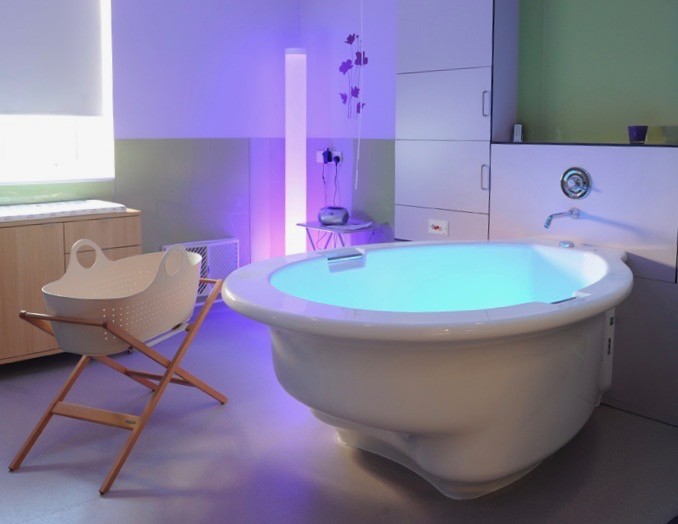
By integrating support features into the structure of the pool, Active Birth Pools create a smoother, simpler and more intuitive environment. The mother can move around the pool without constantly negotiating obstacles. Midwives can access the mother more easily. Cleaning is more straightforward. The pool looks and feels calmer.
This is especially important in labour, where the environment can influence how safe, private and confident a woman feels. A clear, uncluttered pool supports the instinctive nature of active birth. The design fades into the background, allowing the mother to focus on her body, her baby and her support team.

Conclusion: purposeful design that supports safer birth
The internal design of an Active Birth Pool is the result of practical experience, careful observation and a clear understanding of what mothers and midwives need during water labour and birth. Each feature has been developed to serve a real purpose: to support movement, improve comfort, reduce hazards, assist clinical care and make the pool easier to use safely.
The rim-level safety seat provides a secure place for rest, monitoring and assisted evacuation. The labour support seat gives mothers another stable position from which to move, lean, rotate and respond instinctively to labour. The recessed handrails offer dependable support without creating obstructions or unnecessary cleaning challenges. The keyhole-shaped water channel keeps water delivery safely out of the mother’s movement space, helping to prevent contact with protruding spouts.
Together with the extra-wide rounded rim and uncluttered interior, these features create a birth pool that is not simply comfortable, but intelligently designed around the realities of maternity care.
For mothers, this means greater freedom, confidence and physical support. For midwives, it means better access, safer working conditions and more practical options when assistance is needed. For hospitals and birth centres, it means a purpose-designed pool that supports safety, hygiene and repeated clinical use.
Good birth pool design should feel natural in use, but that simplicity depends on careful detail. In Active Birth Pools, the internal features work quietly together to create a safer, calmer and more supportive environment for labour and birth.