
Why practical clinical access, room efficiency and unobstructed working space matter more than the appearance of 360-degree access.
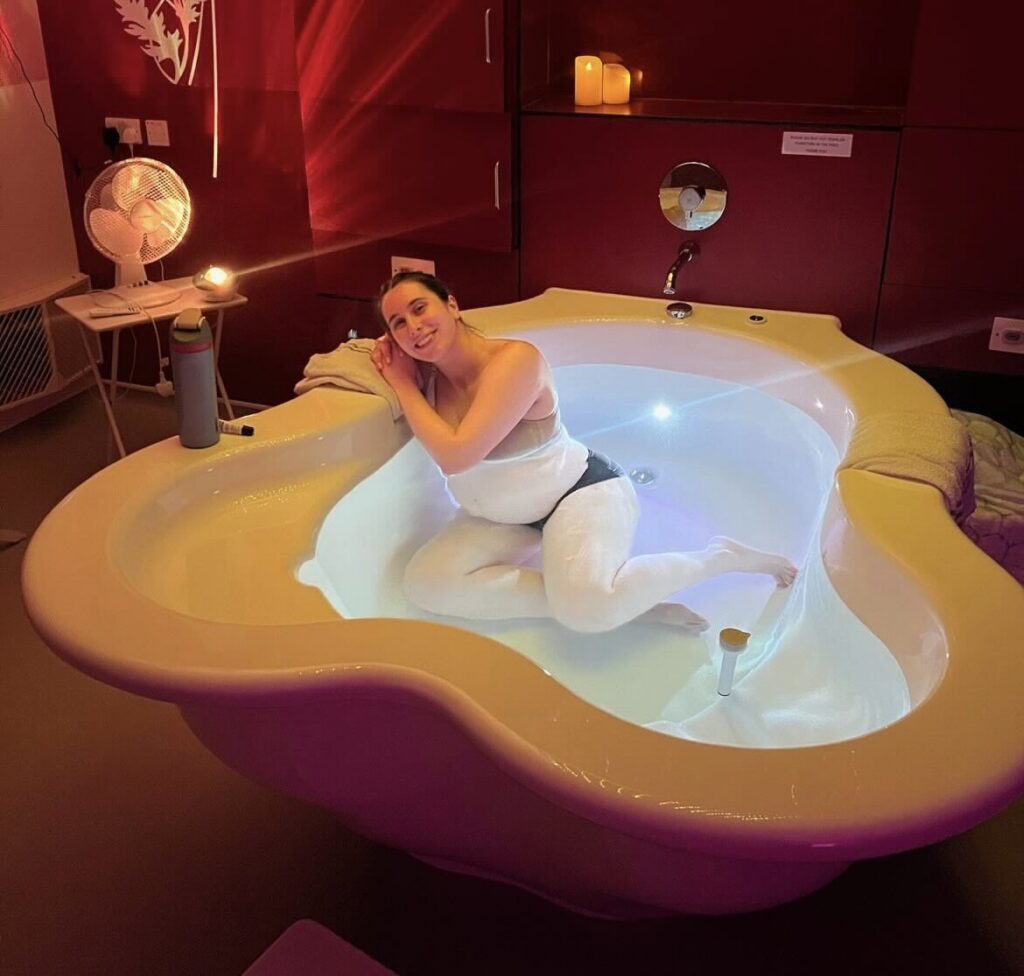
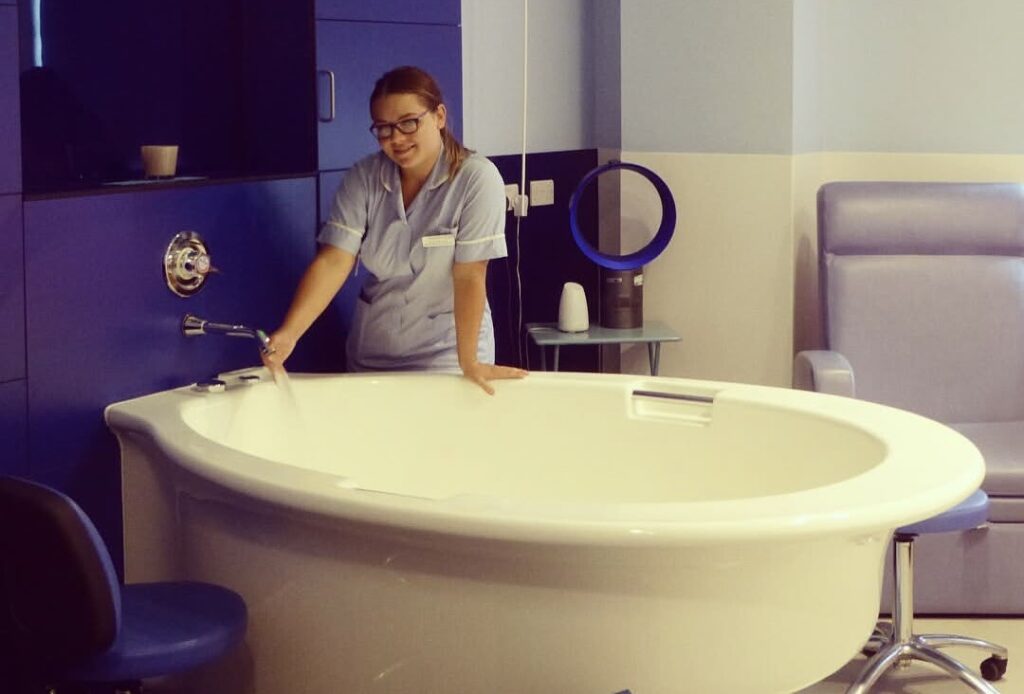
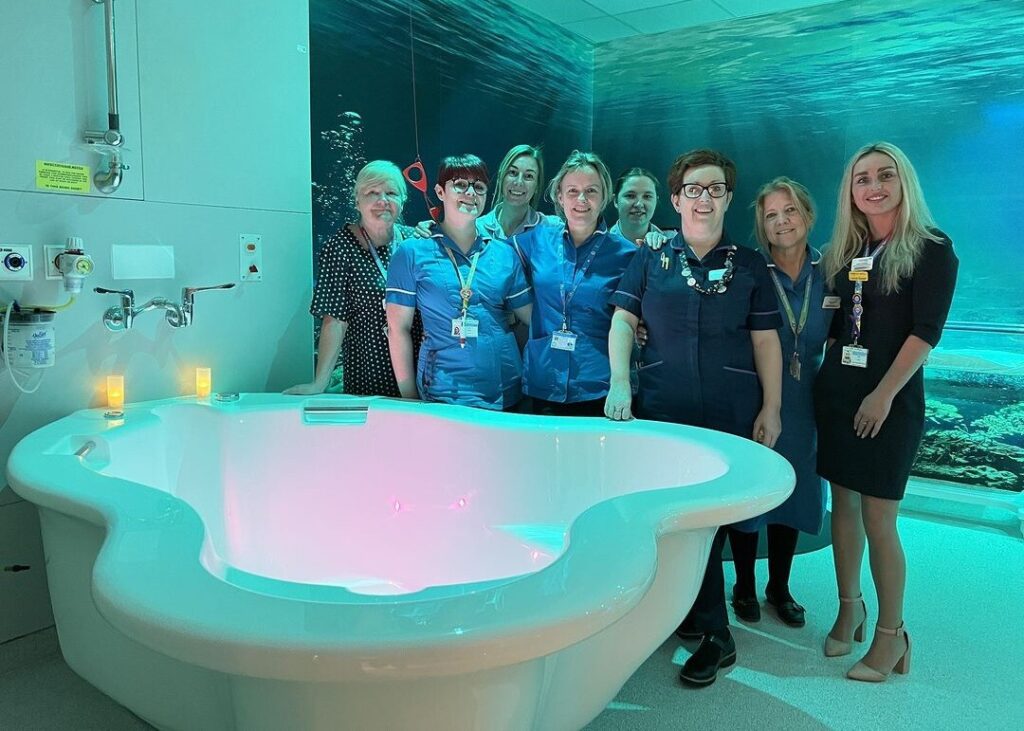
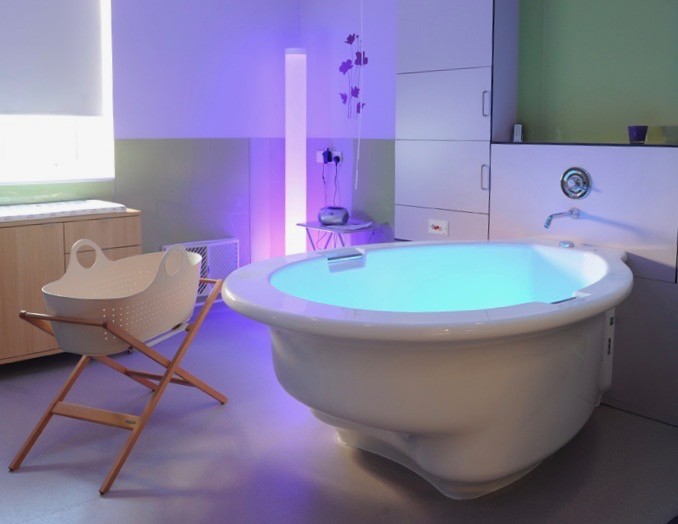
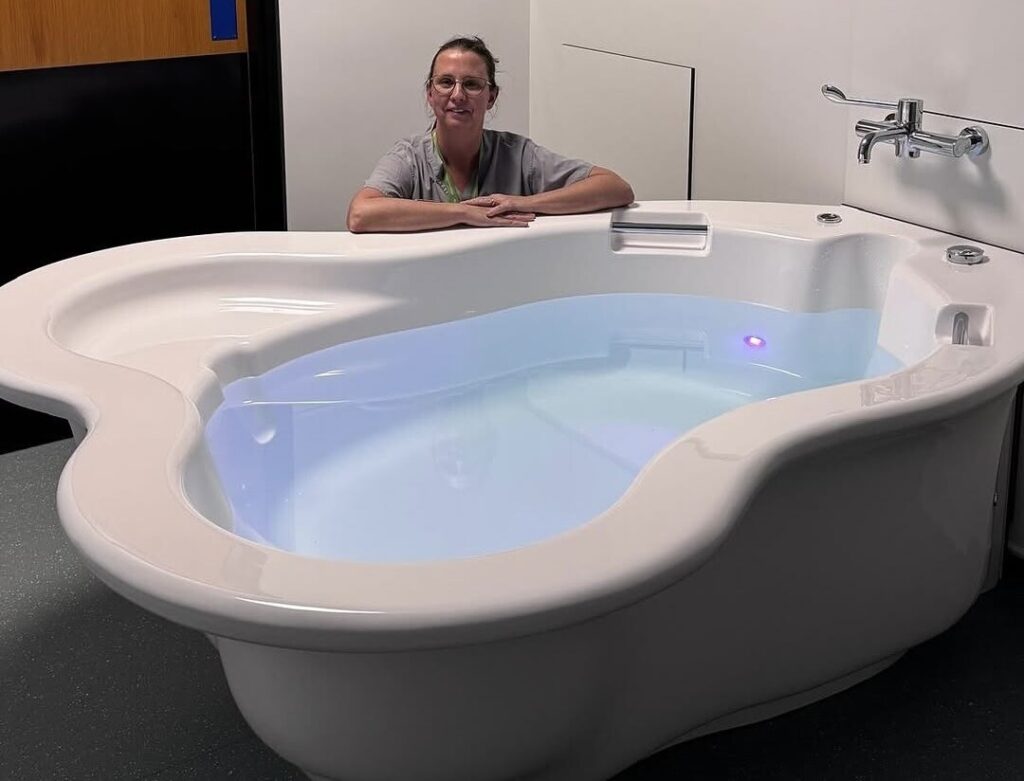
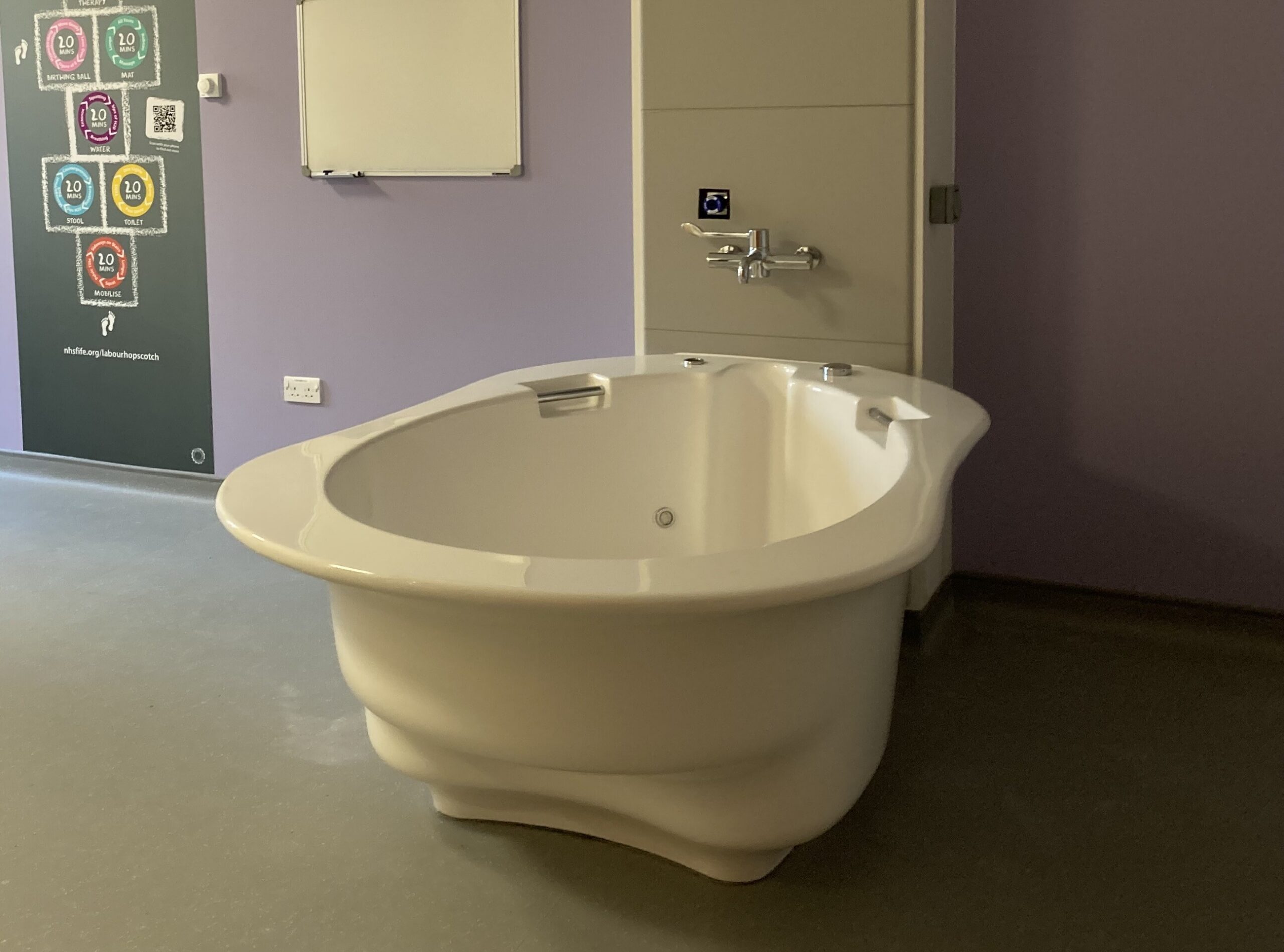
A freestanding pool does not automatically provide better access. Water columns, plumbing fixtures, hand grips, steps and room features can obstruct the rim. An Active Birth Pools wall-mounted model uses only approximately 500 mm of the perimeter at the wall, leaving a broad, clear working edge with no rim-mounted metalwork or plumbing.
When hospitals plan a water birth room, one of the first decisions is whether to install a wall-mounted or freestanding pool.
A freestanding pool is often promoted on the basis that it provides “360-degree access”. At first sight, this sounds persuasive. If a pool stands away from the wall, it appears that midwives should be able to approach the mother from every direction.
In practice, however, physical space around a pool is not the same as usable clinical access.
The questions that matter:
The important question is not simply whether somebody can walk around the outside of the pool. The design should instead be judged by whether the midwife can get close enough to the mother, work without excessive bending or reaching, and use a clear section of the rim without taps, spouts, handrails or other obstructions.
Planners should also consider whether more than one member of staff can reach the mother when assistance is required, whether the room retains space for essential maternity equipment, whether cleaning can be carried out efficiently, and whether any additional space and expenditure deliver a genuine clinical benefit.
When these questions are considered carefully, a well-designed wall-mounted water birth pool will often provide more useful access than a freestanding pool.
The difference between theoretical access and usable access
The claim that a freestanding pool provides access around its complete perimeter assumes that the whole perimeter remains clear. That is frequently not the case.
Freestanding pools commonly require a water column, rim-mounted taps, a bath filler or spout, hand grips or handrails, control valves, access panels, associated pipework, entry steps and clearance from doors or movable room fittings.
Each of these features occupies space. More importantly, some obstruct the pool rim and prevent a midwife from working comfortably at that position. A section occupied by a water column is not a working position. A projecting handrail can prevent a midwife from leaning comfortably against the pool. Rim-mounted taps and metal fittings can restrict where staff place their hands and forearms.
This means that “360-degree access” may exist on a floor plan but not during an actual labour. A design should be assessed according to the amount of clear, comfortable and clinically useful working edge it provides—not simply according to whether the pool touches a wall.

Our wall-mounted pools do not sacrifice access
There is sometimes an assumption that placing a pool against a wall makes the rear third inaccessible. That is not true of a purpose-designed Active Birth Pool.
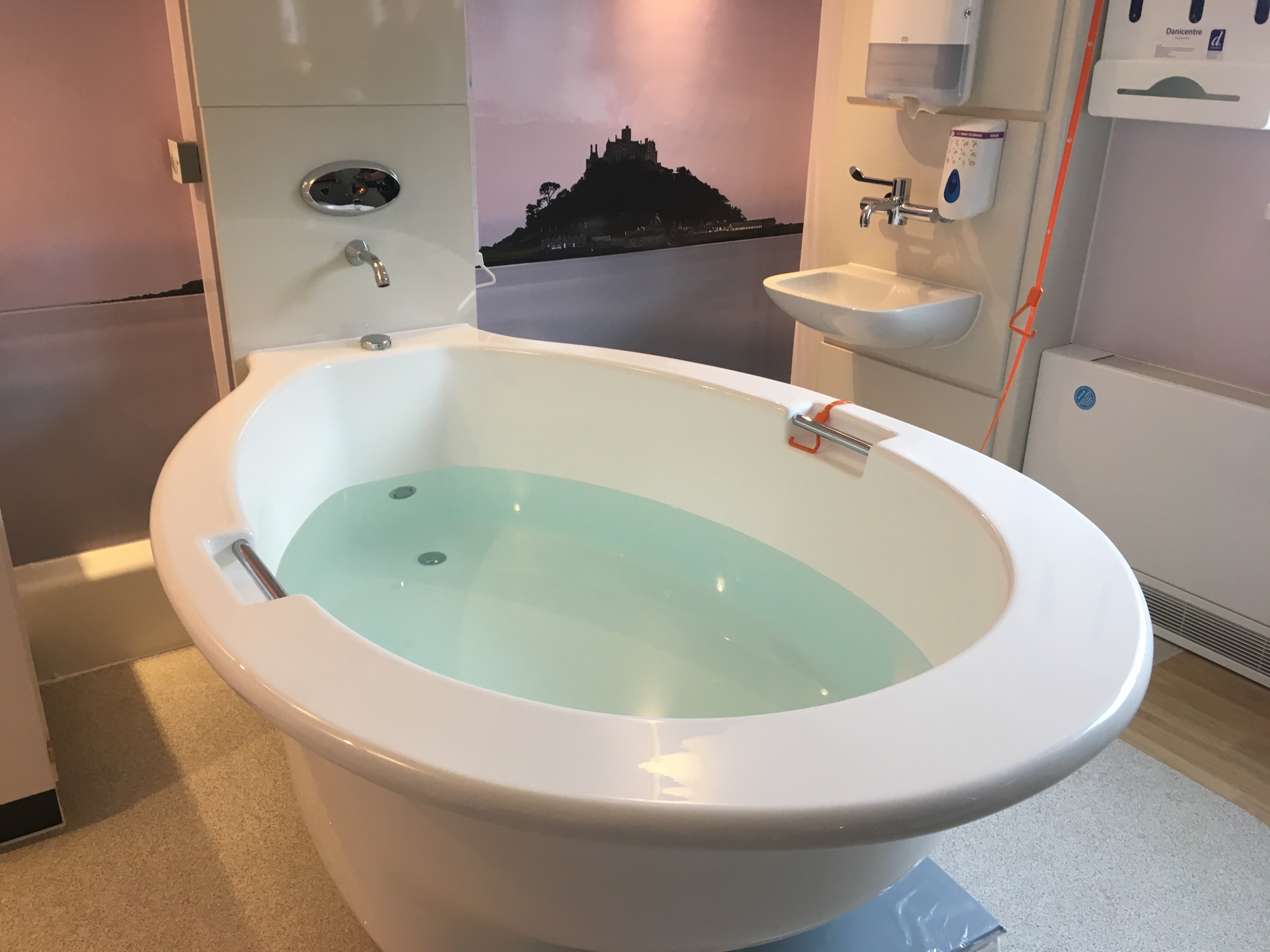
The wall-mounted flange occupies only approximately 500 mm of the pool perimeter. The remainder of the pool projects into the room and remains available to the mother and the maternity team.
There is no rim-mounted metalwork, plumbing or filler mechanism interrupting the principal working edge. The broad pool rim remains clear, allowing midwives to position themselves where they can observe, communicate and provide care.
The relevant comparison is not between a freestanding pool with complete access and a wall-mounted pool with access to only half of the pool. It is between a freestanding pool whose nominal perimeter may be interrupted by a water column, plumbing fixtures, handrails and surrounding room features, and a wall-mounted pool with a small wall connection and a substantially unobstructed working perimeter.
Once the obstruction created by fixtures and fittings is taken into account, the wall-mounted model may provide more useful access—not less.

Clear rim space is more important than walking space
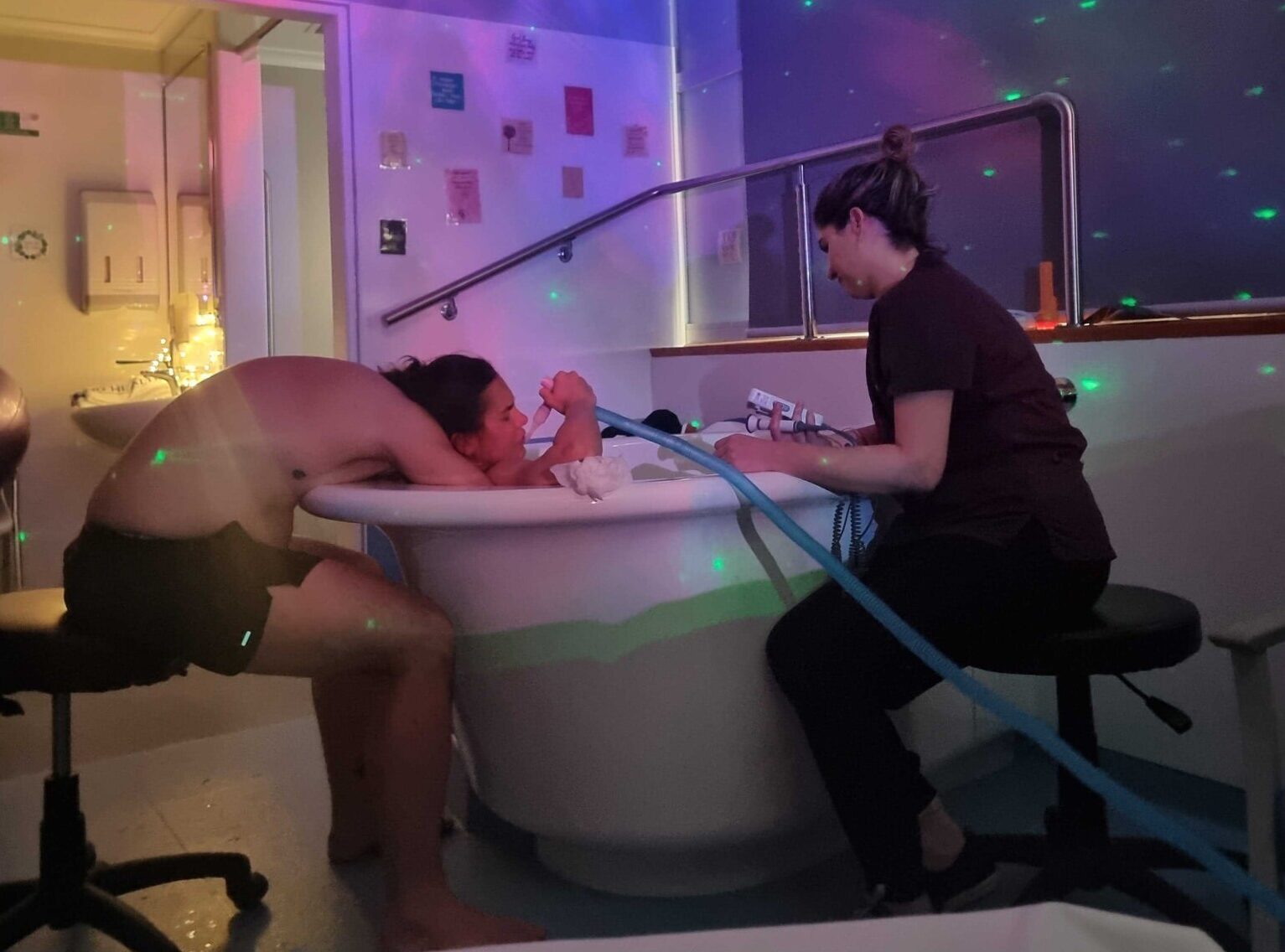
A midwife does not provide care simply by walking around the outside of a birth pool. She must be able to sit, kneel or stand close to the mother and work in a stable, comfortable position.
Taps, projecting spouts, surface-mounted grips and other fittings can prevent the midwife from resting her forearms comfortably, increase the distance between the midwife and the mother, restrict hand placement, interfere with observation and monitoring, create potential impact points and make cleaning more complicated.
Active Birth Pools are designed with a clear working edge. The plumbing is separated from the principal clinical access area rather than occupying positions where midwives need to work.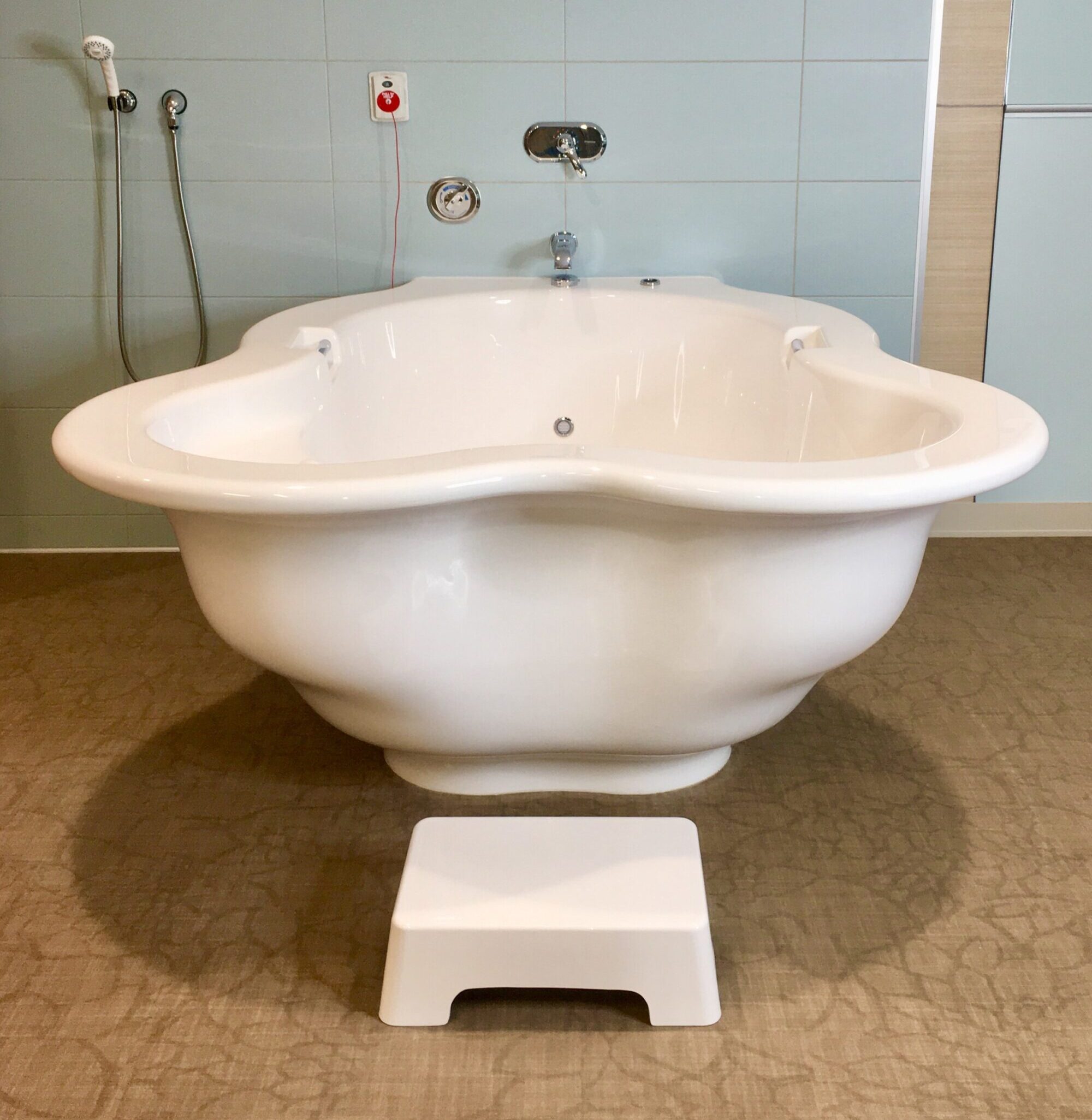
The pool’s external shape also affects access
Access should not be measured only at floor level. A pool may have open floor around it but still force a midwife to lean across a wide or vertical external wall.
If she cannot bring her knees and legs beneath the rim, her upper body remains too far away from the mother.
The distinctive concave external profile of Active Birth Pools allows the midwife to sit closer to the pool. Her knees can be positioned beneath the rim, helping her maintain a more upright and balanced working posture.
The wide, rounded rim provides a comfortable surface on which the mother or midwife can rest.
Access is therefore created through the relationship between the pool’s shape, its rim and the person using it—not merely through the amount of empty floor surrounding it.
Manual-handling guidance emphasises that risk is influenced by posture, reach, repetition, workplace layout and the physical design of the task.[1][2]
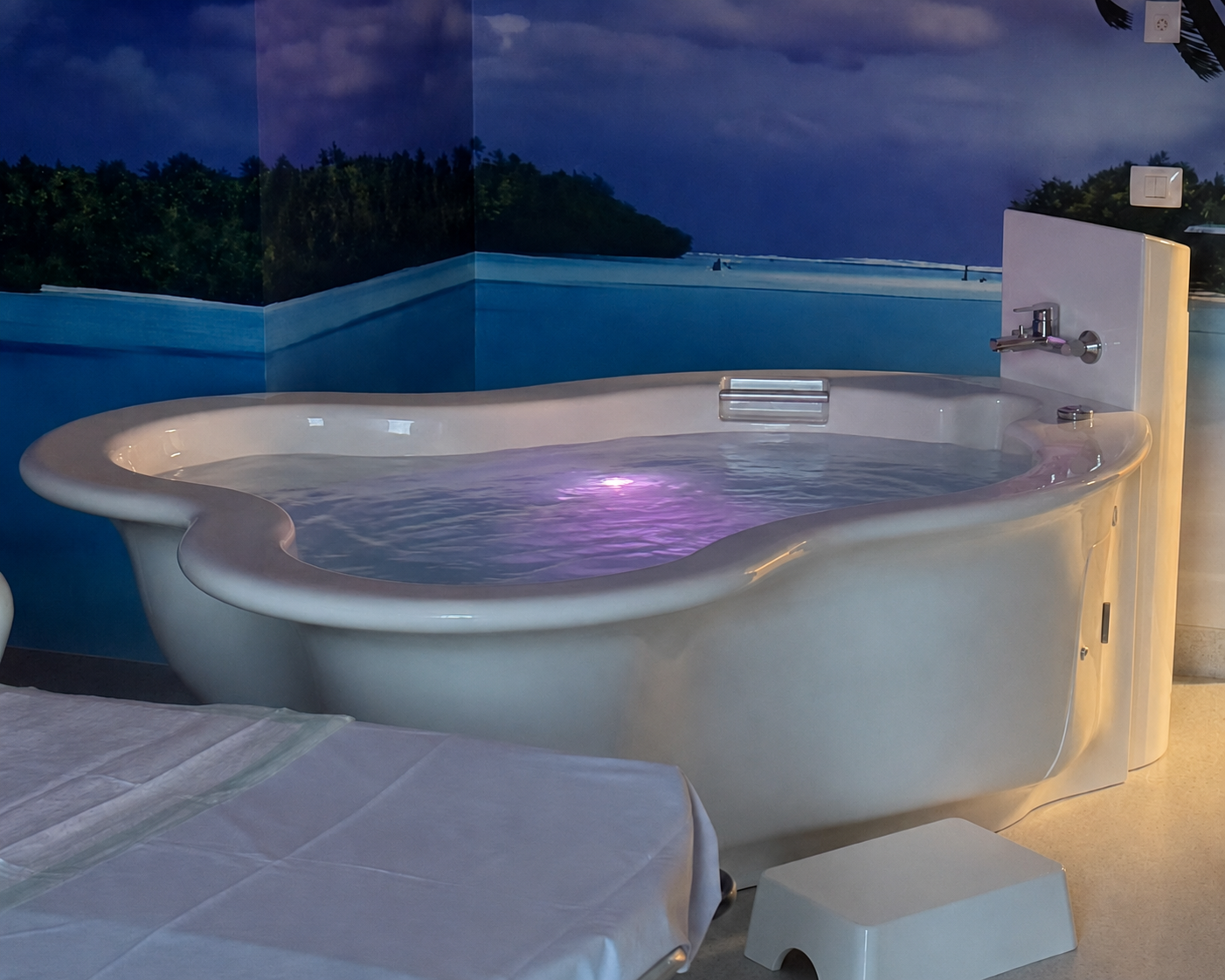
Freestanding pools occupy more of the birth room
A birth room must accommodate considerably more than the pool itself.
Depending on local requirements, the room may also need space for a birthing bed, seating, monitoring equipment, neonatal equipment, an emergency trolley, a portable hoist or other evacuation equipment, clinical storage, staff circulation, birth partners and access to doors and sanitary facilities.
A freestanding pool must be positioned far enough from surrounding walls and fittings to create circulation space around it. That circulation zone can substantially increase the pool’s total spatial footprint.
A water column also occupies floor space. It requires installation, anchoring, pipework and clearance. Although it can provide a location for plumbing fixtures, it does not make the pool itself smaller or necessarily create better clinical access.
A wall-mounted installation uses the perimeter of the room intelligently. It places one small section of the pool against a surface that would not ordinarily serve as a clinical working position, while leaving the principal access areas facing into the room.
This can release valuable space for the mother, midwives, equipment and emergency procedures.

A water column does not automatically improve access
Active Birth Pools can also be supplied in freestanding versions with a water column when the architectural design or intended room layout genuinely requires it. However, the water column does not create additional access by itself.
It occupies a position adjacent to the pool and must contain or support plumbing controls, pipework and potentially handrails. That section of the perimeter is therefore not equivalent to a completely clear working position.
A freestanding option may be appropriate where the pool must be located centrally, the walls cannot accept the necessary services, the room has been specifically planned around a central pool, or the building makes a wall-mounted installation impractical.
These are legitimate architectural reasons. But freestanding construction should not be selected solely on the assumption that it automatically delivers superior access.
Where the room allows a wall-mounted installation, adding a water column may increase the amount of floor space required, the installation work, the number of interfaces and sealed junctions, the quantity of materials, the plumbing complexity and the project cost. Unless it provides a specific, demonstrable benefit, the hospital may be paying more and sacrificing space without gaining meaningful clinical access.
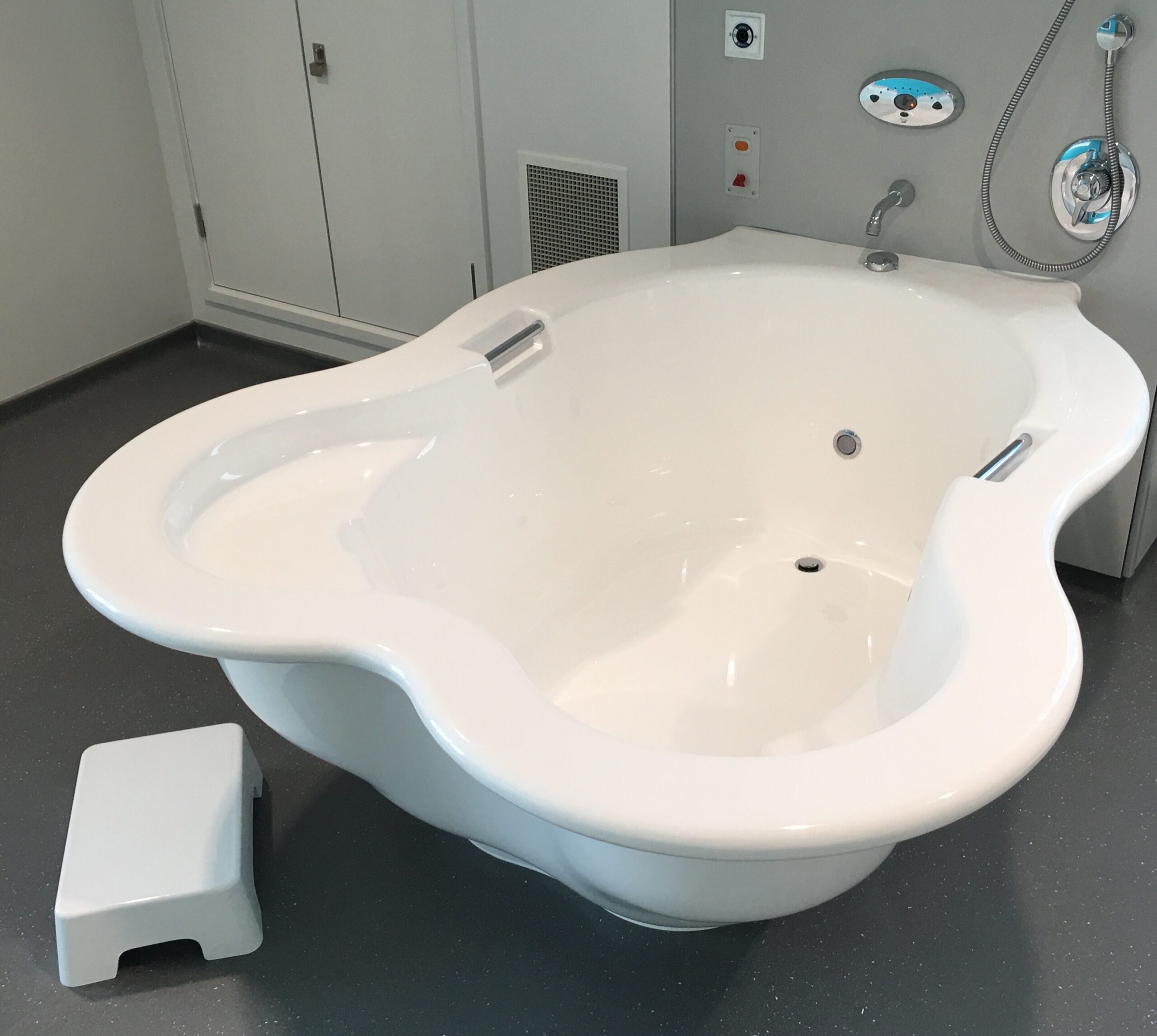
Simpler installations can support easier cleaning
Water birth pools used in hospitals are subject to rigorous cleaning and infection-prevention procedures. Public health guidance has recognised that fixed hospital birth pools are managed through stringent infection-control measures and monitoring.[3]
The pool and its surroundings must be designed so that staff can reach, inspect, clean and dry the necessary surfaces. Every additional fitting, junction, projection and floor penetration creates another area that must be considered within the cleaning regime.
Rim-mounted metalwork and plumbing can make it harder to clean the complete pool edge. Water columns create additional external surfaces and junctions with the floor. Handrails and fittings introduce further contact points and interfaces.
A wall-mounted pool sealed appropriately to the wall and floor can create a clean, permanent installation with fewer external components occupying the room. Its principal rim remains clear and accessible for cleaning. NICE guidance states that units offering labour in water should have protocols governing pool use and cleaning, reinforcing the importance of considering cleanability at the specification stage.[4]
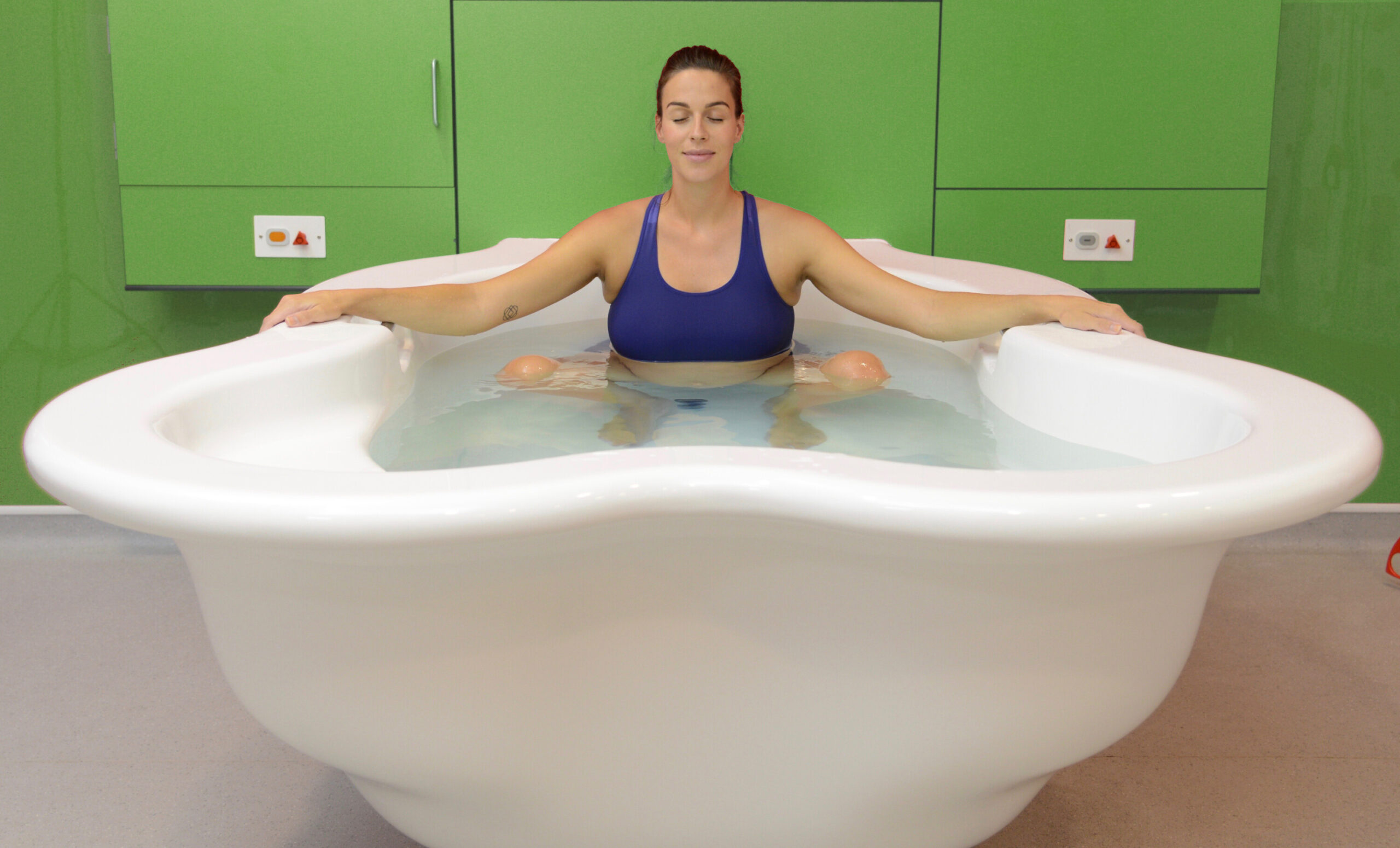
Better use of the construction budget
A hospital is not purchasing only a pool. The total project may include transportation, plumbing fixtures, pipework, structural or floor preparation, electrical or mechanical coordination, installation labour, sealing, room finishes, commissioning and access for future maintenance.
A freestanding installation with a water column is likely to require more material and installation work than the equivalent wall-mounted pool.
It may also influence the size of the room itself. In a new-build project, increasing the room area to preserve circulation around a freestanding pool can affect construction, flooring, ceilings, lighting, ventilation and ongoing cleaning.
The correct procurement question is: which arrangement provides the best combination of clinical access, ergonomic performance, room efficiency, infection prevention, installation simplicity and lifetime value? In many maternity settings, the answer will be a wall-mounted pool.
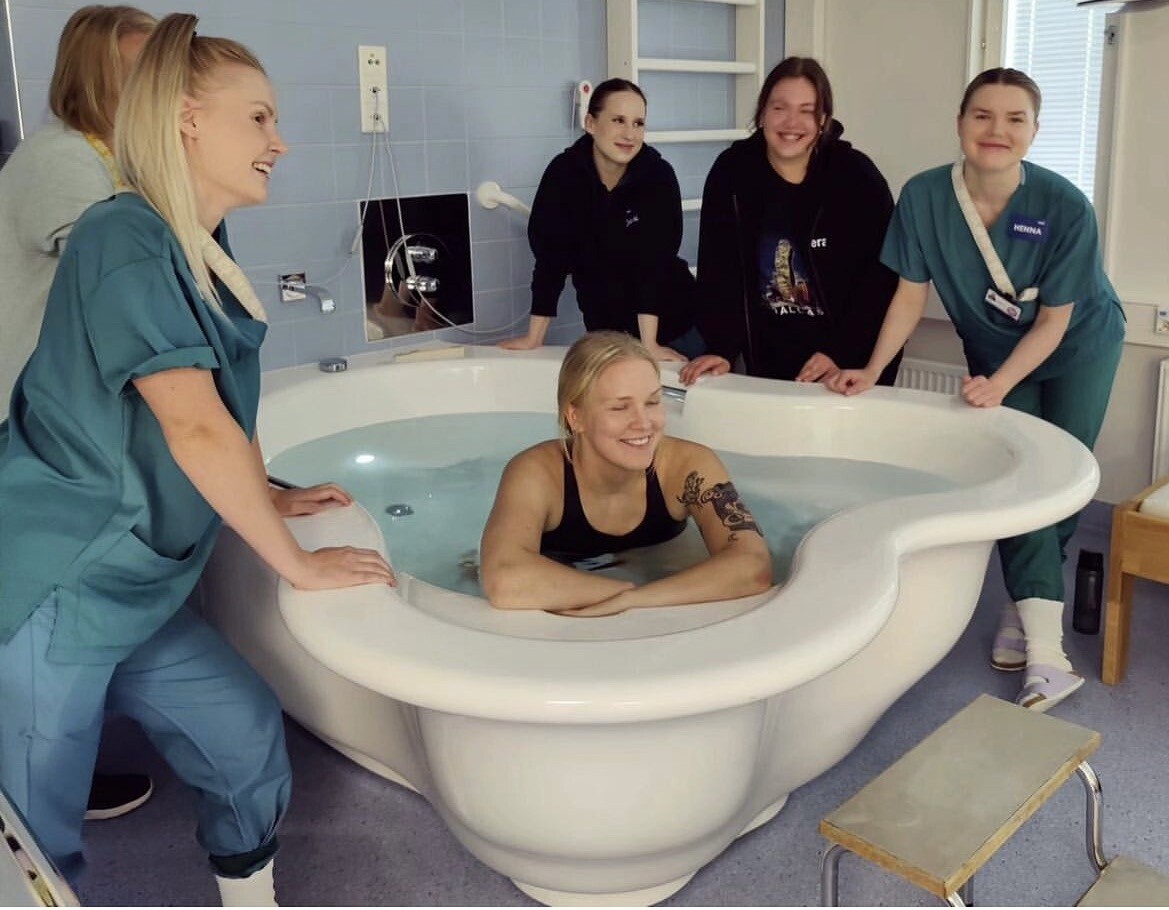
Clinical access should be tested on the actual plan
Architects, planners and maternity teams should examine proposed layouts at an early stage. The working perimeter of the pool should be marked on the floor plan together with the wall-mounted flange or water column, taps and filler positions, handrails, pool entry points, doors and their opening arcs, fixed furniture, the birthing bed, emergency equipment, staff working positions and routes into and out of the room.
The team should test where a midwife can sit or kneel close to the pool, which parts of the rim are obstructed, whether a second midwife can approach, whether the mother can enter and leave without unnecessary obstacles, whether emergency equipment can be brought into position and whether all necessary surfaces can be cleaned.
This exercise will normally reveal that an apparently accessible perimeter is not always a usable perimeter.
Emergency planning depends on the whole room
No birth pool can replace appropriate staffing, training, risk assessment or local emergency procedures. However, pool design and room layout should support those procedures.
Access for emergency assistance depends on the mother’s position, the number of staff present, the pool rim and internal support features, available lifting or evacuation equipment, the location of the bed or trolley, clear floor space and rehearsed local procedures.
A freestanding pool that consumes more of the room can reduce space available for the equipment and staff movement required during an emergency. Conversely, a thoughtfully positioned wall-mounted pool can preserve a larger, clearer working zone in front of and around the accessible sides of the pool.
The objective is not to allow staff to stand at every theoretical point around the perimeter. It is to create sufficient clear, strategically positioned and ergonomically effective access where it is most useful.
Wall-mounted does not mean less flexible
A well-designed wall-mounted pool can support a wide range of maternal positions. The mother can kneel, squat, sit, lean forwards, rest against the rim, use the internal support features, turn within the water and move between positions instinctively.
Water immersion itself supports buoyancy and freedom of movement. Research and clinical guidance recognise the role of water in supporting comfort, relaxation and movement during labour.[5][6]
The mother’s freedom inside the pool does not depend on whether the outside is accessible from every direction. It depends primarily on the pool’s internal dimensions, water depth, support features, material, temperature and ergonomic design.
Similarly, the midwife’s ability to provide care depends more on clear working positions and good reach than on an uninterrupted walking route around the complete exterior.
When does a freestanding pool make sense?
A freestanding water birth pool remains a useful option in the right project. It can make sense when the room is exceptionally large, a central location forms part of the clinical plan, services must rise through the floor, no suitable wall is available, the building’s construction prevents wall installation, or the layout has been designed specifically to preserve effective access around the pool and water column.
Active Birth Pools supplies freestanding models for precisely these situations. The important point is that freestanding installation should be selected because the room and project require it—not because of an untested claim that it always provides better access.

The most effective solution is often the simplest
Good healthcare design is not achieved by adding components without a clear purpose. It is achieved by removing unnecessary obstacles and making the best use of the available room.
A wall-mounted Active Birth Pool commits only a small section of the perimeter to the wall, leaves the main working edge unobstructed, avoids rim-mounted taps and metalwork, allows midwives to get close through its concave external profile, preserves more of the room for clinical use, requires fewer freestanding components and generally costs less than an equivalent freestanding arrangement with a water column.
This is why wall-mounted pools often make more practical sense. The value of a water birth pool should never be measured by how much empty floor can be seen around it. It should be measured by how safely and effectively the mother and midwife can use it.
Conclusion
The phrase “360-degree access” sounds reassuring, but it does not provide a complete picture.
A freestanding pool may be surrounded by floor space while substantial sections of its perimeter remain obstructed by a water column, plumbing fixtures, hand grips, steps, doors or other room features.
By contrast, the wall-mounted flange of an Active Birth Pool occupies only approximately 500 mm. The remaining perimeter provides a broad, clear working edge without rim-mounted metalwork, plumbing or fixtures.
The result can be more genuinely usable access, better midwife positioning, less wasted floor space, simpler installation, easier room planning and better overall value.
Freestanding pools have an important place where the architecture requires them. But where a wall-mounted installation is possible, there is often little or nothing to gain by moving the pool into the middle of the room.
In many cases, the wall-mounted pool is not the compromise. It is the better-designed solution.
References
1. Health and Safety Executive. Manual handling at work: guidance on avoiding, assessing and reducing risk.
2. Health and Safety Executive. Moving and handling in health and social care: manual handling in birthing pools.
3. Public Health England. Advice on home birthing pools. Guidance distinguishing fixed NHS pools, which are subject to hospital infection-control procedures and monitoring.
4. National Institute for Health and Care Excellence. Intrapartum care: NICE guideline NG235. Recommendations covering labour in water, pool protocols, cleaning and access.
5. Sanders J, et al. Maternal and neonatal outcomes among spontaneous vaginal births occurring in or out of water following intrapartum water immersion: the POOL cohort study. BJOG, 2024.
6. Cooper M, et al. Understanding the barriers and facilitators related to birthing pool use from organisational and multi-professional perspectives: a systematic integrative review. 2023.
7. Chartered Institute of Ergonomics & Human Factors. Improving birthing pool design.
8. Active Birth Pools. Creating Better Water Birth Pools Through Ergonomic Design.
9. Active Birth Pools. Manual Handling Risks in Water Birth Pools: Why Design Matters.
10. Active Birth Pools. Delivery and Installation Instructions.