
Safety begins with design
When hospitals create or refurbish water birth facilities, safety must be designed in from the outset.
A birth pool is not simply a vessel for warm water.
In a maternity unit it becomes part of the clinical environment, the water system, the cleaning regime and the manual-handling strategy.
Every surface, fitting, outlet and access point has implications for infection prevention, water safety, mother safety and midwife safety.
Warm, moist environments can support the growth of waterborne organisms if they are not properly controlled.
guidance recognises the need to manage risks from pathogens such as Legionella and Pseudomonas aeruginosa through appropriate design, maintenance, cleaning, monitoring and local water-safety procedures. [1]
Active Birth Pools have been developed with these responsibilities in mind.
Our design philosophy is simple: remove avoidable risk at source wherever possible, make cleaning easier and more effective, and support hospitals in meeting their local infection-control, water-safety and maternity-care protocols.

Superior material equals superior safety
Active Birth Pools are fabricated from Ficore®, our proprietary composite material.
Ficore® gives our pools exceptional strength, durability and surface integrity.
Its hard, smooth, non-porous finish is designed to withstand the demands of repeated clinical use and routine disinfection, while helping staff clean the pool thoroughly between births.
In a hospital environment, surface quality matters.
Scratched, porous, jointed or damaged surfaces can make effective cleaning more difficult.
By contrast, a smooth, seamless surface helps reduce places where organic matter, moisture and microorganisms can collect.
The result is a birth pool that supports infection-control practice by design, not by afterthought.
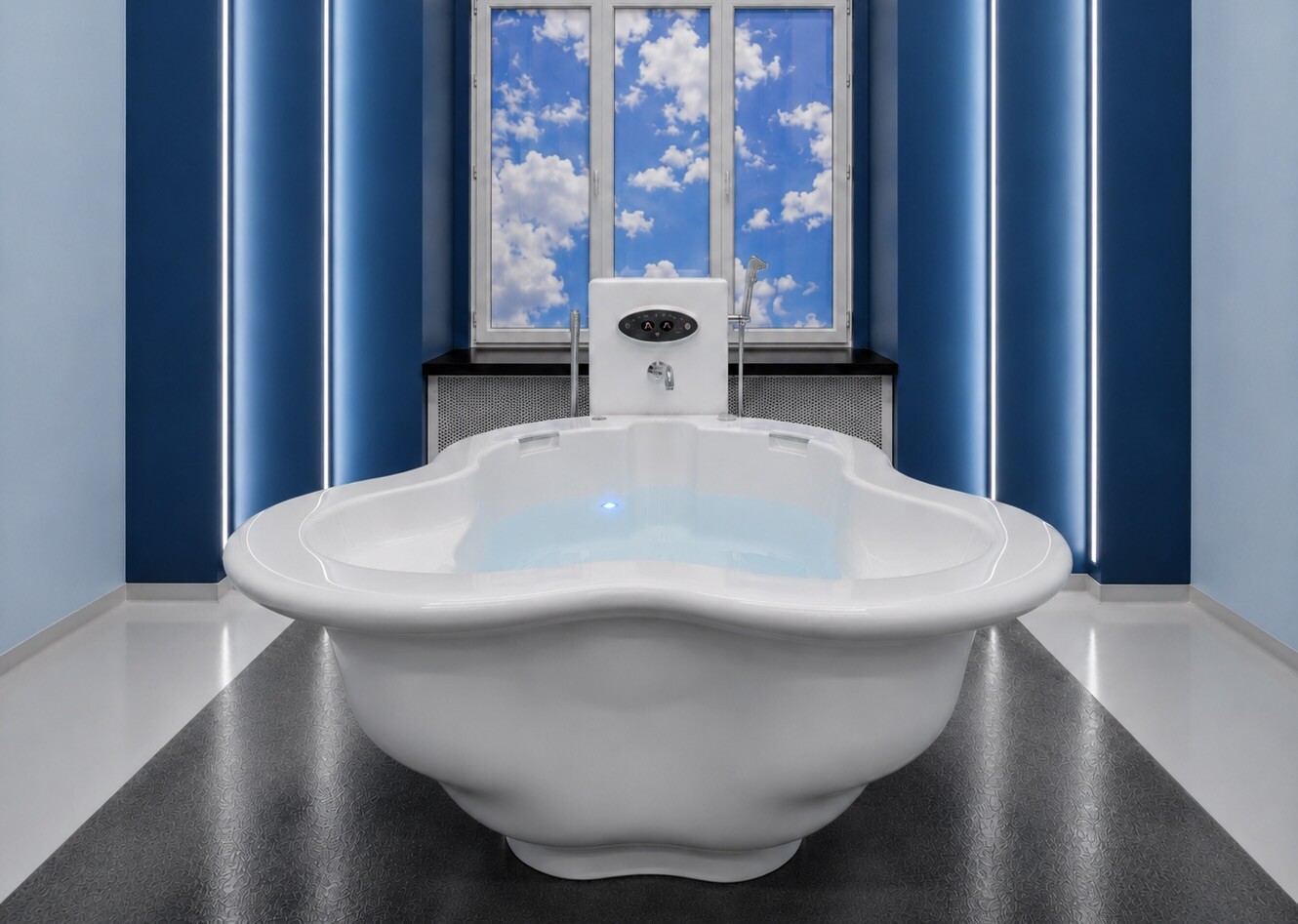
Seamless one-piece construction
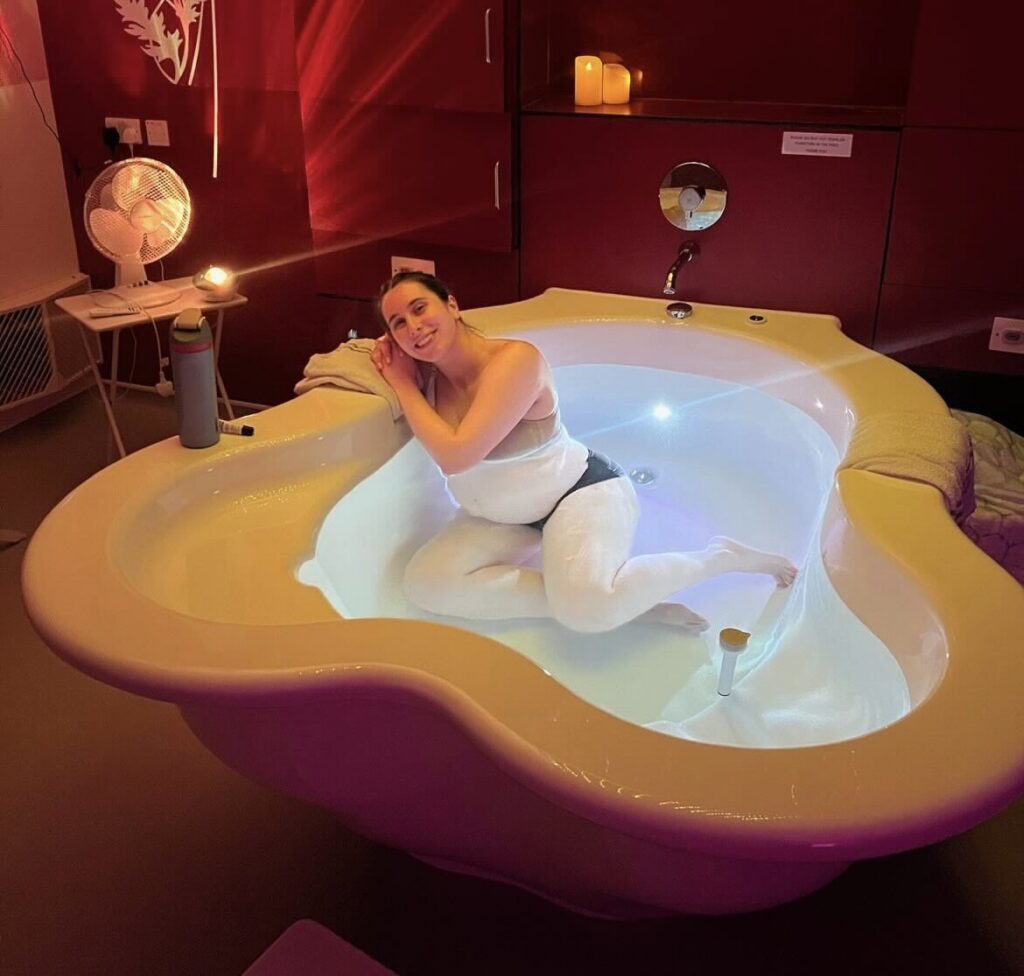
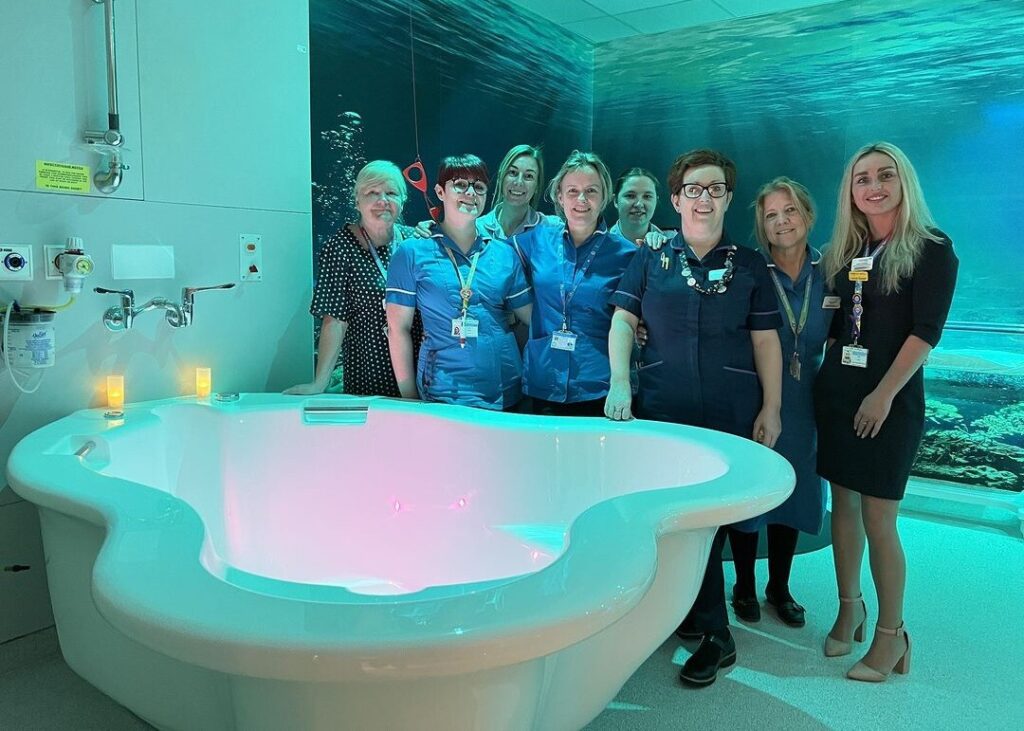
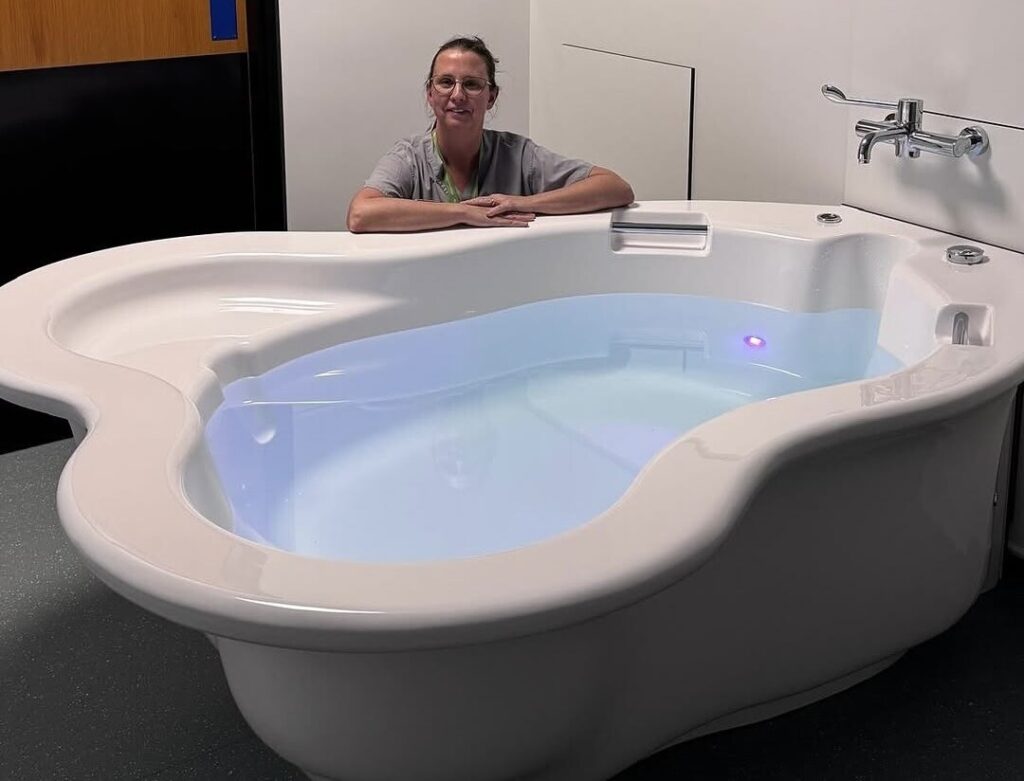
Active Birth Pools are manufactured as seamless, one-piece structures.
This is an important safety feature.
Joints, seams, cracks, ledges and surface-mounted fittings can create dirt traps and areas where moisture can remain after cleaning.
Our one-piece construction minimises these vulnerable areas and helps staff achieve a consistent cleaning outcome.
NICE guidance states that baths and birthing pools should be kept clean using a protocol agreed with the local microbiology department or infection-control guidance, and in accordance with the manufacturer’s guidelines. [2]
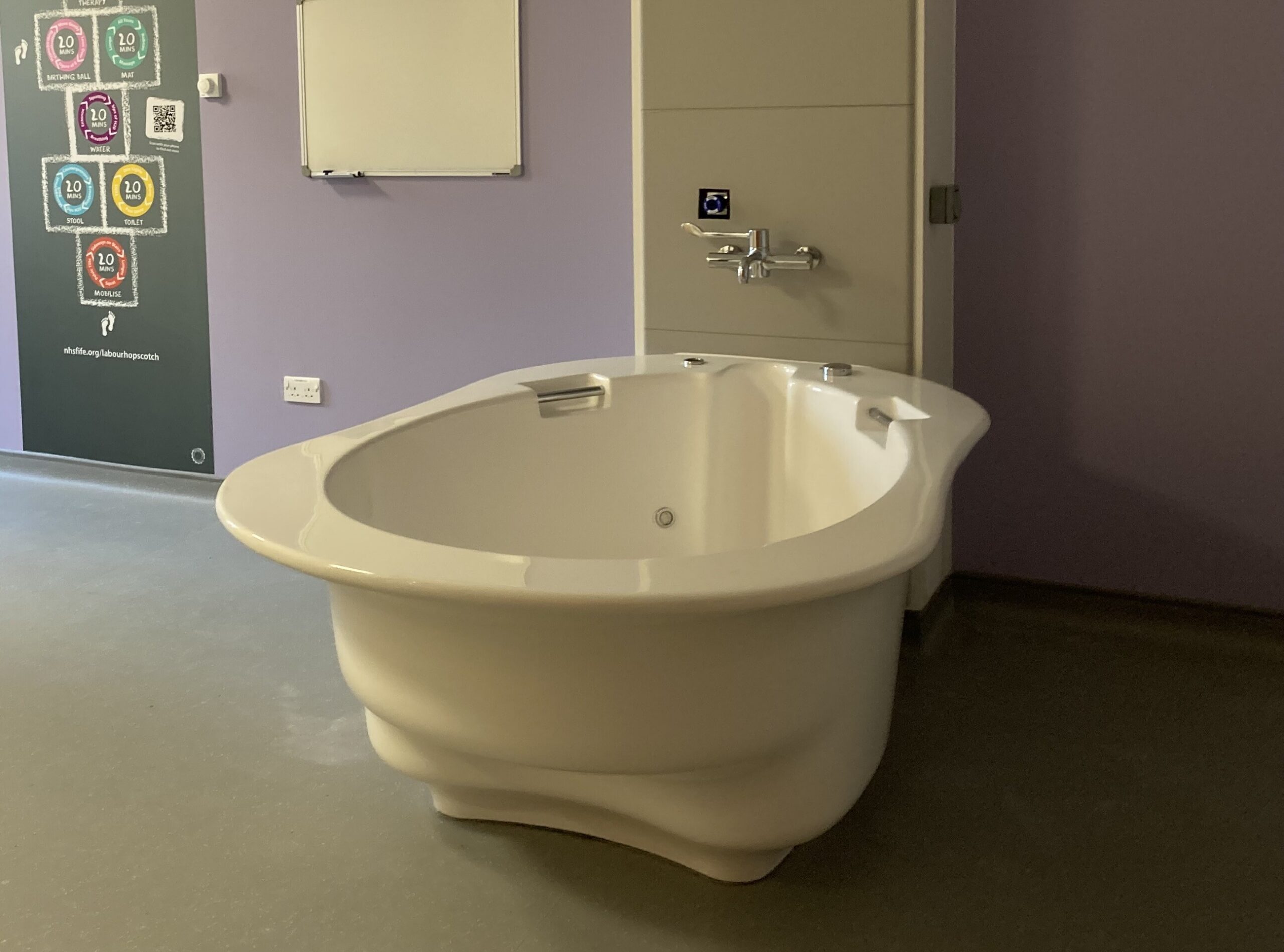
Flowing contours that improve cleanability
Ficore® allows us to manufacture pools with flowing, organic shapes rather than sharp internal angles.
The smooth internal form helps water drain efficiently, supports thorough wiping, and reduces awkward areas that are difficult for staff to reach.
This matters because cleaning must be practical, repeatable and achievable in a busy maternity setting.
Good infection control is not only about which disinfectant is used.
It is also about whether the product’s design allows staff to clean every surface properly, quickly and consistently.
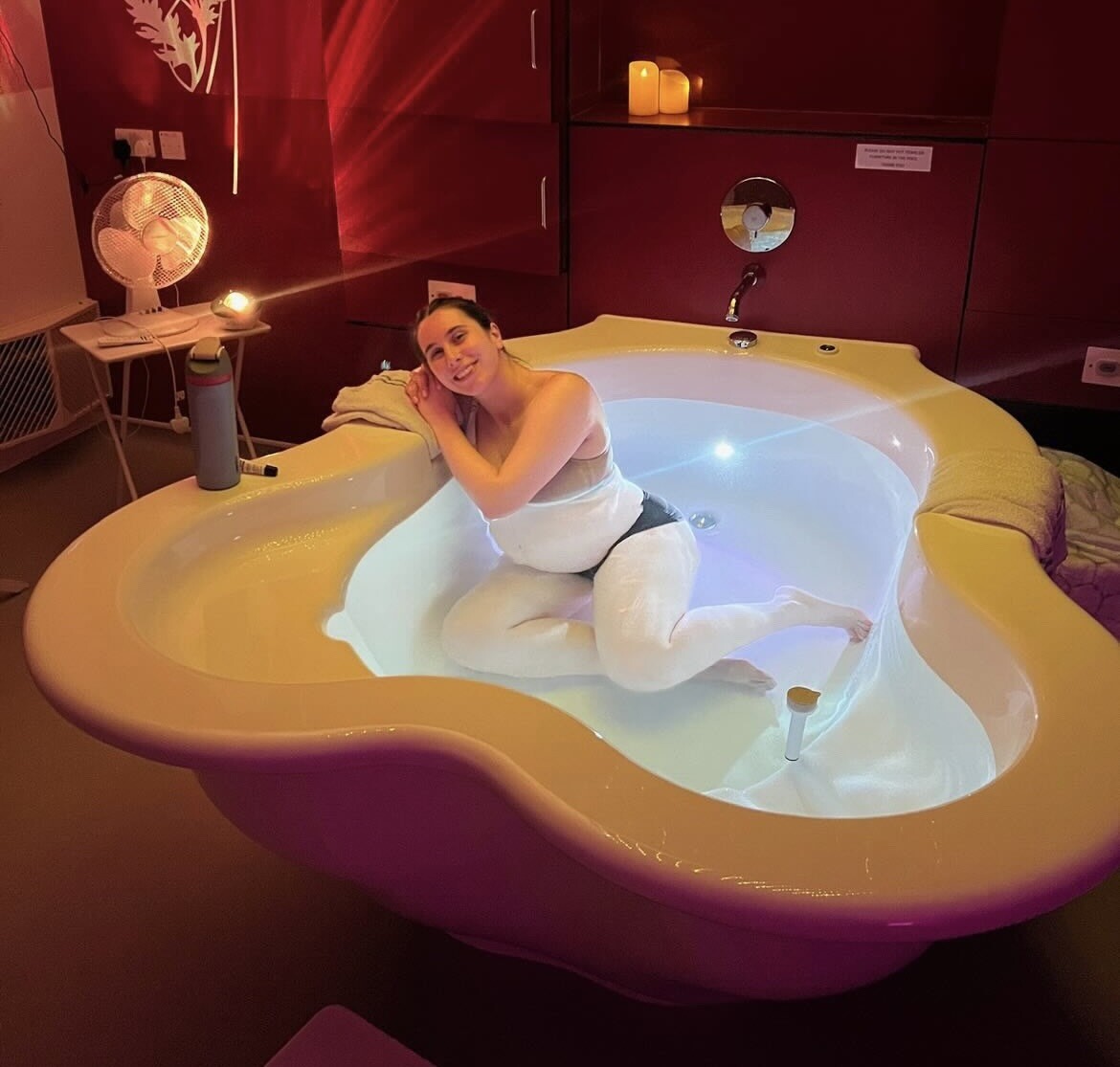
Minimal fittings, fewer risk points
Every fitting on a birth pool should justify its presence.
Active Birth Pools use the minimum number of surface-mounted components.
This reduces complexity, improves cleanability and limits areas where water, residue or contamination could accumulate.
Our design approach is aligned with a basic infection-prevention principle: the fewer unnecessary joints, penetrations and ledges there are, the fewer areas staff need to manage during cleaning and inspection.

Integrated hand grips
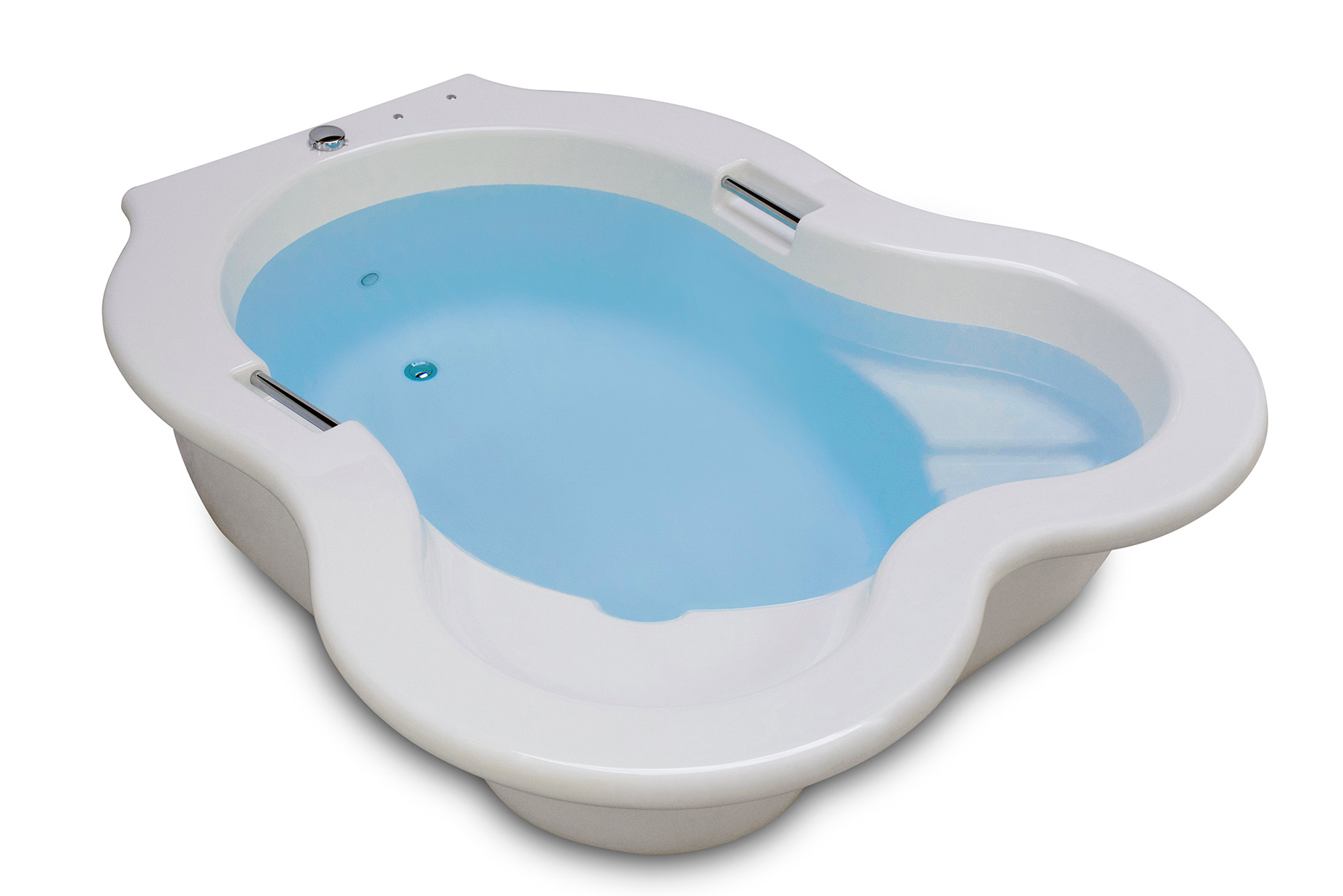
Our stainless-steel hand grips are bonded directly into the structure of the pool.
They are not simply bolted onto the rim.
The grip is sealed into the fabric of the pool, creating a secure, stable and easy-to-clean detail with no loose movement and no exposed fixing points around the rim.
This gives mothers firm support when changing position, entering or leaving the pool, while also avoiding the hygiene issues associated with unnecessary surface-mounted metalwork.
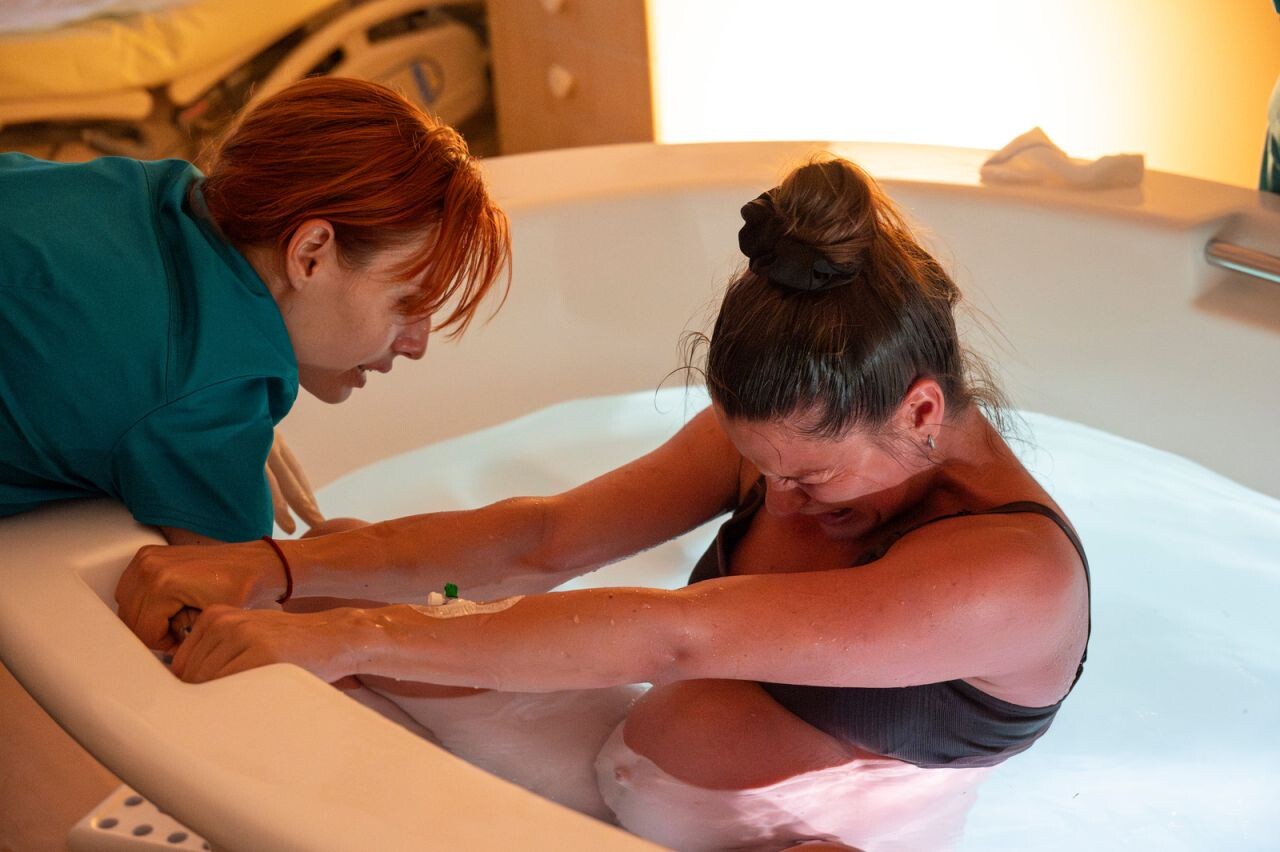
Purpose-designed drainage
The drainage system is a critical part of birth pool safety.
Active Birth Pools are fitted with a purpose-designed drainage assembly manufactured to high standards.
The waste sits in a recess and is securely sealed to help create a watertight, cleanable installation.
The plug can be removed for cleaning and disinfection between births, supporting local decontamination protocols.
Removable components make inspection and cleaning easier and help staff follow a consistent post-use procedure.
Local NHS birth-pool cleaning protocols commonly require removal of debris, cleaning, disinfection, rinsing, drying and documented daily checks. [3]
Our drainage design supports these practical requirements.
Lighting designed to avoid water traps
Where underwater lighting is specified, the fitting is designed to sit flush with the internal wall of the pool.
The stainless-steel bezel is sealed into the pool surface, and the vertical mounting helps prevent water from sitting around the fitting.
The control switch is also sealed.
This approach avoids unnecessary protrusions and supports the same design objective used throughout the pool: smooth surfaces, minimal ledges and cleanable details.
Plumbing that’s separate from the pool
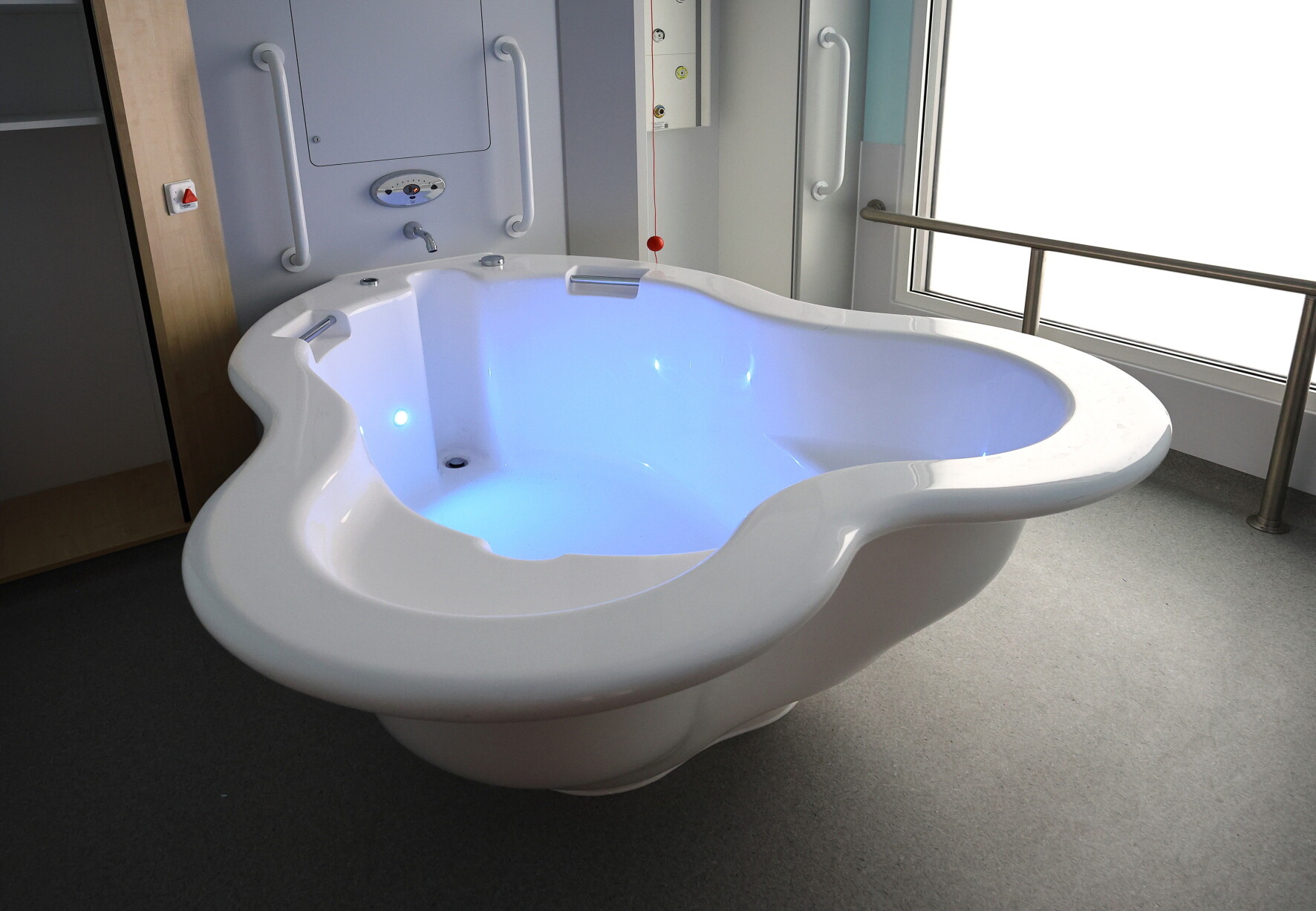
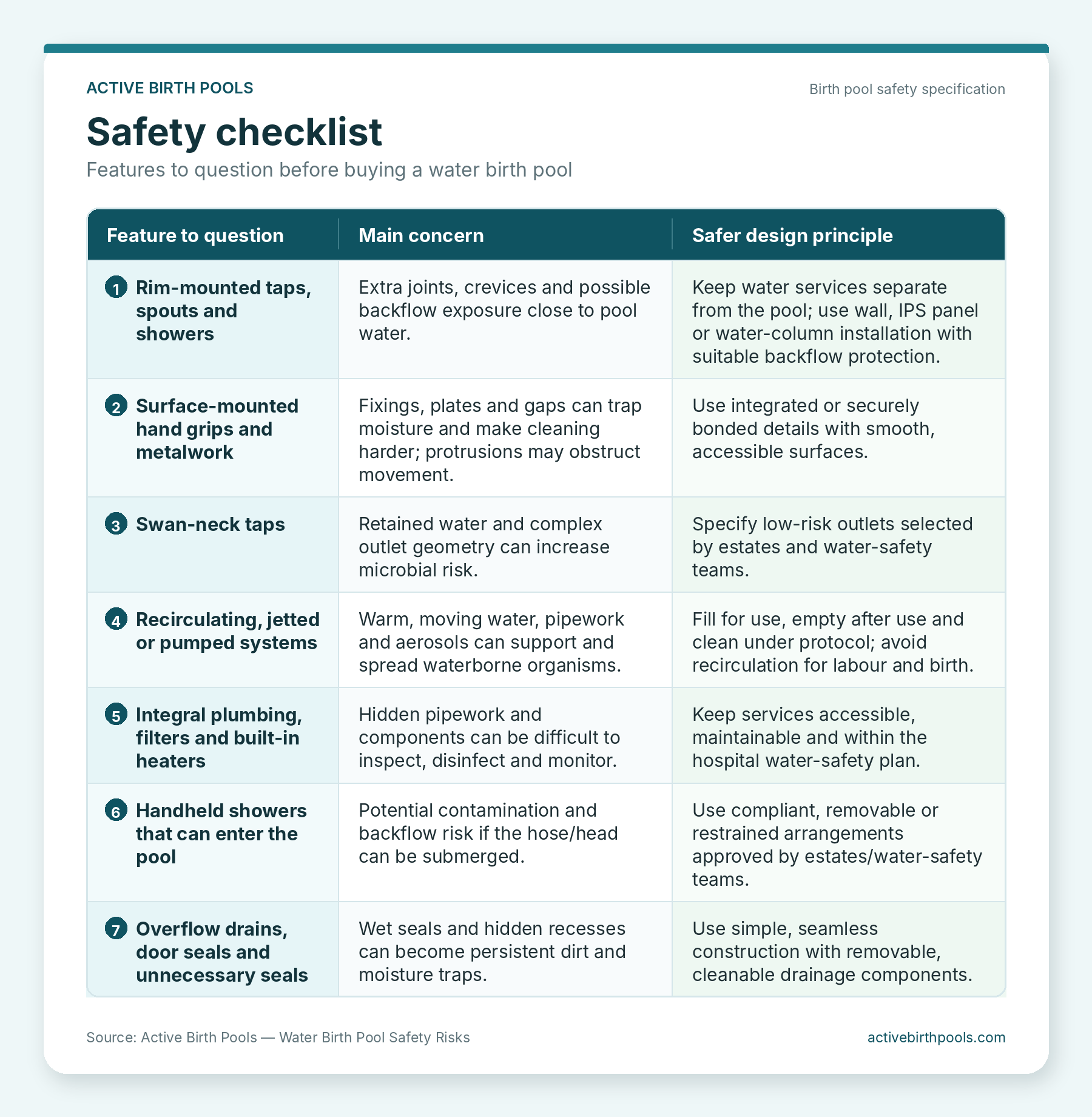
We do not recommend mounting taps on the rim of a birth pool.
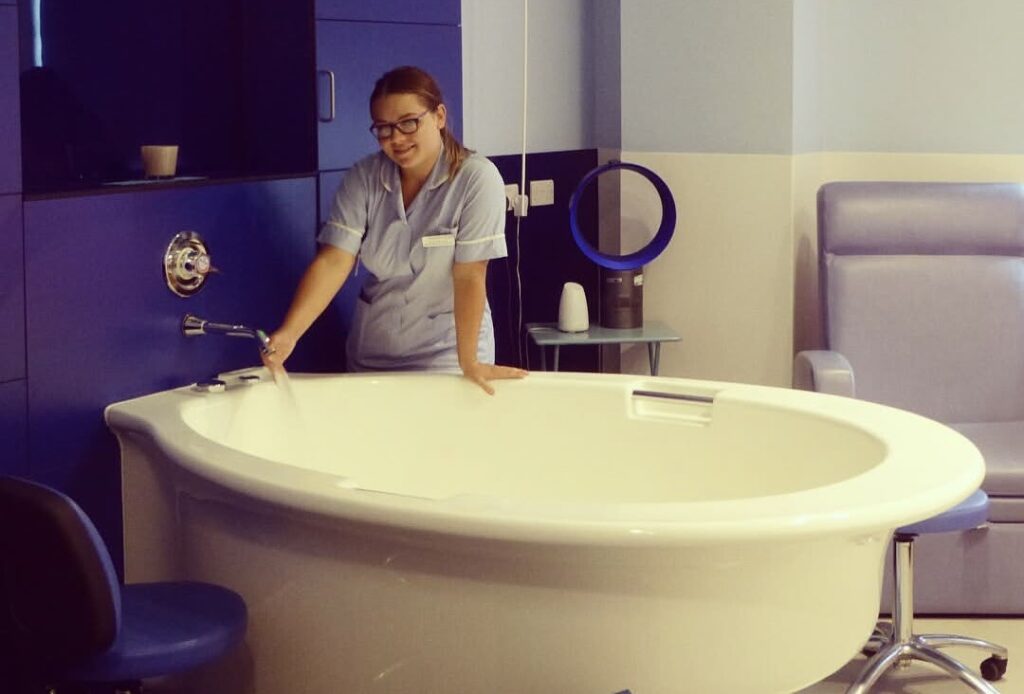
Taps, spouts and showers should be installed on the wall, on an IPS panel, or on a dedicated water column.
This keeps the pool rim clear, reduces fittings on the pool itself and helps separate the hospital water-supply installation from the pool structure.
Healthcare water-safety guidance recognises the importance of design, installation, commissioning, maintenance and operational management of hot and cold water systems in healthcare premises. [1]
Separating the plumbing from the pool supports this principle by allowing estates teams to specify, access, maintain and manage water outlets as part of the hospital’s water-safety system.

Thermostatic mixing valves and scald protection
Birth-pool filling water must be controlled safely.
Thermostatic mixing valves are used in healthcare settings to reduce scalding risk, but they must be correctly specified, installed, maintained and included within the organisation’s water-safety procedures. [4]
We recommend suitable thermostatically controlled bath or bath/shower mixers, specified by the hospital’s estates team in accordance with local water-safety policy and current healthcare guidance.
NICE also recommends that, when women are labouring in water, both the woman’s temperature and the water temperature are monitored hourly, and that the water temperature should not be above 37.5°C. [2]
Warning: Recirculating water systems
Waterborne infection risk increases when warm water is stored, recirculated or maintained for prolonged periods.
NHS England issued a patient safety alert on heated birthing pools that incorporate both a pump and heater and are filled in advance of labour.
The alert required organisations to ensure hospital birthing pools are covered by Legionella management control policies and procedures. [5]
Public Health England also advised that fixed birthing pools in NHS units are considered safe when they are subject to stringent infection-control procedures, and distinguished them from heated pools filled in advance and maintained warm by heater and circulation pump. [6]
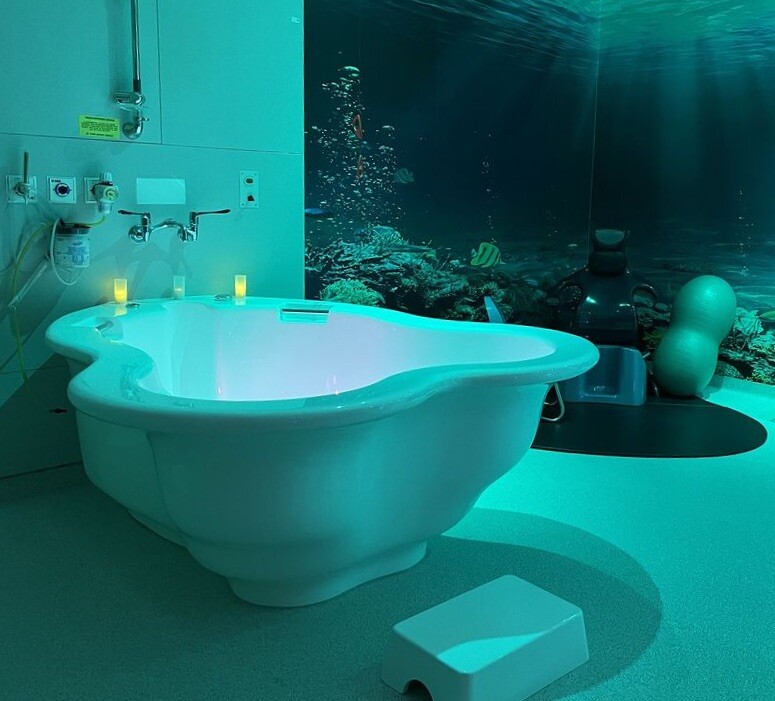
Active Birth Pools are designed as fixed, hospital-grade sanitary-ware products.
They are filled for use, emptied after use and cleaned in accordance with local protocols and manufacturer guidance. They do not rely on recirculating heated water.

Purpose designed Water Column for freestanding installations
Freestanding birth pools are increasingly popular because they allow more flexible room layouts and better all-round access for mothers and midwives.
However, freestanding installations still need safe, accessible and maintainable plumbing.
To solve this, we developed the Active Birth Pools Water Column: a dedicated solution that keeps taps, spout, shower and support rail separate from the pool itself.
The Water Column provides the practical advantages of a freestanding pool while allowing the water services to remain accessible, controlled and cleanly detailed.
It also keeps the pool rim free from tap holes and unnecessary fittings.
Supporting hospital water-safety governance
Healthcare premises are expected to manage water safety through appropriate governance, risk assessment, operational control and monitoring.
HTM 04-01 provides guidance for healthcare management, water safety groups, design engineers, estate managers, contractors and supply-chain businesses. It covers the legal requirements, design applications, maintenance and operation of hot and cold water systems in healthcare premises, and gives guidance on managing risks from Legionella, Pseudomonas aeruginosa and other waterborne pathogens. [1]
Our role is to provide birth pools whose design supports those duties.
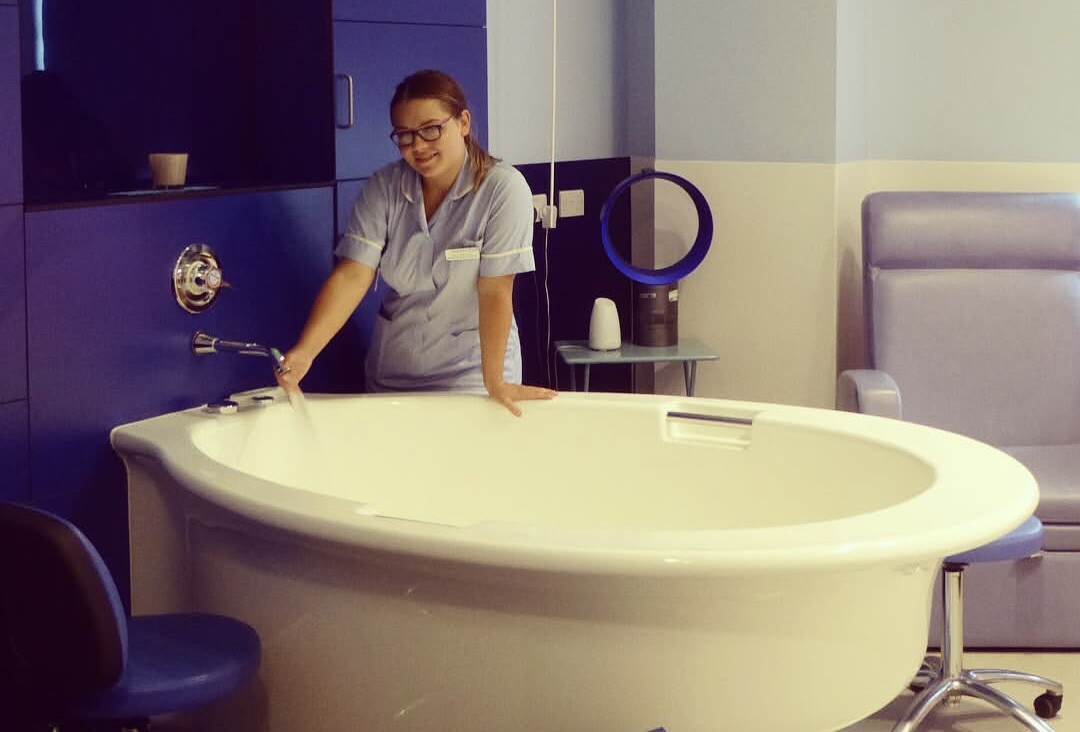
Supporting maternity care and informed choice
Water immersion is an established option in maternity care.
NICE recommends offering women the opportunity to labour in water for pain relief. NICE also now advises that birth in water may be considered, with balanced discussion of the evidence so women can make an informed choice. [2]
This makes the quality and safety of the birth-pool environment especially important.
A well-designed pool should support the mother’s freedom of movement, comfort and sense of privacy.
It should also support midwives by providing good visibility, access, stable handholds, practical cleaning and safe working space around the pool.
Evidence and source notes
[1] NHS England – Safe water in healthcare premises (HTM 04-01)
NHS England’s HTM 04-01 is the central healthcare water-safety guidance for hot and cold water systems. It covers legal requirements, design, maintenance and operation, and specifically references control of Legionella, Pseudomonas aeruginosa and other waterborne pathogens.
https://www.england.nhs.uk/publication/safe-water-in-healthcare-premises-htm-04-01/
[2] NICE NG235 – Intrapartum care recommendations
NICE recommends offering labour in water for pain relief, monitoring water and maternal temperature hourly with water not above 37.5°C, and cleaning birth pools using local microbiology/infection-control protocols and manufacturer guidance. NICE also says birth in water may be considered with informed discussion of benefits and risks.
https://www.nice.org.uk/guidance/ng235/chapter/Recommendations
[3] Hywel Dda NHS – Use of Water for Labour and Birth Guideline
This NHS guideline provides an example protocol covering cleaning, rinsing, drying, disposable accessories, outlet flushing for Legionella and Pseudomonas prevention, and daily birth-pool records.
https://wisdom.nhs.wales/health-board-guidelines/hywel-dda-file/639-use-of-water-for-labour-and-birth-guideline/
[4] HSE – Hot and cold water systems
HSE guidance identifies thermostatic mixer valves as part of hot and cold water systems and points healthcare premises to HTM 04-01. It also notes scalding risks where tap water exceeds 44°C.
https://www.hse.gov.uk/legionnaires/hot-and-cold.htm
[5] NHS England – Patient Safety Alert: Legionella and heated birthing pools
The 2014 alert required NHS organisations to ensure birthing pools within hospital control are covered by Legionella management control policies and procedures, and warned against heated birthing pools with pump and heater filled in advance of labour in home settings.
https://www.england.nhs.uk/wp-content/uploads/2014/06/psa-legionella-birth-pool.pdf
[6] Public Health England / NHS England – Legionnaires’ disease and birthing pools factsheet
This factsheet distinguished fixed NHS birthing pools, considered safe when subject to stringent infection-control procedures, from higher-risk heated pools filled in advance and maintained warm by heater and circulation pump.
https://assets.publishing.service.gov.uk/media/5a82bf48ed915d74e34035d0/Factsheet_LegionnairesDiseaseAndBirthingPools.pdf
[7] Original Active Birth Pools page
Original page used as the basis for the product-specific design claims: Ficore®, seamless one-piece construction, bonded hand grips, drainage design, flush lighting, wall/water-column mounted taps and separating plumbing from the pool.
https://activebirthpools.com/designed-to-optimise-safety-negate-risk-and-deliver-safer-birthing-environments/