
A comprehensive, evidence-based introduction for parents, midwives and maternity teams
Updated June 2026
For many people, the idea of labouring or giving birth in water still feels unfamiliar. It may sound gentle, even beautiful, but they may wonder: Does it really help? Is it safe? Is it only for certain kinds of birth?
The simple answer is that warm water can be one of the most effective, low-intervention ways to support a woman through labour. A birth pool does not “do” birth for the mother. It gives her an environment in which her body can work more freely, more instinctively and often more comfortably.
Water supports weight. Warmth encourages relaxation. Privacy reduces tension. Buoyancy makes movement easier. Together, these effects can transform the atmosphere of labour from something clinical, exposed and stressful into something calmer, more protected and more mother-led.
This matters because birth is not only a medical event. It is a physical, emotional and hormonal process. The way a woman feels during labour can influence how she moves, how she copes, how safe she feels and how positively she remembers the birth.

What is water immersion in labour?
Water immersion means labouring in a deep bath or birth pool filled with warm water, usually deep enough to cover the mother’s abdomen. The mother may use the pool during the first stage of labour for comfort and pain relief, and she may choose to leave the pool before birth or remain in the water for the baby’s birth, depending on her circumstances, preferences and local clinical guidance.
A “water birth” usually means that the baby is born underwater and then brought gently to the surface. The baby does not breathe underwater; babies are born with protective reflexes, and the first breath normally occurs after the baby reaches air. This is why trained midwifery care, appropriate water temperature, calm handling and safe protocols are essential.
Why warm water helps
The most immediate effect of entering a birth pool is often visible: the mother’s shoulders drop, her breathing slows and her body softens. That relaxation is not incidental. It is central to why water works.
In labour, tension and fear can increase the perception of pain. When a woman feels exposed, watched, restricted or frightened, stress hormones can rise. When she feels private, warm, supported and safe, her body is more likely to produce the hormones that help labour progress, including oxytocin and endorphins.
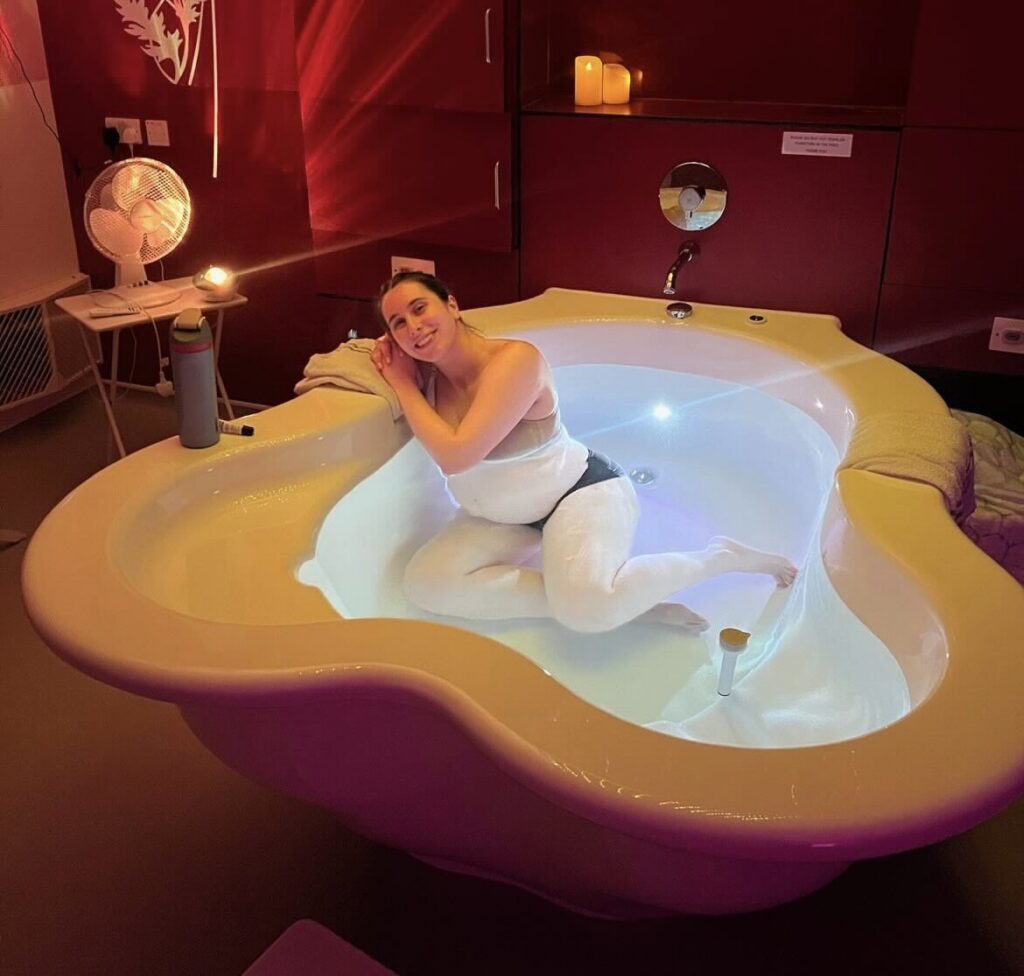
Warm water helps by creating a quiet boundary around the mother. The pool becomes her space. The water supports her body, reduces the effort required to hold herself upright and allows her to rest between contractions. Many women describe the pool as a place where they can “go inward” and concentrate on the work of labour.

Natural pain relief without loss of control
Water immersion is widely used as a non-pharmacological method of pain relief. It does not numb the body in the way an epidural does. Instead, it helps the mother cope by reducing pressure, easing muscular tension and making it easier to find comfortable positions.
For some mothers, water reduces the need for stronger pharmacological pain relief. Cochrane’s review of water immersion during labour found that labouring in water may reduce the use of epidural or spinal analgesia, without evidence of increased adverse outcomes for mothers or babies in the trials reviewed.
This is important because many women want pain relief but do not necessarily want to lose mobility, sensation or the ability to follow their body’s instincts. Water offers a middle path: meaningful comfort while preserving freedom of movement, upright positions and active participation.
Freedom of movement: why the design of the pool matters
One of the greatest advantages of a birth pool is buoyancy. In water, the body feels lighter. The mother can shift from kneeling to squatting, leaning forward, sitting back or floating with much less effort than on land.
This freedom is not a luxury. It is part of physiological birth. Movement helps the mother respond to contractions, relieve pressure and work with the baby’s descent and rotation. Upright and forward-leaning positions may feel more instinctive than lying on a bed, particularly when the mother is trying to create space in the pelvis.
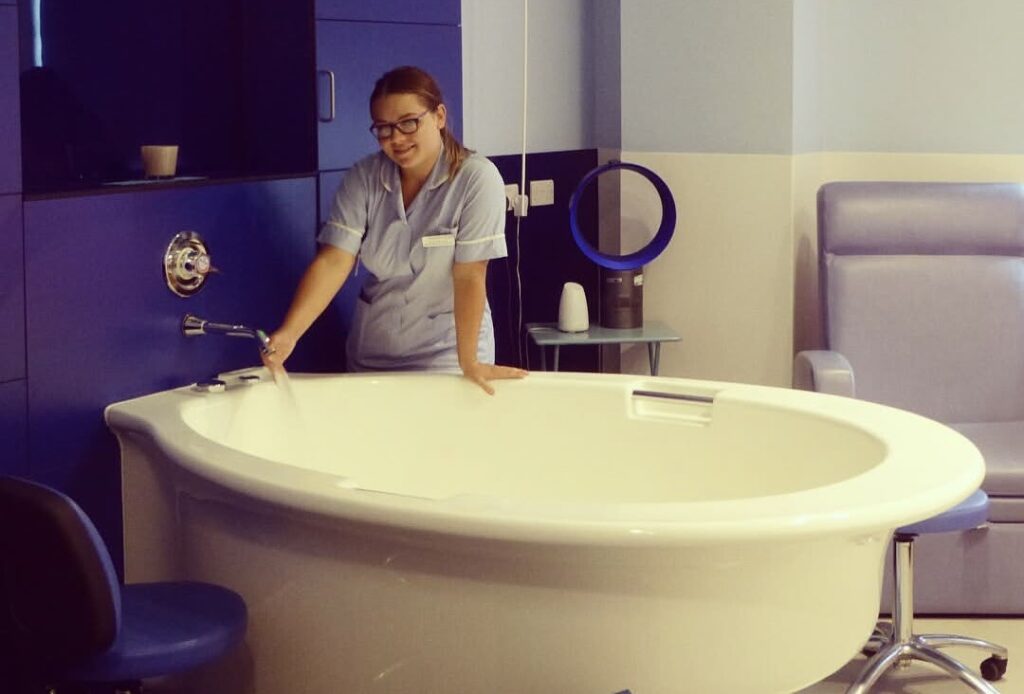
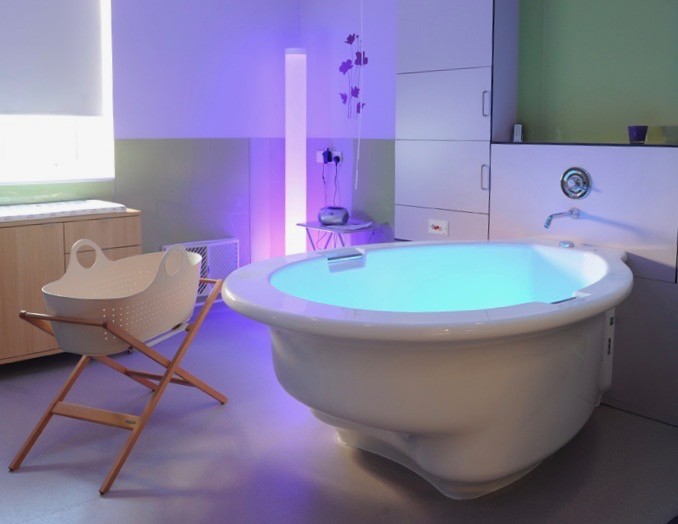
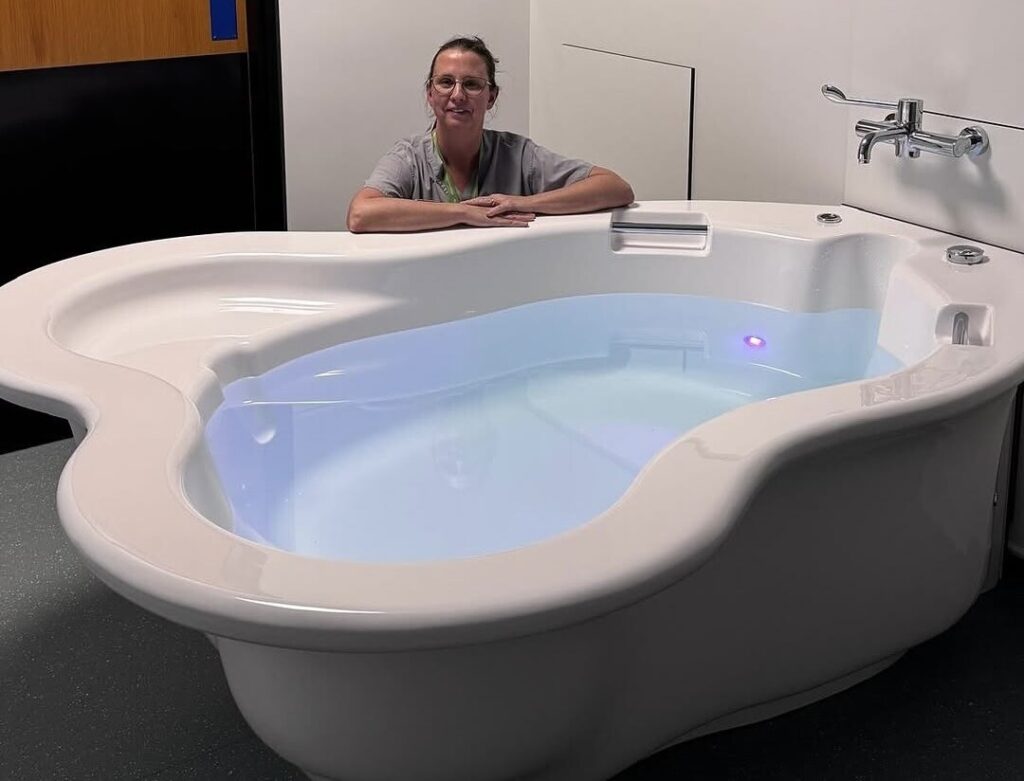
For this reason, a birth pool should not be thought of simply as a “large bath”. A good birth pool needs to be deep enough, spacious enough and shaped to allow the mother to move freely and to allow midwives to support her safely. The better the pool supports active birth, the more it can help the mother use her own instincts.
Privacy, dignity and the hormonal environment of birth
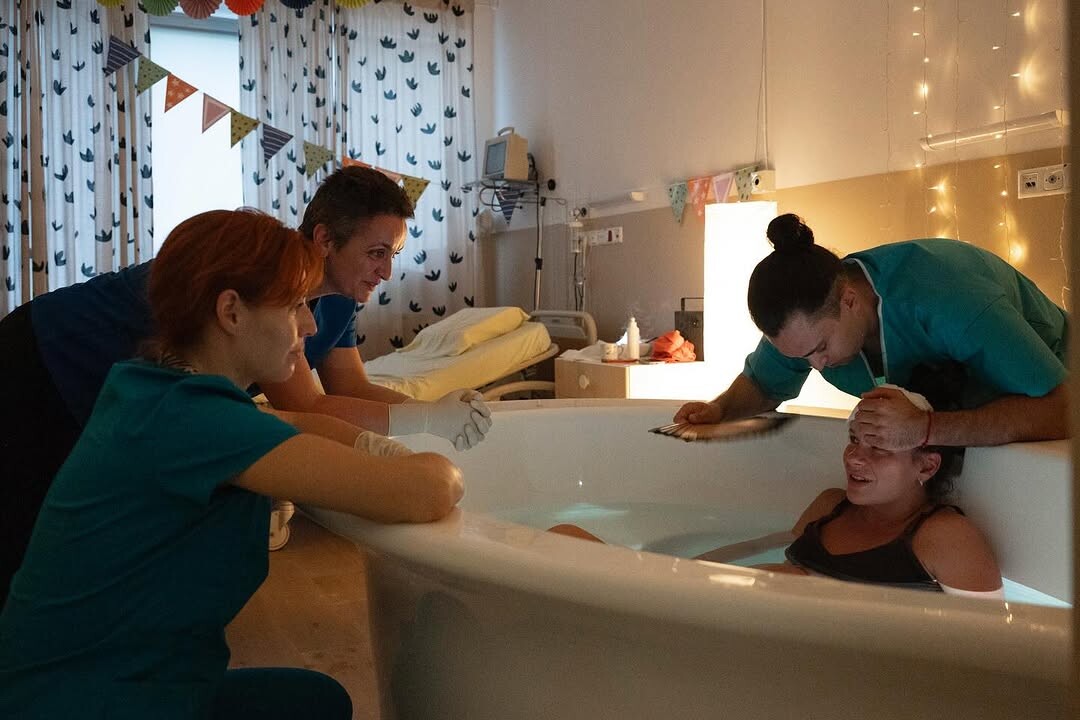
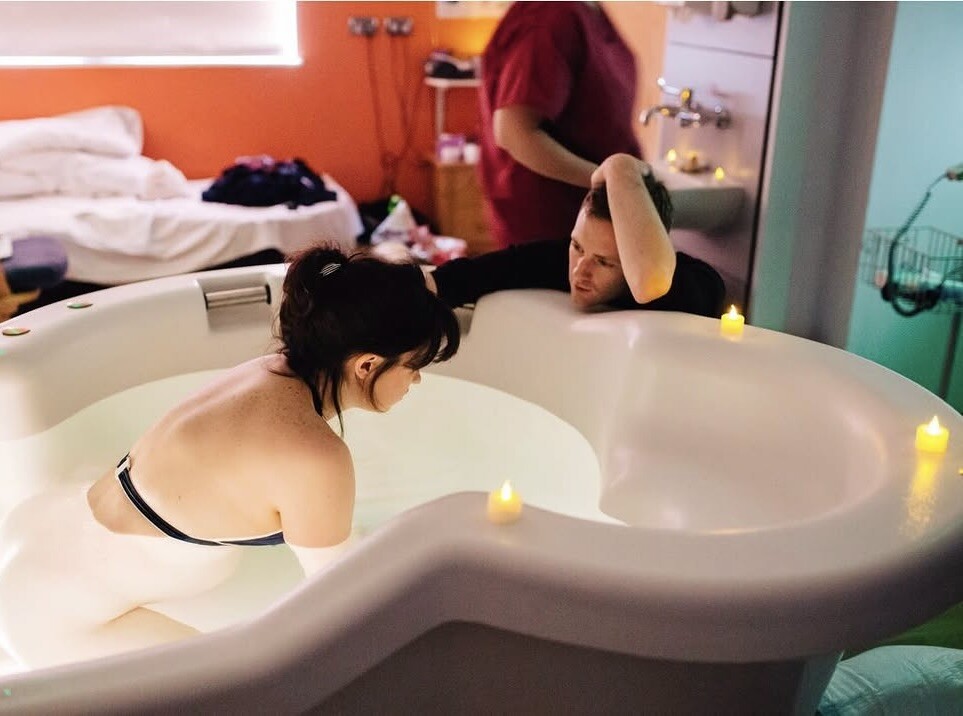
Birth is intensely personal. Many women labour best when they feel undisturbed, unobserved and secure. A pool can support this by creating a protected physical space. The sides of the pool form a natural boundary. The mother is not lying exposed on a bed. She is upright, covered by water and often more in control of how people approach her.
This sense of privacy can have real physiological value. Labour depends on oxytocin, the hormone that stimulates uterine contractions. Oxytocin flows best in conditions of safety, warmth, trust and low disturbance. A calm, respectful environment can therefore support the natural rhythm of labour.
The psychological benefits are just as important.
A woman who feels in control is more likely to experience birth as something she actively did, rather than something that was done to her. That difference can shape her memory of birth for years.
Shorter labour and fewer interventions?
Research has long suggested that water immersion during the first stage of labour may be associated with reduced use of epidural analgesia and, in some studies, shorter labour. The evidence is not identical across all studies, and outcomes depend on factors such as when the mother enters the pool, her parity, the birth setting and the support she receives.
However, the overall direction of evidence is encouraging: water immersion is a simple, low-cost intervention that can reduce reliance on more invasive forms of pain relief for many women.
When mothers need fewer interventions, maternity teams may also see wider benefits. A woman who remains mobile, comfortable and confident may be less likely to require escalation simply because she is exhausted, distressed or unable to cope.
This does not mean that water prevents complications, nor that every labour in water will be straightforward. It means that water can form part of a supportive environment that protects normal physiology whenever it is safe to do so.

What does current guidance say?
UK guidance has become increasingly supportive of water use in labour and birth. NICE recommends offering women the opportunity to labour in water for pain relief. NICE also now advises that birth in water should be considered, with discussion of the available evidence so women can make informed choices.
The 2025 NICE update is particularly important because it reviewed newer large cohort evidence on water birth during the second stage of labour. NICE concluded that, for low-risk, term, singleton pregnancies, the evidence was reassuring overall: water birth was not associated with increased risk of severe adverse maternal or neonatal outcomes and may offer benefits such as lower risk of postpartum haemorrhage, lower neonatal unit admission and lower severe perineal trauma for multiparous women. NICE also notes a small increased absolute risk of umbilical cord snapping before clamping, so careful practice and informed discussion remain essential.
This balanced message is important: water birth should not be presented as risk-free or suitable for everyone, but neither should it be dismissed as fringe or unsupported. For many healthy women with uncomplicated pregnancies, it is a reasonable, evidence-based option when supported by trained staff and safe facilities.

Is water birth safe for babies?
Parents often ask whether a baby can breathe underwater. During a properly managed water birth, the baby is born into warm water and then brought calmly to the surface. The first breath normally occurs after contact with air.
The key safety requirements are simple but essential: the baby’s head should remain submerged until birth is complete, the baby should be brought gently to the surface without traction on the cord, the water temperature should be monitored, and staff should be trained to recognise when leaving the pool is needed.
Systematic reviews of neonatal outcomes have not found definitive evidence that water birth causes harm compared with land birth, though researchers have repeatedly called for high-quality data and careful protocols. The largest recent UK cohort evidence has been reassuring for women with uncomplicated pregnancies using NHS services.
Who is water birth usually suitable for?
Eligibility varies between hospitals and countries, but water immersion is most commonly offered to women who are healthy, at term, carrying one baby in a head-down position, and expected to have a straightforward vaginal birth.
Some circumstances may mean that labouring or giving birth in water is not advised, or that the mother may be asked to leave the pool. These can include concerns about the baby’s heart rate, significant bleeding, maternal fever, heavy meconium, need for continuous monitoring, complications requiring urgent assessment, or a clinical need for interventions that cannot be safely provided in the pool.
The essential point is that water birth should be supported by clear guidelines, trained midwives, infection control procedures, safe evacuation plans and respectful communication. The mother should always understand that she can choose to leave the pool at any time, and staff may recommend leaving if clinical circumstances change.
Why the experience matters
A positive birth experience is not defined only by mode of birth. It is shaped by whether the mother felt informed, respected, safe, listened to and involved in decisions.
Qualitative research shows that women often associate water immersion with reduced pain, relaxation, privacy, control, autonomy and empowerment. Midwives also identify the importance of adequate resources, training, consistent protocols and a supportive culture.
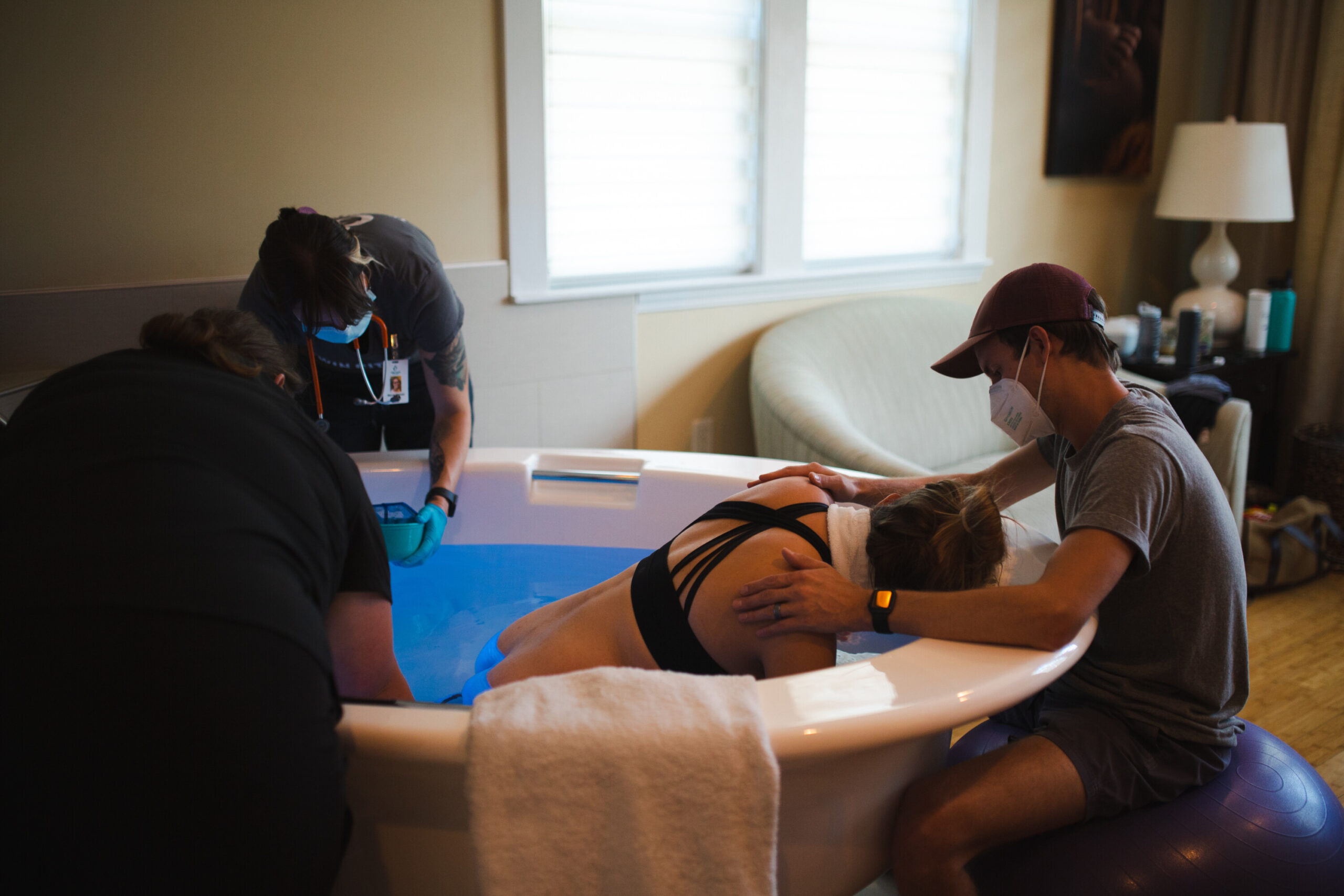
This is where birth pools can have a profound effect. They change the room. They change the mother’s posture. They change how people approach her. They encourage quiet, patience and observation. They make it easier for birth companions to offer calm support. They remind everyone present that birth is not simply something to manage; it is something to protect.
Benefits for maternity services
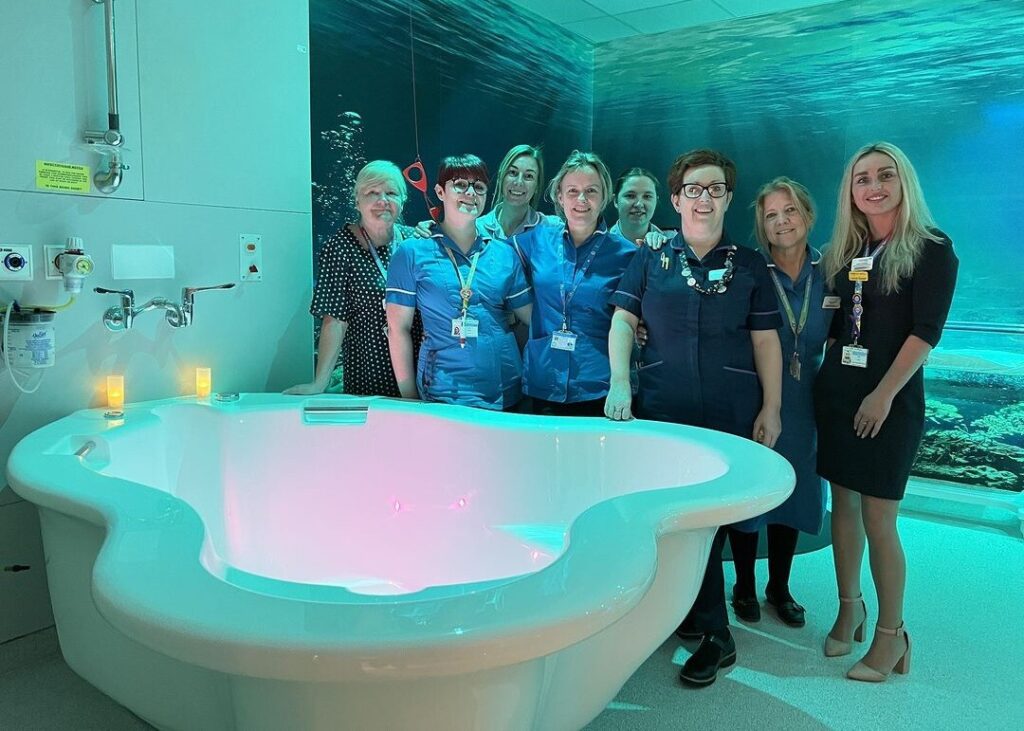
For hospitals and birth centres, birth pools are a practical investment in quality of care. They are relatively simple pieces of equipment, but they can have a major impact on the environment of birth.
When used appropriately, water immersion can support:
- greater maternal comfort and satisfaction;
- reduced use of epidural or spinal analgesia for some women;
- more freedom of movement and upright positioning;
- privacy and dignity;
- lower-intervention care for suitable mothers;
- a calmer working environment for midwives;
- more efficient use of staff and resources when normal birth is supported safely.
The economic argument should never overshadow the human one. The primary purpose of a birth pool is to improve care. But when better care also reduces unnecessary intervention, improves maternal experience and supports efficient maternity services, the case becomes even stronger.
Conclusion: a simple pool of water with deep benefits
A birth pool is simple, but its effects can be profound.
It offers warmth, buoyancy, privacy and freedom. It helps many mothers relax into labour, cope with contractions, move instinctively and feel more in control. It can reduce reliance on medical pain relief and support a calmer, more physiological birth environment.
For the uninitiated, water birth may seem unusual at first. But when we look at what labour requires — safety, warmth, movement, privacy, skilled support and trust — the logic becomes clear.
Water does not replace midwifery skill. It enhances it. It does not guarantee a particular kind of birth. It creates better conditions for the mother’s body to do what it is designed to do.
For many mothers, that can make the difference between simply getting through labour and experiencing birth as powerful, supported and deeply positive.
References
- Cluett ER, Burns E, Cuthbert A. Immersion in water during labour and birth. Cochrane Database of Systematic Reviews. 2018;5:CD000111. doi:10.1002/14651858.CD000111.pub4.
- National Institute for Health and Care Excellence. Intrapartum care: NICE guideline NG235. Updated 2025–2026. Recommendations on labouring in water and water birth.
- National Institute for Health and Care Excellence. Intrapartum care: Appendix D — Benefits and risks of birth out of water and water birth. 2025 update.
- National Institute for Health and Care Excellence. Evidence review Q: Effects and safety of water immersion during the second stage of labour. 2025.
- Sanders J, et al. Characteristics, interventions, and outcomes of women who used a birthing pool: the POOL cohort study. 2024/2025.
- Burns E, Feeley C, Vanderlaan J, Hall PJ. Systematic review and meta-analysis to examine intrapartum interventions, and maternal and neonatal outcomes following immersion in water during labour and waterbirth. BMJ Open. 2022;12:e056517. doi:10.1136/bmjopen-2021-056517.
- Reviriego-Rodrigo E, Ibargoyen-Roteta N, Carreguí-Vilar S, et al. Experiences of water immersion during childbirth: a qualitative thematic synthesis. BMC Pregnancy and Childbirth. 2023;23:395. doi:10.1186/s12884-023-05690-7.
- Taylor H, Kleine I, Bewley S, Loucaides E, Sutcliffe A. Neonatal outcomes of waterbirth: a systematic review and meta-analysis. Archives of Disease in Childhood: Fetal and Neonatal Edition. 2016;101(4):F357–F365. doi:10.1136/archdischild-2015-309600.
- Vanderlaan J, Hall PJ, Lewitt MJ. Neonatal outcomes with water birth: a systematic review and meta-analysis. Midwifery. 2018;59:27–38. doi:10.1016/j.midw.2017.12.023.
- Royal College of Obstetricians and Gynaecologists and Royal College of Midwives. Immersion in Water During Labour and Birth. Joint Statement No. 1. 2006.
- American College of Obstetricians and Gynecologists. Immersion in Water During Labor and Delivery. Committee Opinion No. 679. Obstetrics & Gynecology. 2016;128:e231–e236.
- Active Birth Pools. The benefits of using water for labour and birth are well known, here are the facts. Blog article, 2019.
Source note
This article has been developed from the Active Birth Pools page “The benefits of using water for labour and birth are well known, here are the facts” and expanded with current evidence and guidance for a broader educational audience.