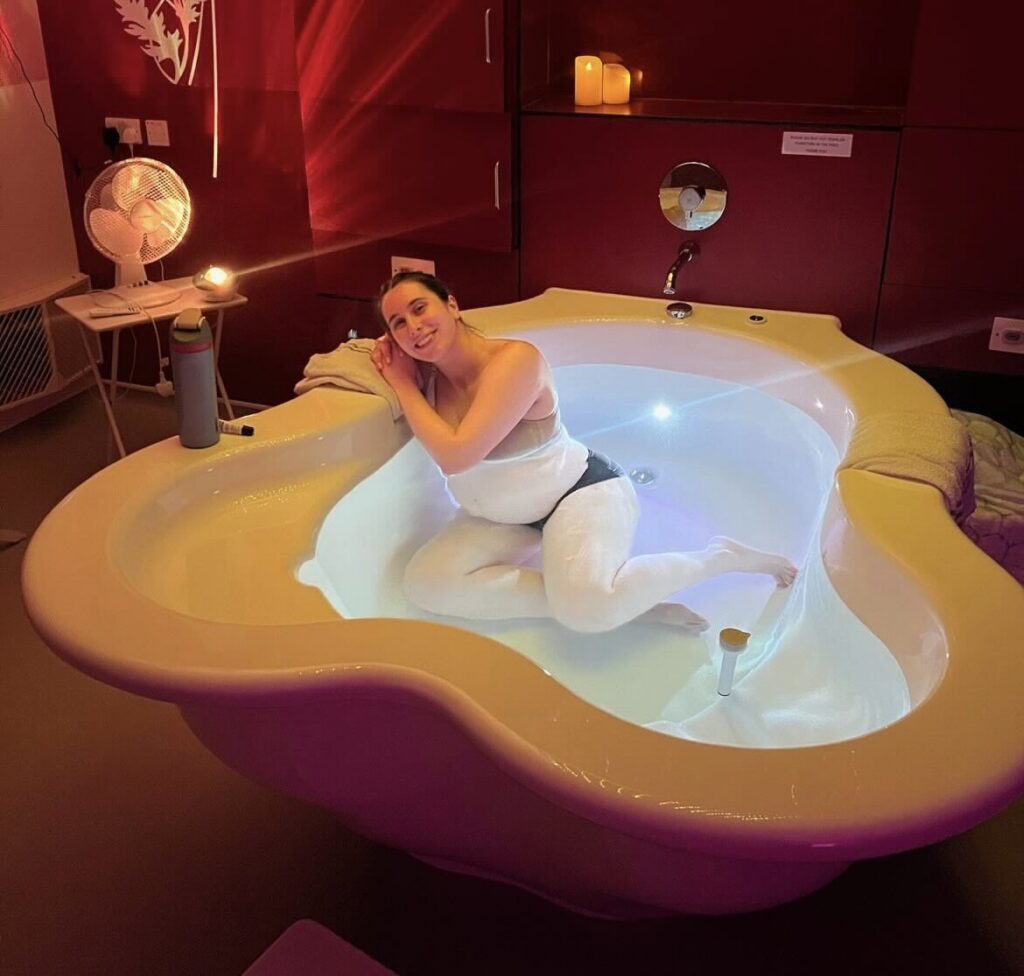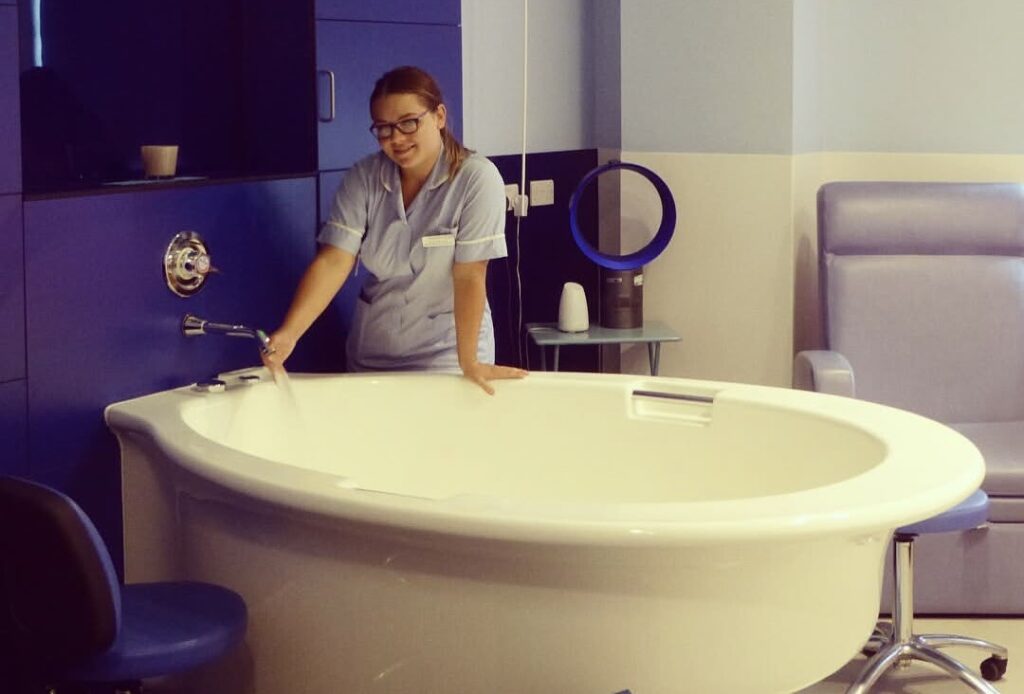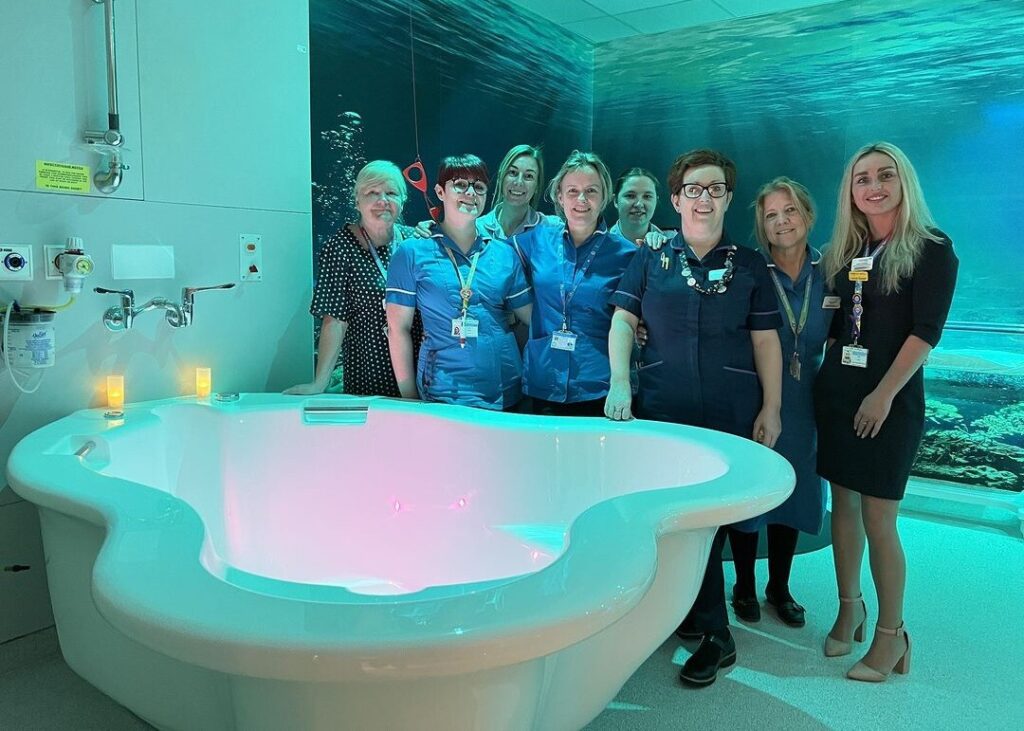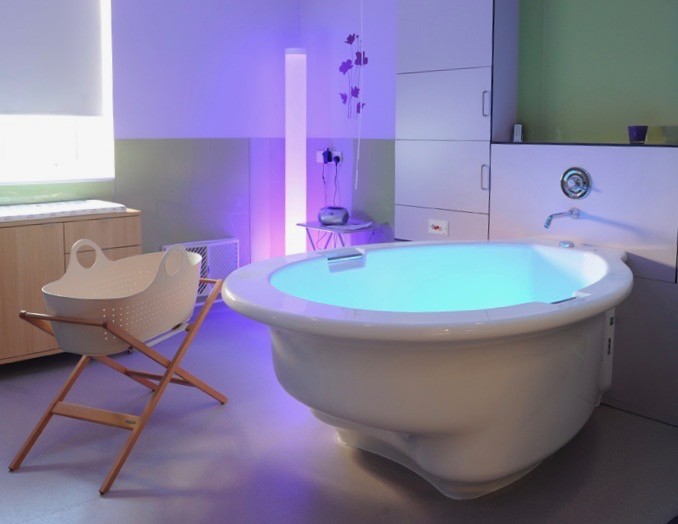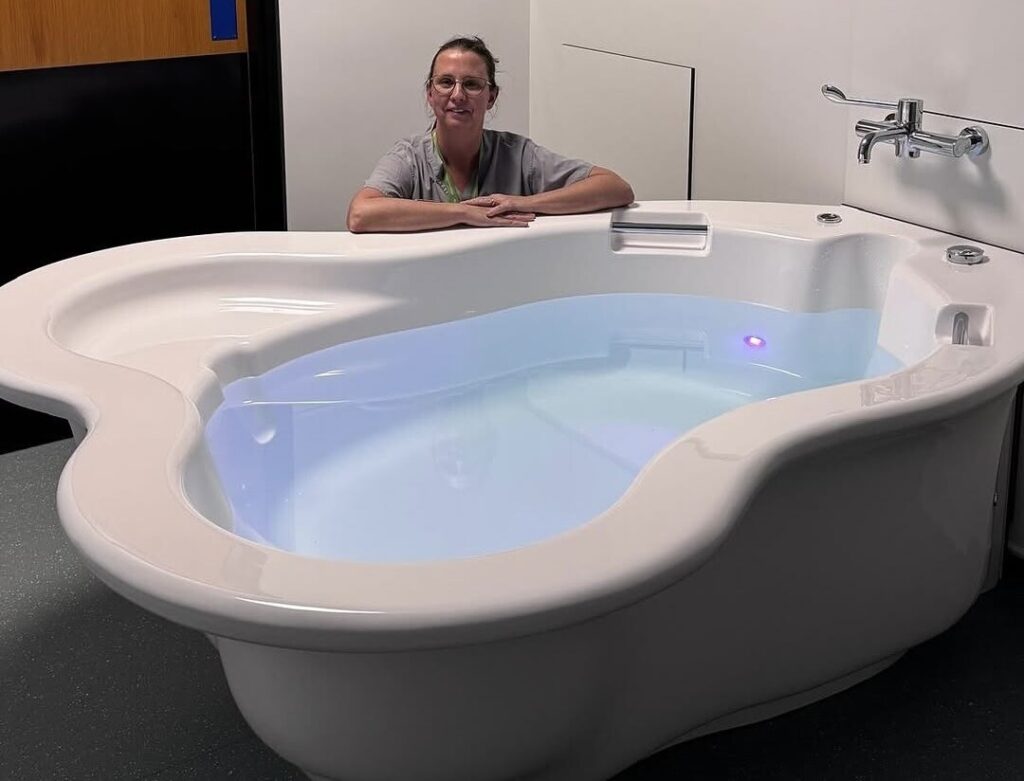

When it comes to water birth pools, hygiene and water safety are paramount.
Active Birth Pools are designed to meet the highest standards for water safety, hygiene and infection control.
This begins with Ficore®, the exceptionally durable material used to manufacture our pools.
Ficore® is five times harder than conventional materials and is unaffected by disinfection with 10,000 ppm hypochlorite when used correctly.
The seamless, one-piece construction and absence of surface-mounted metalwork remove the joints, gaps and fixings where micro-organisms can collect and propagate.
Active Birth Pools Cleaning and Disinfection Guidelines
This is a two-step procedure – first cleaning of the pool and surround, then disinfection of the pool and surround.
- Prior to emptying the pool remove debris and larger particles from the water with a sieve to prevent it from blocking or obstructing the outlet.
- Use the standard infection control precautions (plastic apron, disposable gloves and eye protection) when cleaning the pool. Ensure the area is well ventilated.
- Cleaning – use a non-abrasive detergeant with non-abrasive sponge or cloth to thoroughly clean the pool. Ensure the tap is cleaned first, so as not to transfer micro-organisms from the “dirty” pool area to the cleaner tap region. Rinse well with warm water.
- Disinfecting – use an approved hypochlorite disinfectant listed in the table below following the directions on the packet for mixing the solution to the correct concentration for disinfecting the birth pool and surround.
- Apply the solution to the tap and spout prior to disinfecting the pool.
- There are 3 methods for disinfecting the pool that are commonly used in hospitals:
1) Fill the pool with cold water and add the requisite amount of disinfectant – leave for ten minutes.
The advantage of this method is that it is 100% effective but wasteful of water, time consuming and uses a large amount of disinfectant
2) Make up 2-3 litres of solution and pour it around the inside of the rim. Then use a new disposable mop or cloth to spread the disinfectant over the surface of the pool. Leave for ten minutes.
The advantage of this method is that it is economic in terms of time and cost but relies upon the person carrying out the task to ensure that 100% of the pools surface is disinfected.
3) Fill a spray bottle with disinfectant and thoroughly spray the surface of the pool and surround. Then use a new disposable mop or cloth to spread the disinfectant over the surface of the pool. Leave for ten minutes.
The advantage of this method is that it is economic in terms of time and cost but relies upon the person carrying out the task to ensure that 100% of the pools surface is disinfected
- Open the drain outlet and empty the pool of the disinfectant.
- Using cold water, rinse the tap then the pool to remove all traces of the disinfectant, to prevent any residue being left on the pool surface.
- Dry the entire surface of the pool using a new cloth or disposable mop head.
- Keep the drain outlet closed when not in use.
Damage resulting from exposure to higher water temperatures, or steam cleaning or will not be covered by our guarantee.
If you are duty flushing the taps with hot water/steam add 10cm of cold water to the pool first.

Do not use hydrogen chloride (bleach) or hydrogen peroxide as they are highly corrosive and will cause the metal fittings to rust and may damage the surface of the pool.
If you want to use another product please contact us for approval as damage resulting from unapproved products will not be covered by our guarantee.
Warning: Copper/Silver Orca Disinfection Systems
Hospitals worldwide are starting to use Copper/Silver orca disinfection systems in an effort to combat bacterial issues and improve water safety. We have discovered that there is great potential for staining with the Copper/Silver orca disinfection system
Copper-silver ionization systems introduce trace amounts of copper into the pool water. In some cases, exposure to elevated copper levels can lead to staining of the sanitary ware and other surfaces, such as walls, floors, or fixtures.
Please note that staining caused by these systems is NOT covered by our guarantee.
If your hospital is using one of these water treatment systems we suggest that you contact the department responsible for water safety as regular monitoring and appropriate copper levels are essential to mitigate the risk of staining.