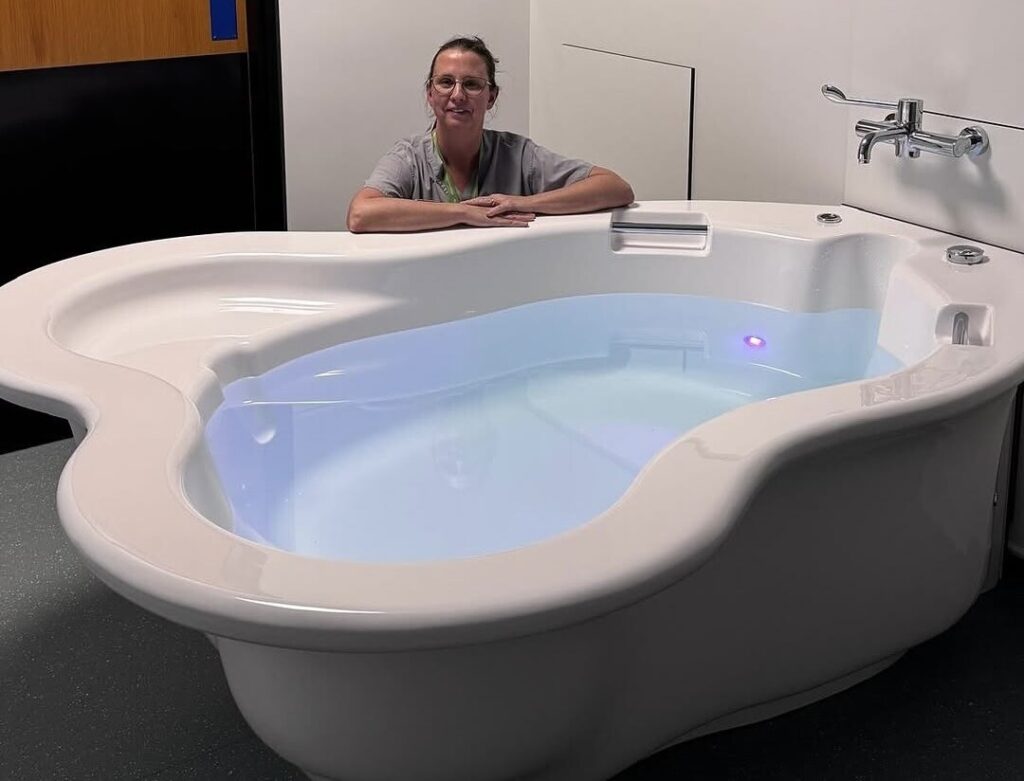

A birth pool is part of the working environment
Manual handling risk in water birth pools should never be treated as an afterthought.
In a maternity unit, a birth pool is not simply a vessel for warm water. It becomes part of the working environment for midwives, part of the support system for mothers, and part of the clinical space in which care is provided.
The design of the pool therefore matters.
A well-designed water birth pool should help mothers move safely and instinctively. It should allow midwives to work close to the mother in a stable, comfortable position. It should support safe entry and exit. It should allow emergency procedures to be carried out with clarity and confidence.
Manual handling risk is not only about lifting. It is also about posture, reach, access, repetition, support, room layout and the way people are expected to move around the pool.
What creates manual handling risk around a birth pool?
Manual handling risks associated with water birth pools usually arise from four main areas:
- the position of the mother in the pool
- the position of the midwife while providing care
- how the mother enters and leaves the pool
- how staff would respond if emergency evacuation became necessary
These risks are strongly influenced by the design of the pool itself.
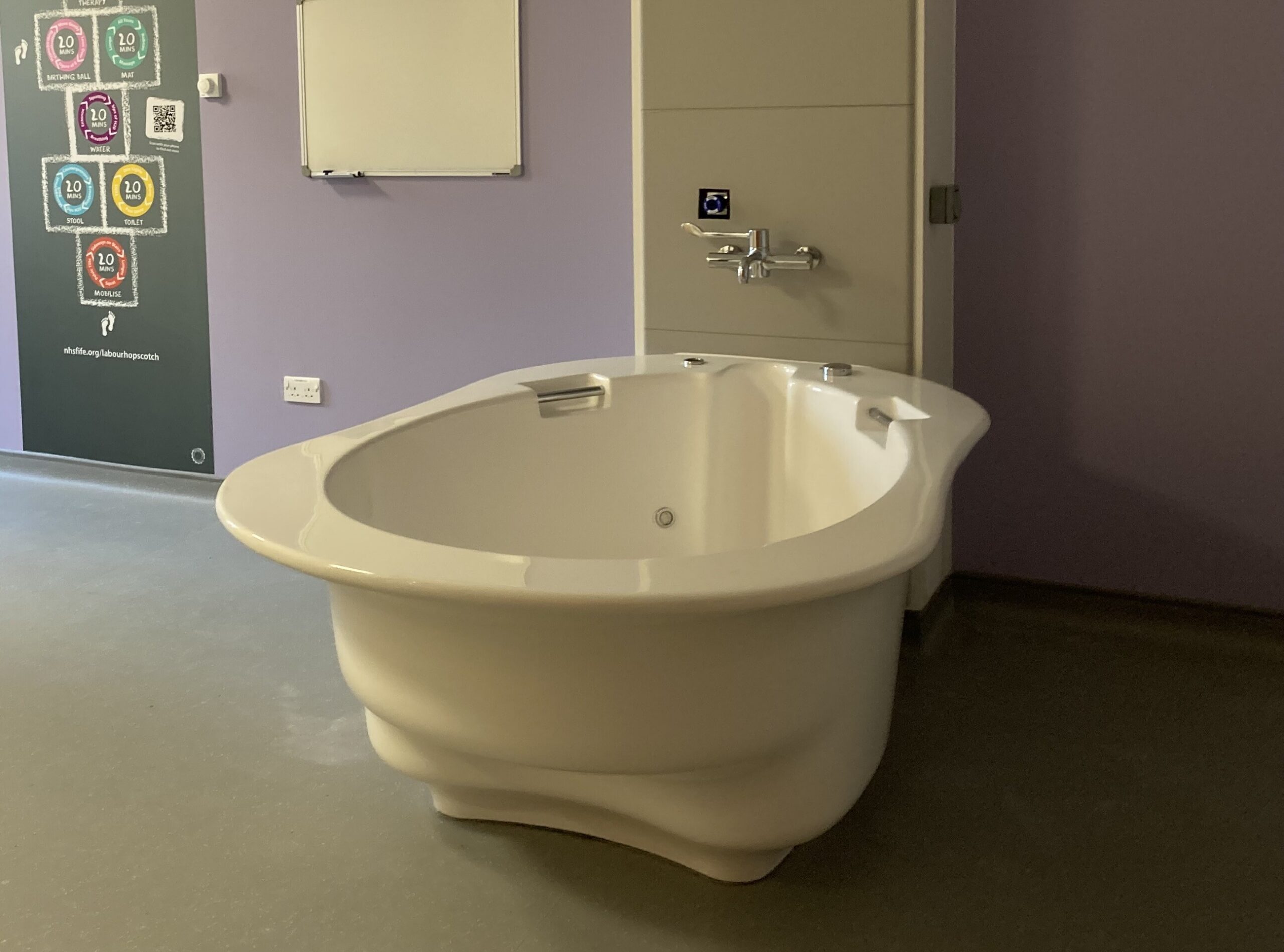
A pool with vertical sides, a narrow rim, obstructive fittings or poor access can make the midwife work at a distance from the mother. This may require leaning, bending, stretching or twisting during observation, reassurance, examination or hands-on support.
Over time, these repeated awkward postures can become a significant occupational-health issue.

Why vertical-sided pools create problems
Earlier water birth pools were often shaped like large domestic baths, with vertical sides and narrow rims.
The problem with this type of design is simple: the pool forms a physical barrier between the mother and the midwife.
The midwife may be forced to sit too far away from the pool, place her legs apart, lean forwards over the rim, and support herself through her arms, shoulders, neck and lower back. During a long labour this is uncomfortable. Repeated over many shifts, it becomes avoidable strain.
A narrow rim adds to the problem because it concentrates pressure into a small area of the forearm and gives the midwife less comfortable support.
This is why birth pool design should be judged not only by how it looks, but by how it works for the people who use it.
The concave shape: giving midwives room to work
Active Birth Pools were developed to solve this problem.
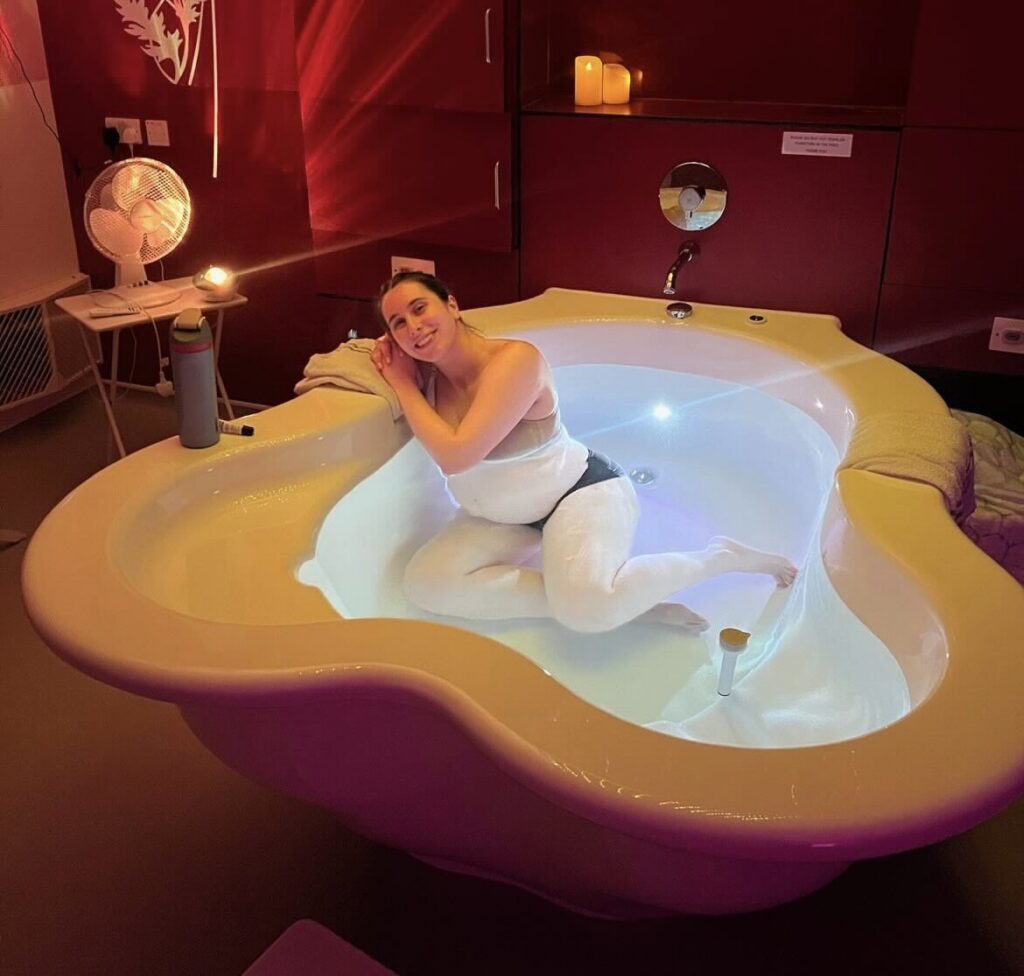
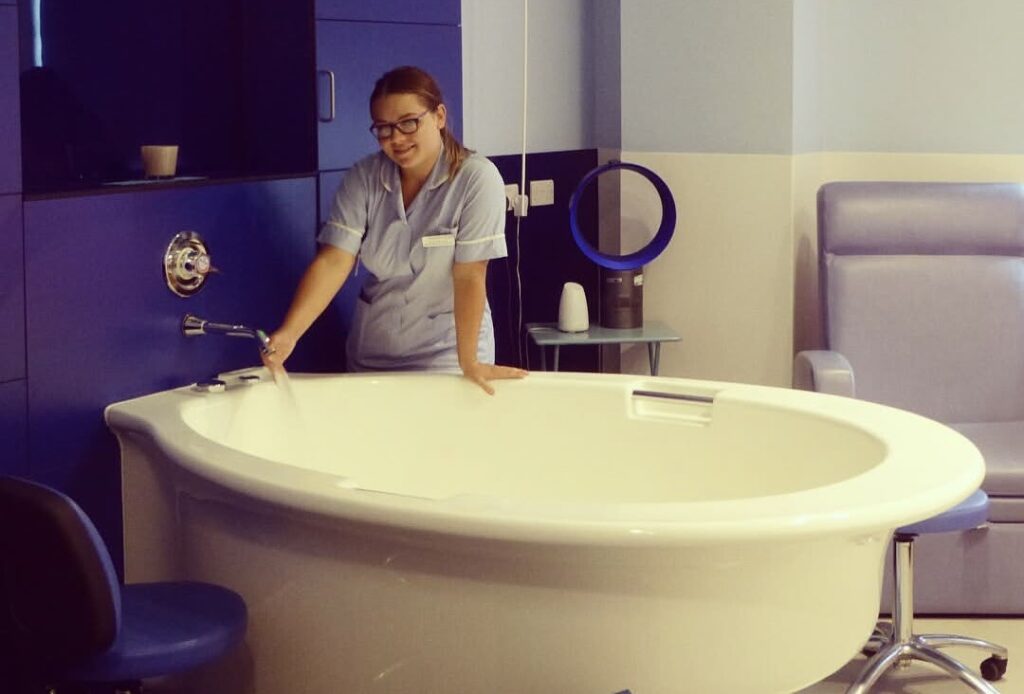
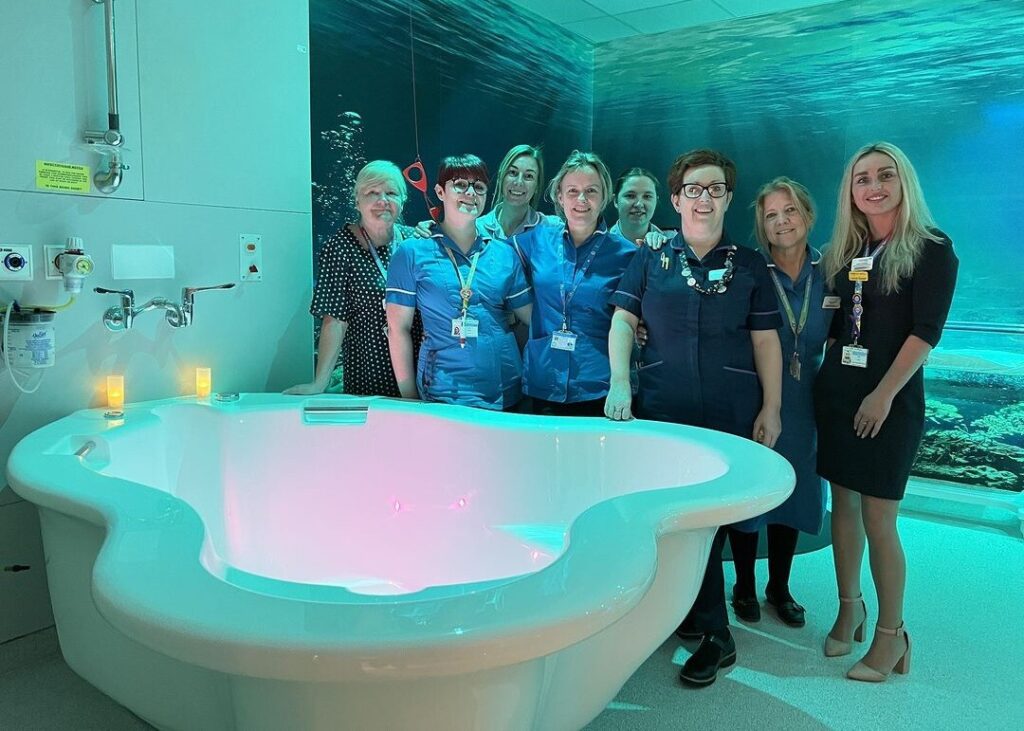
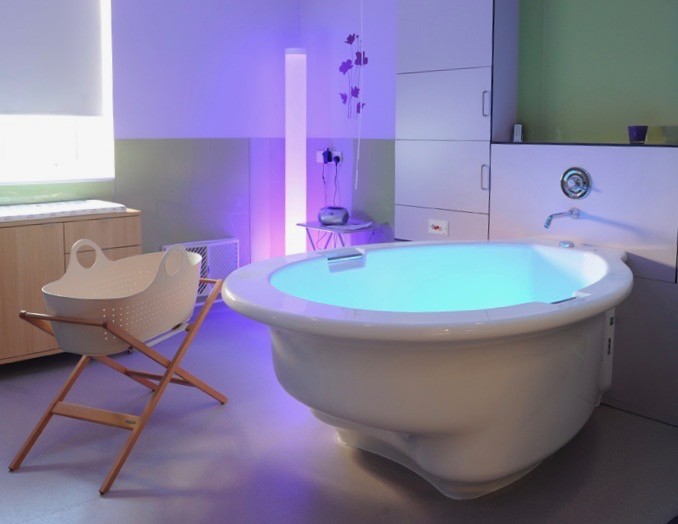
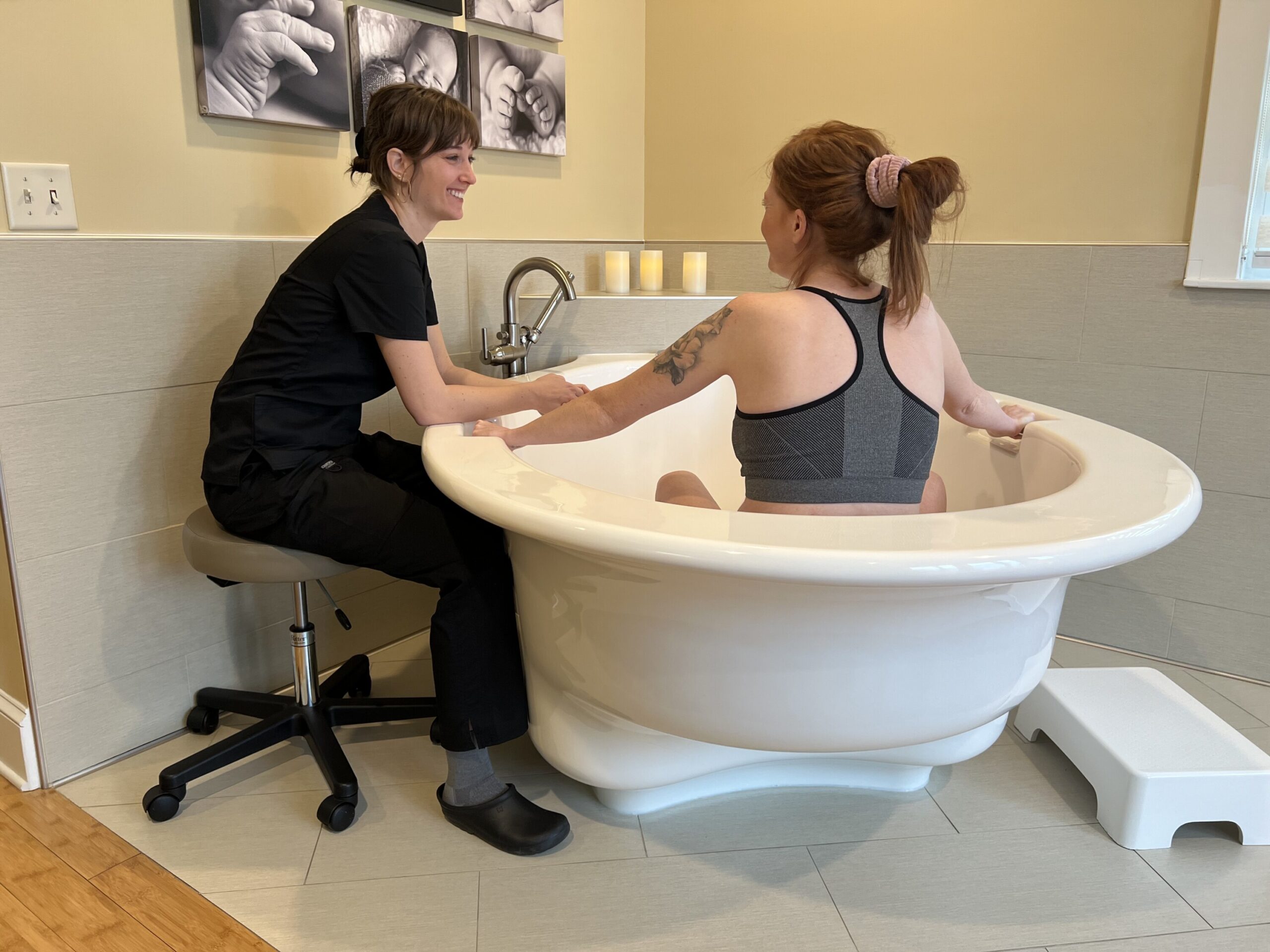
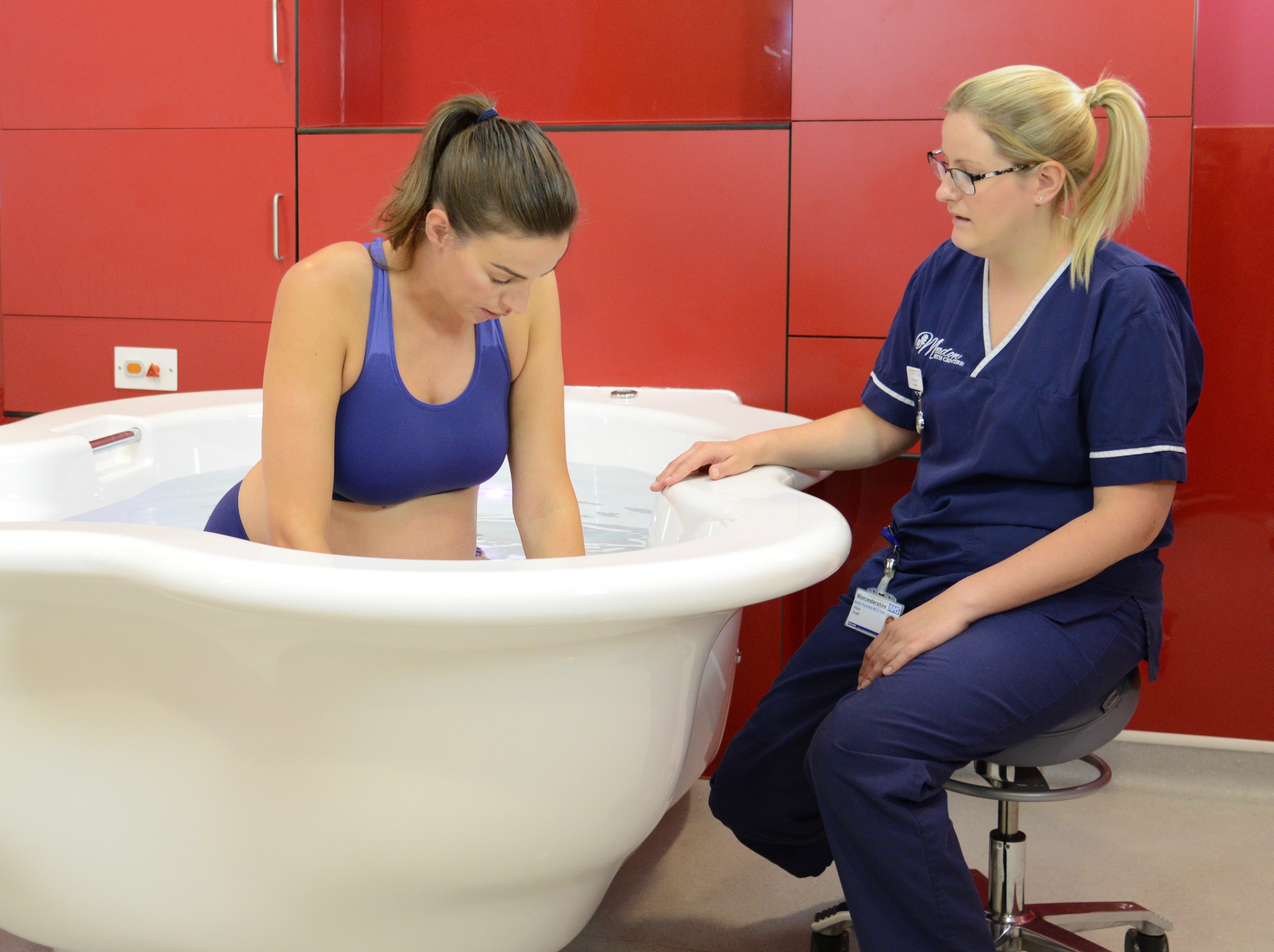
The distinctive concave outer profile allows the midwife to sit closer to the pool with her legs naturally positioned beneath the rim. Instead of working around a vertical wall, the midwife can get close to the mother in a more upright, balanced and supported position.
This changes the working relationship between the midwife and the pool.
The midwife can remain closer, reach less, observe more comfortably, communicate more easily and move around the pool with less obstruction.
This is not a cosmetic design feature. It is an ergonomic safety feature.
The extra-wide rounded rim
The extra-wide, bullnose-shaped rim is another important manual-handling feature.
A wide rounded rim gives mothers and midwives a broad, comfortable support surface. Mothers can use it to rest, lean, change position and support upright movement. Midwives can rest their forearms comfortably while remaining close to the pool.
The rim should also be free from unnecessary obstructions.
Taps, spouts, surface-mounted hand grips and other fittings placed on or around the rim can interfere with access. They can restrict the midwife’s movement around the pool, compromise comfort, complicate cleaning and increase the risk of accidental impact.
For this reason, Active Birth Pools are designed with a clear working edge. Plumbing and fittings are positioned to support safe use, infection prevention and freedom of movement.
Safe entry and exit
Getting into and out of the pool is one of the most important manual-handling considerations.
If a mother has to climb up steps, turn, lower herself awkwardly or rely heavily on the midwife for support, the risk increases for both mother and staff.
Active Birth Pools are designed around a simpler and safer principle: sit and swivel.
The extra-wide rounded rim allows the mother to sit securely on the side of the pool and gently swivel into the water. A small step can reduce the effective height without creating the hazards associated with larger step units.
This helps the mother remain grounded and in control. It also helps the midwife guide and reassure rather than physically support or bear the mother’s weight.
Good pool design should reduce the need for hazardous handling wherever possible.
Emergency evacuation must be designed in
Emergency evacuation is another area where pool design matters.
No pool design can replace local procedures, training, staffing or clinical judgement. But the pool should support the emergency response rather than make it harder.
Active Birth Pools are designed to give midwives practical options. The extra-wide rim, internal seats, unobstructed access and compatibility with portable hoists help staff respond according to local policy and the needs of the situation.
In some situations, the mother may be able to participate. In others, she may need more assistance. The pool, room layout and available equipment should support both routine use and emergency planning.
Emergency evacuation should never depend on improvisation. It should be considered at the specification stage.
Manual handling risk should influence procurement
When hospitals compare water birth pools, manual handling should be part of the decision-making process.
Important questions include:
- Can the midwife get close to the mother without excessive bending or reaching?
- Does the outer shape provide knee room?
- Is the rim wide, rounded and comfortable to lean on?
- Is the working edge clear of obstructions?
- Can the mother enter and leave the pool without climbing a large step unit?
- Does the pool support emergency evacuation procedures?
- Can a trolley, evacuation net or portable hoist be used if required?
- Does the pool design support cleaning, access, infection prevention and long-term safe use?
These are not minor details. They affect how the pool functions every day.
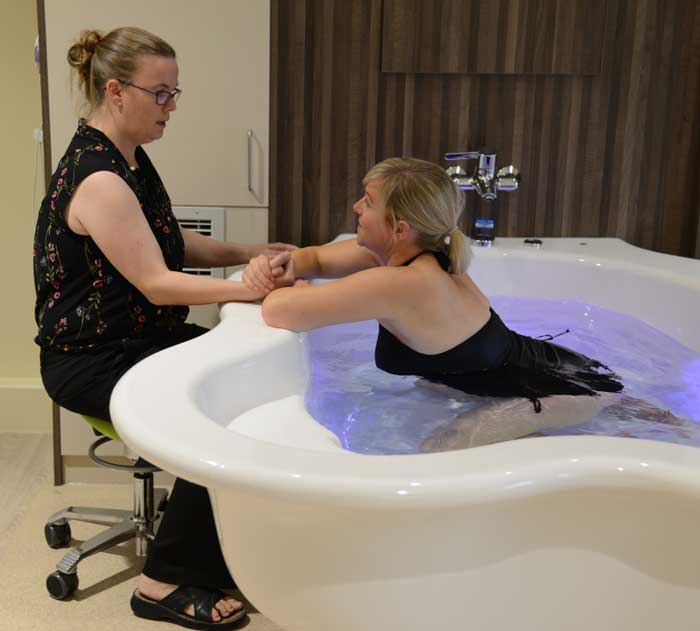
Designed to reduce avoidable strain
The safest birth pool is not simply the one that holds water. It is the one that supports the whole birth environment.
For mothers, this means easy access, freedom of movement, comfort, dignity and support.
For midwives, it means better working posture, closer access, less bending and reaching, and practical options when assistance is needed.
For hospitals, it means a pool that supports safer practice, efficient use of space, infection prevention and long-term value.
Manual handling risk can never be removed entirely from maternity care. But avoidable strain should be designed out wherever possible.
That is the principle behind Active Birth Pools.
Every curve, rim, recess, seat and support feature has a purpose: to make water birth safer, easier and more practical for the people who use it.
Recommended internal links
- Why Midwife Comfort and Safety Starts with Better Birth Pool Design
- Creating Better Water Birth Pools Through Ergonomic Design
- Sit and Swivel – The Natural Way to Enter the Pool
- Midwives Have Safe, Practical Options for Dealing with Emergencies
- Designed to Optimise Safety, Reduce Risk and Support Safer Birthing Environments
References
[3] National Institute for Health and Care Excellence. Intrapartum care, NICE guideline NG235.
[4] Chartered Institute of Ergonomics & Human Factors. Case Study 18: Improving birthing pool design.
[5] Active Birth Pools. Why Midwife Comfort and Safety Starts with Better Birth Pool Design.
[6] Active Birth Pools. Creating Better Water Birth Pools Through Ergonomic Design.
[7] Active Birth Pools. Sit and Swivel – The Natural Way to Enter the Pool.
[8] Active Birth Pools. Midwives Have Safe, Practical Options for Dealing with Emergencies.