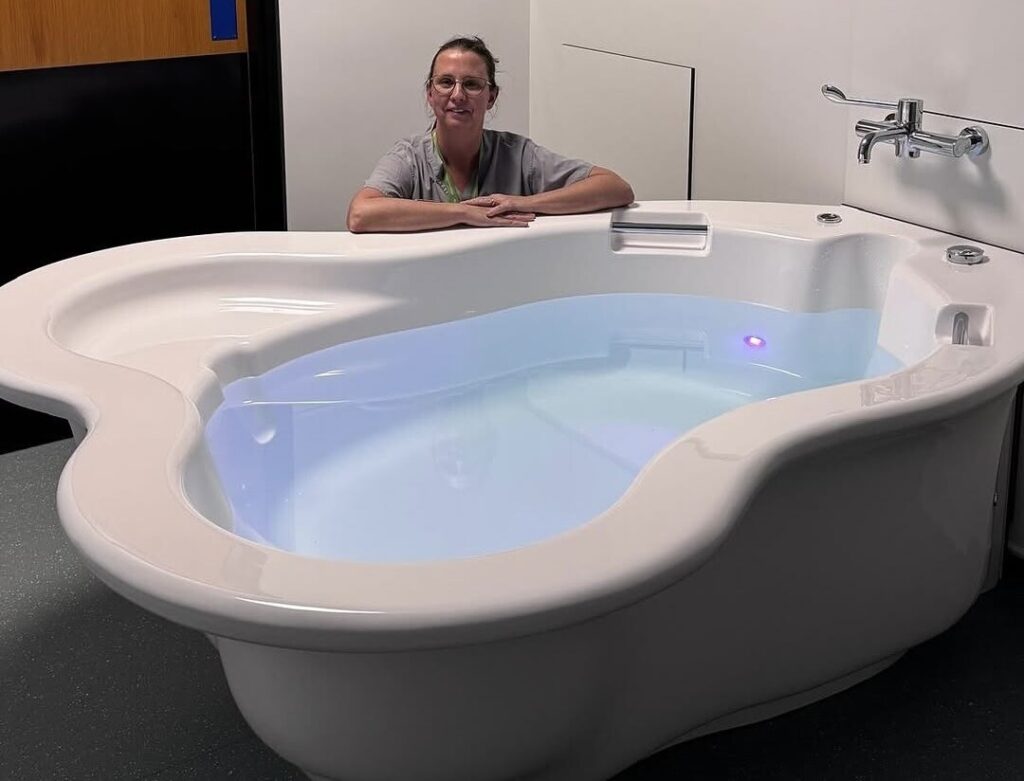

A birth pool is a workplace
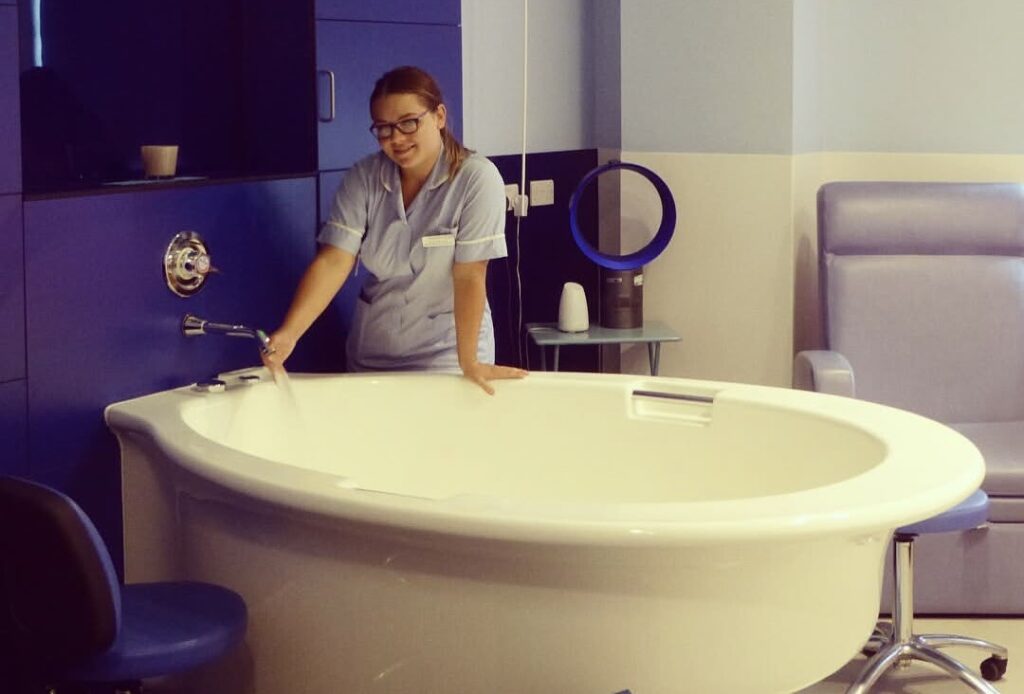
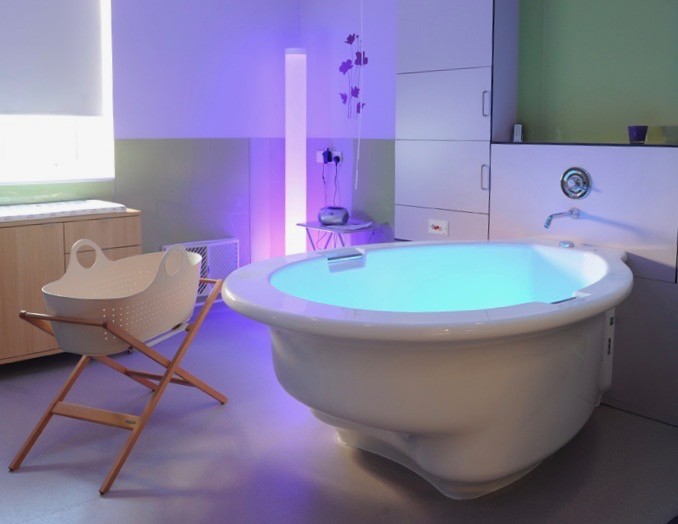
A water birth pool is not simply a vessel for warm water.
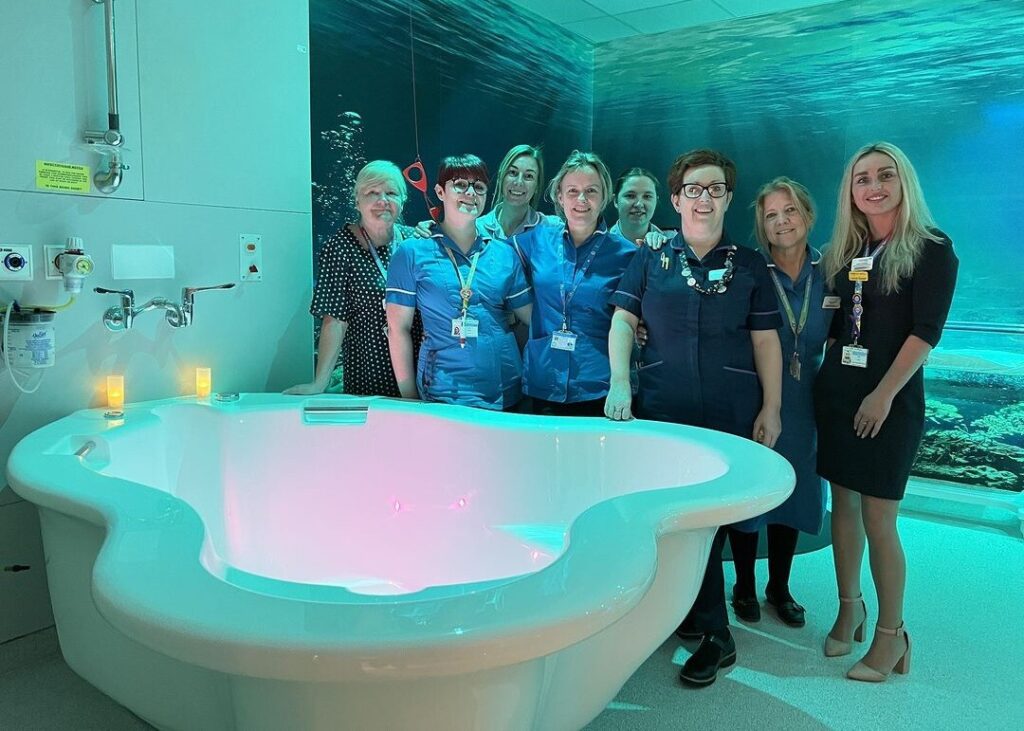
In a maternity unit it becomes part of the midwife’s working environment.
Midwives use the pool repeatedly.
They observe, communicate, monitor, reassure, assist with entry and exit, support examinations where clinically appropriate, manage water temperature, help maintain a safe space around the pool and respond quickly when circumstances change.
That ongoing use is the reason midwife comfort, safety and wellbeing should be treated as a primary design requirement.
If the pool forces poor posture, every use can add to physical strain.
If the pool supports good working access, it helps midwives stay close, balanced and available throughout labour and birth.
This is the principle behind Active Birth Pools: the pool must support the people who use it every day.
Download Midwife Comfort and Safety Assessment
Why ergonomic design matters to midwives
The Chartered Institute of Ergonomics & Human Factors explains that user-centred product design starts by identifying the key users early in the design process and researching their needs before the finished product is developed.
In Case Study 18, Improving Birthing Pool Design, the Institute records that earlier barrel-shaped pools had not been designed for any of the users.
Midwives were unable to monitor and examine mothers in the pool without putting strain on their back and neck. [1]
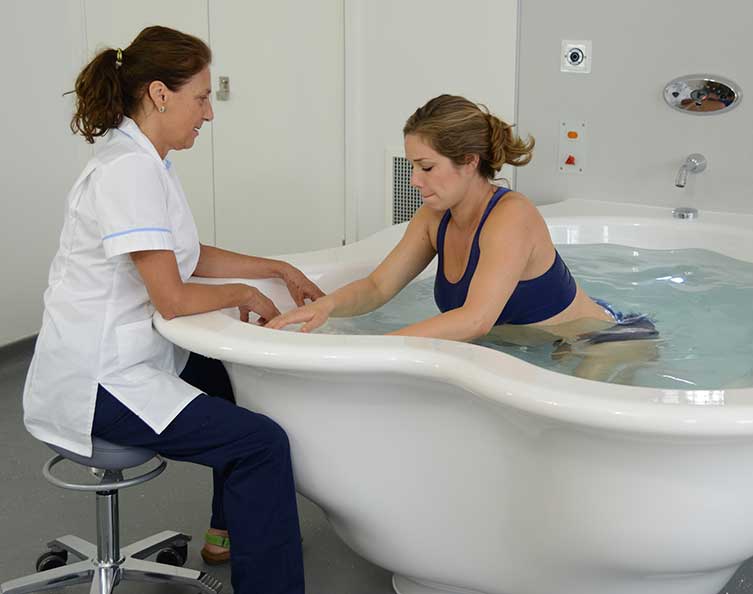
The same case study identifies the midwife as a key user who needs a comfortable working position, knee room beside the pool and the ability to reach the mother for examinations and monitoring. [1]
This is exactly where birth pool design becomes an occupational-health issue.
The design either helps the midwife work close to the pool in a natural posture, or it creates an obstacle that the midwife has to work around.

The problem with vertical-sided pools
A pool with a solid vertical surround places a physical barrier between the midwife and the person in the water.
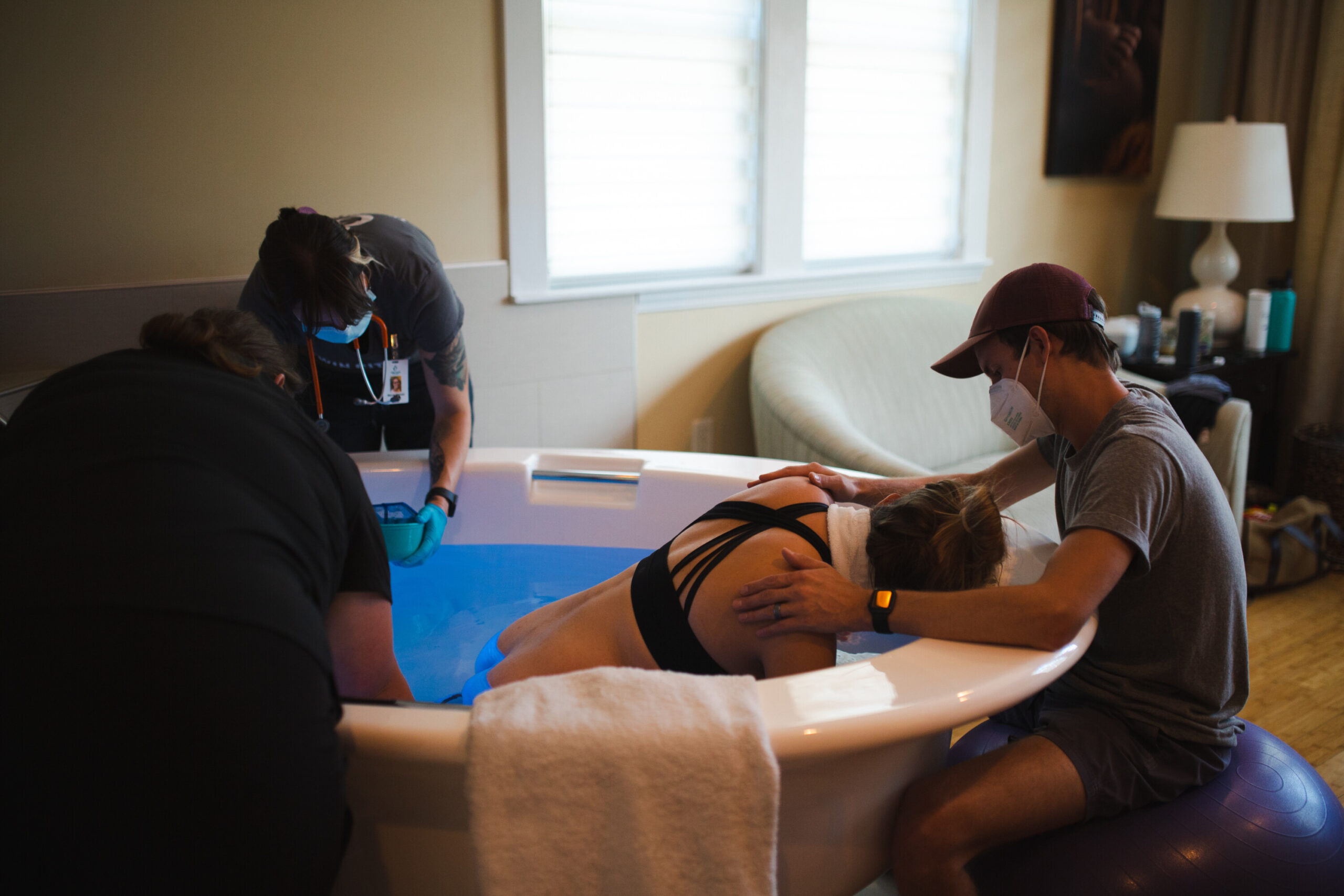
The midwife may have to stand with feet wide apart, lean forwards over a narrow rim, twist from the waist or support weight through the arms and shoulders for prolonged periods.
These positions are uncomfortable in the moment and can become more significant when repeated across shifts, weeks and years. The issue is not only one difficult birth.
It is cumulative exposure to avoidable strain.
The Health and Safety Executive identifies manual-handling risks to midwives and auxiliary staff who assist births in pools.
These risks can arise from routine tasks, the position of the mother in the pool, and the position of the midwife while carrying out tasks at the pool or supporting entry and exit. [2]

The concave shape: giving the midwife knee room
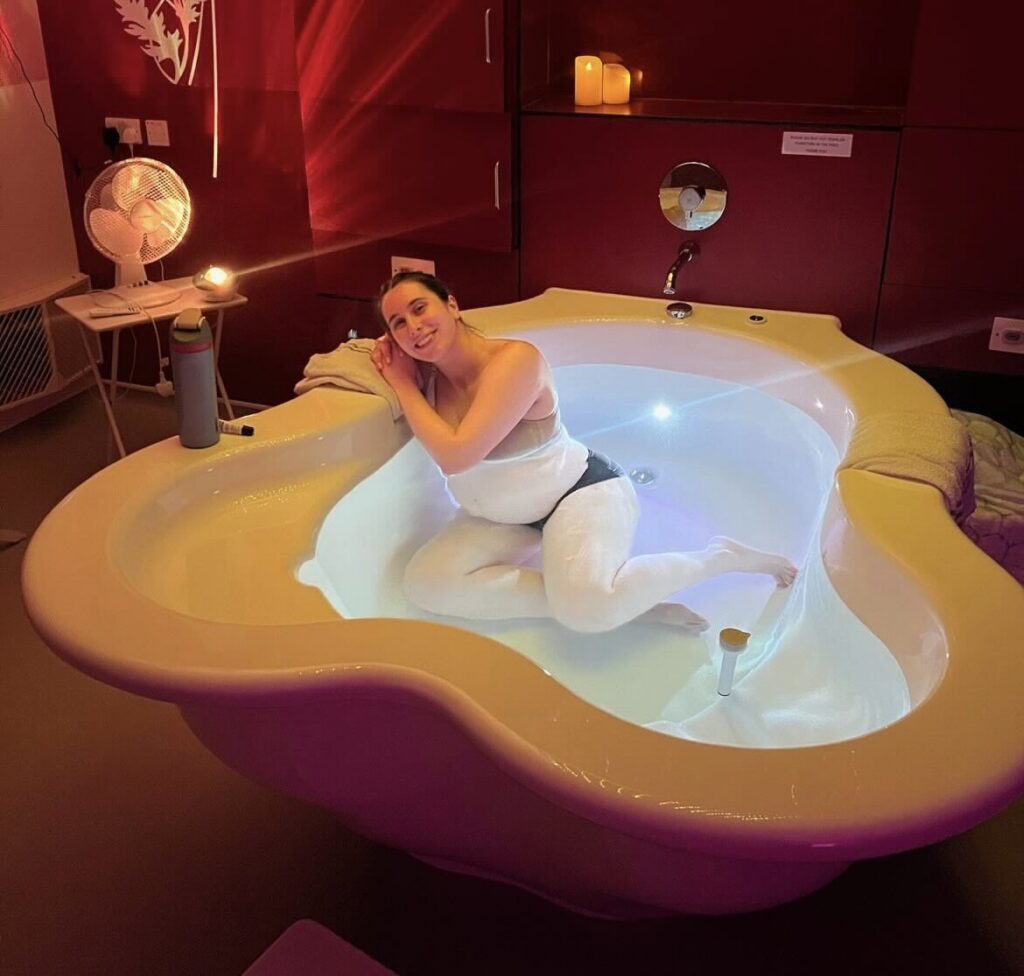
The key ergonomic difference in Active Birth Pools is the concave outer profile.
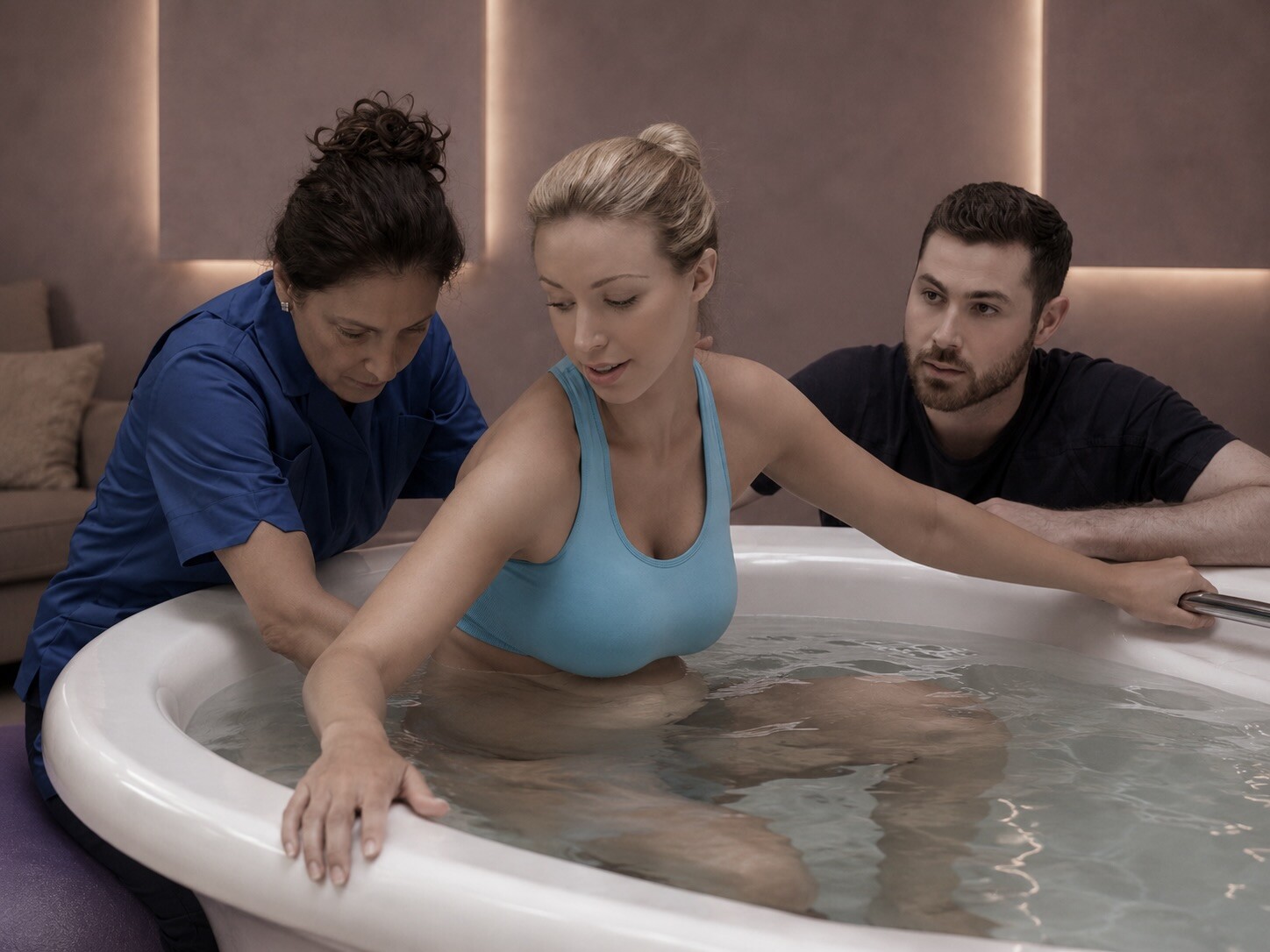
Instead of forcing the midwife to work around a vertical wall, the recessed shape allows the midwife to sit closer to the pool with her legs naturally positioned beneath the rim, as if sitting at a desk.
This design principle is directly supported by Case Study 18, which identifies a concave side as a feature that provides knee room for the sitting midwife. [1]
Knee room matters because it changes the whole working posture.
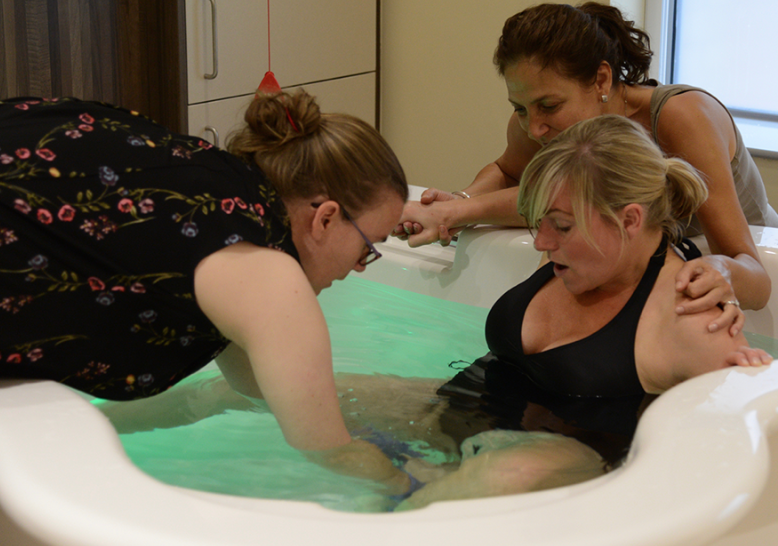
The midwife can sit closer, remain more upright, rest the arms, see clearly, communicate calmly and reach the person in the pool with less bending and stretching.
Reducing bending, reaching and twisting
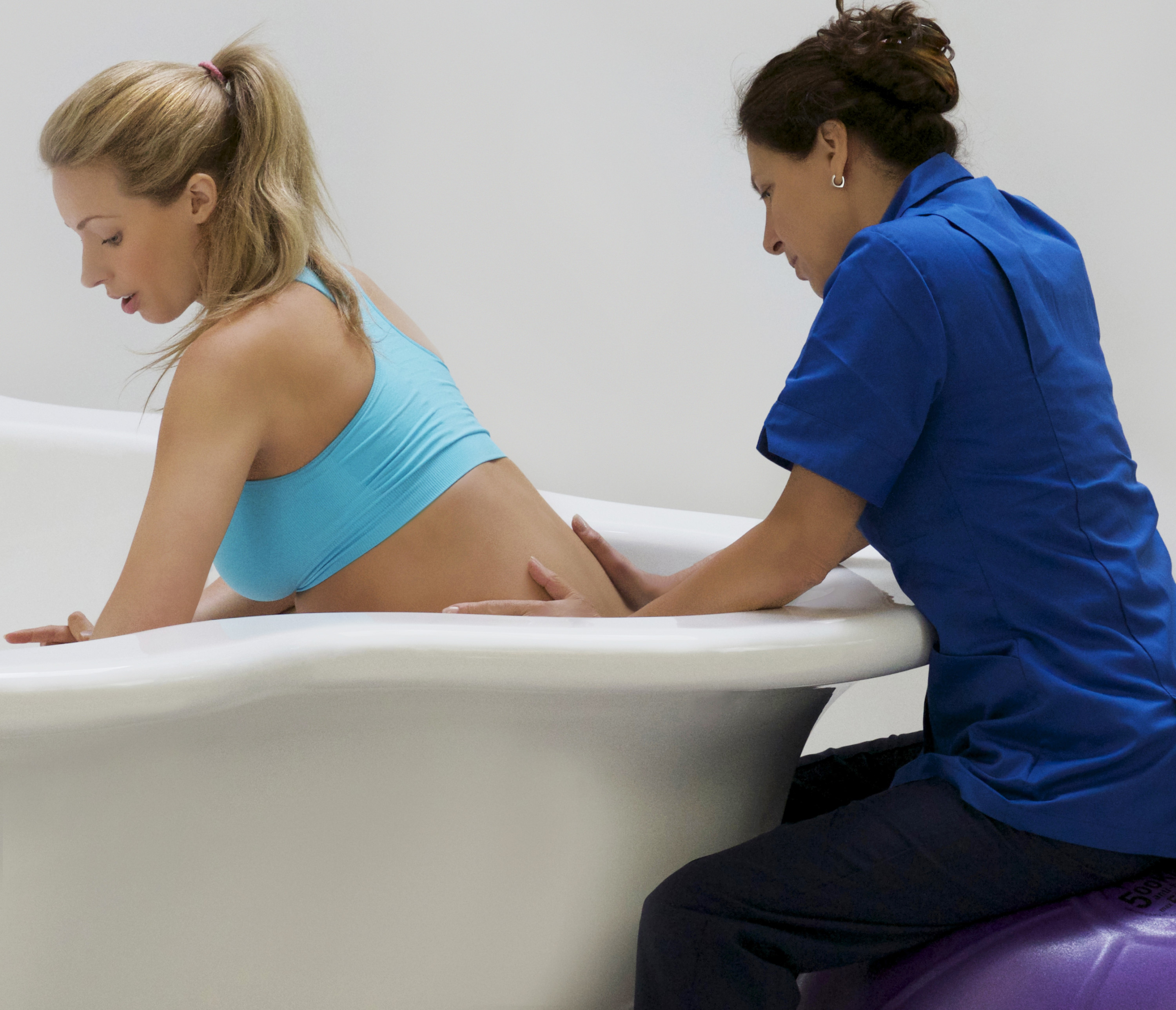
HSE guidance on manual handling in birthing pools is clear: pool design should allow the midwife to get as close as possible and minimise bending and reaching over. [2]
This is one of the most important tests of a hospital birth pool.
Can the midwife get close enough to work comfortably? Can she support the person in the water without excessive forward reach? Can she move around the pool without obstructions? Can she change position easily during a long labour?
Active Birth Pools are designed to answer yes to these questions.
The concave outer form, wide rounded rim and unobstructed working edge are intended to reduce the awkward postures that can occur when staff have to lean over a fixed barrier.
HSE guidance on musculoskeletal disorders highlights the need to manage work-related risks such as manual handling, back pain and upper limb disorders. [3]
In the birth-pool context, design should therefore help reduce avoidable physical loading wherever possible.
The extra-wide rounded rim
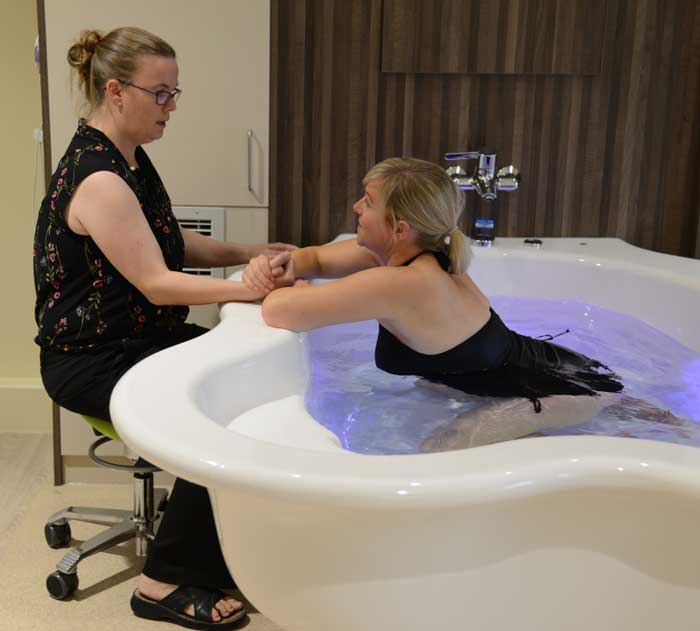
The extra-wide rounded rim is another midwife-centred design feature.
A narrow rim concentrates pressure into a small area of the forearm.
A wider rounded rim allows the midwife to rest the forearms more comfortably while staying close to the pool.
This can make a considerable difference during prolonged observation, reassurance and hands-on support.
The rim should also remain clear of taps and fittings.
Midwives need freedom to move around the pool and choose the most appropriate position.
A clear working edge supports better access, better posture and better responsiveness.
Supporting entry and exit protects midwives too
Although the primary focus of this article is midwives, entry and exit must be considered because they directly affect the midwife’s role and physical workload.
HSE identifies risks when midwives actively support entry or exit into the pool, or when the mother uses the midwife as support while entering or exiting. [2]
For this reason, pool design should reduce unnecessary lifting, pulling and steadying by staff.
A secure sit-and-swivel approach over a wide, supportive rim gives the person entering the pool a more controlled method of access. It also helps the midwife guide rather than physically carry or hold body weight.
NICE recommends supporting women and pregnant people with mobility issues to access water during labour and birth through an individualised needs assessment and reasonable adjustments. [4] From the midwife’s perspective, this reinforces the need for pool design, room layout and local procedures to work together.

Emergency evacuation: designed in, not improvised
Emergency evacuation is another area where design directly affects the midwife’s work.
HSE advises that emergency procedures should identify what situations could arise, whether the mother can participate, how to get her out of the pool, how many staff or helpers are required and how to call for additional help.
HSE also lists equipment that may be needed, such as an evacuation net, flotation aids, slide sheet, height-adjustable bed or trolley, hoist and slings. [2]
The pool should support these procedures rather than make them harder.
Access around the pool, the working height, the rim, internal supports and the ability to move the person towards a safe exit point all affect how calmly and efficiently staff can respond.
Good design cannot replace training, staffing or local policy. But it can make the trained response easier to carry out.
Midwife comfort is a safety issue
Midwife comfort is sometimes treated as a soft benefit. It is not.
A midwife who can work close to the pool in a stable, supported position is better placed to remain attentive, calm and physically available.
Good posture supports good practice. It helps midwives observe, listen, monitor, reassure and assist without unnecessary strain.
For midwives who use birth pools on an ongoing basis, the difference between an obstructive design and an ergonomic design is not theoretical.
It is felt in the back, neck, shoulders, arms and wrists at the end of a shift.
The pool should never make the midwife’s work harder than it needs to be. It should support safe, skilled, compassionate care.
Designed for the people who use it every day
Active Birth Pools were developed from a user-centred ergonomic approach, including the work described in CIEHF Case Study 18 and the involvement of a health-service ergonomist working with midwives at Nottingham City Hospital. [1]
That approach remains central to the design today.
Every curve, rim, recess and support feature has a purpose. The concave side gives knee room. The wide rounded rim supports the arms. The clear working edge allows movement around the pool.
The internal supports and access features help reduce avoidable strain during entry, exit and assistance. The overall form helps midwives get closer, reach less and work more comfortably.
A water birth pool should be beautiful, durable and easy to clean. But above all, it should work safely for the people who use it every day.
For midwives, better birth pool design means better access, less strain and a safer working position.
That is why midwife comfort and safety starts with better birth pool design.
Download Midwife Comfort and Safety Assessment
References
[1] Chartered Institute of Ergonomics & Human Factors. Case Study 18: Improving birthing pool design. Produced and published by CIEHF. https://activebirthpools.com/wp-content/uploads/2023/01/Improving-birthing-pool-design.pdf
[2] Health and Safety Executive. Moving and handling in health and social care: Manual handling in birthing pools. Updated 12 January 2026. https://www.hse.gov.uk/healthservices/moving-handling/birthing-pools.htm
[3] Health and Safety Executive. Musculoskeletal disorders at work. Updated 16 March 2023. https://www.hse.gov.uk/msd/index.htm
[4] National Institute for Health and Care Excellence. Intrapartum care, NICE guideline NG235: recommendations on labouring in water, water temperature, cleaning and access for people with mobility issues. Published 29 September 2023; last updated 9 June 2026. https://www.nice.org.uk/guidance/ng235/chapter/Recommendations