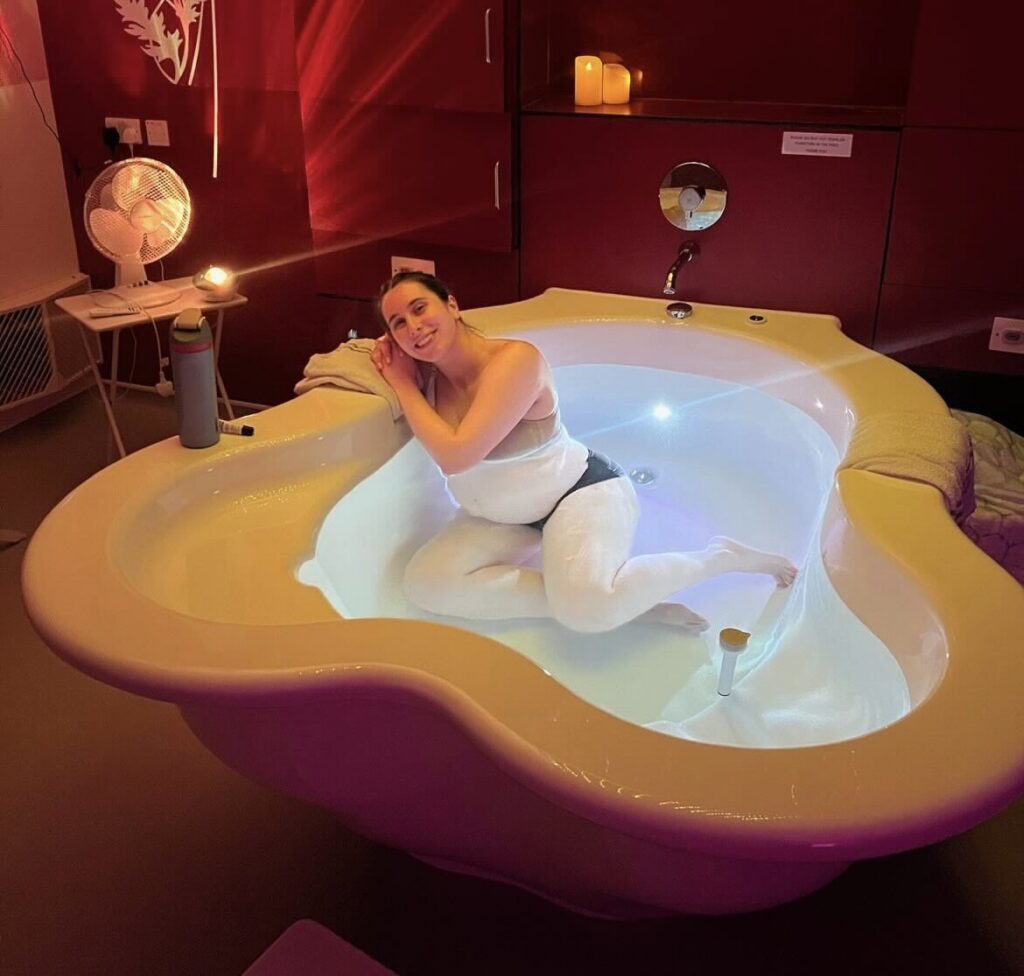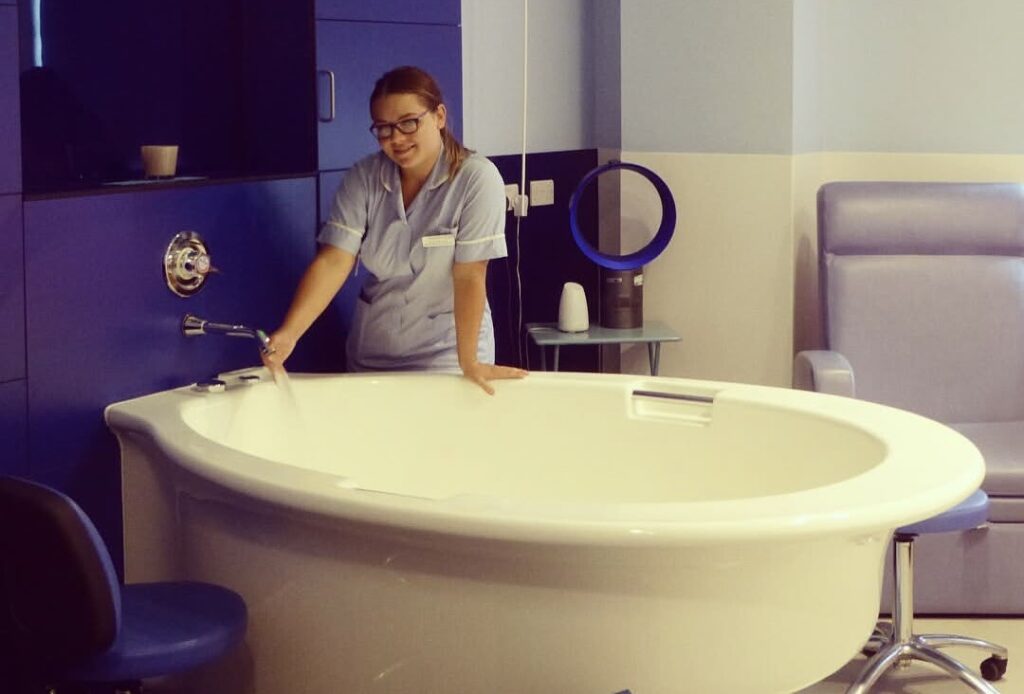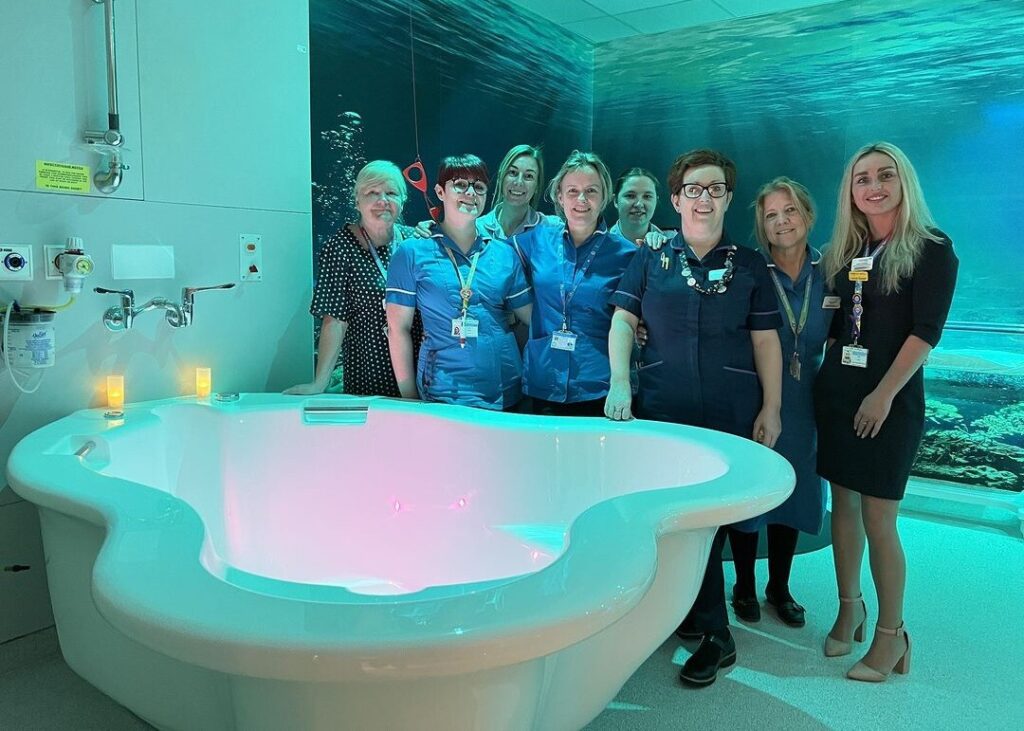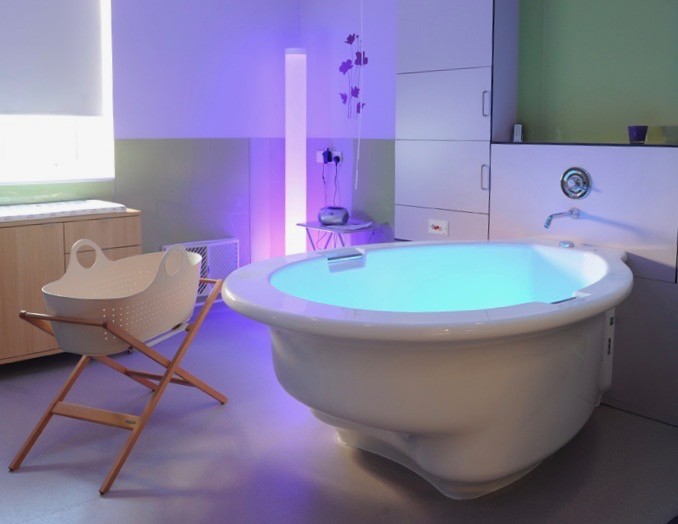

“Even a recent innovation, the birth pool, does not always permit free movement.” — Sheila Kitzinger OBE
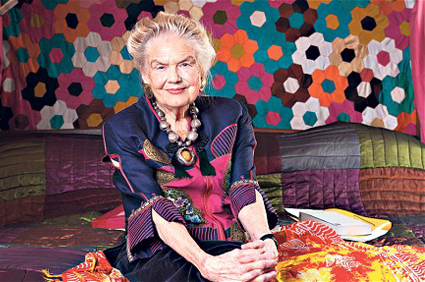
Sheila Kitzinger was one of the most influential voices in modern childbirth. As an author, social anthropologist and birth activist, she spent decades challenging the assumption that women should labour and give birth in positions chosen for the convenience of the institution rather than the needs of the body.
In her 2003 article The Clock, the Bed, the Chair, the Pool, Kitzinger made a point that remains highly relevant for maternity units today: a birth pool should support freedom of movement — but not every pool does. [1][2]
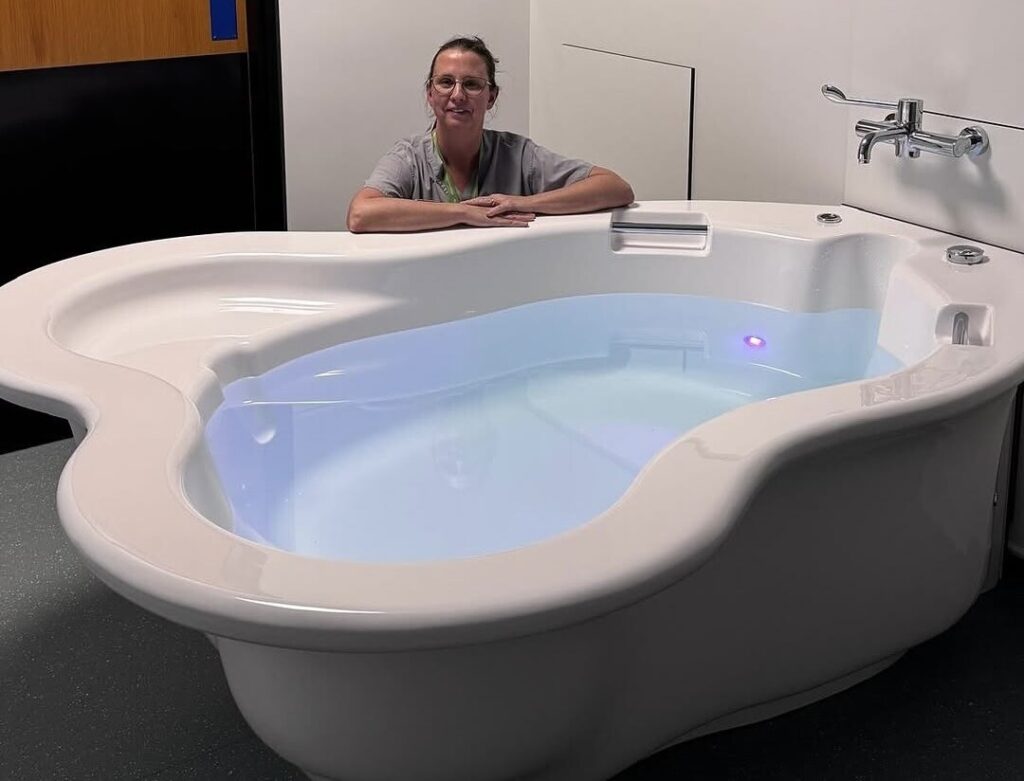
A birth pool should not become a bed filled with water
Water immersion is often valued because it can help women feel lighter, more private, more comfortable and more able to move instinctively during labour. Evidence reviews have found that labouring in water may reduce the use of epidural analgesia, without evidence of increased adverse outcomes for mothers or babies in the studies reviewed. [3]
NICE also recognises water immersion as an option for pain relief in labour, while noting that evidence on actual birth in water continues to be assessed separately. [4]
But the benefits of water depend on the environment created by the pool itself.
A poorly designed birth pool can reproduce the same problem Kitzinger identified in beds and chairs: it can direct the mother into a fixed, semi-recumbent position. Built-in seats, moulded supports, foot rests and rigid hand grips may look reassuring, but they can also restrict the very mobility that makes water valuable in labour.
The problem with fixed seating
When a pool contains a fixed seat, it subtly instructs the mother how to use it.
Instead of inviting upright, forward-leaning, kneeling, squatting or all-fours positions, it can encourage the mother to lean back with her legs forward. In effect, the pool becomes a reclined chair under water.
That matters because maternal position affects how freely the pelvis can move. Upright and flexible positions are associated with several possible advantages in the second stage of labour when compared with supine or lithotomy positions, although the evidence varies in certainty and each position has its own benefits and considerations. [5]
Research and reviews of maternal positioning also describe how positions such as squatting, kneeling and upright postures can increase or optimise pelvic outlet dimensions compared with more horizontal positions. [6][7]
The design question is therefore simple:
Does the pool allow the mother to move — or does it decide her position for her?
Water birth works best when the mother can respond to her body
Labour is dynamic. A woman may want to lean forward during one contraction, kneel during the next, rest between contractions, hold the pool edge, float, turn, squat, or change position quickly as the baby descends.
A pool designed around freedom of movement should make these changes easy.
It should provide:
- open internal space, rather than restrictive moulded seating;
- comfortable support points that can be used in different positions;
- sufficient room for the mother to turn, kneel, lean, squat and rest;
- safe access for the midwife without compromising the mother’s privacy;
- a design that supports physiological labour rather than imposing a posture.
The best birth pool is not simply a vessel for warm water. It is part of the clinical environment, part of the mother’s support system, and part of the midwife’s working space.
Kitzinger’s insight is still a design standard
Sheila Kitzinger’s observation was not an objection to birth pools. It was a challenge to design them properly.
A pool that restricts movement can undermine the reasons for using water in the first place. A pool that supports movement can help create the conditions that many women seek from water birth: comfort, autonomy, privacy, buoyancy and the ability to follow instinctive positions in labour.
For hospitals, architects, maternity planners and midwives, this is the key lesson:
A birth pool should never dictate the birth position. It should make movement possible.
That principle has guided the development of Active Birth Pools for decades. Our designs avoid restrictive internal mouldings and fixed birth seats because freedom of movement is not an optional feature. It is central to the purpose of water birth.
When choosing a birth pool, ask not only how it looks, but how it behaves in use.
Does it support the mother?
Does it support the midwife?
Does it preserve space, mobility and dignity?
And most importantly:
Does it allow the woman in labour to move as her body needs?
References used
[1] Your current page quotes Kitzinger and frames the issue around how some pools restrict movement with seats, handgrips and footrests.
[2] Sheila Kitzinger’s article is listed as Sheila Kitzinger’s Letter from Europe: The Clock, the Bed, the Chair, the Pool, published in Birth in March 2003.
[3] Cochrane’s review on immersion in water during labour found that labouring in water may reduce epidural use and found no evidence of increased adverse outcomes in the reviewed studies.
[4] NICE’s intrapartum care guidance covers care during labour and includes recommendations relating to water immersion for pain relief.
[5] The Cochrane review on positions in the second stage of labour reports possible benefits of upright positions compared with supine positions for women without epidural anaesthesia, while also noting uncertainties and possible trade-offs.
[6] A 2019 review of common maternal positions notes, for example, that squatting can increase the pelvic outlet by approximately 20%.
[7] A 2021 MRI-based study reports that maternal birthing position may influence pelvic capacity, with upright positions potentially optimising capacity through freer pelvic movement.
[8] The 2022 systematic review and meta-analysis in BMJ Open found that water immersion during labour and birth was associated with several maternal benefits and no increase in adverse neonatal outcomes in the included evidence.