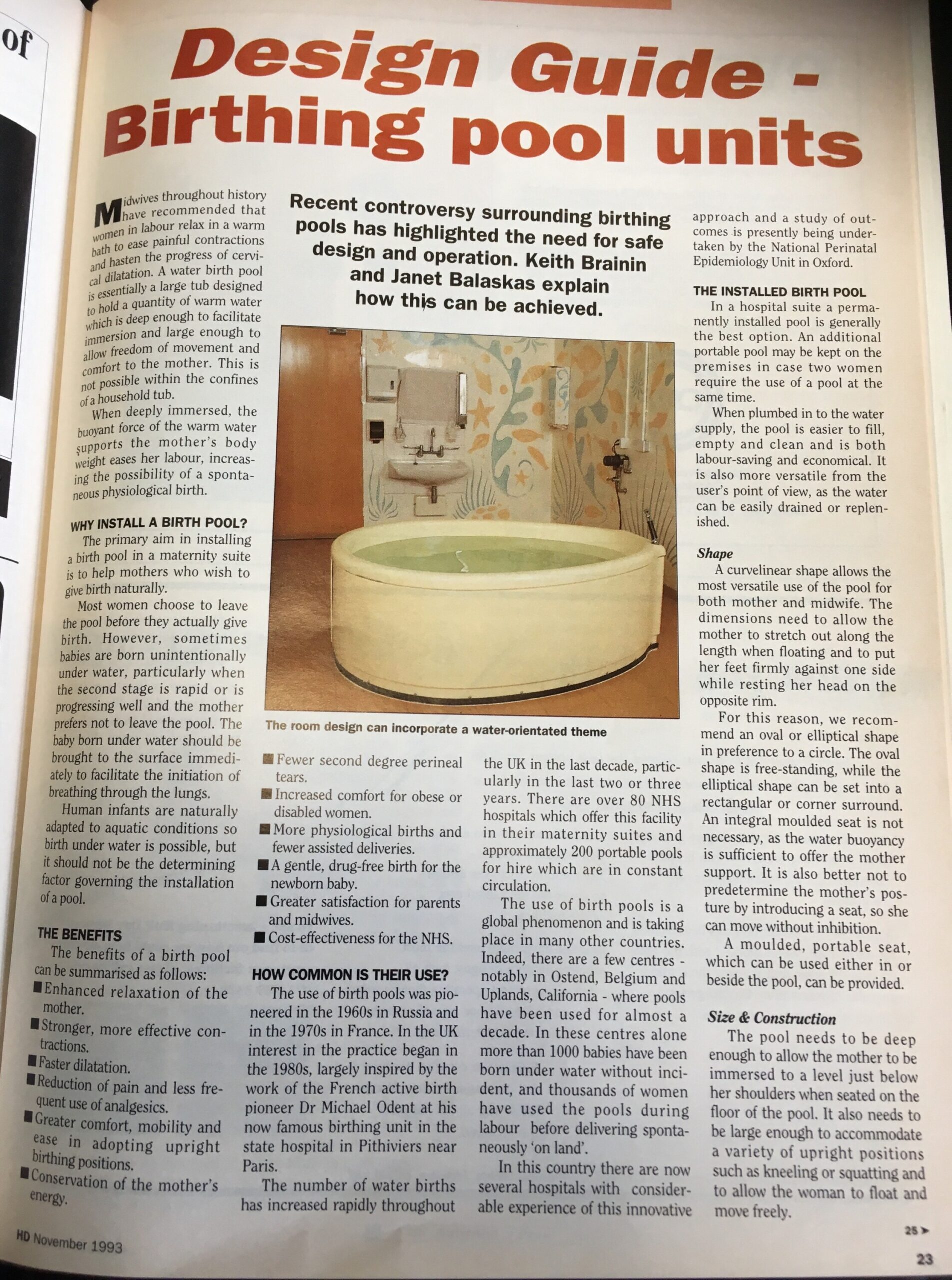
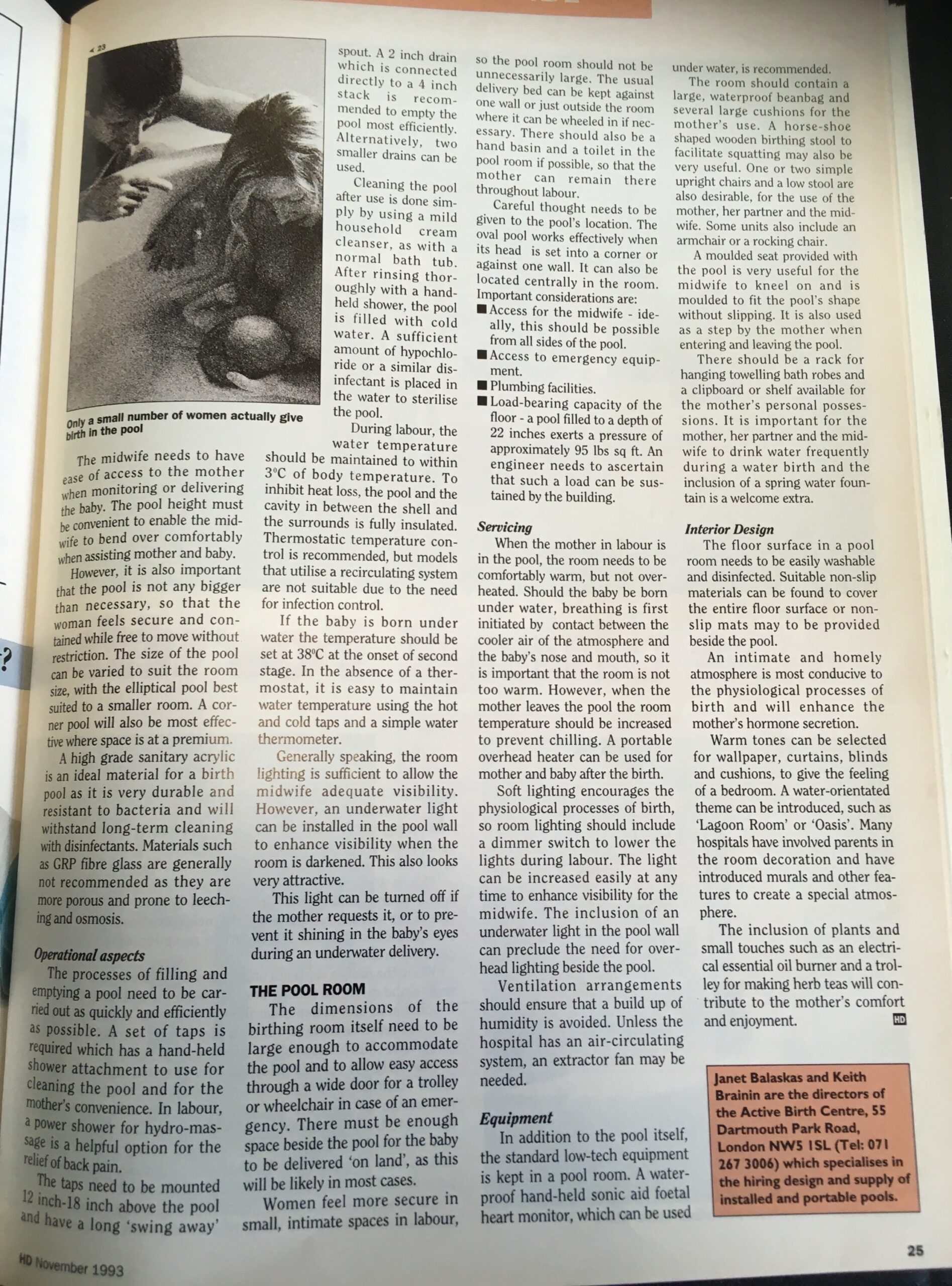
Design Guide – Birthing Pool Units Hospital Development Magazine November 1993

By Janet Balaskas and Keith Brainin

Hospital Development Magazine November 1993

Fluid modernities: the birthing pool in late twentieth-century Britain

Improving Birthing Pool Design: Case Study 18 – Chartered Institute of Ergonomics & Human Factors

The history of water birth and development of specialised water birth pools

Active Birth Pools: Cleaning and Care

Safety comes 1st!

Active Birth Pools  are Rated No.1 for water safety and infection control standards.

This is because the material we use (Ficore) is 5 x harder than other materials and is immune to the effects of disinfection with 10,000ppm hypo-chlorite.

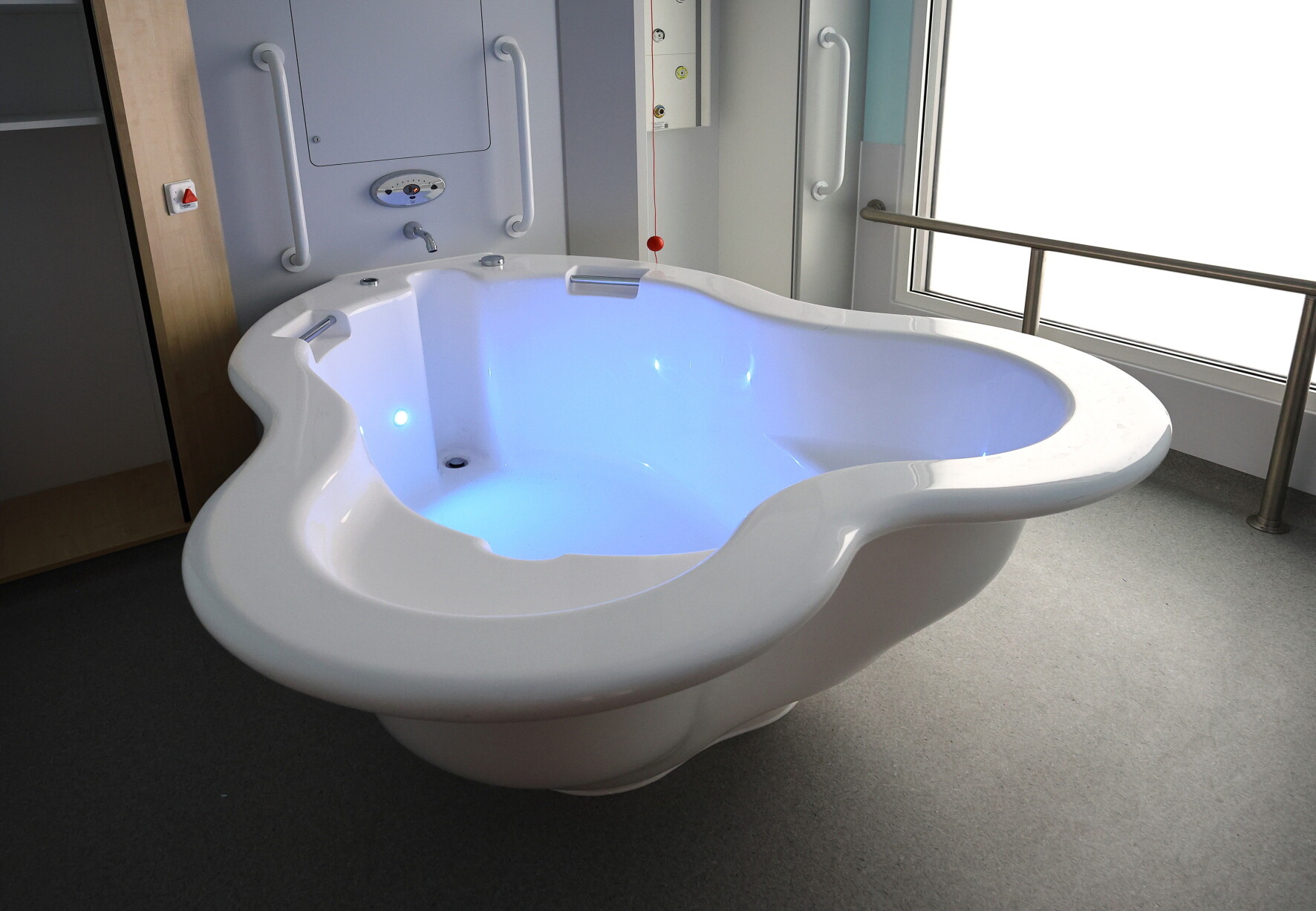
Seamless one-piece construction and the absence of surface mounted metal work deny micro-organisms the environment they need to propagate.

Active Birth Pools Cleaning and Disinfection Guidelines

This is a two-step procedure – first cleaning of the pool and surround, then disinfection of the pool and surround.

  1. Prior to emptying the pool remove debris and larger particles from the water with a sieve to prevent it from blocking or obstructing the outlet.
  1. Use the standard infection control precautions (plastic apron, disposable gloves and eye protection) when cleaning the pool. Ensure the area is well ventilated.
  1. Cleaning – use a non-abrasive detergeant with non-abrasive sponge or cloth to thoroughly clean the pool. Ensure the tap is cleaned first, so as not to transfer micro-organisms from the “dirty” pool area to the cleaner tap region. Rinse well with warm water.
  1. Disinfecting – use an approved hypochlorite disinfectant listed in the table below following the directions on the packet for mixing the solution to the correct concentration for disinfecting the birth pool and surround.
  1. Apply the solution to the tap and spout prior to disinfecting the pool.
  1. There are 3 methods for disinfecting the pool that are commonly used in hospitals:

1) Fill the pool with cold water and add the requisite amount of disinfectant – leave for ten minutes.

The advantage of this method is that it is 100% effective but wasteful of water, time consuming and uses a large amount of disinfectant

2) Make up 2-3 litres of solution and pour it around the inside of the rim. Then use a new disposable mop or cloth to spread the disinfectant over the surface of the pool. Leave for ten minutes.

The advantage of this method is that it is economic in terms of time and cost but relies upon the person carrying out the task to ensure that 100% of the pools surface is disinfected.

3) Fill a spray bottle with disinfectant and thoroughly spray the surface of the pool and surround. Then use a new disposable mop or cloth to spread the disinfectant over the surface of the pool. Leave for ten minutes.

The advantage of this method is that it is economic in terms of time and cost but relies upon the person carrying out the task to ensure that 100% of the pools surface is disinfected

  1. Open the drain outlet and empty the pool of the disinfectant.
  1. Using cold water, rinse the tap then the pool to remove all traces of the disinfectant, to prevent any residue being left on the pool surface.
  2. Dry the entire surface of the pool using a new cloth or disposable mop head.
  3. Keep the drain outlet closed when not in use.

Damage resulting from exposure to higher water temperatures, or steam cleaning or will not be covered by our guarantee.

If you are duty flushing the taps with hot water/steam add 10cm of cold water to the pool first.

Our North American Distributor, Tim Johnson Grass has produced a Cleaning & Disinfection Protocol for our water birth pools  in US and Canadian Healthcare Facilities which is recommended reading  for Infection Control Personnel – click here to download it: ABP Cleaning and Disinfection Protocol

Active Birth Pools – Approved Disinfectants Suitable for Ficore

This table lists hospital disinfectants suitable for use with Active Birth Pools made from Ficore composite.
Always follow manufacturer IFU (dilution and contact time) and then rinse and dry surfaces as per our cleaning and disinfection guidelines.

#
Disinfectant / Product Type
Common Hospital Brands / Examples
Active Ingredient
Hospital Use / Notes
Ficore Suitability (Pool Surface)
Key Cautions
1
NaDCC chlorine disinfectant tablets (general)
Generic “NaDCC tablets” worldwide
Sodium dichloroisocyanurate (NaDCC / troclosene sodium)
Global hospital standard for surface disinfection, spills
Highly suitable
Rinse after use to prevent residues
2
Actichlor Plus tablets
Ecolab Actichlor Plus
NaDCC + detergent
Designed for healthcare surface/environment disinfection; broad spectrum & sporicidal capability
Highly suitable
Use correct dilution/contact time
3
Chlor-Clean tablets
Guest Medical Chlor-Clean
NaDCC + detergent
Cleaning + disinfecting combined; healthcare product
Highly suitable
Follow packet directions
4
Presept tablets / granules
ASP / Presept
NaDCC (troclosene sodium)
Widely used in healthcare hard-surface disinfection
Highly suitable
Clean first, then disinfect
5
Haz-Tab tablets / granules
Guest Medical Haz-Tab
NaDCC
Used internationally for outbreaks/spills/surface disinfection
Highly suitable
Rinse thoroughly after contact time
7
Chlorine dioxide system (surface disinfectant)
Tristel Fuse for Surfaces
Chlorine dioxide (generated from components)
Premium sporicidal surface disinfection, widely used in hospitals
Suitable
Must be rinsed off fittings/surfaces after contact time

Do not use hydrogen chloride (bleach) or hydrogen peroxide as they are highly corrosive and will cause the metal fittings to rust and may damage the surface of the pool.

If you want to use another product please contact us for approval as damage resulting from unapproved products will not be covered by our guarantee.

Hospitals worldwide are starting to use Copper / Silver orca disinfection systems in an effort to combat bacterial issues and improve water safety.

We have discovered that there is great potential for staining with the Copper / Silver orca disinfection system

Copper-silver ionization systems introduce trace amounts of copper into the pool water.

In some cases, exposure to elevated copper levels can lead to staining of the sanitary ware and other surfaces, such as walls, floors, or fixtures.

This study goes into great detail – https://www.ncbi.nlm.nih.gov/pmc/articles/PMC7384302/

Please note that staining caused by these systems is NOT covered by our guarantee.

If your hospital is using one of these water treatment systems we suggest that you contact the department responsible for water safety as regular monitoring and appropriate copper levels are essential to mitigate the risk of staining.

Recommended Reading:


Hospital Water Birth Pools

Create a calm, clinically appropriate water birth environment with hospital-grade birth pools designed around mothers, midwives and the realities of modern maternity care.

Why hospitals choose Active Birth Pools

For nearly four decades, Active Birth Pools have helped maternity services provide water birth facilities that are safer, stronger and more practical to use.

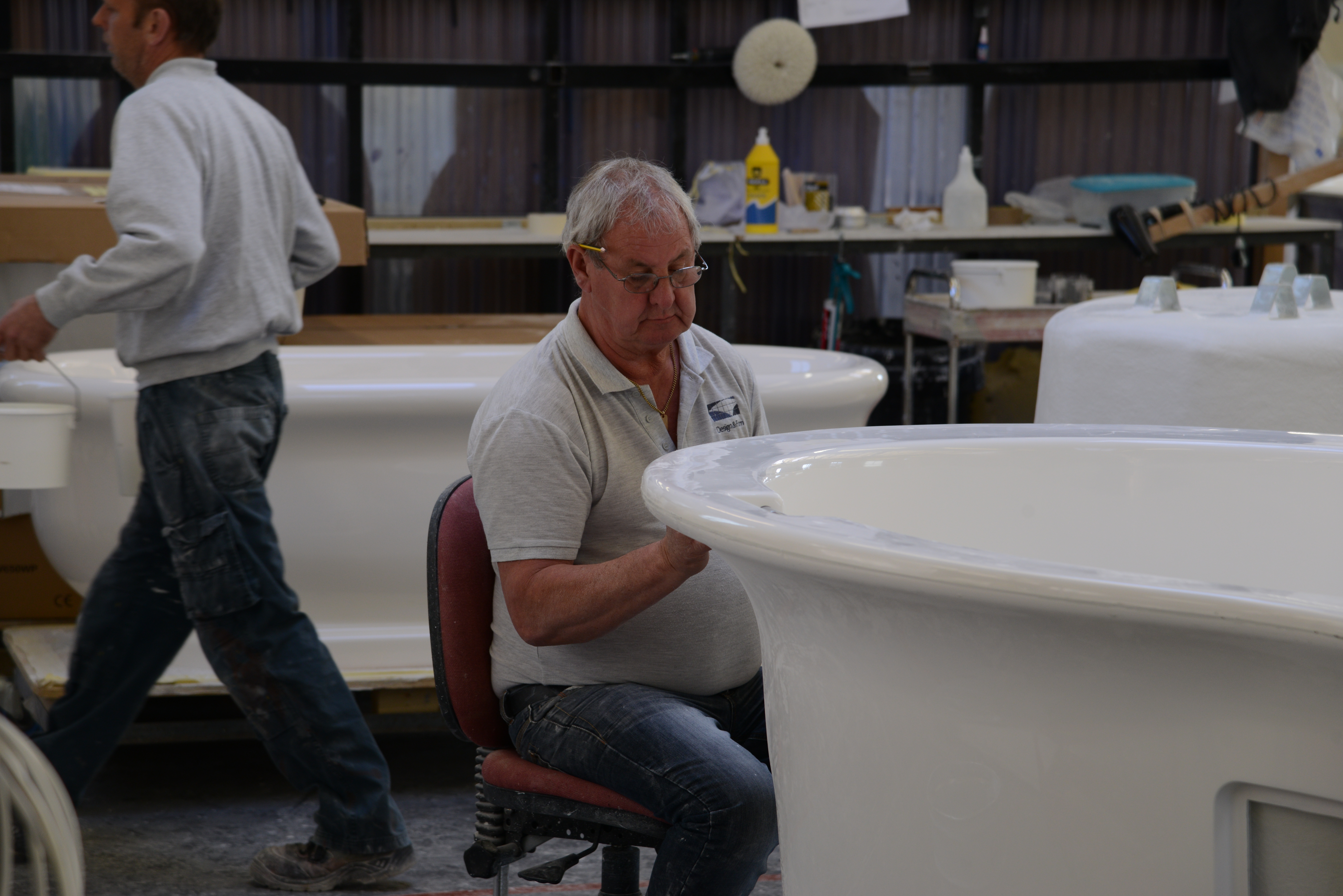
Our pools are hand-built to order in England from Ficore® composite and designed specifically for professional maternity settings. Every curve, rim, seat, handhold and access point has a purpose: to support mothers, protect midwives and help hospitals maintain a clean, efficient birth environment.

Built around five priorities

Safety – Designed to reduce avoidable risks, support secure movement and allow midwives to remain close, observant and ready to assist.

Hygiene –  Designed to reduce avoidable risks, support secure movement and allow midwives to remain close, observant and ready to assist

Midwife comfort and support – Ergonomic rims, practical working height and clear access help midwives provide care without unnecessary bending, reaching or strain.

 Maternal comfort –  Generous depth, supportive contours and intuitive handholds help mothers relax, move freely and find comfortable positions during labour and birth.

Long-term value – Durable construction, proven performance and a lifetime guarantee make Active Birth Pools a practical investment for maternity services.

Designed for mothers

A birth pool should help a mother feel secure, supported and free to move.

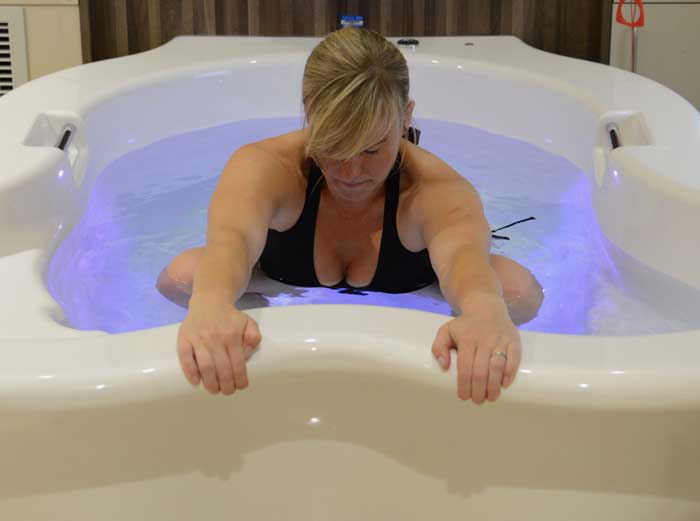
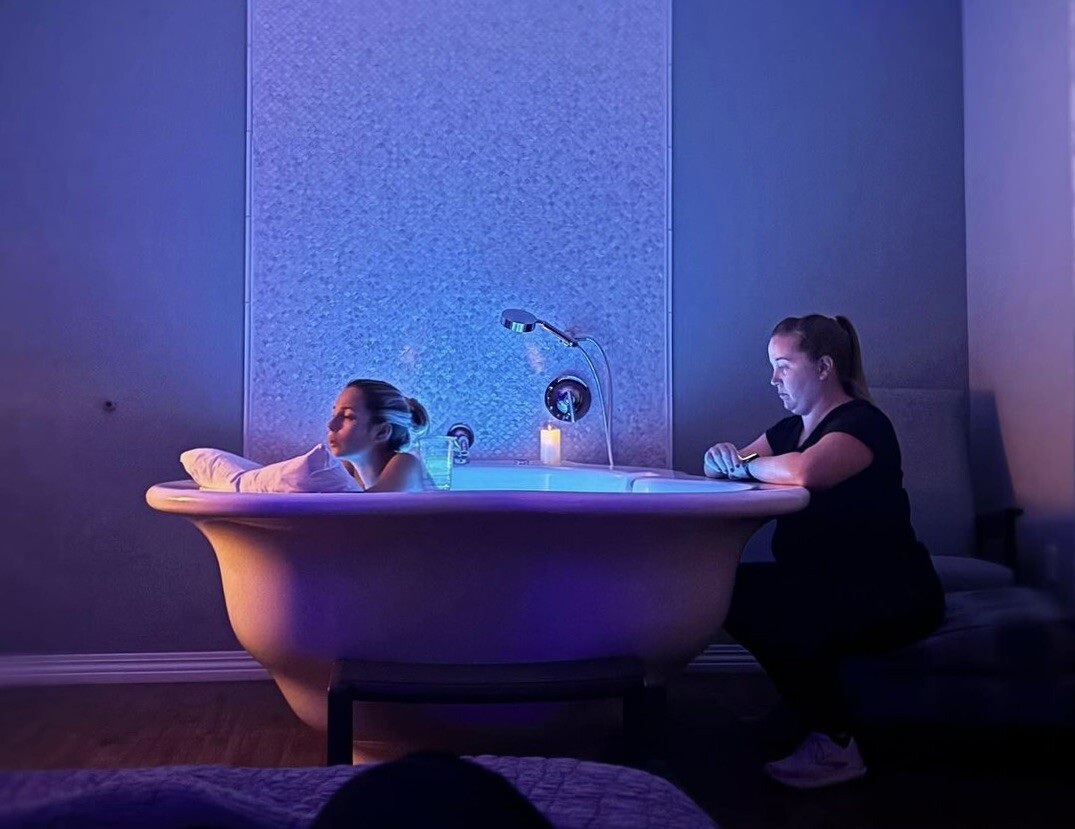
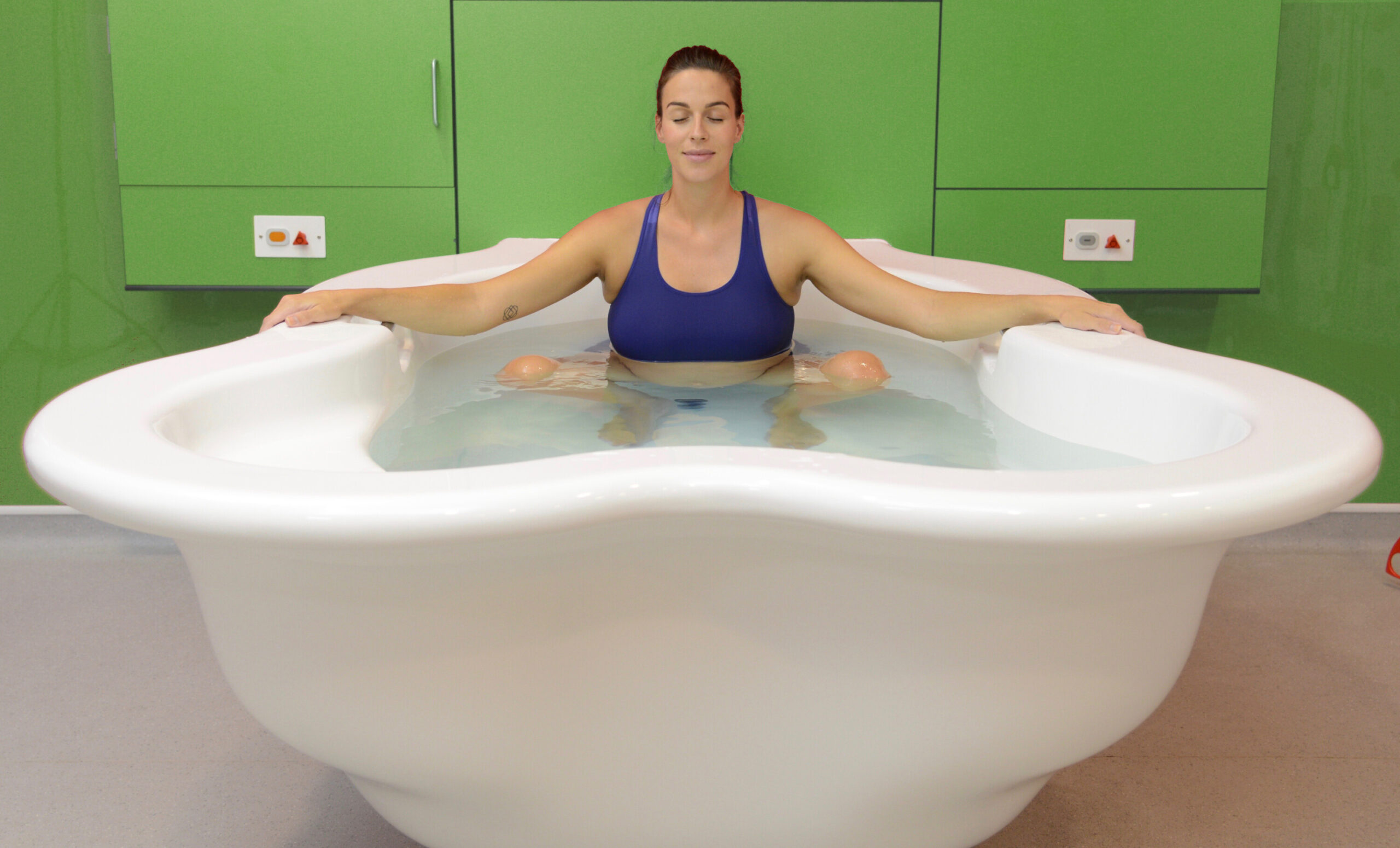
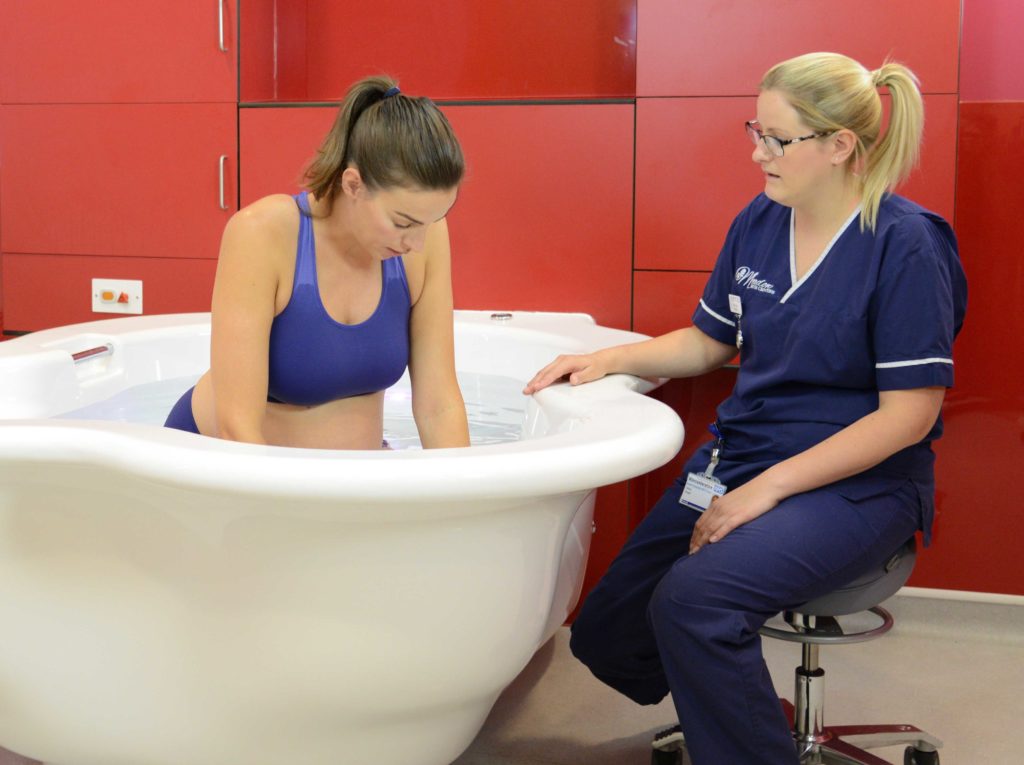
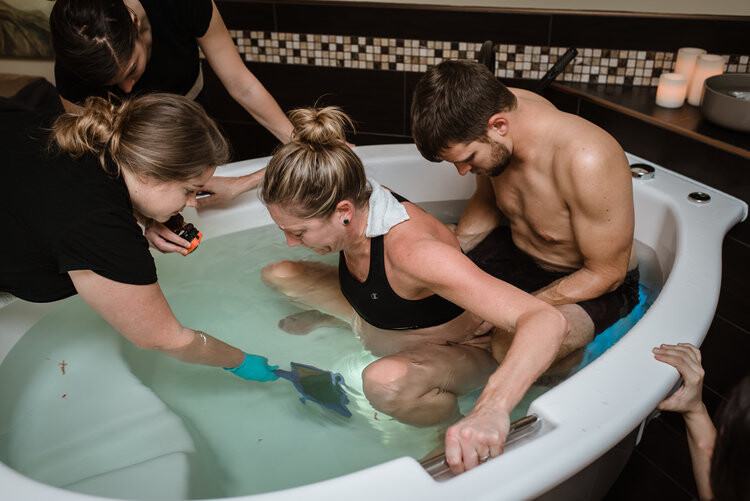
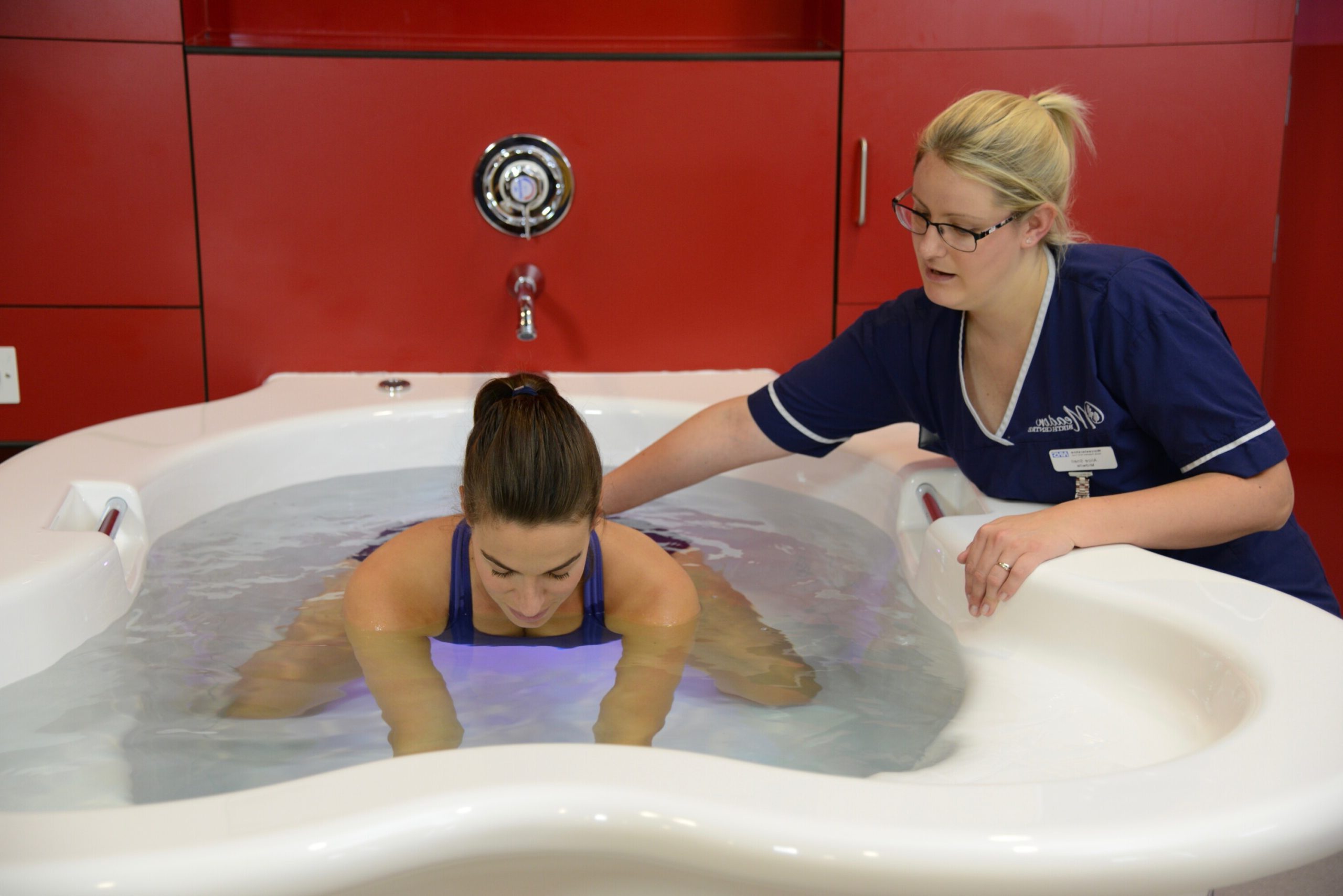
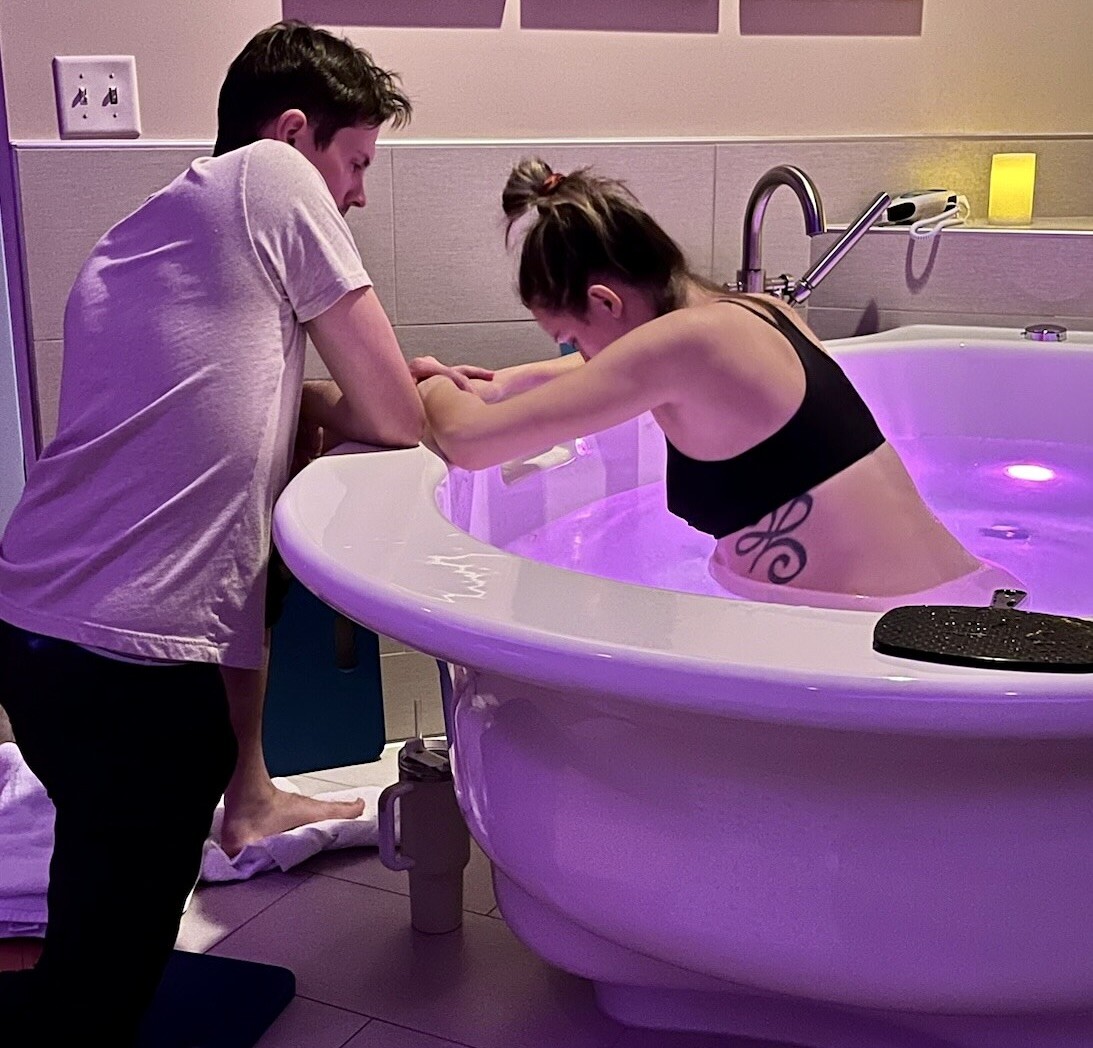
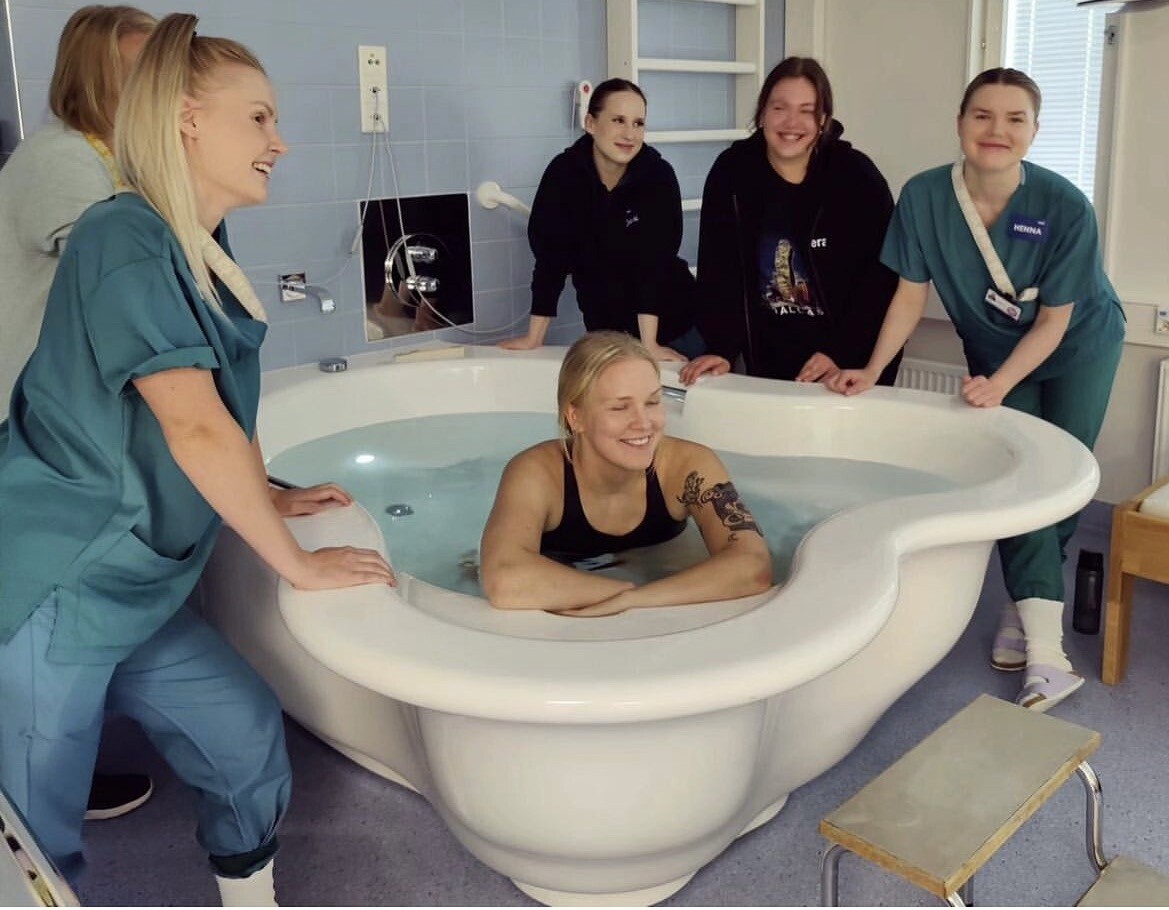
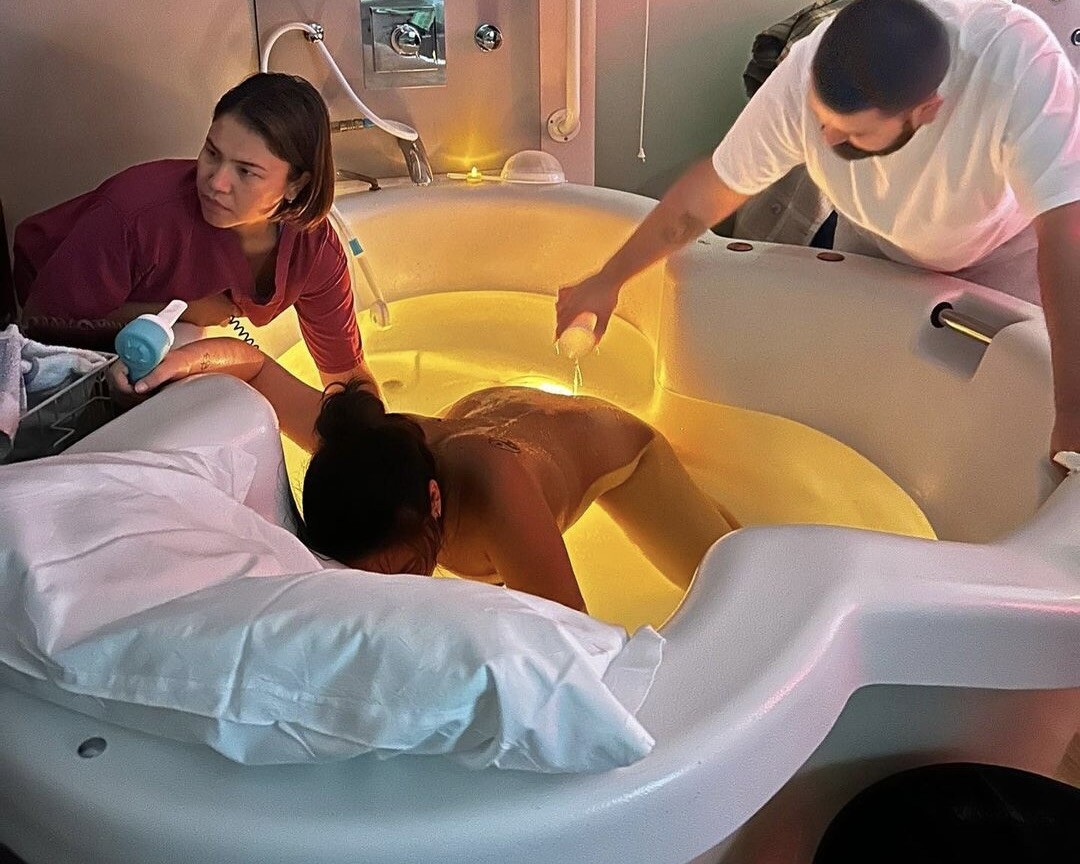
Active Birth Pools provide space, depth and internal support for upright, forward-leaning, kneeling, sitting and resting positions. Mothers can use the rim, internal handholds and contoured surfaces instinctively, without needing complicated instructions or additional equipment.

The result is a pool that supports physiological labour, maternal confidence and dignity.

Designed for midwives

A hospital birth pool is also a workplace.

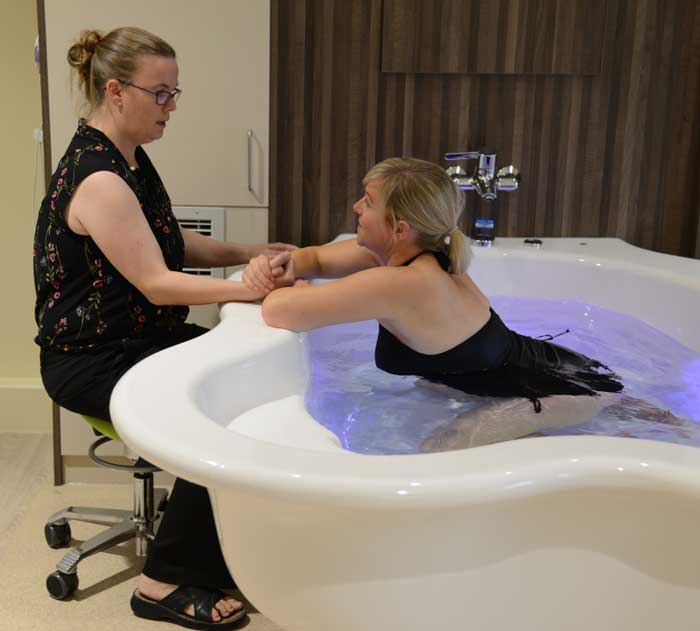
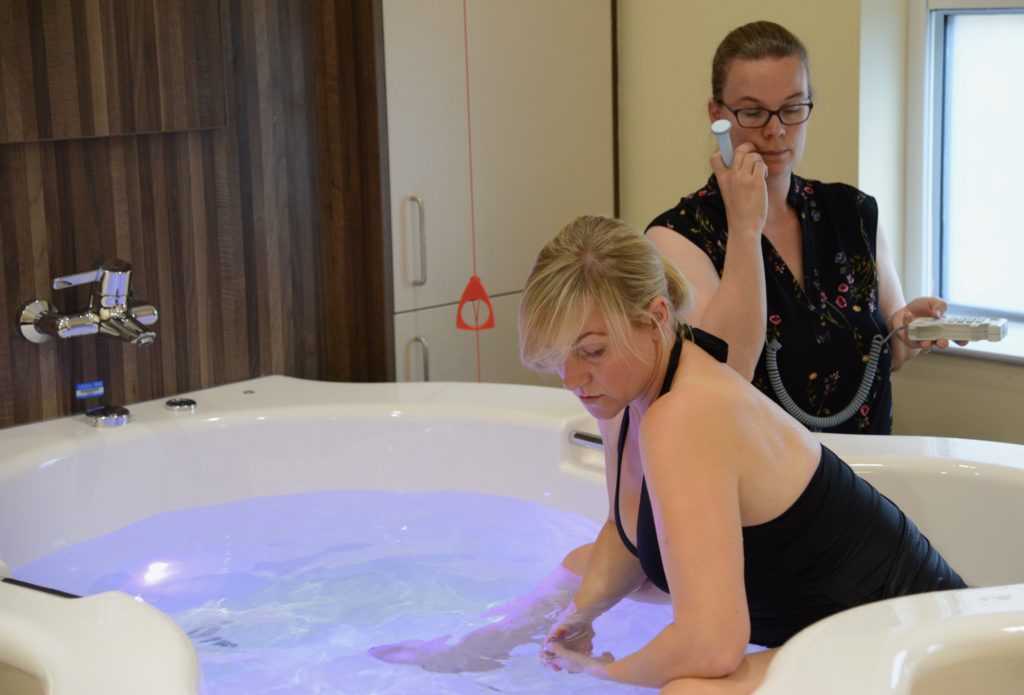
Midwives need safe access, clear sightlines and a comfortable working position. Poorly designed pools can force midwives to bend, kneel, reach or twist for long periods. Active Birth Pools are designed to support better posture, closer access and more effective hands-on care.

The aim is simple: better comfort for midwives, better support for mothers and a safer working environment for the whole maternity team.

Designed for hospitals

Hospitals need water birth facilities that are safe to specify, straightforward to clean and reliable over many years of service.

Active Birth Pools are designed for the practical demands of maternity units, including infection prevention, manual-handling awareness, emergency access, room layout, plumbing integration and long-term lifecycle value.

Whether you are planning a new maternity unit, refurbishing an existing birth room or replacing an older pool, we can provide product guidance, technical information and specification support.

Hospital-grade construction

Active Birth Pools are hand-built from Ficore® composite, a specialist material chosen for strength, warmth, durability and hygiene.

Unlike standard baths or domestic-style tubs, our pools are designed for repeated clinical use in demanding maternity environments. The material, form and finish work together to create a pool that feels calm and inviting while meeting the practical needs of hospitals and birth centres.

Evidence-aware water birth facilities

Water immersion is widely recognised as an important option in maternity care. Current guidance and research support the availability of water during labour and birth for appropriate women and birthing people, with local clinical assessment, infection-control procedures and safety protocols in place.

The pool itself matters. A well-designed hospital water birth pool can help maternity teams offer water birth with greater confidence by supporting access, hygiene, comfort, observation and emergency response.

What makes Active Birth Pools different?

  • Specialist water birth pool design since 1987
  • Thousands of pools installed worldwide
  • Hand-built in England
  • Ficore® composite construction
  • Lifetime guarantee
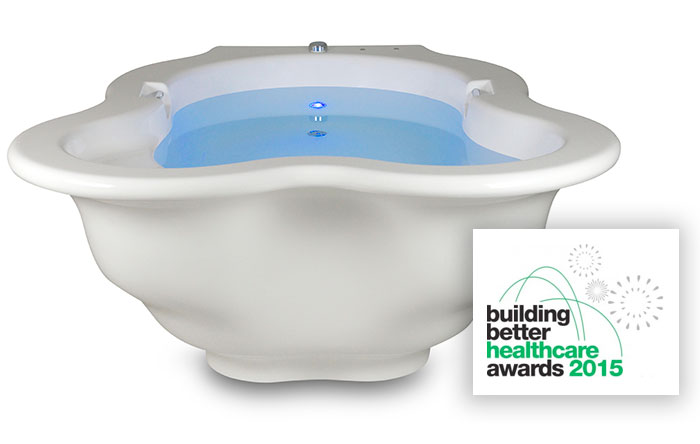
  • Award-winning ergonomic design
  • Comfortable for mothers
  • Safer working conditions for midwives
  • Practical specification support for hospitals, architects and project teams

Plan your hospital water birth facility

Choosing a birth pool is a clinical, practical and financial decision. The right pool should support safe care, clean efficiently, protect staff, fit the room properly and deliver reliable performance for decades.

Request specifications and pricing

Download the buyers’ guide

References and source notes

These references support the landing page claims and should be used to ground external-facing content. Claims in final published copy should remain proportionate and should not promise specific clinical outcomes.

  1. Active Birth Pools homepage. Used for company positioning including hospital-grade focus, long specialist experience, award-winning design, Ficore® composite, hygiene, durability and lifetime value. https://activebirthpools.com/
  2. Active Birth Pools Venus / 360 product information. Used for product positioning around 360° access, Water Column plumbing design and unobstructed rim access. https://activebirthpools.com/products/venus-birth-pools/
  3. NICE NG235: Intrapartum care recommendations. Supports careful wording around access to water during labour and birth, individualised assessment and reasonable adjustments. https://www.nice.org.uk/guidance/ng235/chapter/Recommendations
  4. Royal College of Midwives news summary on Oxford Brookes water birth research. Supports cautious evidence-aware copy around benefits associated with water birth, including reduced interventions and increased satisfaction. https://rcm.org.uk/news/2022/07/water-births-provide-clear-benefits-and-a-positive-birth-experience-to-mother-and-baby/


If Sir Jony Ive Designed a Water Birth Pool, He Would Have Designed an Active Birth Pool

Sir Jony Ive is the British industrial designer best known for shaping the look and feel of the modern world. As the former Chief Design Officer at Apple, he led the design of iconic products including the iPhone, iMac and MacBook.

His philosophy is simple yet demanding: remove the unnecessary, refine the essential, and create objects that feel inevitable — as though they could never have been designed any other way.

If Jony Ive had turned his attention to maternity care and set out to design a water birth pool, it’s hard to imagine he would have created anything other than an Active Birth Pool.

Design That Begins With Purpose

At Active Birth Pools, design does not start with aesthetics. It starts with mothers, midwives, and clinical safety. Every curve, every surface, every fitting exists for a reason.

The pools are instantly recognisable — soft flowing internal lines, no harsh edges, no visual clutter. They look calm. Reassuring. Considered.

But like the best Apple products, the beauty is a by-product of rigorous function.

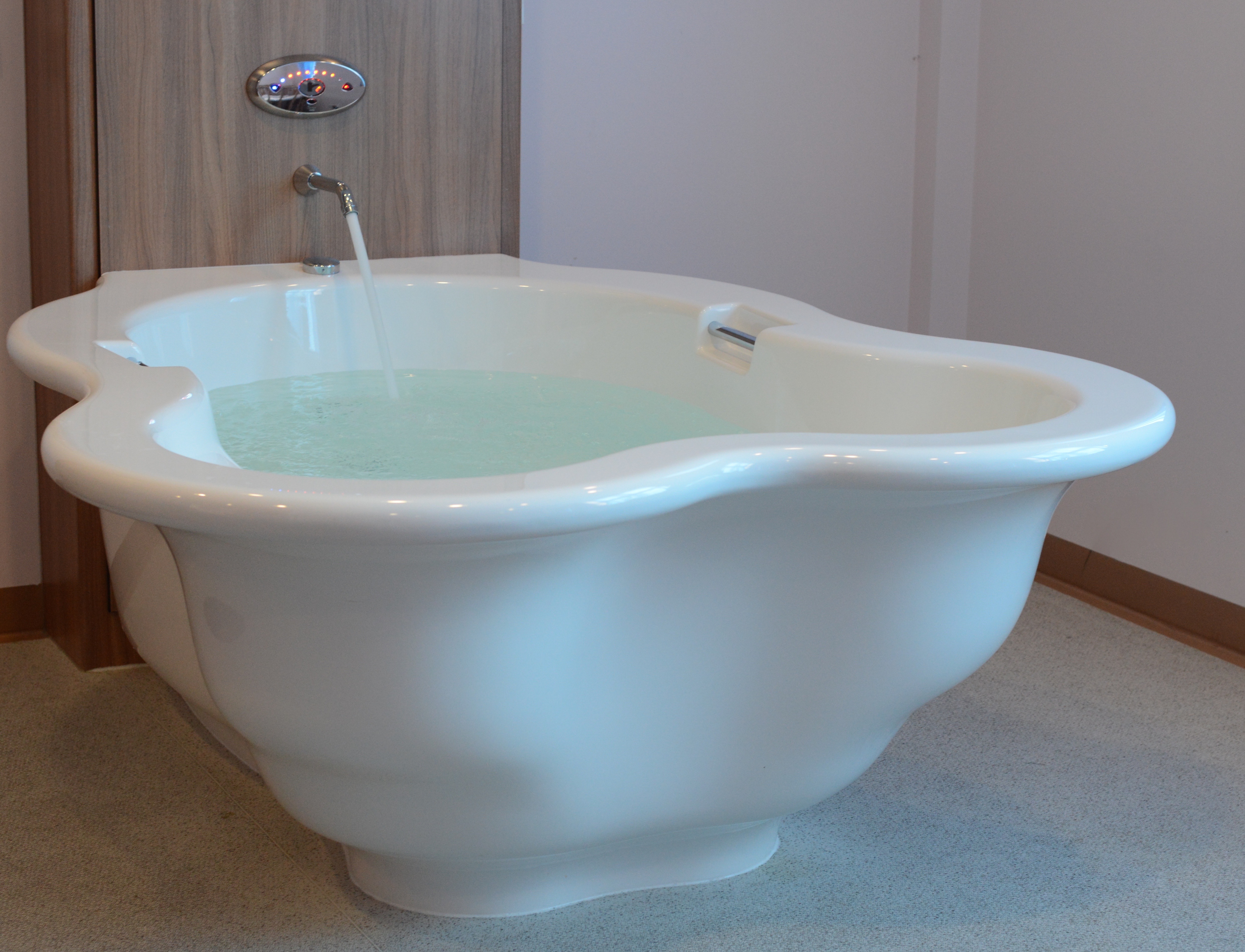
The distinctive rim is not just elegant; it is ergonomically profiled to support a woman in multiple birthing positions. The integrated handholds are placed exactly where instinct takes over.

The depth is carefully calculated to provide optimal buoyancy, supporting physiological birth while allowing midwives clear access when needed.

This is design that respects the user — both the mother and the clinician.

Simplicity That Conceals Complexity

One hallmark of Ive’s work is making the complex appear simple. The same is true here.

Behind the seamless surfaces lies serious engineering. Active Birth Pools are built for hospitals, designed to meet demanding infection control standards.

The one-piece, solid surface construction eliminates dirt traps and joints where bacteria can hide. The integrated waste systems, pipework, and access panels are engineered for reliability and longevity in high-use clinical environments.

Nothing is decorative. Nothing is arbitrary.

The result is a product that feels intuitive to use — because every detail has been thought through.

Human-Centred Innovation

Jony Ive often spoke about creating products that feel humane, that enhance experience rather than dominate it. Water birth pools are not simply clinical equipment; they are environments in which families meet for the first time.

Active Birth Pools understands this profoundly.

The pools create a sense of sanctuary within the birthing room. The soft geometry, the tactile materials, the quiet confidence of the design all contribute to a calmer atmosphere.

At the same time, midwives benefit from 360-degree access, carefully considered rim heights, and practical features developed through decades of collaboration with NHS maternity units and international hospitals.

This balance — emotional sensitivity combined with clinical precision — is rare.

Enduring, Not Disposable

Another parallel with Ive’s philosophy is longevity. Active Birth Pools are not temporary solutions.

They are capital investments for hospitals, designed to last for many years with minimal maintenance. Robust materials, precision fabrication, and thoughtful engineering reduce lifetime costs while maintaining performance.

They are not trends. They are standards.

Design That Feels Inevitable

The highest compliment often paid to an Apple product is that it feels obvious — as though it could not have been otherwise.

That same inevitability defines an Active Birth Pool.

When you see one installed in a maternity suite, it does not feel like equipment that has been added to the room. It feels like it belongs there. Like it was always meant to be there.

If Jony Ive had designed a water birth pool, it would not shout. It would not be ornate. It would not compromise.

It would be calm. Intelligent. Purposeful. Beautifully engineered.

It would be an Active Birth Pool.

Active Birth Pools and the Enduring Relevance of the “Ten Principles of Good Design”

In the world of design, few voices have resonated more deeply or enduringly than that of Dieter Rams. Known for his iconic work with Braun and Vitsoe, Rams articulated Ten Principles of Good Design—a framework that has influenced generations of designers across disciplines. His philosophy is rooted in clarity, functionality, sustainability, and the idea that design should exist in harmony with the user and the environment.

At Active Birth Pools, these principles are not just admired—they are intrinsically embedded into the company’s design ethos, guiding every aspect of product development, from material selection to user interaction. Here’s how each of Rams’ principles finds clear expression in the design and manufacture of Active Birth Pools:

  1. Good Design is Innovative

Innovation in Active Birth Pools is not about novelty for its own sake—it’s about continuous improvement in service of mothers and midwives. These pools integrate cutting-edge composite materials and ergonomic sculpting to meet the evolving needs of modern maternity care. Innovations such as integrated support features and seamless construction enhance both comfort and hygiene, setting new standards in birthing pool design.

  1. Good Design Makes a Product Useful

The primary purpose of a birthing pool is to support women through the physical and emotional journey of childbirth. Active Birth Pools are designed to enhance natural birth by promoting freedom of movement, buoyancy, and pain relief. Every contour, shape, and feature is purpose-built to serve both the mother’s needs and the midwife’s functionality requirements. Usefulness is paramount, with nothing superfluous or merely decorative.

  1. Good Design is Aesthetic

While functionality leads, aesthetics are not ignored. The organic shapes and flowing lines of Active Birth Pools evoke calm, safety, and softness. The visual harmony of the pools reflects the emotional atmosphere needed in a birthing environment—serene, supportive, and nurturing. Their presence in a room transforms a clinical setting into a place of dignity and intimacy.

  1. Good Design Makes a Product Understandable

An Active Birth Pool communicates its function intuitively. Without the need for instructions, women and birth professionals can immediately understand how to use its features. Thoughtful design—like strategically placed handholds and specially designed seats—ensures that interaction with the pool is natural and self-explanatory.

  1. Good Design is Unobtrusive

Active Birth Pools do not dominate the birth space; they complement it. With their minimalist, sculptural appearance, they create a quiet sense of readiness. The design does not impose itself but respects the primacy of the birth experience, providing a gentle, supportive presence that encourages empowerment and privacy.

  1. Good Design is Honest

There is no deception in an Active Birth Pool. Its form follows its function, and its materials are authentic and appropriate. The integrity of the design is reflected in visible quality and craftsmanship. There are no gimmicks—just a sincere commitment to excellence in support of natural birth.

  1. Good Design is Long-lasting

Active Birth Pools are built to last for decades and guaranteed for life. Using high-performance, medical-grade materials and precision manufacturing, these pools are designed for longevity in high-demand hospital environments. Their timeless design ensures they remain relevant and effective, resisting the ephemerality of trends. They are an investment in sustainable maternity care.

  1. Good Design is Thorough Down to the Last Detail

From the tactile, non-slip surfaces to the ergonomically optimised rim, every detail is meticulously considered. Nothing is left to chance. This attention to detail ensures safety, hygiene, and ease of use—critical aspects in any healthcare setting. It is a level of refinement that shows deep respect for both users and caregivers.

  1. Good Design is Environmentally Friendly

Active Birth Pools are created with sustainability in mind. Their durability reduces waste over time, while efficient manufacturing processes and long product life cycles contribute to lower environmental impact. The choice of materials reflects a commitment to health and environmental safety, aligning with the needs of an increasingly eco-conscious world.

  1. Good Design is as Little Design as Possible

This principle, perhaps more than any other, captures the soul of Active Birth Pools. There is no excess, no ornamentation, no distractions—only what is necessary to create the optimal environment for labour and birth. The purity of form, the clarity of purpose, and the simplicity of use reflect the ethos of “less, but better” in its purest expression.

Conclusion: Design with Integrity, Purpose, and Compassion

Dieter Rams’ principles are more than a manifesto for industrial design—they are a call for ethical, human-centered creation. Active Birth Pools has embraced these principles, not as a marketing tool, but as a core philosophy guiding every product decision.

By aligning with Rams’ Ten Principles, Active Birth Pools has created not only world-class birthing pools but also a legacy of design integrity in the service of life’s most profound moment—birth. In a healthcare landscape often dominated by cold functionality, Active Birth Pools reminds us that good design is compassionate design.

Fluid modernities: the birthing pool in late twentieth-century Britain

Original Research
Victoria Bates , Jennifer Crane, Maria Fannin
British Medical Journal
June 2023 

Abstract

Birthing pools are a common feature of maternity units across Europe and North America, and in home birth practice.

Despite their prevalence and popularity water birth pools have received minimal empirical or theoretical analysis.

This article attends to the emergence, design and meaning of such birthing pools, with a focus on the UK in the 1980s and 1990s.

Across spheres of media, political and everyday debate, the pools characterise the paradoxes of ‘modern maternity’: they are ‘fluidly’ timeless and new, natural and medical, homely and unusual, safe and risky.

Beyond exploring the contradictions of ‘modern maternity’, we also make two key interventions.

First, we contend that modern maternity has substantially expanded in recent decades to hold and include additional ideas about comfort and experience.

Second, we flag the culturally specific notions of ‘modernity’ at play in modern births: the popularity of the birthing pool was typically among white, middle-class women.

We argue that birthing pools have had an impact at a critical moment in birthing people’s care, and we map out the uneven and unjust terrains through which they have assumed cultural and medical prominence.

I am pleased to say that I (Keith Brainin) receive honourable mention in this esteemed publication and recommend it highly to anyone interested in the use of water for labour.

Delivery, handling and Installation

Delivery, Moving and Handling

Mainland UK Deliveries

Active Birth Pools delivered within the mainland UK are wrapped in protective packaging and placed in double walled boxes with corrugated sides.

The pools are delivered by our dedicated carrier on a week commencing basis.

If you require delivery on a specific date or at a specific time please contact us for a quote.
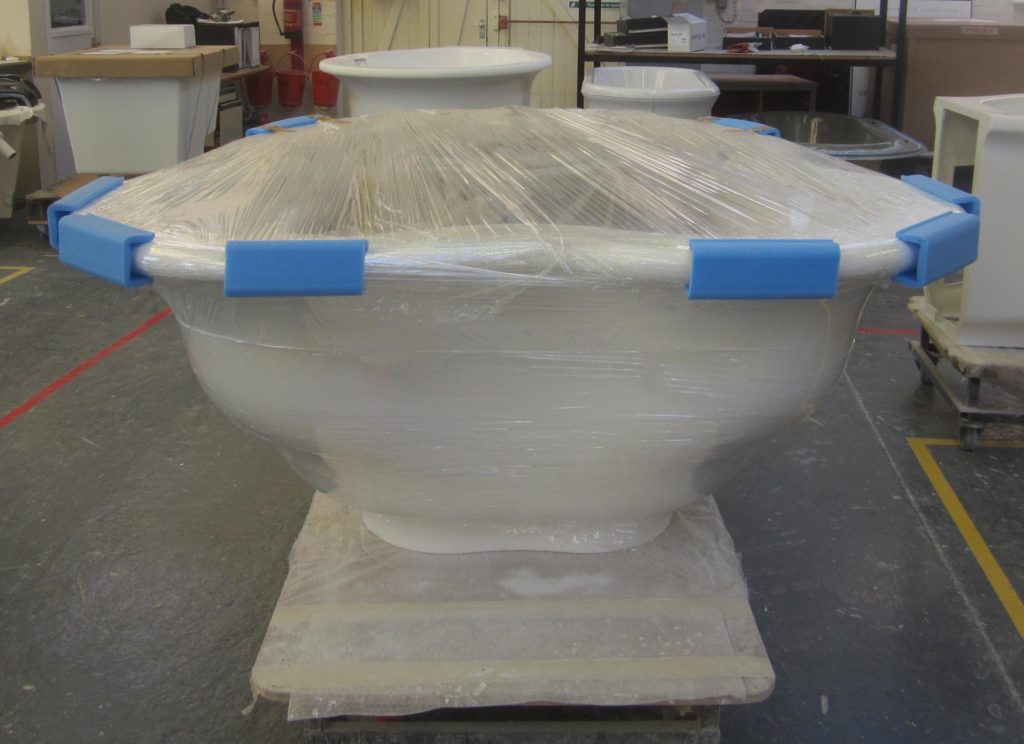
Box Size and Weight

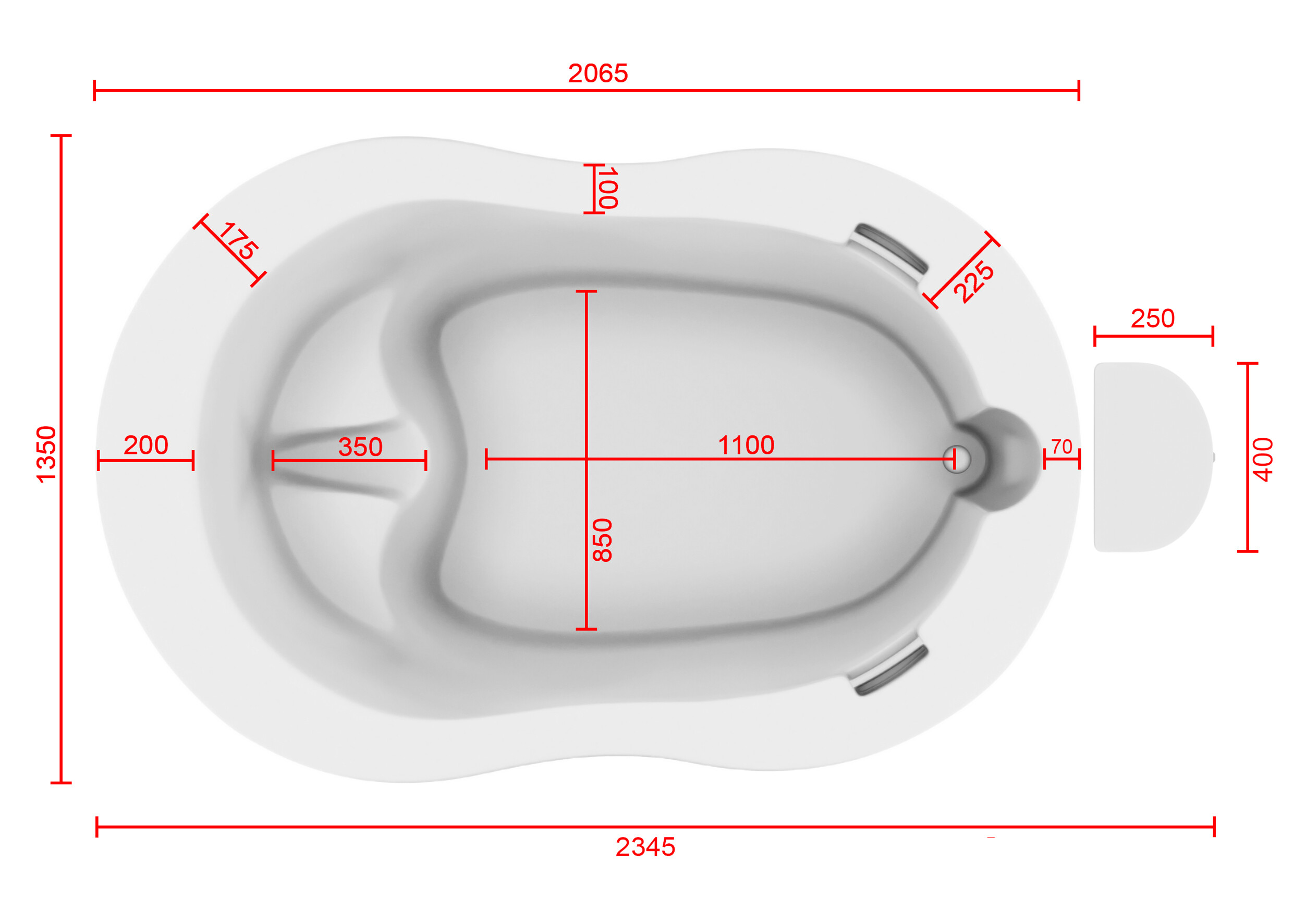
  • Active Birth Pool:  1880 x 1690 x 790mm 100 kg
  • Venus Birth Pool: 1960 x 1390 x 790mm 90 kg
  • Princess Birth Pool: 1640 x 1140 x 790mm 80 kg

The carrier will deliver your birth pool to the receipt and distribution point.

You’ll be responsible for moving it to the room where it will be installed.

The pool should be moved from the delivery point in its cardboard box by turning it gently on its side onto a movers dolly or two.

This will enable it to be easily moved along corridors and through doorways.  Once the pool is in the room where it will be installed carefully open the cardboard box and remove the protective packaging.

Outside Mainland UK and International Deliveries

Active Birth Pools that are delivered outside the mainland UK are wrapped in protective packaging and placed in timber framed crates with plywood sides that conform to ISPM15 and are stamped accordingly.

Crate Size and Weight

  • Active II Water Birth Pool: 2050 x 1810 x 970mm 220kg
  • Active 360 Water Birth Pool: 2050 x 1810 x 970mm 220kg
  • Active 360 Water Birth Pool with Water Column2050 x 1810 x 970 240kg
  • Venus II Water Birth Pool: 2050 x 1420 x 890mm 205kg
  • Venus 360 Water Birth Pool: 2050 x 1420 x 890mm 205kg
  • Venus 360 Water Birth Pool with Water Column: 2120 x 1450 x 950  205kg
  • Princess II Water Birth Pool: 1670 x 1170 x 890mm 145 kg
  • Princess 360 Water Birth Pool: 1670 x 1170 x 890mm 145 kg
  • Princess 360 Water Birth Pool with Water Column: 1710 x 1170 x 890 165 kg

The birth pool should be unpacked from the timber crate but left in its protective packaging for moving from the delivery point to the room where it will be installed.

The pool should be gently turned on its side onto a padded movers dolly or two to  enable it to be easily moved along corridors and through doorways. It’s best to handle the pool by the rim as this is the strongest point.
Installation

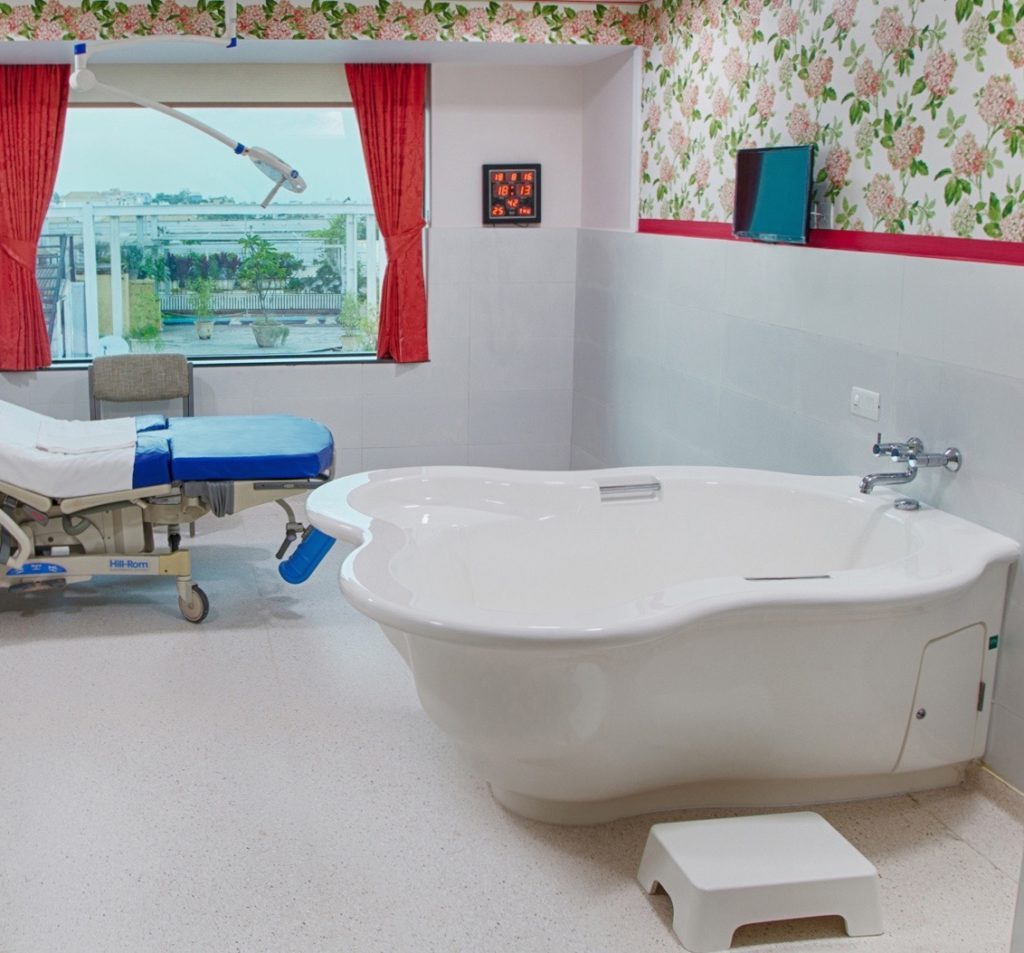
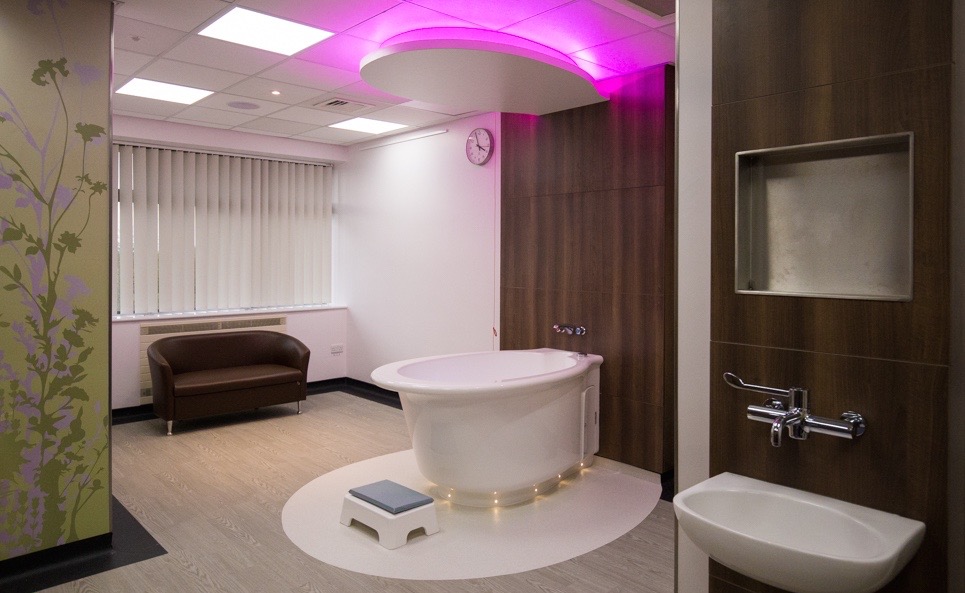
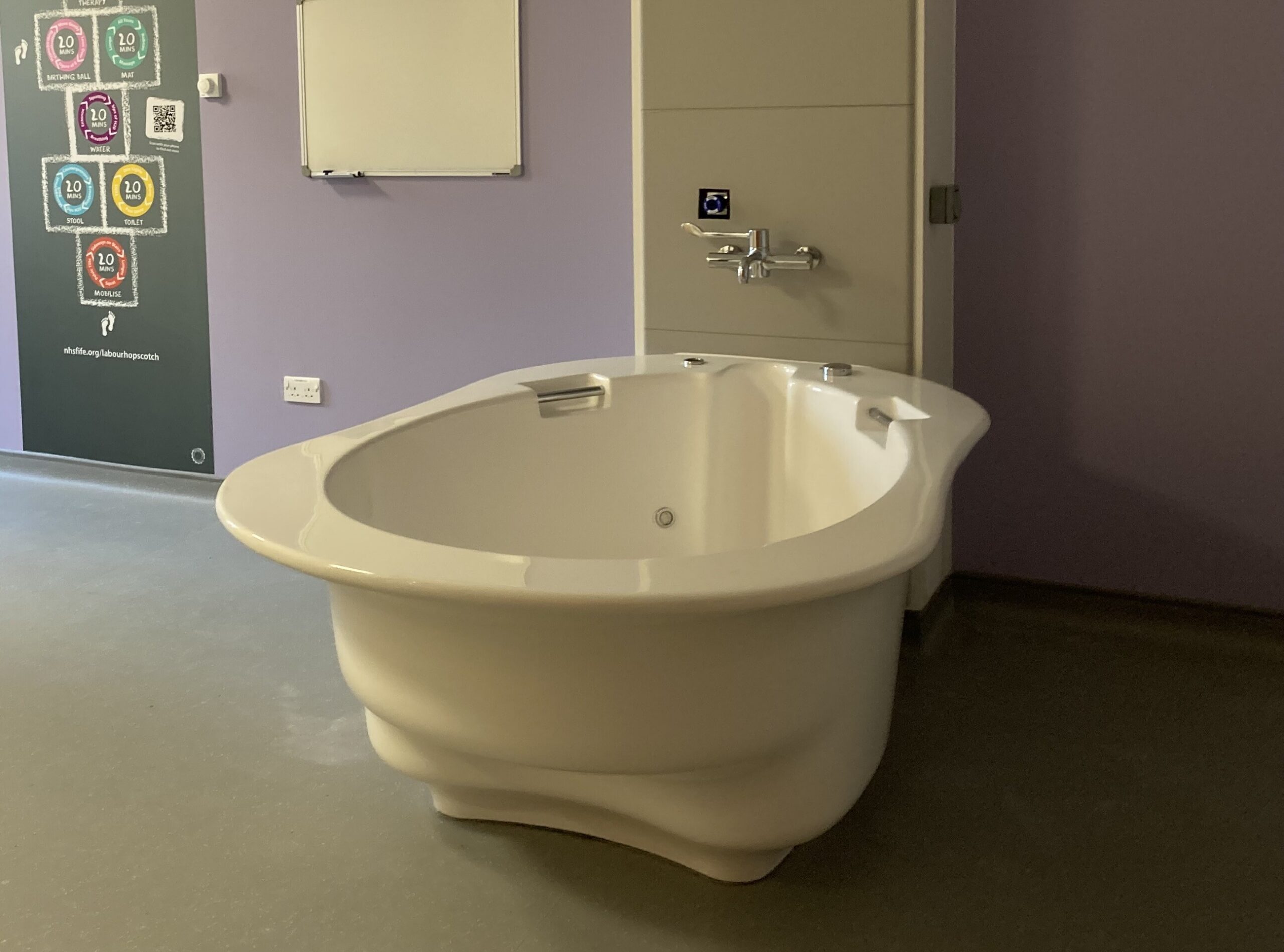
When siting the water birth pool be sure to leave plenty of room around it (at least 80cm on the sides and 150-200cm in front) for midwives and attendants to move freely.

Prior to moving the birth pool into position against the wall the plumbing (taps and drainage) and electrical services should be in place ready for final connection to the pool.

Taps

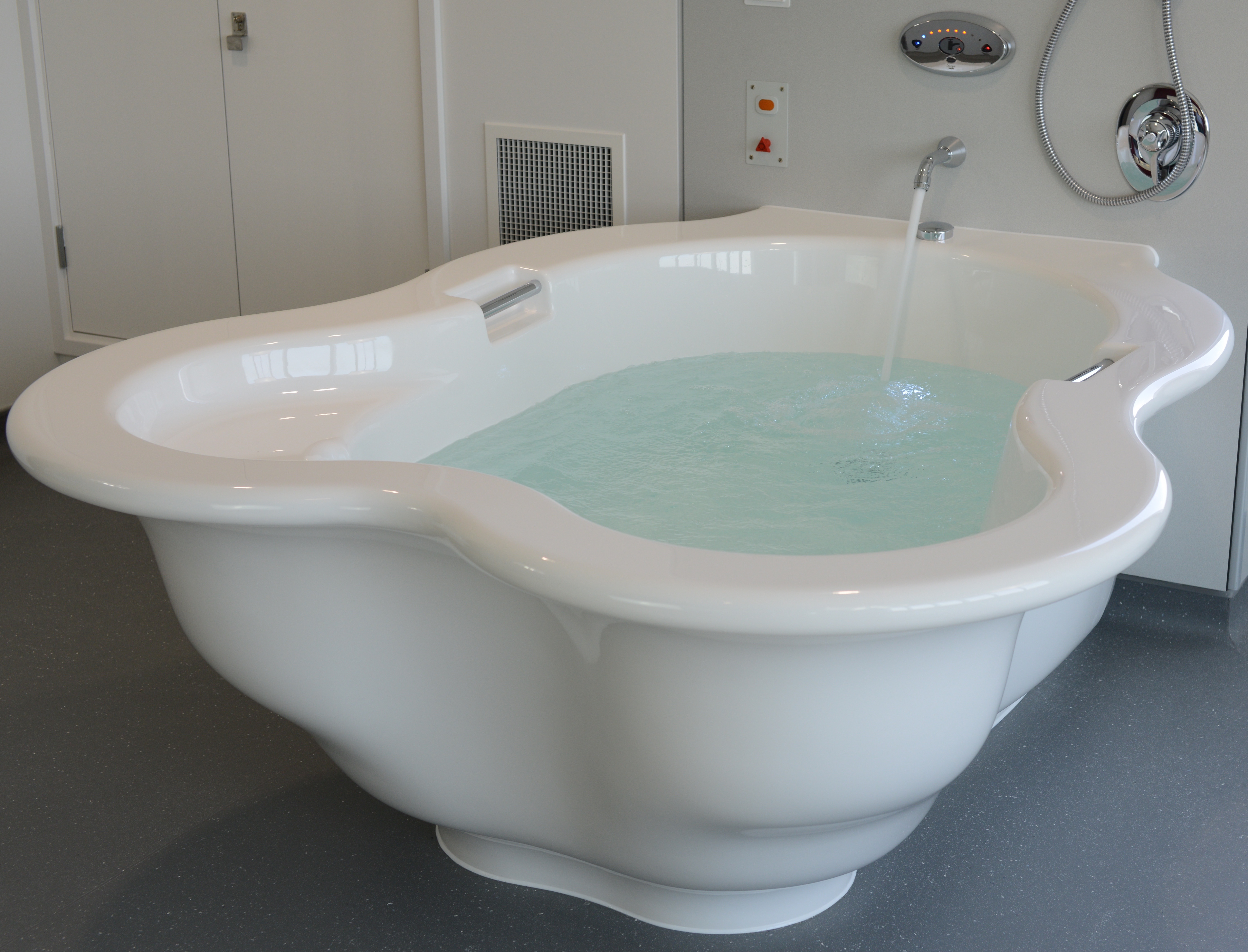
Fix a 3/4″ thermostatically controlled mixer tap with a short spout on an IPS panel 25 cm above the rim of the pool (rim height 75cm).

We suggest that you consider the Rada T3 or similar as it is a digital tap that not only enables you to programme the water temperature but also the fill time.

A filling time of 20 – 25 minutes is acceptable.

Note: if you are utilising a bath/shower mixer or handheld shower be sure that the shower hose does not dangle in the pool as this is a significant infection control risk

Drainage

The pool is supplied with a bespoke 40mm pop up waste that is operated by a control that is fixed to the rim.
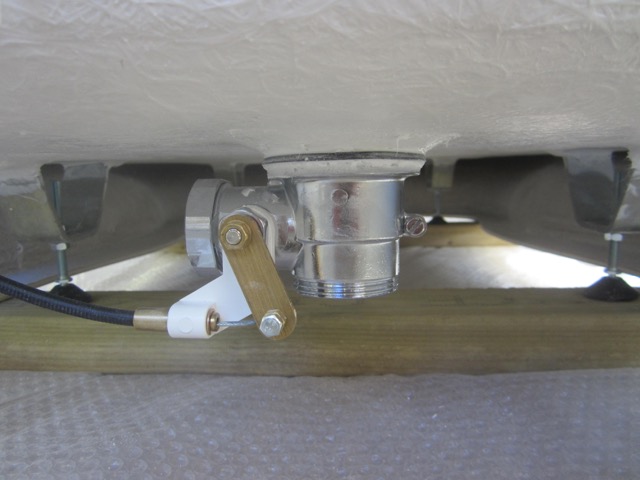
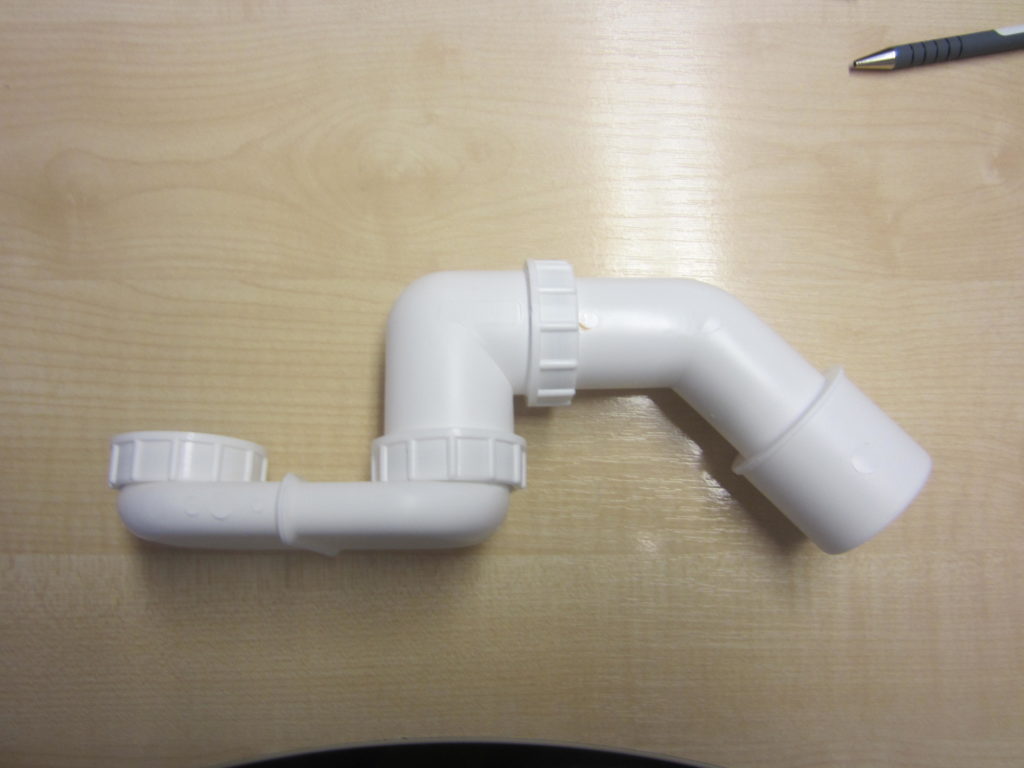
The waste is connected to a P Trap  and a McAlpine T25 adaptor

Height from the floor to the centre of the T25 adaptor is 11cm

From the T25 adaptor you can utilise of a wide variety of commonly available parts to connect to the pipework of the buildings drainage system.
When electrical and plumbing services are in place and ready for the final connection to the pool’s systems the pool should be moved into position and fixed to the floor.

Final connection of services can be carried out through the access panel when the pool is secured in place.

Fixing the birth pool to the floor

All feet MUST be in solid contact with the floor.

If the floor is not level or smooth be sure to adjust the feet or level the floor so that all of the feet are in firm contact with the floor and there is no rocking or movement.

The bottom flange of the outer panel should be in contact with the floor but is not the primary support structure of the pool and must not bear the full weight of the filled birth pool.
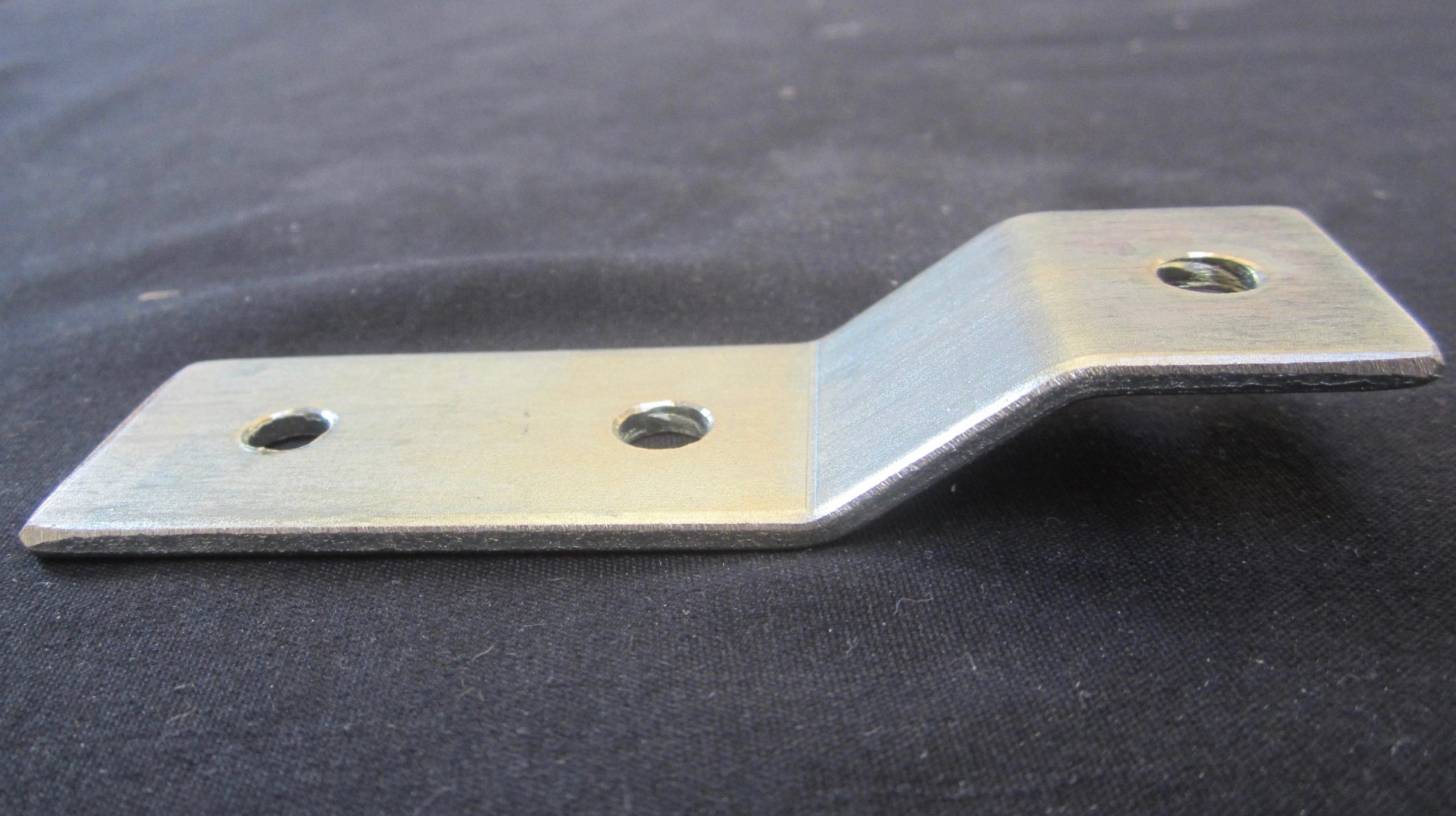
The water birth pool is supplied with 3 x 100 mm x 30 mm fixing brackets.

You’ll find the brackets taped to the pool just inside the access panel that can be opened with a 10mm Allen Key.

It is essential these brackets are securely fixed to the floor with suitable hardware to immobilise the pool and prevent it from moving when empty.

Failure to secure the pool to the floor with the fixing brackets will endanger the end user and VOID the guarantee.

Locating and fixing the brackets

Step 1: All Models:

Mark the central position of the water birth pool on the wall that it is being fitted on.

SStep 2:  Active II Water Birth Pool – front fixing bracket

Measure 1330 mm from the centre point on the wall and mark this as the point to locate the bracket so that the long flat piece is projecting away from the wall and the raised short section faces forward into the room.

Fix the bracket to the floor using suitable hardware.
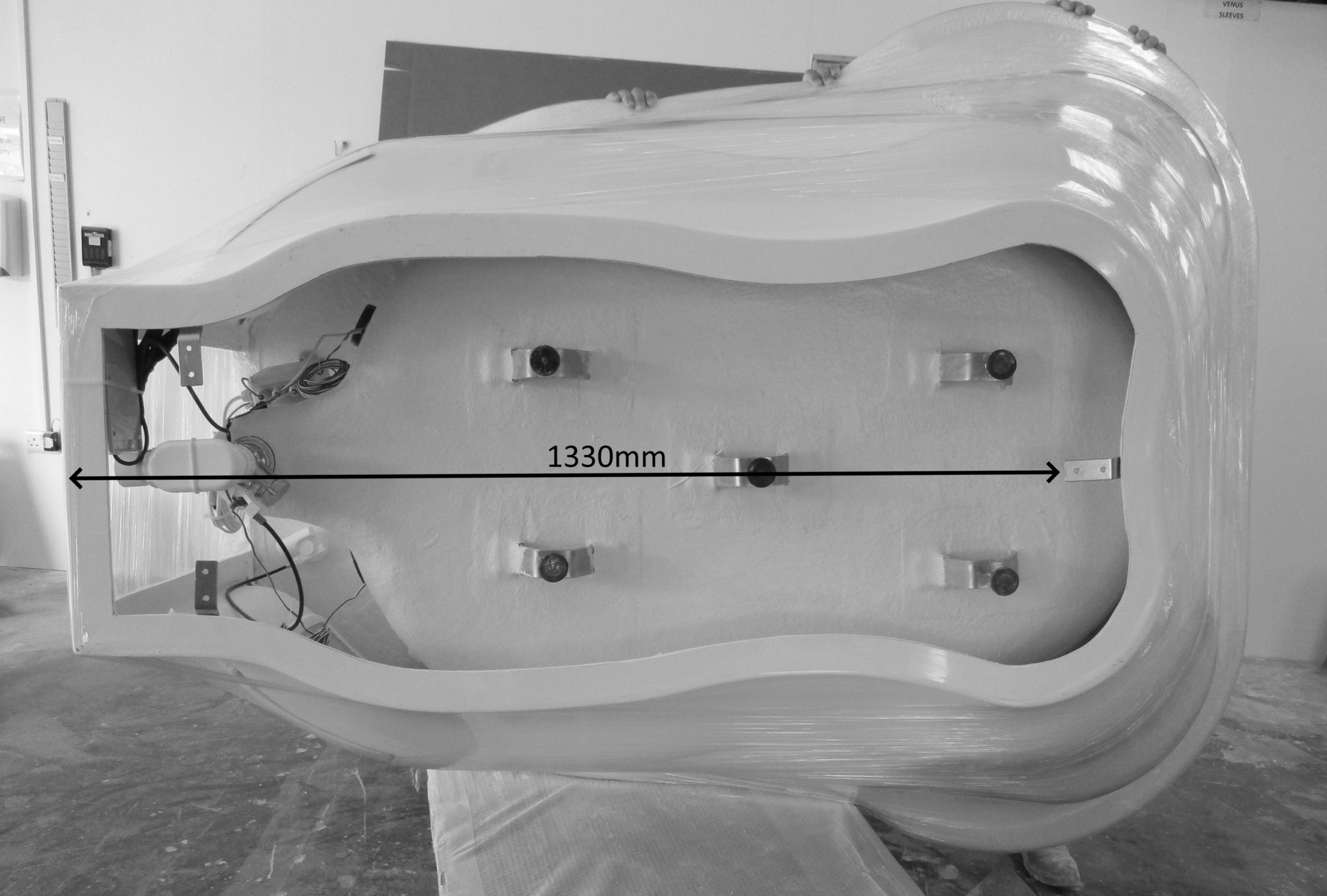
Front bracket right centre – Back bracket lower left and right

Step 2: Venus II Water Birth Pool

– front fixing bracket

Measure 1330 mm from the centre point on the wall and mark this as the point to locate the bracket so that the long flat piece is projecting away from the wall and the raised short section faces forward into the room.

Fix the bracket to the floor using suitable hardware.
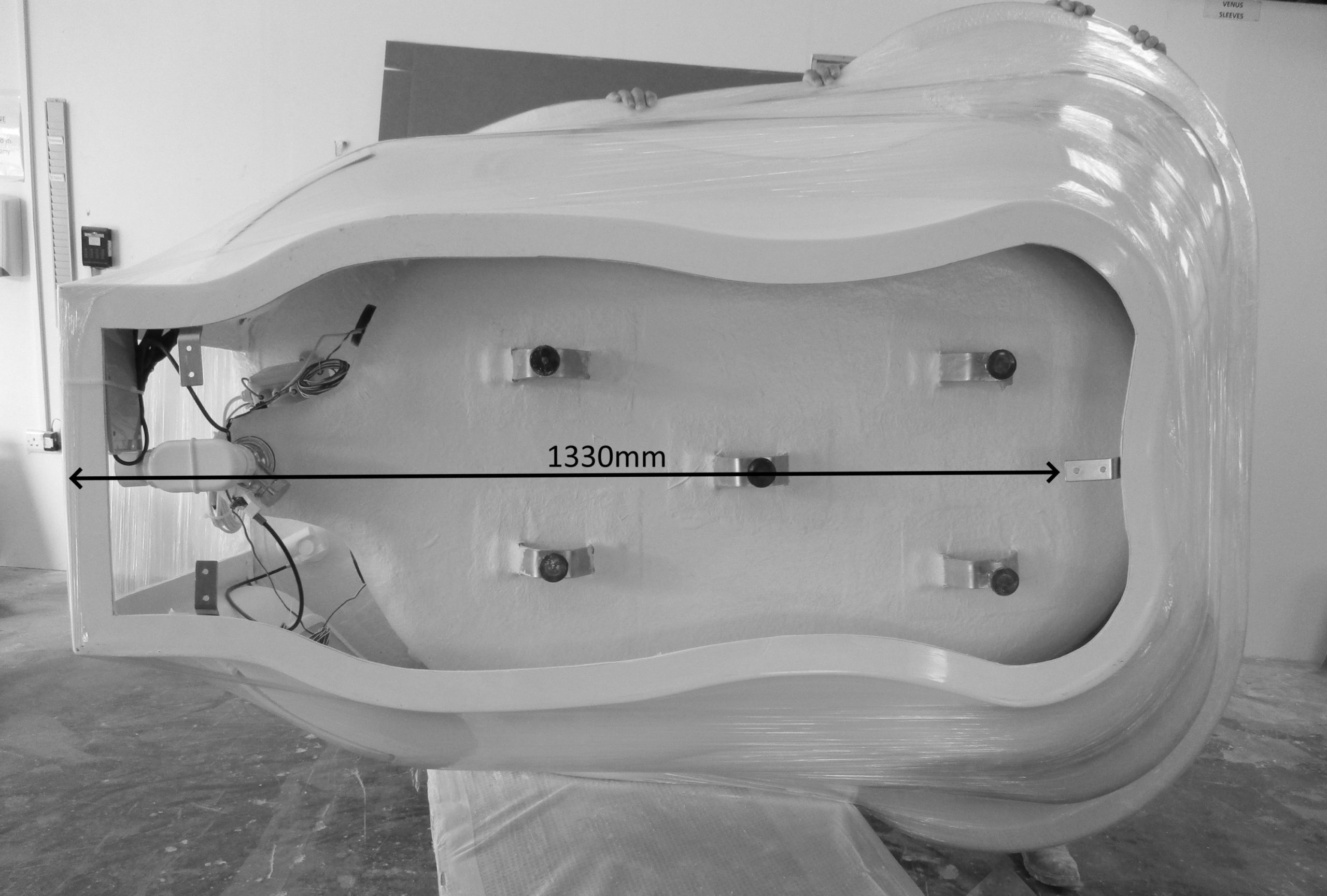
Front bracket right centre – Back bracket lower left and rightt

Step 2: Princess II Water Birth Pool – front fixing bracket

Measure 1020 mm from the centre point on the wall and mark this as the point to locate the bracket so that the long flat piece is projecting away from the wall and raised short section faces forward into the room.

Fix the bracket to the floor using suitable hardware.
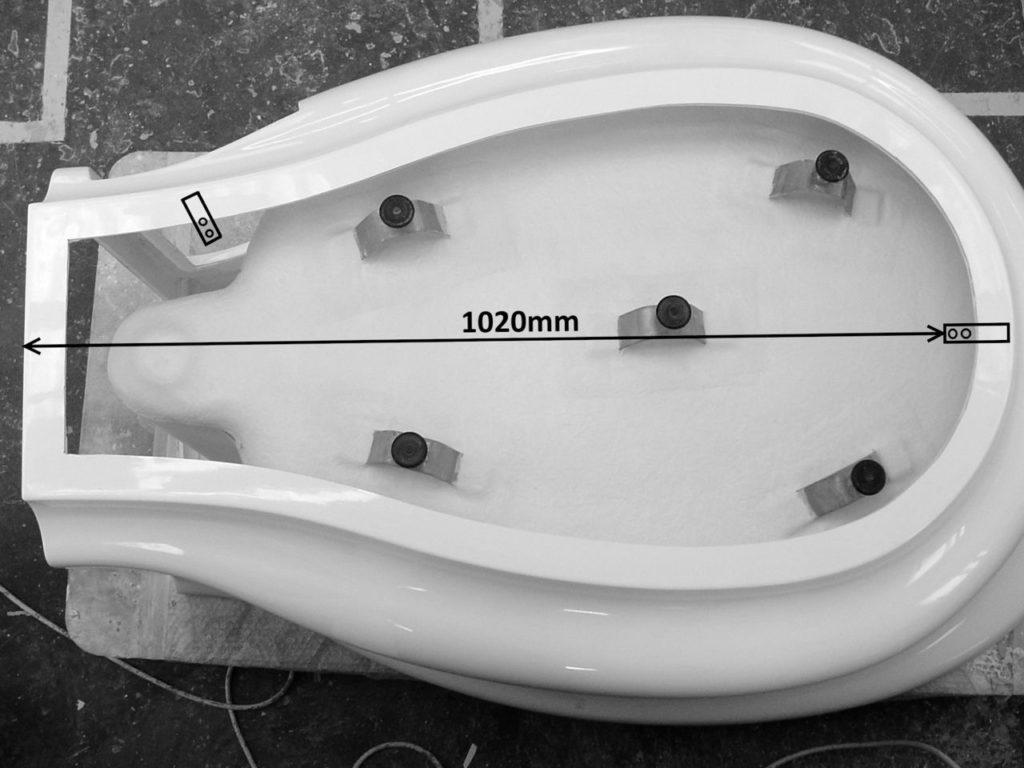
Front bracket right centre – Back bracket upper left

Step 3: All Models

Place the birth pool at least 60 mm away from the rear wall before moving it onto the bracket and flush against the wall.

Push the birth pool towards the wall so that the flange of the pool slides under the bracket.

This secures the front of the pool to the floor.

Step 4: All Models – back fixing bracket

The 2nd fixing bracket should be fixed in position on the bottom flange of the pool below the access panel as indicated in the images above.

You will see that a hole has been drilled in the flange. Line the bracket up with this hole. You can fix the pool to the floor with a raw plug and suitable hardware to guarantee that it is secure.

The long flat piece should be fixed to the floor with suitable hardware so that the short section is holding the flange securely to the floor.

Step 5: All Models

Seal the water birth pool to the floor and wall using a suitable sealant to prevent ingress of water and dirt.

Installation 360 Models

Place the water birth pool in the exact location and orientation that you want it.

Mark the floor at the centre of the curve at the front of the pool.

Move the pool away.

Measure 6cm away from the mark you made and fix the front bracket in place.

Continue by following instructions above.
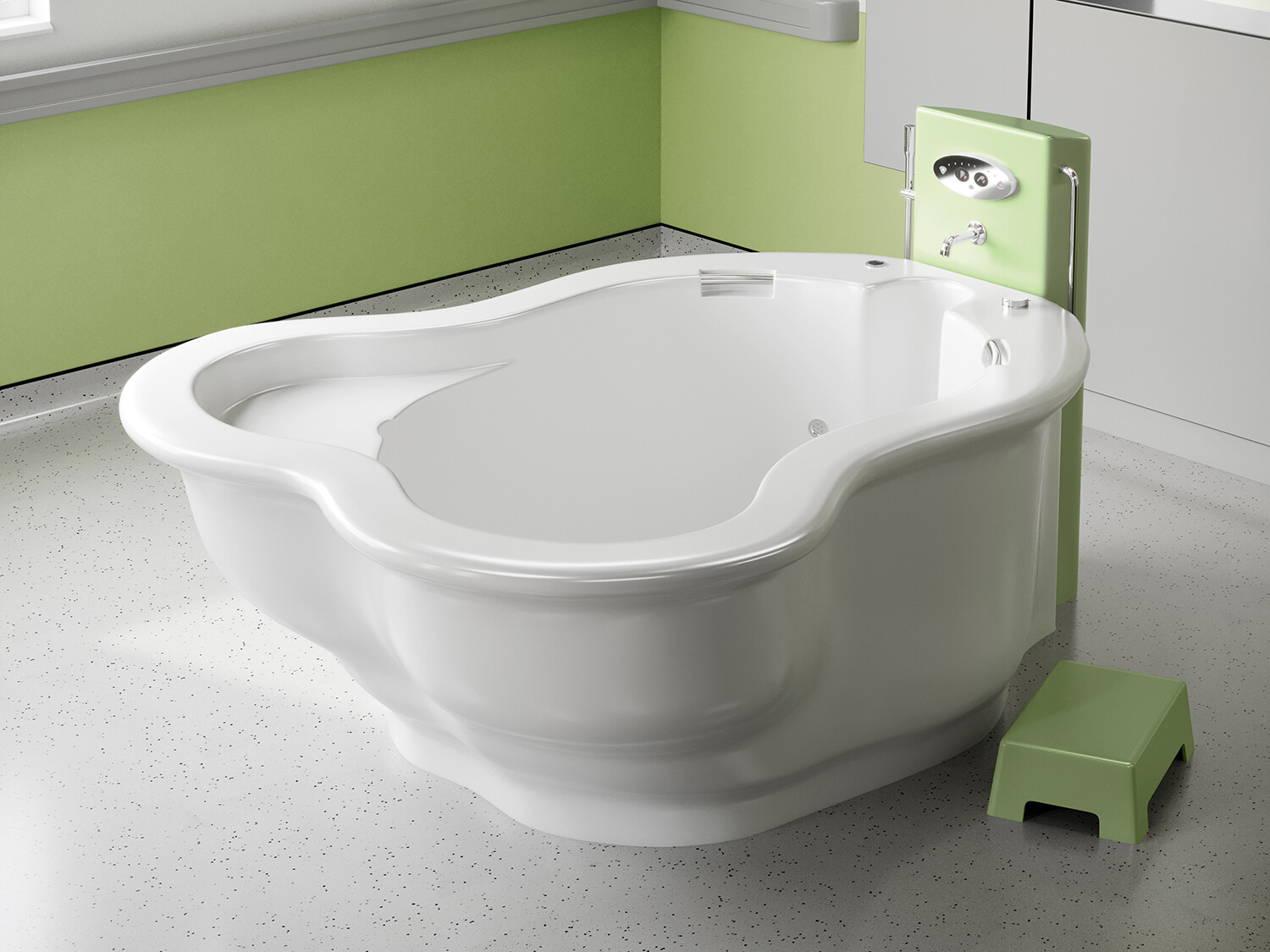
Water Column Installation 

Fixing the column to the floor

  1. Remove the access panel using a hex key and place it off to one side
  2. Locate the water column in the centre of the pool at least 25mm away from the back rim
  3. Mark the four anchor points on the floor and take the column away
  4. Drill four holes suitable for the hardware you will be using to anchor the pool to the floor. We recommend expansion bolts or similar fixings.
  5. If you are using expansion bolts place them in the holes and align the water column accordingly.
  6. Before tightening the bolts apply a generous amount of silicone to the underside of the flange.
  7. Tighten the bolts fully.

Fixtures and Fittings

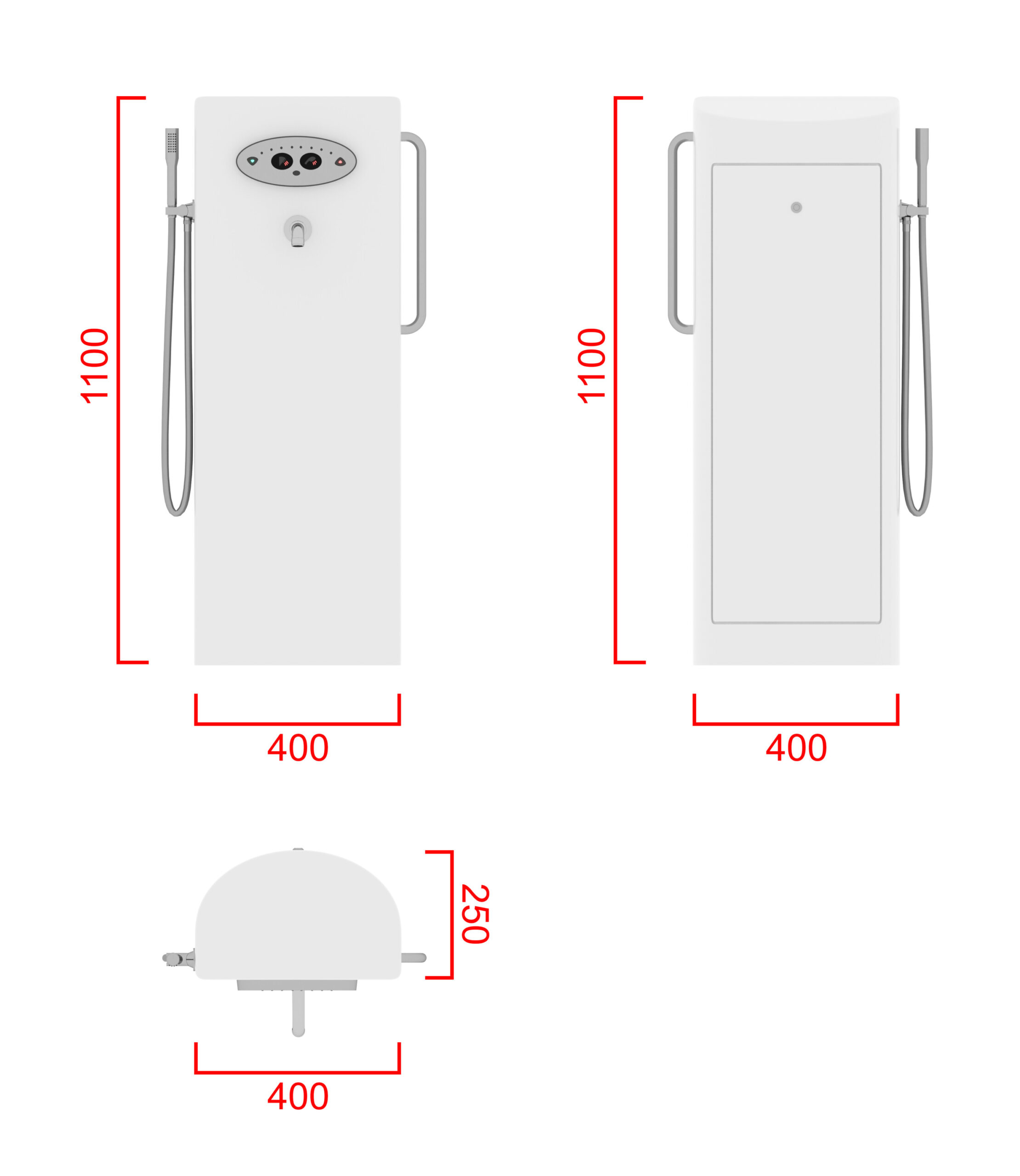
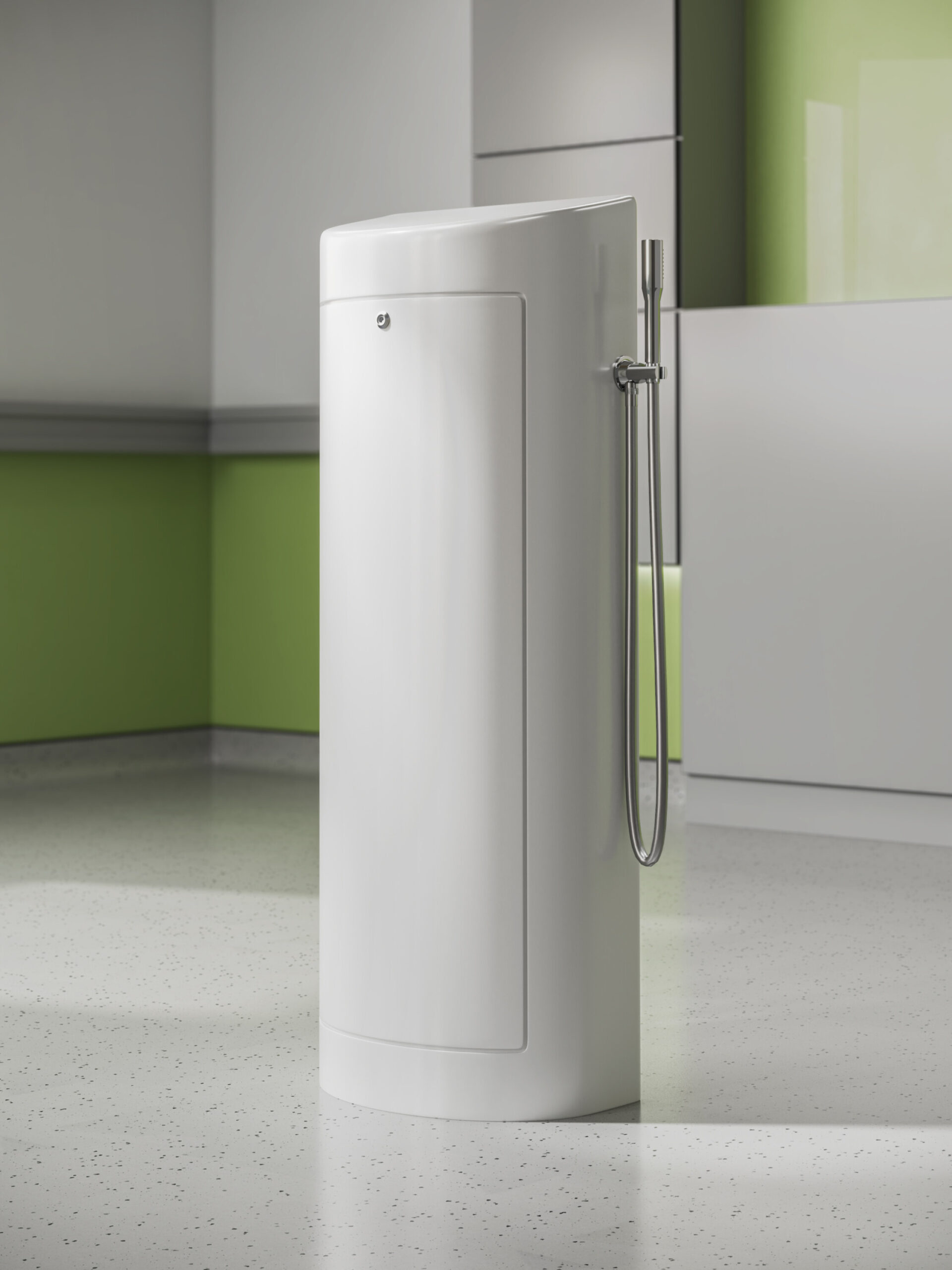
The Water Column is designed to accept a variety of plumbing fixtures and associated fittings such as hand rails.

Installers will find that there is plenty of room inside to accommodate valves and pipework.

The front and sides of the column have been reinforced with 18mm thick plywood.

Ficore is an extremely hard material that is easy to drill provided you place strip of masking tape on the surface and use an HSS drill bit or wood hole saw to make the hole.

We suggest that you use a 120mm spout and fix it to the column at least 150mm above the rim of the pool.

The tap can  be fixed above the spout as shown in the image above.

Handrails and/or handheld showers can be fixed to the sides of the column on the flat sections.
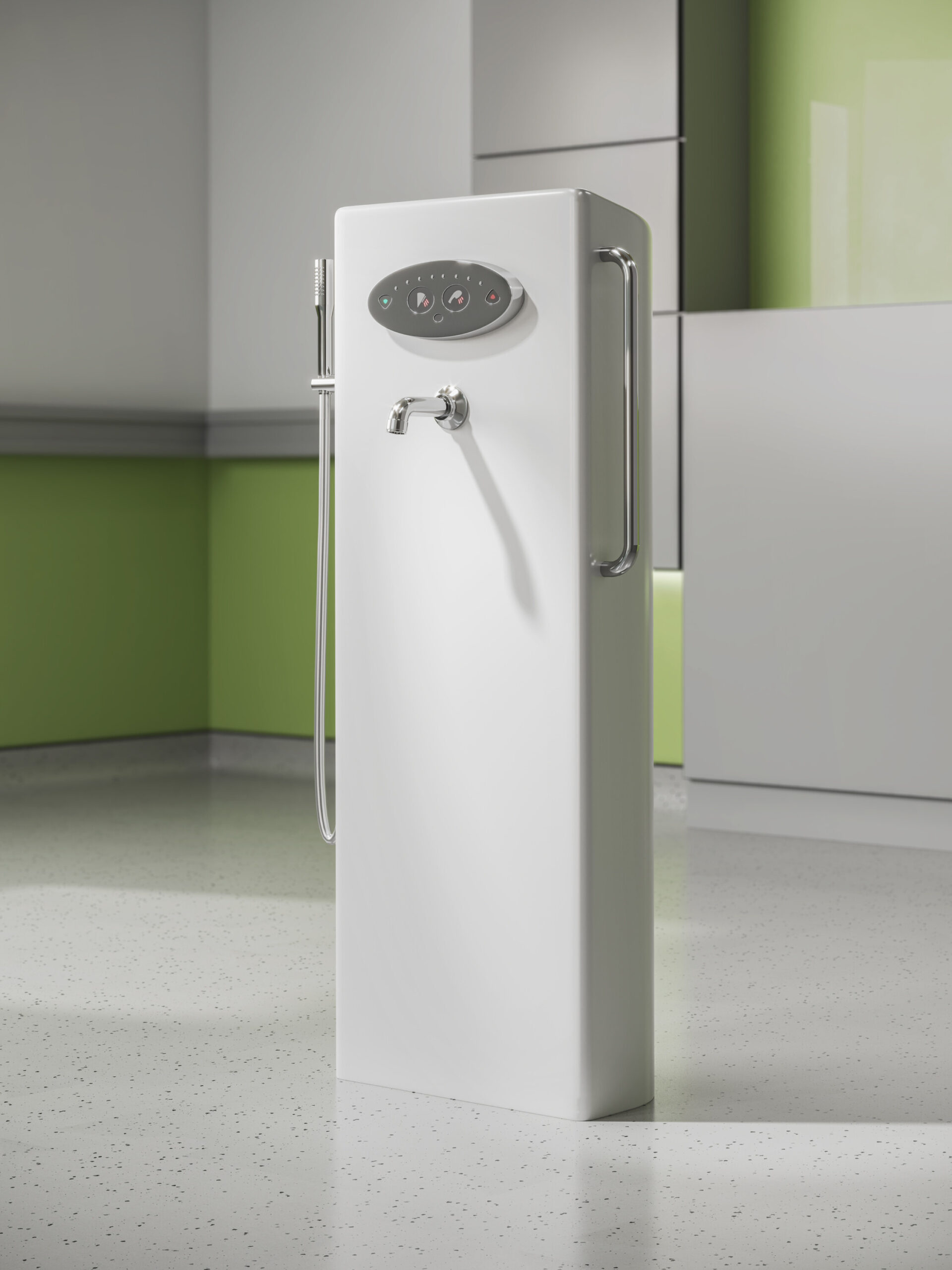
Tap shown is a Rada Sense Bath/Shower  T3 DMV

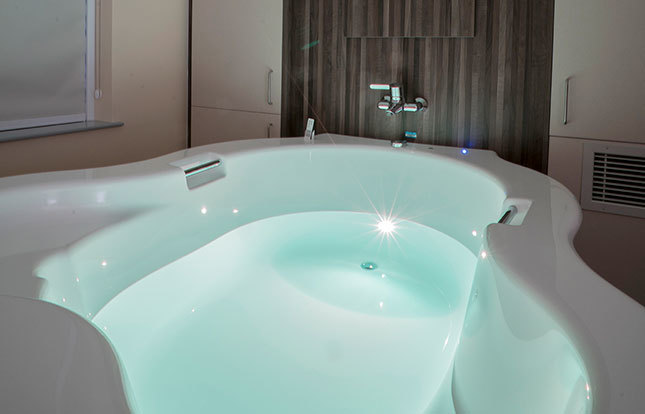
Multi-Colour LED Lighting

Installation

Connect the light to a circuit breaker, then to the power supply.

The system should be protected by a 6 AMP RCD with 30 -32 MA Sensitivity.

The LED is transformed down to 12 volts and has a power rating of 2.5 watts.

A separate means of Isolation should be provided for future maintenance.

Operating voltage 220/230 volts – 50/60 hertz

Operating instructions

The system is operated by the control pad on the rim of the pool.

To activate the system press the button once.

The white light will come on.

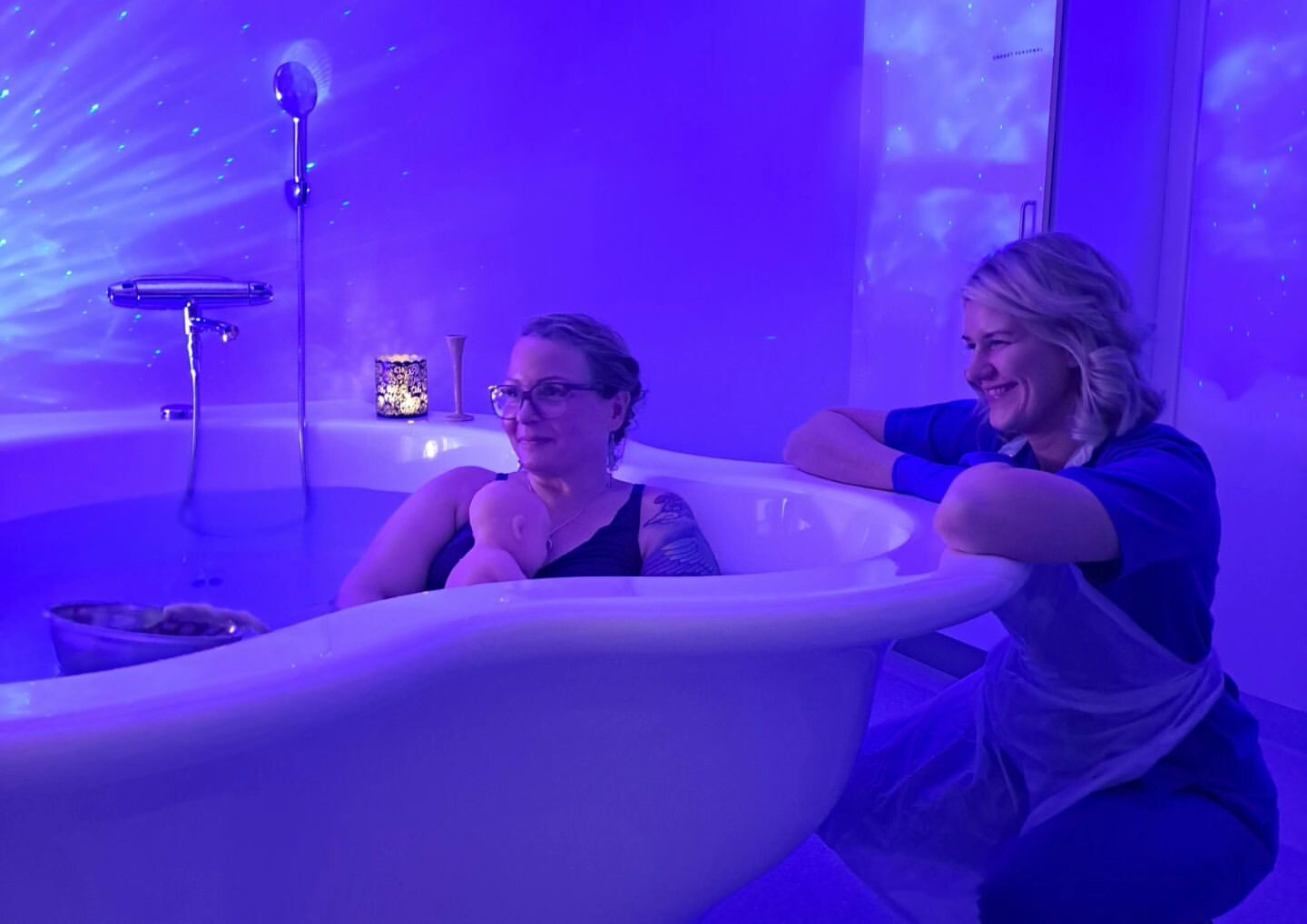
To choose another colour continue to press the button and the system will cycle through the range of colours – light blue, blue, purple, magenta, red, pink, orange, yellow, apple green and green.

To turn the system off press and hold the button down for 2 seconds.

The light should be switched off when the pool is not in use.

Bluetooth Sound System

Connect the factory fitted bluetooth sound system to a circuit breaker and then to the power supply.

The system is always on standby waiting for users to pair and connect.

It’s operated directly from the users mobile phone or bluetooth enabled device and has no controls of its own.

N.B. If there is more than one birth pool with bluetooth sound being installed in the same unit you will need to fit a remote switch to enable the users to turn the system on and off.

This is to prevent people accidentally activating the system instead of the one in their room.

Transducer speaker

  • Frequency Range 20Hz-20KHz.
  • Maximum Power Output 50W at 4 Ohm.

Bluetooth Amplifier

  • Transmission Range 5m to 10m.
  • Maximum Power Output 2ch X 20W.
  • Operating voltage 220/230 volts – 50/60 hertz
  • Transformed Voltage 12 Volt DC / 3 amp.
  • Waterproof Rating IP67.

Cleaning and Care:

Safety comes 1st!

Active Birth Pools are Rated No.1 for water safety and infection control standards.

This is because the material we use (Ficore) is 5 x harder than other materials and is immune to the effects of disinfection with 10,000ppm hypo-chlorite.

Seamless one-piece construction and the absence of surface mounted metal work deny micro-organisms the environment they need to propagate.

SaveSave

SaveSave

SaveSave

SaveSave
SaveSave