
Why Ficore® Composite Is the Better Material for Hospital Water Birth Pools
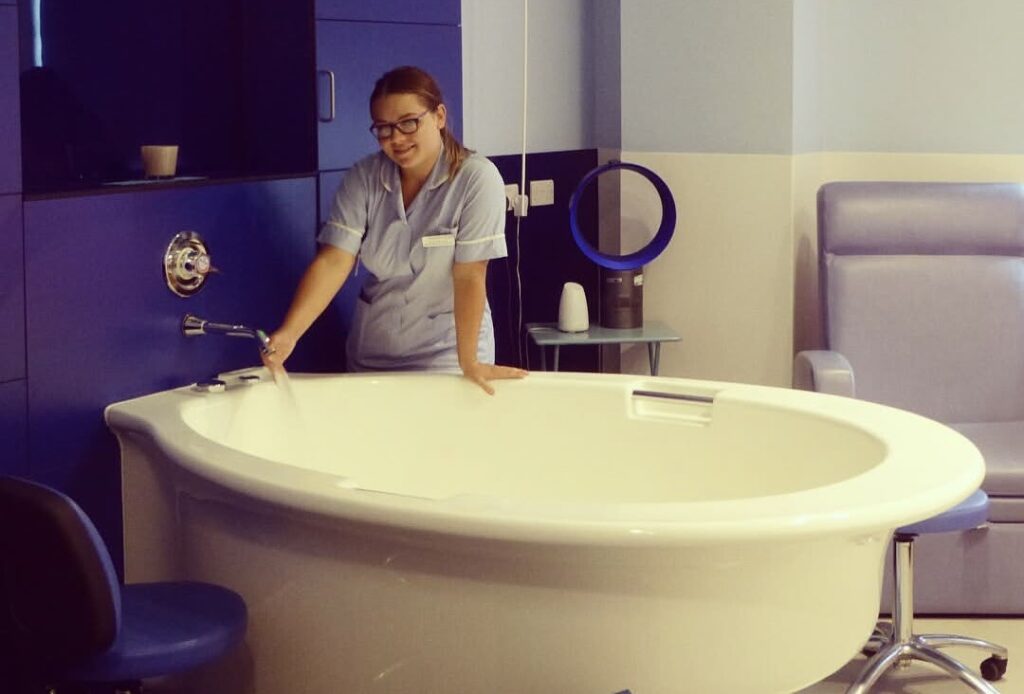
A water birth pool is not simply a large bath. In a maternity unit it becomes part of the clinical environment, part of the mother’s support system and part of the midwife’s working space.
The material it is made from affects how the pool feels, how well it retains heat, how easy it is to clean, how safely it performs under pressure and how long it remains fit for hospital use.
That is why Active Birth Pools are made from Ficore® composite rather than ordinary acrylic or fibreglass.
Ficore is a proprietary solid composite of eight materials that are chemically fused during manufacture and heat-cured at high temperature. It is not laminated or bonded, so it cannot delaminate or come apart like layered materials can. [1][2]
For a hospital water birth pool, this is more than a technical detail.
It is the foundation of the pool’s strength, hygiene, comfort, repairability and whole-life value.
Download Ficore® Composite Technical Guide
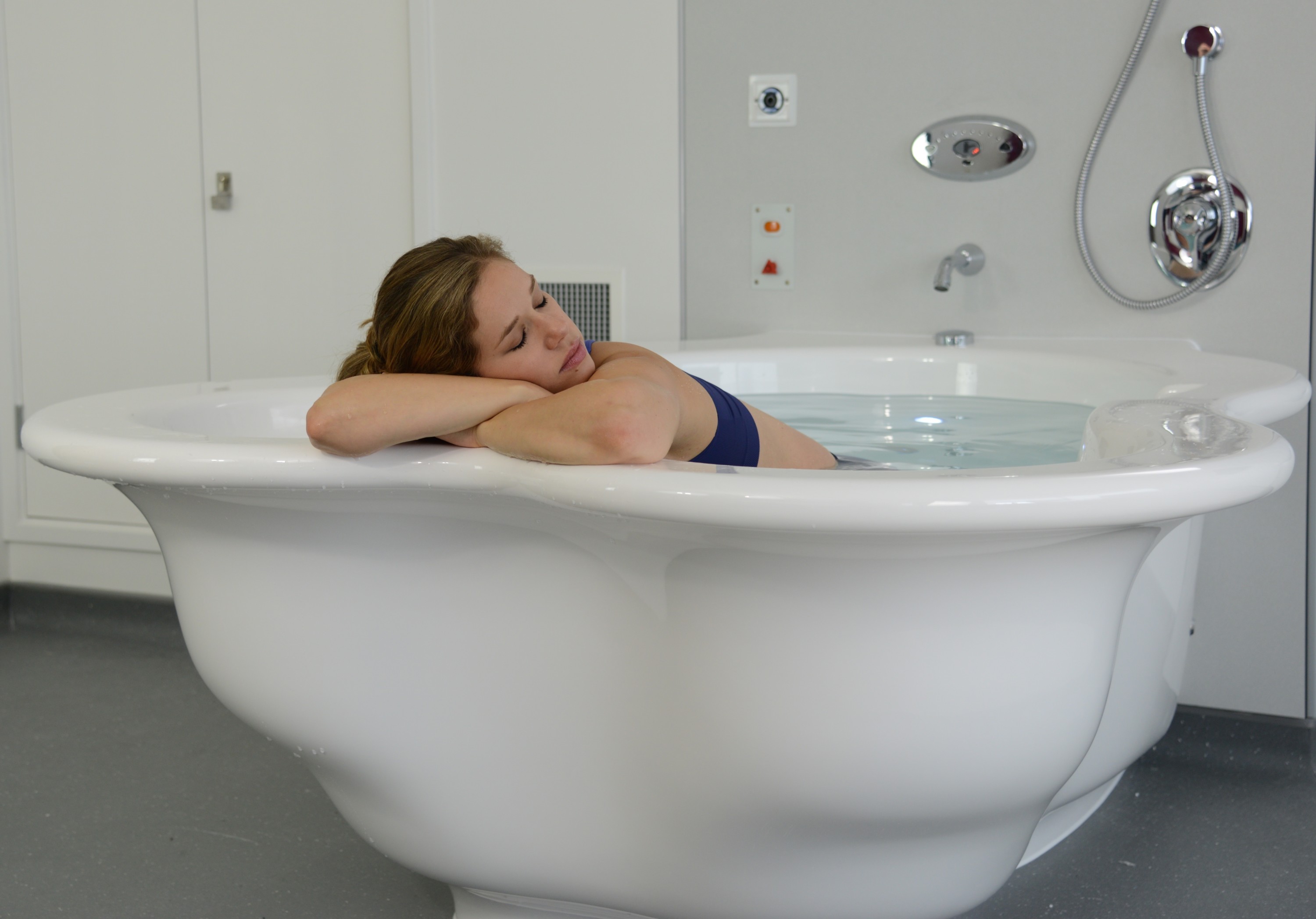
Developed to overcome the limits of ordinary bath materials
Acrylic and fibreglass are common in domestic bathroom products because they are relatively light, economical and easy to form.
Those advantages matter in ordinary bathing, but a water birth pool has to cope with far more demanding conditions.
A birth pool is filled and emptied repeatedly. It holds hundreds of litres of warm water.
It has to support the mother’s body weight and movement, midwifery contact, frequent cleaning, disinfection, inspection and, where necessary, assisted evacuation. Its surface must remain smooth, warm, stable, non-porous and cleanable after years of use.
Ficore was developed specifically to address the weaknesses of conventional bath materials while preserving their useful qualities.
It is strong but comparatively light, rigid without a supporting chassis, highly resistant to impact and chemicals, warm to the touch, fully repairable and capable of being moulded into precise ergonomic forms. [2]
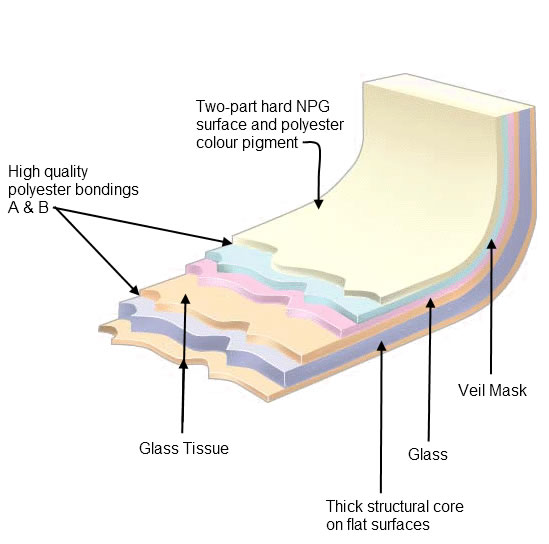
A cross section of FICORE® composite
Solid composite construction, not laminate
One of Ficore’s most important advantages is that it is a solid composite rather than a laminated or bonded construction.
The eight constituent materials are chemically fused and heat-cured into a unified structure.
This means the material cannot delaminate, separate or peel away in layers. [2]
Fibreglass products usually rely on a surface coat over reinforced layers.
Acrylic baths are often formed from acrylic sheet and reinforced underneath.
These methods can work in lower-demand environments, but they introduce dependence on reinforcement, surface thickness, bonding quality and installation support.
In a maternity setting, where surface integrity is closely linked to infection control, durability and cleaning confidence, a solid chemically fused material gives hospitals a stronger foundation.
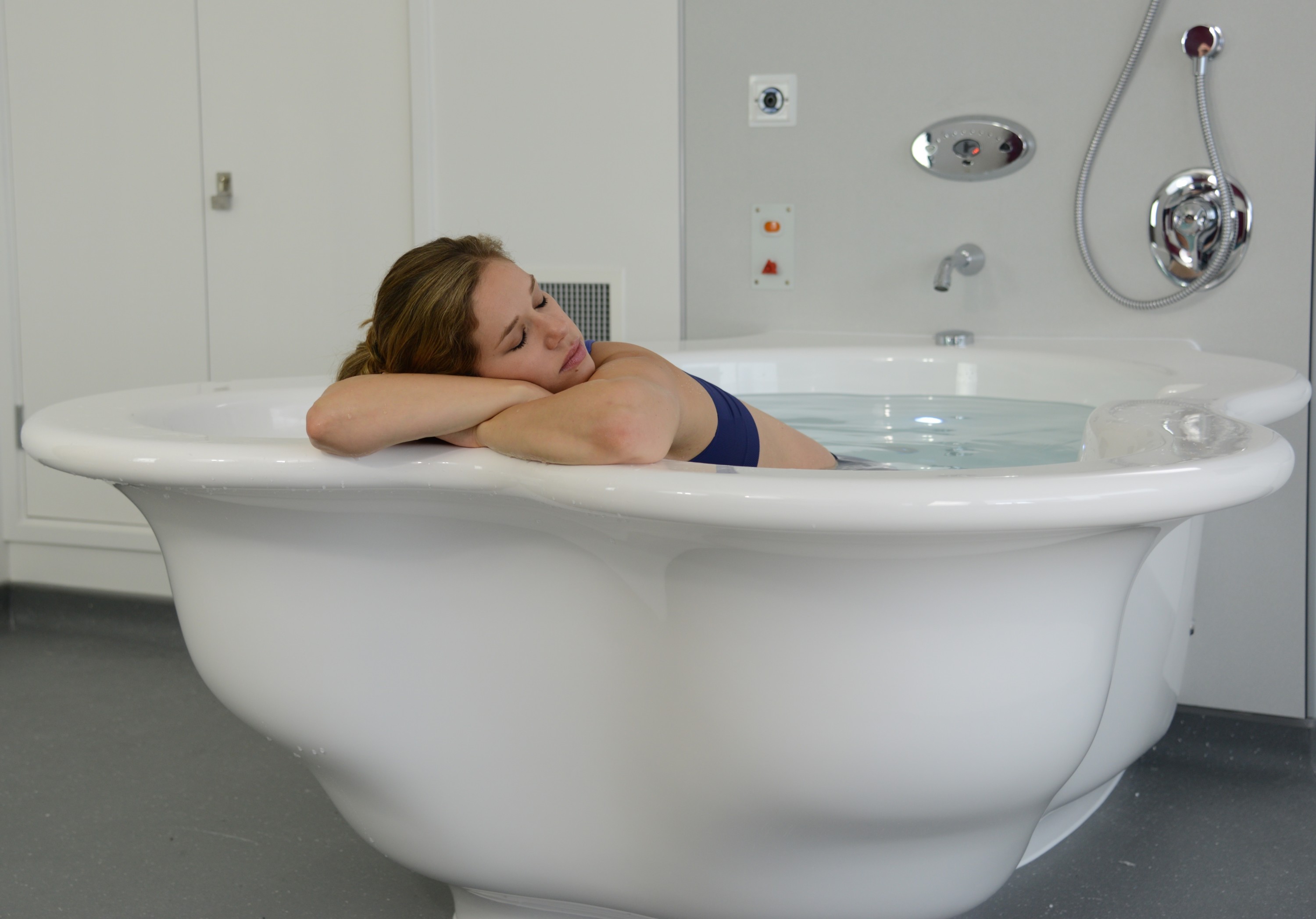
Strength and rigidity for real hospital use
A filled water birth pool must remain stable and reassuring.
It should not flex, creak, bow, buckle or shift under the combined load of warm water, maternal movement and staff support.
Ficore provides exceptional structural integrity.
It does not need a metal or timber chassis to hold its shape, and it enables the pool to perform as one strong, integrated form. [1][2]
This rigidity matters in practice. A stable pool gives mothers confidence as they move, turn, lean, kneel, sit and rise. It gives midwives dependable support points.
It also reduces the risk of movement, stress points or seal failures that can arise when a product depends heavily on added reinforcement.
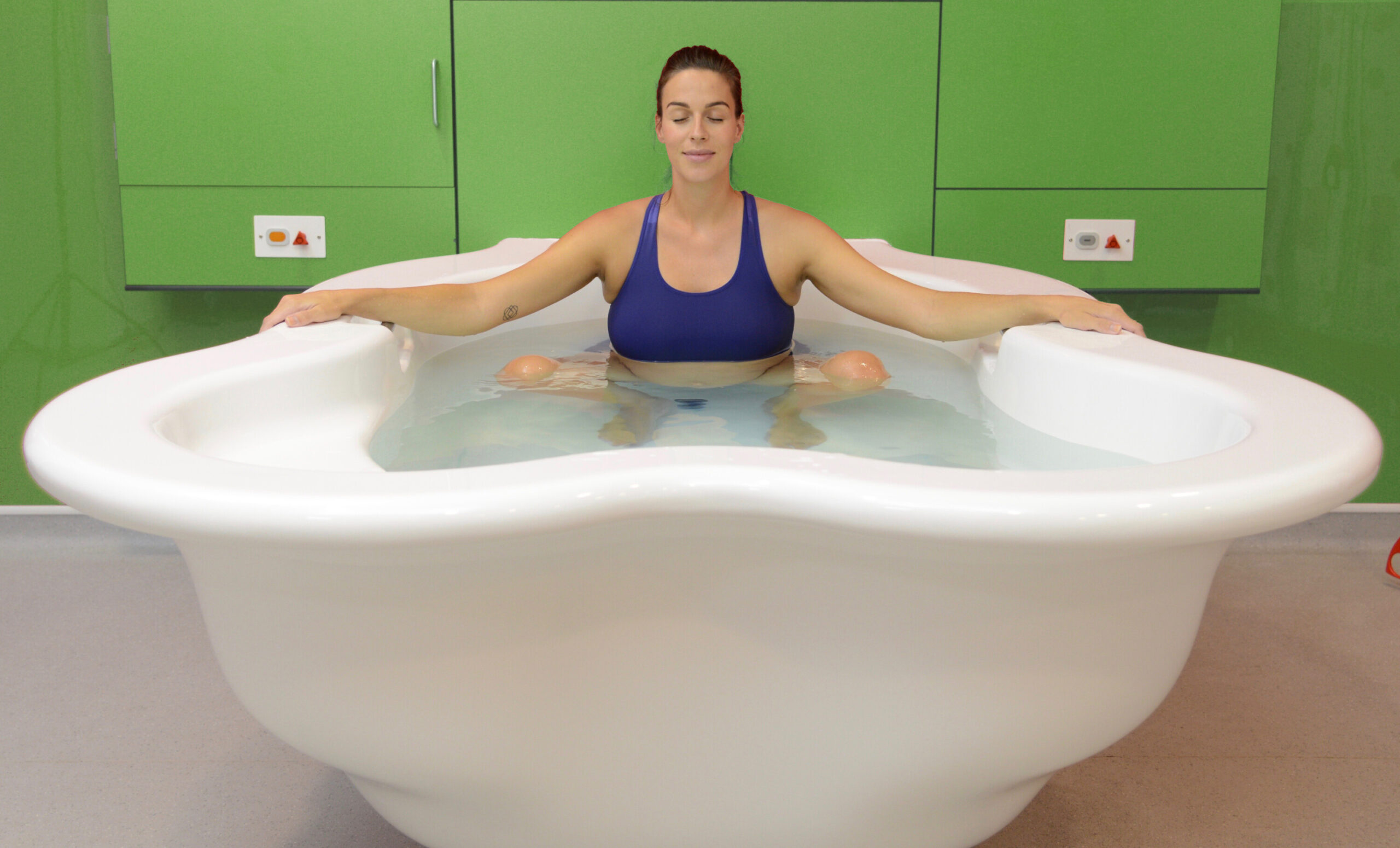
A harder, smoother surface that stays easier to clean
The surface of a birth pool has to stay smooth.
Scratches and dull areas are not merely cosmetic; they can make cleaning more difficult and may create microscopic irregularities where contamination is harder to remove.
Ficore’s surface is made from isophthalic neo-pentyl-glycol and is documented as 50% harder than acrylic when both materials are hot – a relevant comparison because water birth pools are used warm.
Ficore abrasive wear testing also showed only 0.5% loss of reflectance after 10,000 cycles, compared with a typical 2% for acrylic. [2]
A harder, more durable surface helps the pool retain its appearance and cleanability through repeated use. For maternity units, this supports both long-term value and day-to-day infection prevention.
Better resistance to cleaning chemicals and thermal shock
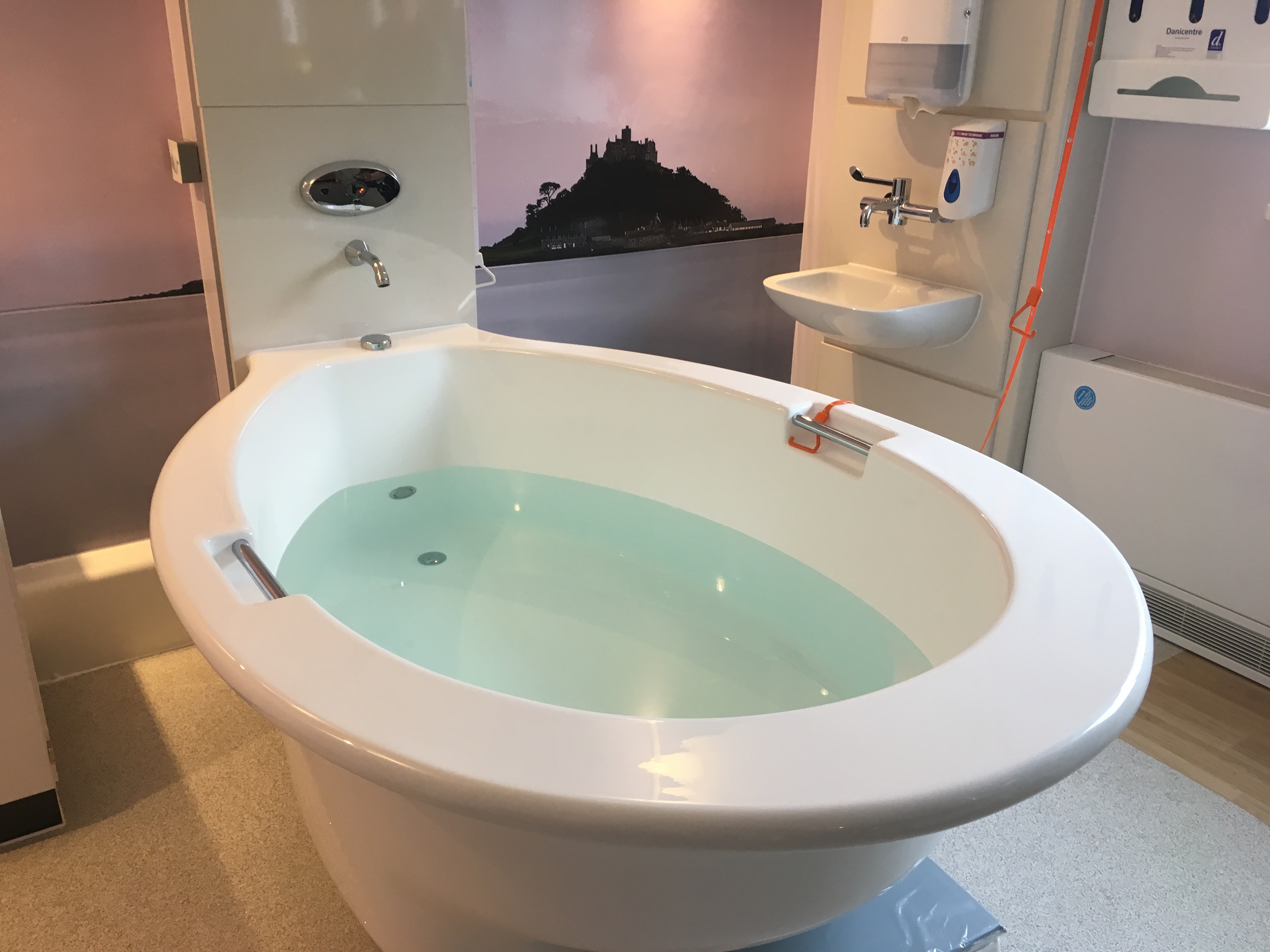
Hospital water birth pools must be cleaned and disinfected thoroughly between uses, using locally approved procedures. The material must tolerate repeated exposure to cleaning agents, warm water, temperature changes and routine descaling without losing surface quality.
Ficore is resistant to most chemicals, including acid and alkaline solutions such as limescale remover. It is also able to withstand continuous exposure to hot water at 80°C and tolerate thermal shock caused by alternating hot and cold water. [2]
This margin is important. A material that softens, crazes, dulls or becomes harder to clean over time is not well suited to heavy clinical use. Ficore’s chemical and thermal resilience helps the pool remain hygienic, attractive and reliable over the long term.
Superior heat retention for comfort and efficiency
Warm water is central to the value of water immersion in labour. It helps mothers relax, move more freely and feel protected. When a pool loses heat too quickly, the experience is interrupted by top-ups, reheating and temperature management.
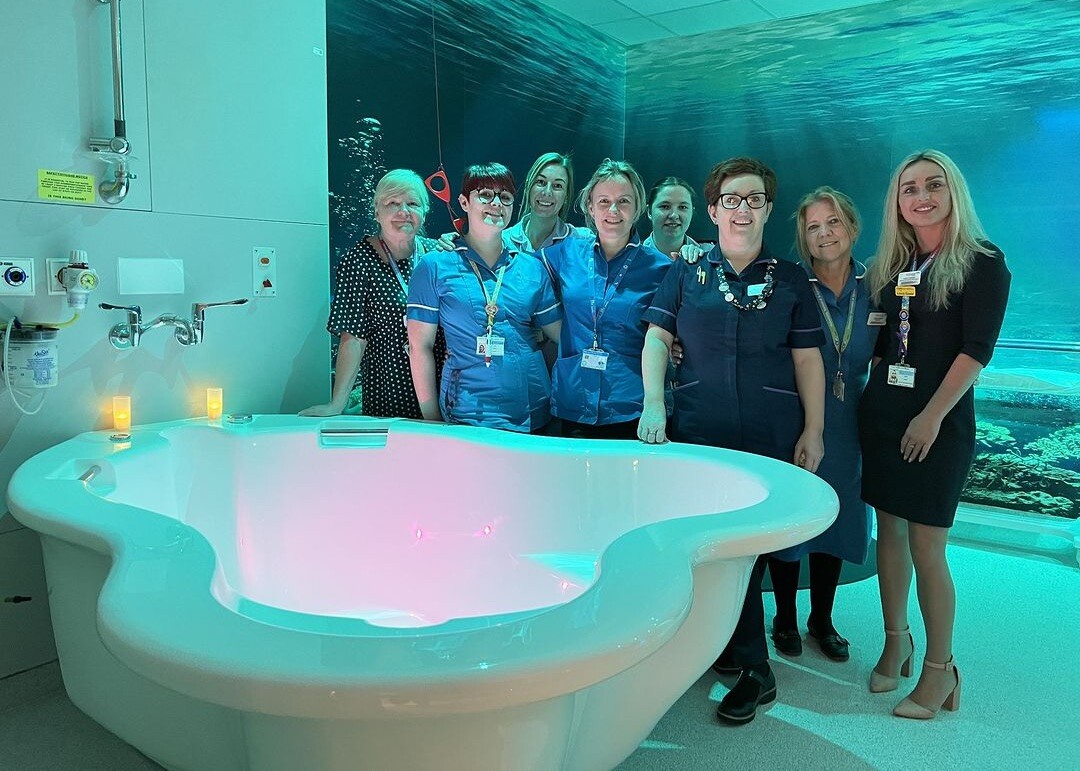
Ficore has a high insulation factor and, in Active Birth Pools, is used with double-wall construction to help retain warmth. The original page states that Active Birth Pools lose less than 0.7°C per hour and maintain water temperature far longer than conventional materials. [1]
Better heat retention has practical benefits for mothers, midwives and estates teams. It supports a calmer labour environment, reduces interruptions, can reduce water and energy use, and helps the pool perform consistently during longer periods of immersion.
A tactile surface that feels warm and secure
The way a birth pool feels matters. Labour is physical and instinctive.
Mothers need surfaces that feel warm, smooth, supportive and secure rather than cold, hard or slippery.
Ficore is dense, tactile and warm to the touch. Its polished surface is smooth and comfortable, while its high adhesion factor helps reduce the risk of slipping. [1][2]
This combination is important in water birth because the mother is constantly changing position.
She may sit, kneel, lean forward, rotate, brace herself, hold the rim, use the integrated seats or rise to leave the pool.
The material should support that movement without making her feel unstable or exposed.
Hygiene built into the form
Infection prevention depends on more than a cleaning protocol. It also depends on the product’s shape, surface, seams, fittings and long-term condition.
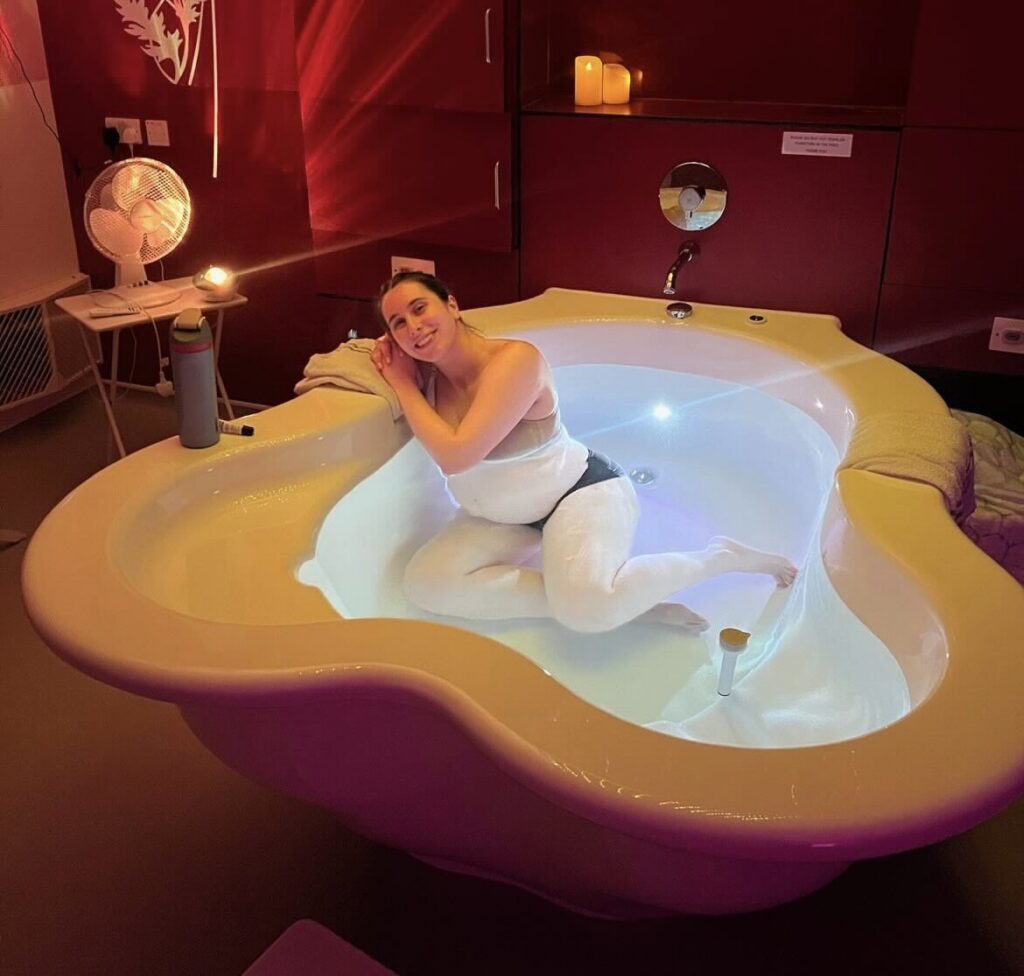
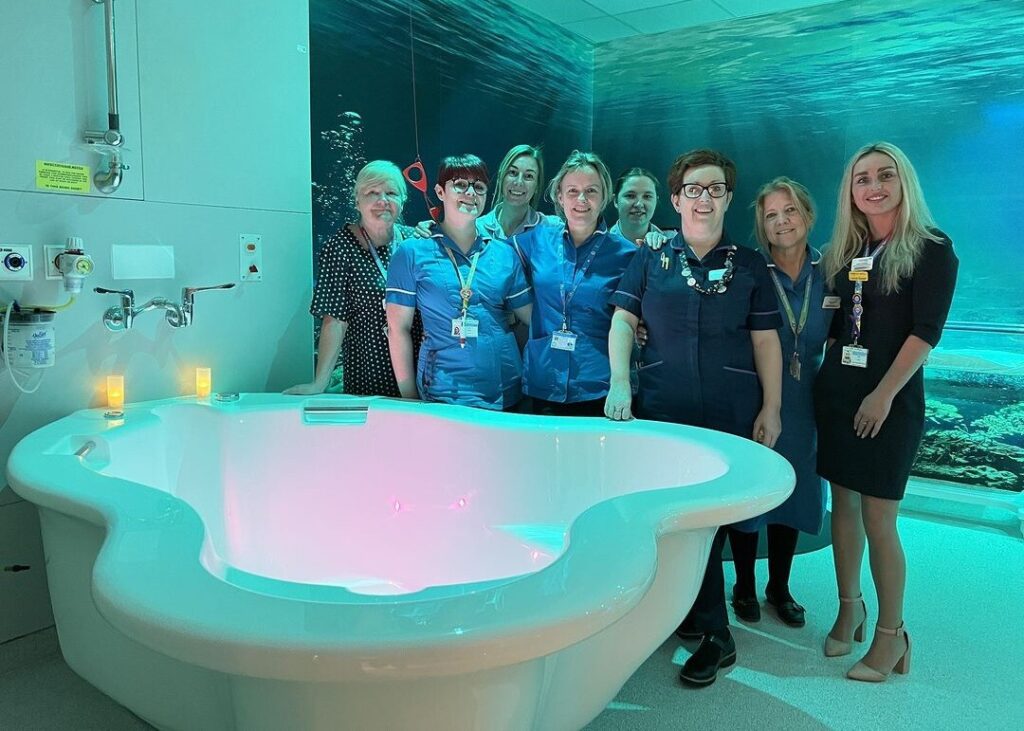
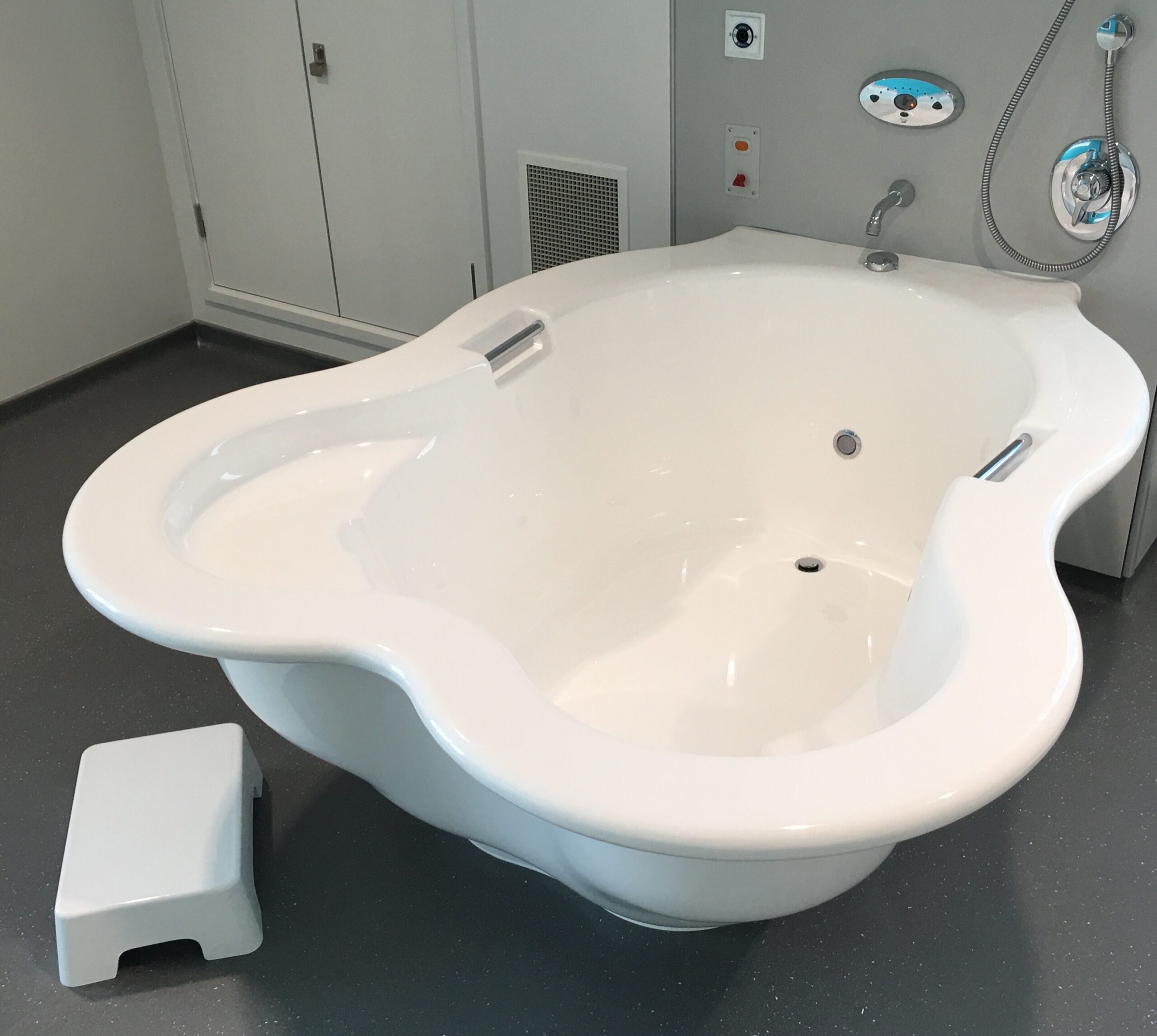
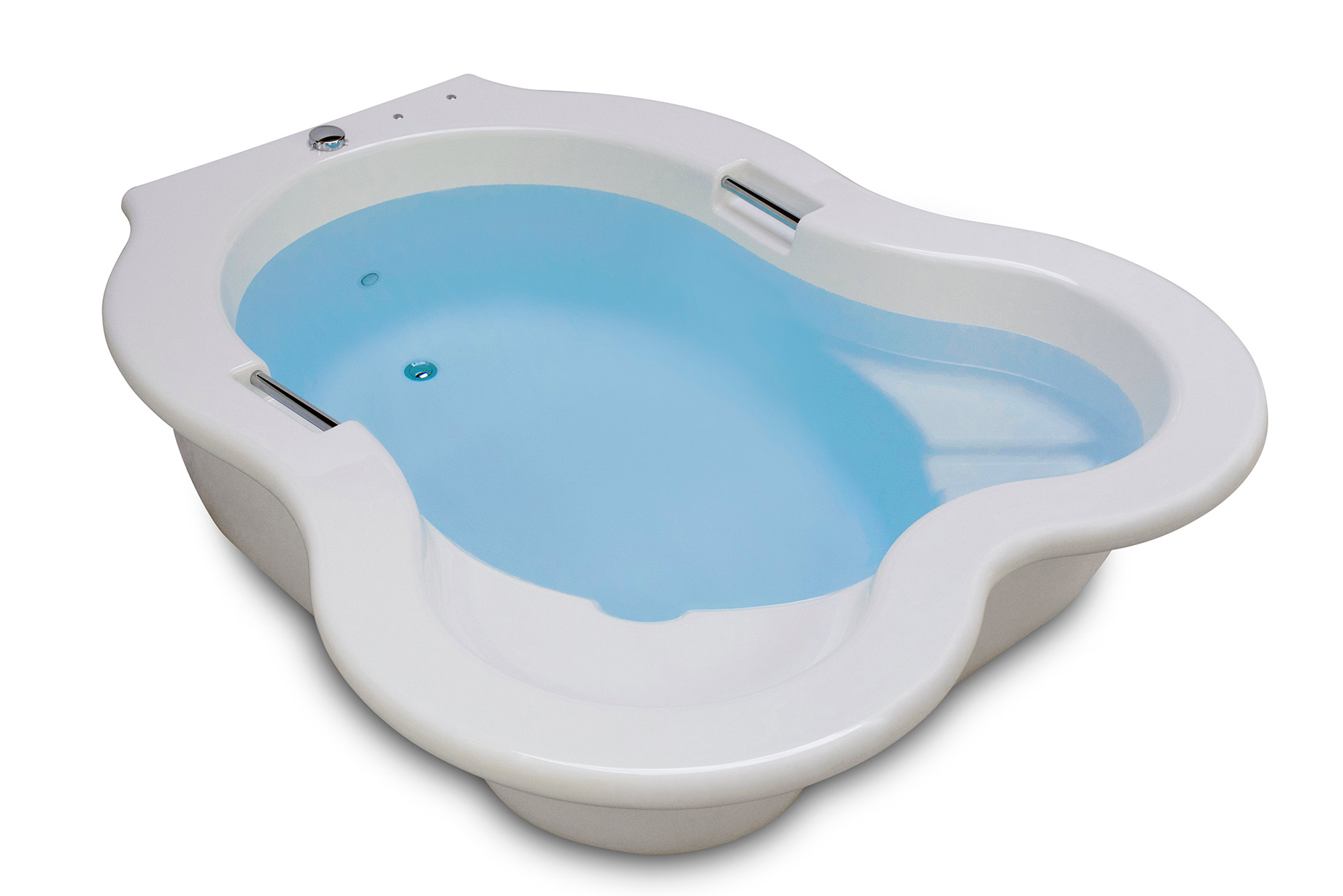
Ficore allows Active Birth Pools to be manufactured as seamless one-piece forms with smooth organic contours.
This reduces joints, crevices and dirt traps, making the pool easier to clean and inspect.
It also allows essential support features to be integrated into the pool rather than added as surface-mounted accessories. [1][3]
This matters because healthcare-estates guidance for sanitary assemblies places emphasis on appropriate, cleanable surfaces and fittings in healthcare environments.
Infection-control guidance for the built environment also recognises the importance of designing facilities and components so that they can be effectively cleaned and maintained. [6][7]
A pool that remains smooth, non-porous, chemically resistant and structurally stable gives maternity teams greater confidence between uses.
Design freedom: why Ficore improves ergonomics
The material does not only determine how strong the pool is. It also determines what the designer can safely create.
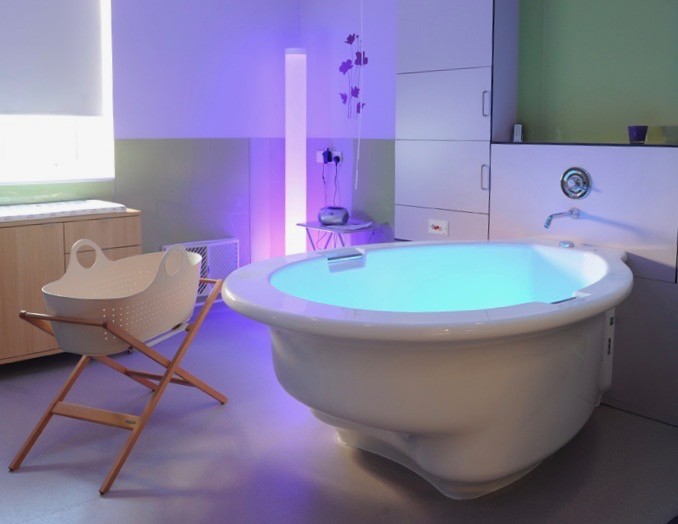
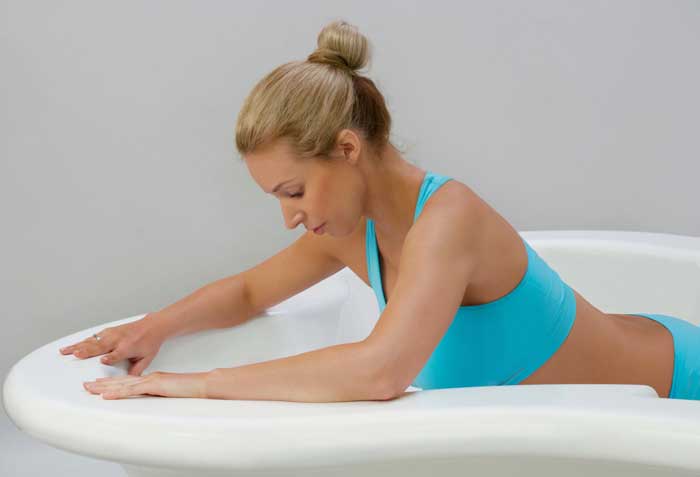
Ficore can be moulded into more highly sculpted forms, with sharper definition and more precise detail than many conventional bath materials. [1][2]
This is essential to the Active Birth Pools design philosophy. A water birth pool must support active birth, not passive immersion.
Mothers need space to move, sit, kneel, squat, lean forward, brace, rest and change position. Midwives need safe access for monitoring, support, cleaning and emergency response.
Because Ficore combines mouldability with rigidity, hardness and surface integrity, features such as wide rims, integrated seats, recessed handholds and smooth water channels can be built into the product without compromising hygiene or stability.
Repairability protects the hospital’s investment
No material is completely immune to damage. The important question is what happens if damage occurs.
Ficore is fully repairable. Chips and scratches can be professionally repaired and the gloss finish restored. [2]
For hospitals, this is a significant advantage.
Replacing a birth pool is expensive, disruptive and wasteful. A repairable material helps protect the asset, reduce downtime and extend the useful life of the room.
This is where whole-life value becomes more important than initial purchase price.
A lower-cost material may appear economical at first, but if it scratches, flexes, dulls, requires more maintenance or needs earlier replacement, the real cost can be much higher over time.
Why Ficore is better suited to maternity environments
Ficore is not simply a premium version of acrylic or fibreglass. It is a better material platform for the specific demands of water birth.
For mothers
Ficore creates a pool that feels warm, smooth, secure and supportive. It helps mothers move freely, rest between contractions and use upright or forward-leaning positions with confidence.
For midwives
Ficore enables stable rims, integrated support points, recessed handholds and smooth surfaces that make the pool easier to work around, clean and inspect.
For infection prevention teams
Ficore supports seamless one-piece construction, non-porous surfaces, fewer dirt traps, chemical resistance and long-term surface integrity.
For estates and procurement teams
Ficore offers durability, heat retention, repairability, low maintenance and long service life. The result is better whole-life value and a product that remains fit for purpose for many years.
A superior material for a purpose-designed birth pool
Acrylic and fibreglass remain common because they are familiar, economical and easy to manufacture. They can be suitable for ordinary baths and showers, but hospital water birth pools require more than ordinary bath performance.
They require strength, stability, hygiene, cleanability, comfort, safety, repairability and value over the whole life of the room.
Ficore meets these demands because it combines structural rigidity, surface hardness, chemical resistance, thermal performance and design freedom in one solid composite material.
That is why Active Birth Pools use Ficore® composite. It allows every pool to be built as a safe, supportive, ergonomic and hygienic birth environment – designed for mothers, midwives and the realities of modern maternity care.
Download Ficore® Composite Technical Guide
References
[1] Active Birth Pools. “Why Ficore® Composite Makes a Superior Water Birth Pool.” Current source page. https://activebirthpools.com/why-ficore-composite-makes-a-superior-water-birth-pool/
[2] Design & Form / Active Birth Pools. “Ficore® composite” material specification PDF. https://activebirthpools.com/wp-content/uploads/2022/11/Active-Birth-Pools-Material-specification-FICORE.pdf
[3] Active Birth Pools. “Assessment: Why Ficore® Is a Superior Material to Acrylic and Fibreglass for Water Birth Pools.” PDF, June 2026. https://activebirthpools.com/wp-content/uploads/2026/06/Ficore-Composite-Material-Assessment.pdf
[4] Active Birth Pools. “Safety by Design: Protecting Mothers, Midwives and Hospitals.” https://activebirthpools.com/safety-by-design-protecting-mothers-midwives-and-hospitals/
[5] NICE. “Intrapartum care” NG235, recommendations on water use in labour and birth. https://www.nice.org.uk/guidance/ng235/chapter/Recommendations
[6] NHS England. Health Building Note 00-10: Part C – Sanitary assemblies. https://www.england.nhs.uk/wp-content/uploads/2021/05/HBN_00-10_Part_C_Final.pdf
[7] NHS England. Health Building Note 00-09: Infection control in the built environment. https://www.england.nhs.uk/wp-content/uploads/2021/05/HBN_00-09_infection_control.pdf
[8] CEN/TR 17221:2018. Guidance on the application of CE marking and preparation of Declaration of Performance for sanitary appliances. https://standards.iteh.ai/catalog/standards/cen/ca30116c-cc32-46a7-885f-655f449a2f70/cen-tr-17221-2018