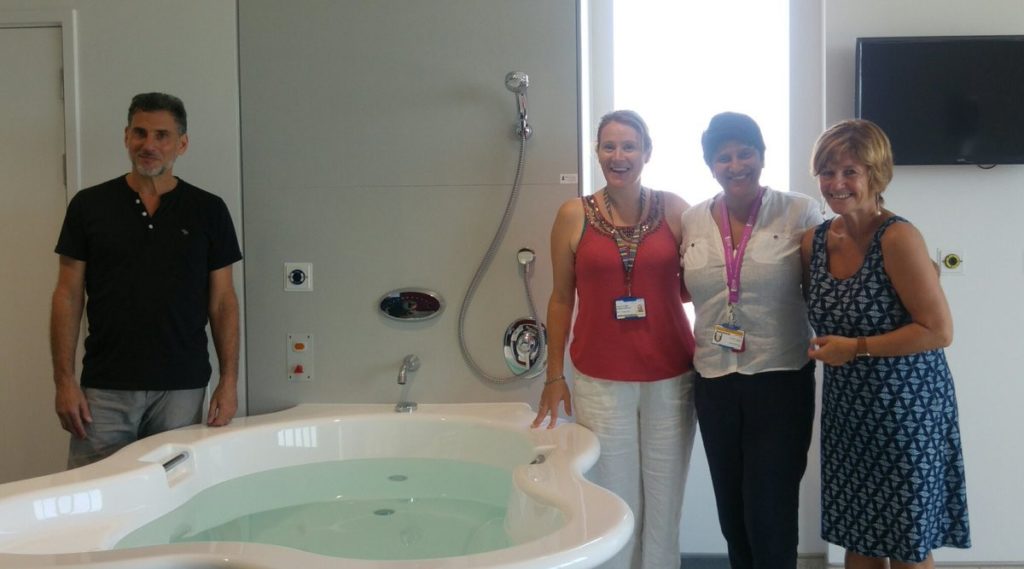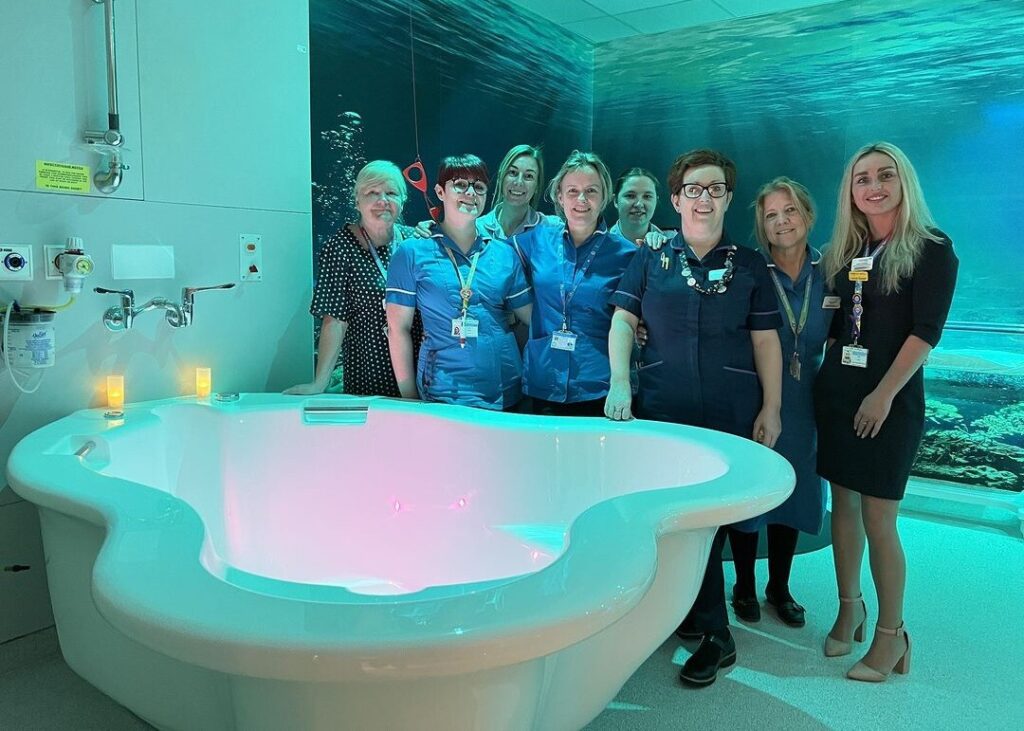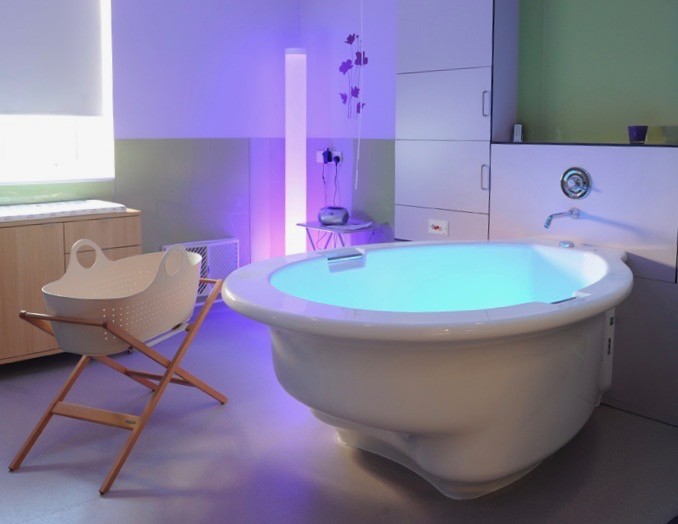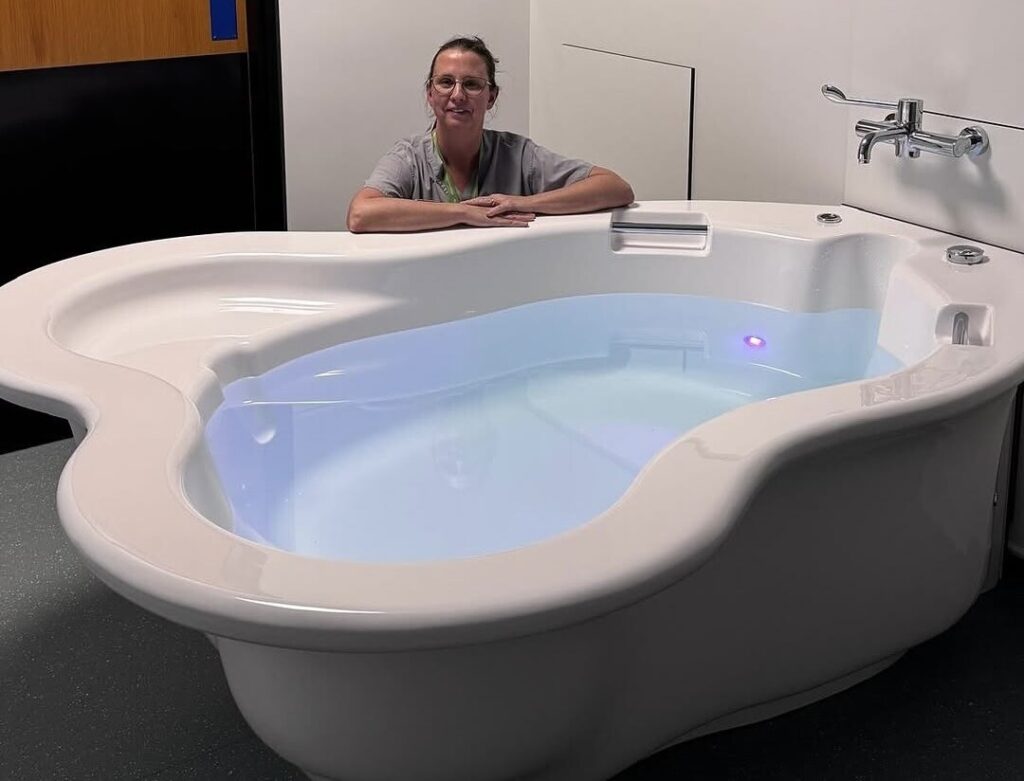

A practical buyer’s guide for maternity units, procurement teams, architects, estates departments and healthcare planners.
A hospital water birth pool should be selected as part of the complete clinical environment. Size and appearance matter, but so do maternal movement, midwife access, infection prevention, water safety, entry and exit, emergency planning, installation, durability and whole-life value.
Choose the pool as part of the complete birth environment
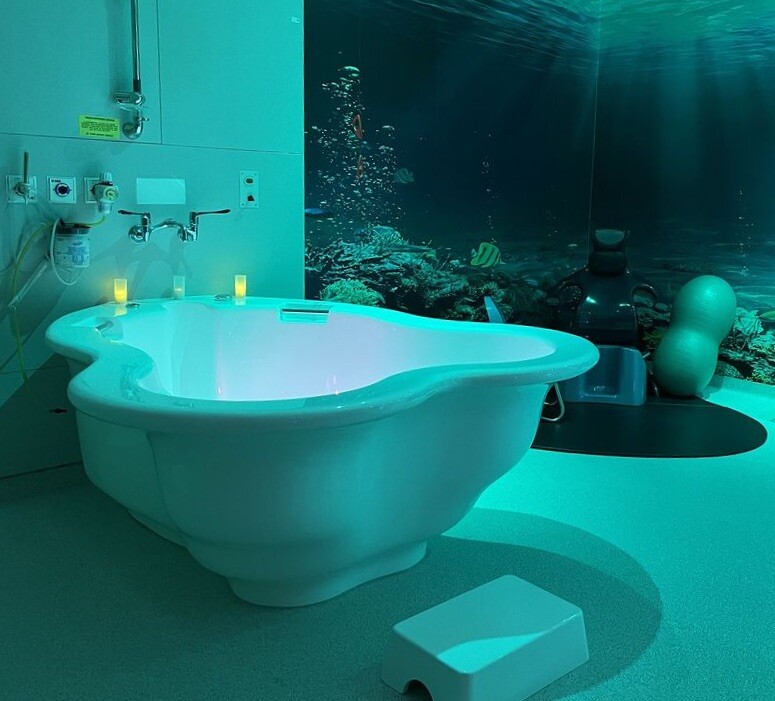
Choosing a water birth pool for a hospital is not simply a question of selecting a shape that fits the room. The pool becomes part of the maternity team’s everyday working environment. It must support the mother’s freedom of movement, allow midwives to observe and assist without unnecessary strain, and fit the hospital’s requirements for hygiene, water safety, maintenance and emergency response. [1,2]
The strongest procurement decisions are made when maternity staff, infection-prevention specialists, estates teams, manual-handling advisers, architects and the supplier are involved before the room and services are finalised. This makes it possible to select the right model first and then coordinate the space, plumbing, drainage, access and finishes around it. [3,4]
Active Birth Pools are purpose-designed hospital sanitary products, made by hand to order in England from Ficore® composite. The range includes three sizes, each available in a wall-mounted II configuration or a freestanding 360° configuration. [5,6]
Start with the maternity unit’s needs
Before comparing models, define how the pool will be used. A pool intended for an alongside midwifery unit may be used differently from one placed in an obstetric-led environment, a small refurbishment or a large new-build room. The intended model of care should guide the specification.
- Estimate how frequently the pool is likely to be used and whether it will serve one room or form part of a larger water birth service.
- Confirm the available room area, the position of the bed or trolley, door routes, storage and emergency equipment.
- Identify the positions from which midwives need to observe, support and assist the mother.
- Consider how the mother will approach, enter, move within and leave the pool.
- Agree cleaning, disinfection, water-safety and maintenance responsibilities.
- Check whether the project requires wall-mounted services or access around the complete pool.
- Assess delivery access, structural loading, drainage, electrical options and future service access.
This early assessment prevents a common project error: choosing a pool that physically fits the drawing but does not provide enough usable space for care, cleaning or emergency response. [3,7]
Choose the correct pool size
Active Birth Pools are available in three sizes. The choice should be based on the room, the intended model of care and the working access required around the pool, rather than on capacity alone. [5]
The Princess is the compact model in the range. It is intended for rooms where space is limited but a purpose-designed hospital pool is still required. Its extra-wide rim and single-step access arrangement are designed to support a controlled sit-and-swivel entry rather than requiring the mother to climb a multi-step unit. [8,9]
The Princess may be the appropriate starting point for smaller delivery rooms, refurbishments and projects where every centimetre must be carefully planned. The current model drawings should be used to confirm the footprint, working clearances and service positions.
The Venus is the mid-size model. First developed in the late 1980s as a specially designed hospital water birth pool, it provides generous internal space while requiring less room than the largest Active model. Its dimensions and depth are intended to facilitate free movement and maximise the benefits of immersion during labour. [10]
The Venus is often suited to hospitals seeking a balance between internal space, room efficiency and access for staff.
The Active is the largest model in the range. It is designed for spacious maternity rooms where maximum freedom of movement, internal support and working access are priorities. The larger footprint must be planned with adequate clearances, delivery access and structural loading in mind. [11]
Use current drawings – Dimensions, capacities, weights, service positions and installation details vary by model and may be updated. Always design from the current data sheet and issued installation information for the selected pool. [4]
Decide between wall-mounted and 360° access
Every Active Birth Pools size is available in two configurations. The choice affects the room layout, service positions and the number of sides from which staff can work. [5]
Wall-mounted II models
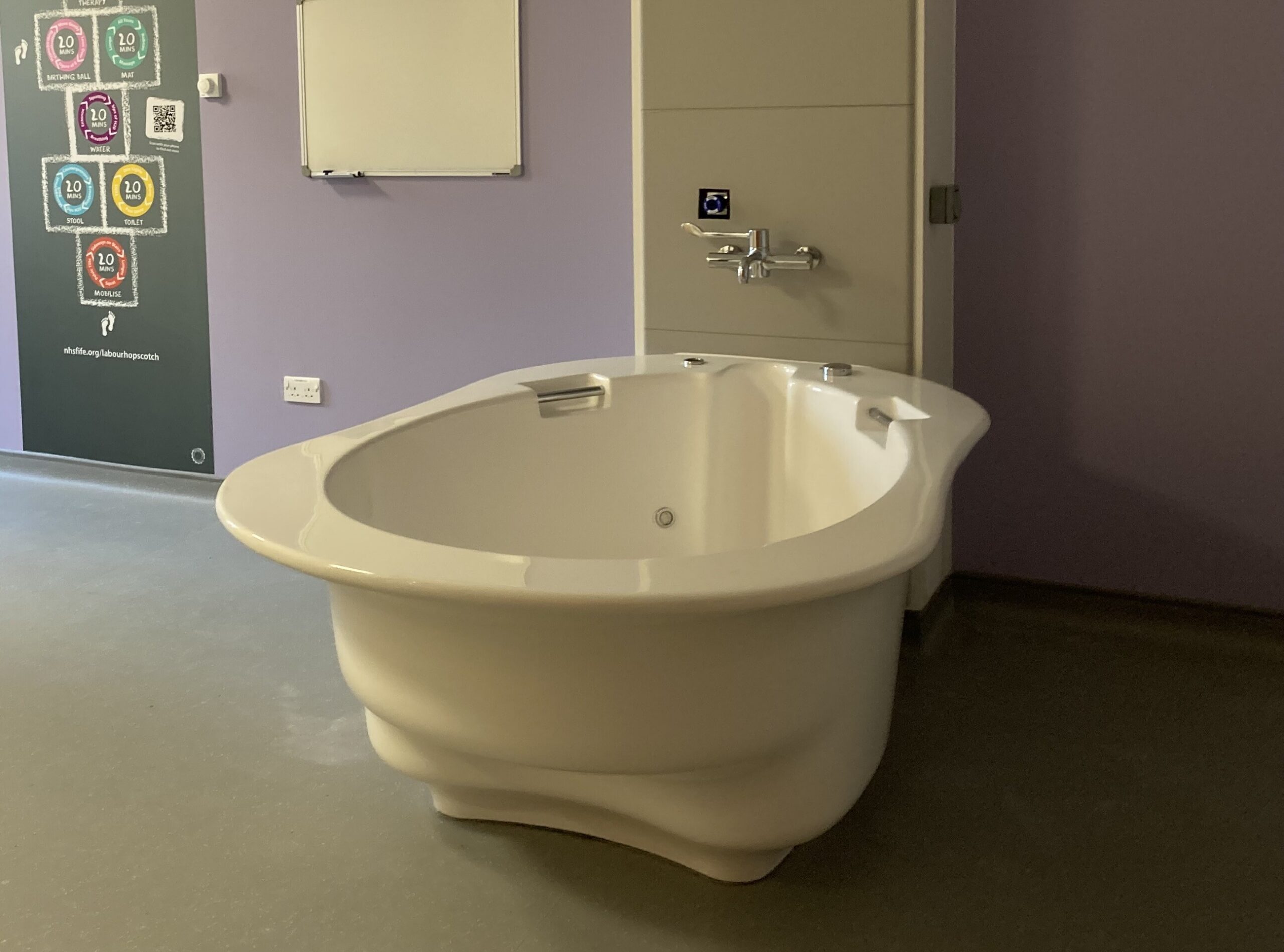
Wall-mounted models are designed for rooms where the pool is positioned against a service wall. They can make efficient use of space and allow water and waste services to be coordinated at the rear or side of the pool. The design must preserve access to inspection panels, traps, valves and fixing points.
Freestanding 360° models
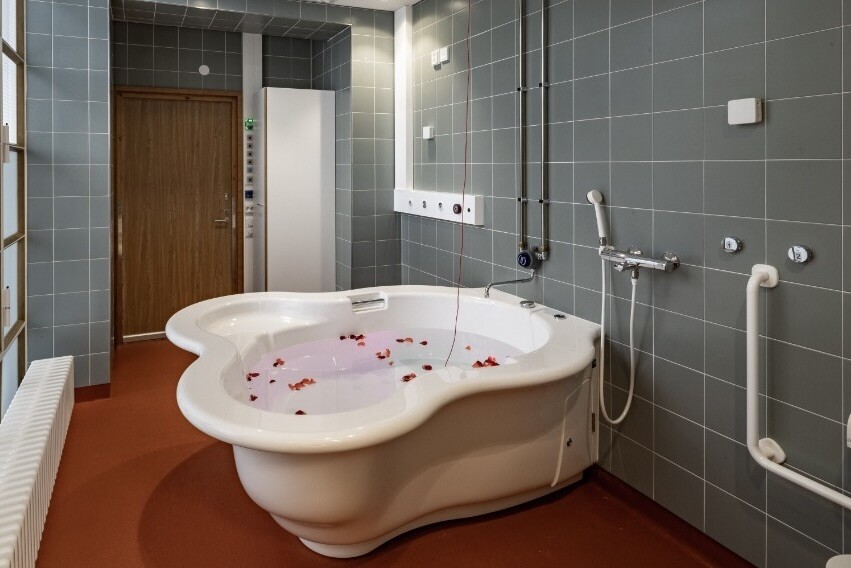
Freestanding models are intended for rooms where movement and care around the complete pool are required. The Active Birth Pools Water Column carries taps, spout and associated services away from the pool rim, helping to keep the principal working edge clear. The Water Column and floor service positions must be set out from the current model drawings before floors and finishes are completed. [6,11]
A 360° configuration does not automatically make a room workable. The project must still provide practical staff clearances, bed or trolley access and unobstructed routes around the pool.
Examine the material and construction
Hospital water birth pools are exposed to repeated filling, emptying, cleaning and disinfection. The material must therefore be assessed for durability, structural stability, surface performance, heat retention, cleanability and repairability.
Active Birth Pools are made from Ficore® composite, a highly specialised material developed for the demands of professional maternity use. Active Birth Pools states that Ficore® is stronger and harder than conventional materials, provides good heat retention, and withstands intensive hospital use and repeated disinfection. [12,13]
- Look for a seamless, non-porous surface that can be cleaned and disinfected consistently.
- Confirm that the surface and structure are designed for prolonged institutional use, not occasional domestic use.
- Ask how the material responds to approved hospital cleaning agents and whether surface damage can be professionally repaired.
- Consider thermal stability and heat retention, which influence comfort and the management of pool water during labour.
- Check the structural warranty and exactly what it covers.
Active Birth Pools manufactured from Ficore® carry a lifetime warranty against structural failure, loss of rigidity, leakage and surface breakdown, subject to the published terms and conditions. [14]
Look beyond the outline of the pool
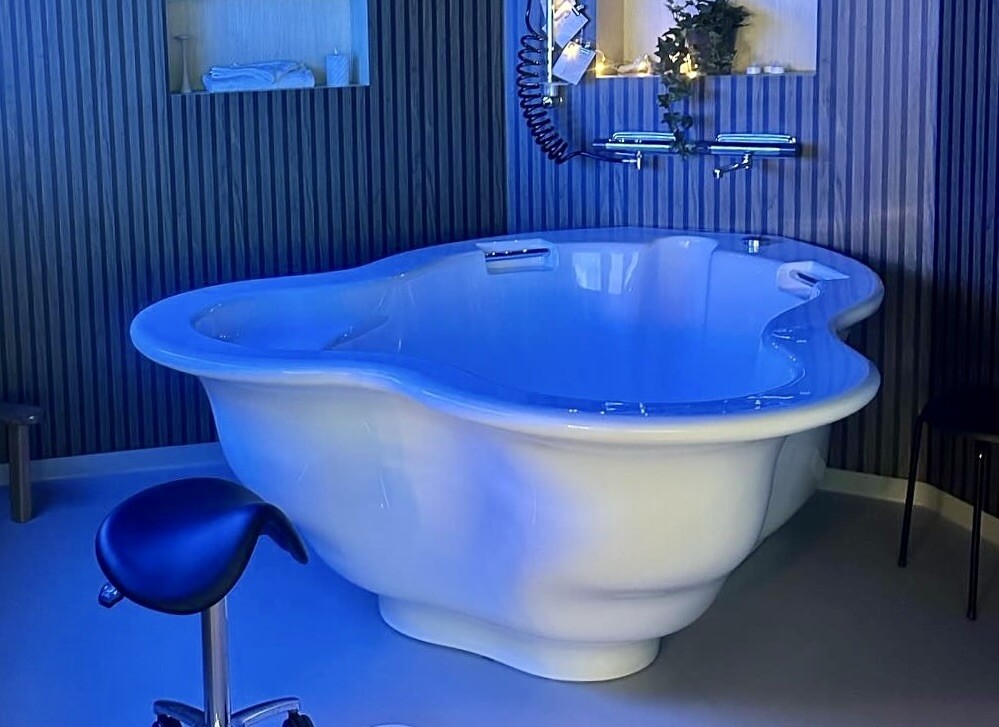
Two pools with similar external dimensions can perform very differently in practice. The shape of the interior, the rim, hand supports, seats and the position of fittings determine how easily the mother can move and how closely the midwife can work.
Freedom of movement for the mother
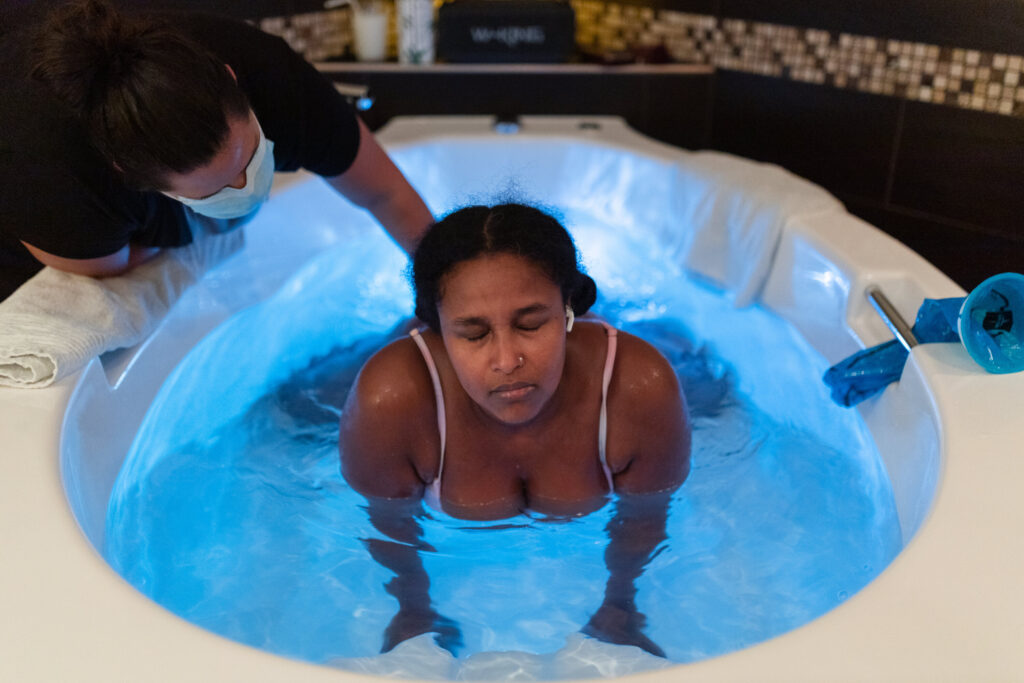
Warm-water immersion is most useful when the mother can change position freely and use the water to support active labour. The pool should provide adequate depth and internal space without forcing a single posture. Integrated support features should assist movement without creating hard projections or obstacles. [1,15]
A broad, rounded working rim
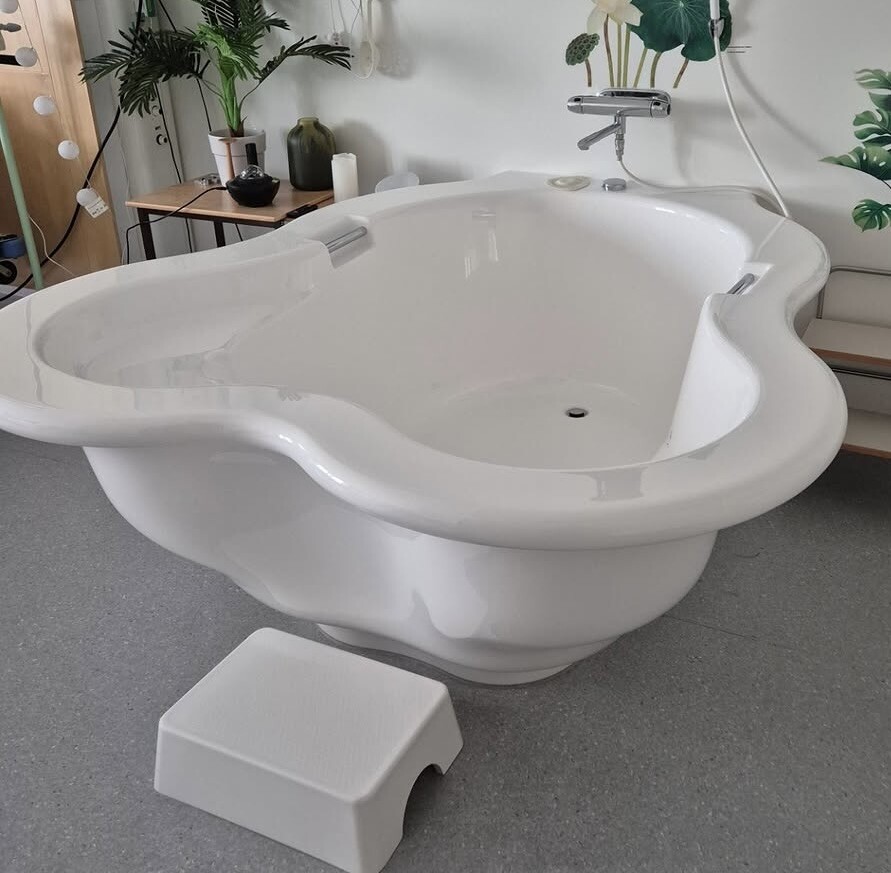
The rim should be comfortable for the mother to hold or sit on and should allow a midwife to get close without leaning across unnecessary metalwork. Active Birth Pools use broad bull-nosed rims and recessed external panels to improve access and reduce obstruction. [2,16]
Recessed handgrips and internal support
Recessed handgrips provide support without adding surface-mounted rails that can obstruct care or complicate cleaning. Internal seats and support areas can help the mother rest, change position and move in stages when leaving the water. [2,7]
Assess entry and exit before purchase
Entry and exit should be considered as a manual-handling and falls-prevention issue, not an accessory decision made after the pool has been ordered. Multi-step arrangements can require the mother to climb in wet conditions and may encourage staff to take her weight.
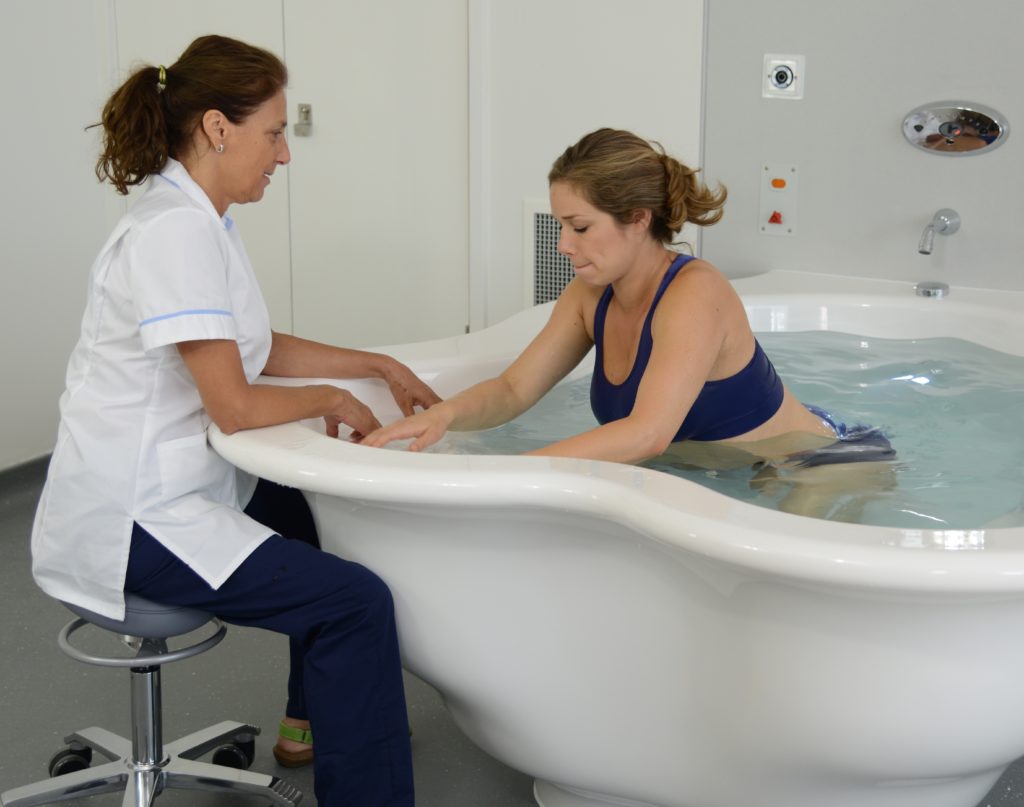
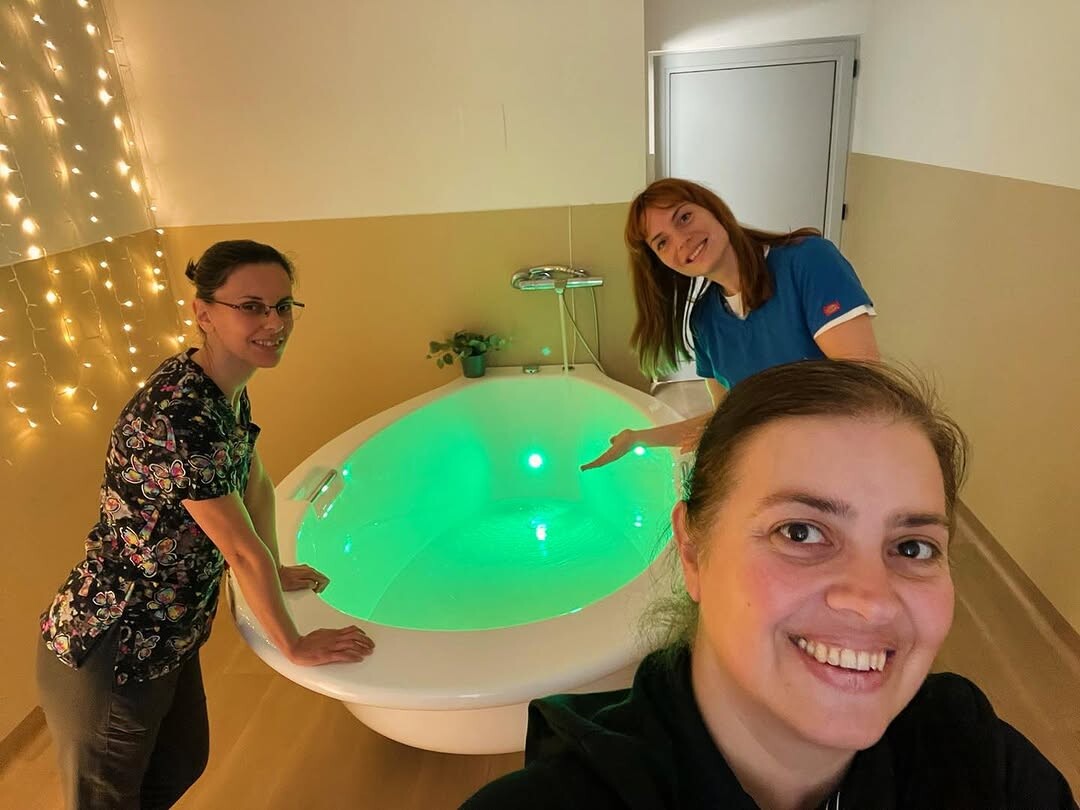
Active Birth Pools promote a sit-and-swivel method in which the mother sits on the broad rim and turns into the pool while maintaining stable points of contact. A simple low step may be used where required by local assessment. This approach is intended to reduce climbing and minimise the need for a midwife to physically support the mother’s weight. [9,17]
- Confirm the rim is wide and strong enough to be used as the principal sitting surface for entry and exit.
- Assess the proposed step for height, stability, cleanability and trip risk.
- Leave enough room for staff to assist without twisting, overreaching or standing in restricted gaps.
- Include entry and exit in the hospital’s local manual-handling assessment and staff training.
Protect midwives through ergonomic design
Midwives use the pool repeatedly over many years. A pool that appears attractive but forces prolonged bending, twisting, kneeling or reaching can create avoidable occupational risks. The choice of pool and its position in the room should therefore be assessed from the actual working positions used during labour, birth, observation and cleaning. [7,16]
Active Birth Pools’ ergonomic approach developed from work undertaken with ergonomist Sue Hignett in the 1990s. The resulting design principles include recessed panels, broad rims and clear working edges intended to help midwives get closer to the mother and maintain better posture. [16]
Procurement question
Can midwives reach the mother from the positions in which care will actually be provided, without fixed taps, rails, cabinetry or narrow gaps forcing them to lean or twist?
Plan for foreseeable emergencies
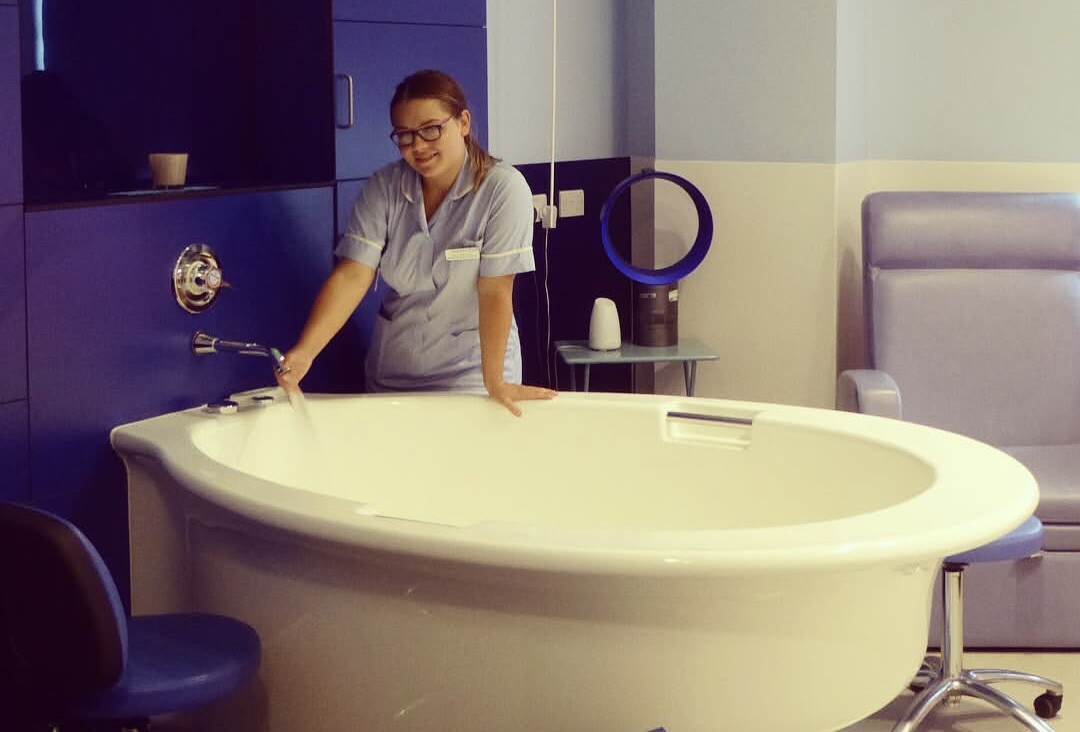
Emergency evacuation is uncommon, but it is foreseeable and must be considered before the pool is selected. The room should allow a height-adjustable bed or trolley and additional staff to be brought close to the pool. Local procedures should define how help is called, how the mother is supported and whether a portable hoist is required. [7,18]
Active Birth Pools incorporate internal support seats and broad rim surfaces that can assist staged movement from the water to a seat, from the seat to the rim, and from the rim to a bed or trolley. The pools are also designed to be compatible with a portable hoist where the hospital’s manual-handling advisers require one. [18]
These design features support emergency planning but do not replace local risk assessment, training, simulation and clinical judgement.
Assess infection-control and water-safety design
Infection prevention is influenced by the pool material, surface finish, drainage, plumbing and the accessibility of every component that must be cleaned or maintained. A hospital pool should be designed to avoid unnecessary water-retaining systems and inaccessible fittings. [19,20]
- Choose a seamless, non-porous pool surface that can withstand the hospital’s approved cleaning and disinfection procedure.
- Use a direct water supply with appropriate thermostatic control and the minimum practicable pipework, subject to local regulations and water-safety policy.
- Avoid integral recirculation, pumped heating, air jets and other systems that can retain water and are difficult to inspect and disinfect.
- Avoid overflow arrangements and unnecessary surface-mounted fittings that can create inaccessible contamination points or obstruct the working rim.
- Ensure plugs, strainers and drainage components can be removed, inspected, cleaned and disinfected.
- Confirm that service panels, valves, traps and joints will remain accessible after the room is complete.
Active Birth Pools cleaning guidance specifies a two-stage process: cleaning first, followed by disinfection. Pool selection and room planning should make that procedure practical between every use. [20]
Check installation requirements before ordering
The pool should be selected before the final water, waste, floor and electrical design is completed. Current model drawings must be used to coordinate the actual footprint, fixing points, service positions and access requirements. [3,4]
- Verify the floor structure for the combined load of the pool, water and user.
- Provide a completed, level, stable and cleanable floor suitable for the model-specific fixing system.
- Coordinate through-wall or through-floor waste routes and retain access to traps and joints.
- Confirm filling flow rate, thermostatic control, backflow protection, isolation and flushing arrangements with the competent project team.
- Protect working clearances and access panels from later encroachment by cabinets, pipe boxes or equipment.
- Check crate dimensions, doors, corridors, lifts, turning spaces and the complete delivery route.
- Coordinate any approved lighting or sound options with the electrical designer before finishes are completed.
For detailed project guidance, link this section to the Water Birth Pool Installation Requirements for Hospitals landing page.
Compare whole-life value, not simply purchase price
The lowest initial quotation is not necessarily the lowest-cost option over the life of a maternity unit. A hospital should consider expected service life, warranty, cleaning time, maintenance, repairability, reliability, energy and water use, replacement frequency, staff usability and the availability of technical support. [21,22]
Active Birth Pools states that Ficore® pools are engineered to last for decades and are guaranteed for life. A long service life can reduce the financial and environmental cost associated with repeated replacement, while a durable and repairable surface can help maintain the pool’s performance and appearance. [6,14,22]
- Ask for the expected service life and evidence from comparable hospital installations.
- Review the warranty terms, exclusions and the supplier’s ability to provide support over time.
- Consider whether the design reduces cleaning complexity and avoids proprietary water-retaining systems.
- Assess how the pool supports staff posture, maternal entry and emergency planning, as these factors affect operational value as well as safety.
- Confirm that current drawings, data sheets, installation information and replacement components are readily available.
Questions to ask every water birth pool supplier
- Was the pool designed specifically for professional maternity and hospital use?
- Which exact model and configuration best suits our room and intended model of care?
- What material is the pool made from, and how does it perform under repeated hospital cleaning and disinfection?
- Is the construction seamless and non-porous?
- Does the pool contain pumps, jets, recirculation, integral heating or inaccessible pipework?
- How are the plug, drain and service components inspected, cleaned and maintained?
- Can the mother enter and leave without climbing a multi-step unit or requiring a midwife to take her weight?
- Can midwives work close to the mother from the required positions without excessive bending, twisting or reaching?
- How does the design support foreseeable emergency evacuation and portable-hoist access?
- What are the filled weight, capacity, delivery dimensions, fixing points and service requirements?
- What is the expected service life, and what does the warranty cover?
- Can the supplier provide current drawings, data sheets, installation guidance and project support?
- Can the supplier provide references from hospitals using the same or comparable models?
Why hospitals choose Active Birth Pools
For nearly four decades, Active Birth Pools have specialised in water birth pools for hospitals and maternity units. The range has been shaped by practical experience of mothers, midwives, architects, estates teams and healthcare projects around the world. [6,23]
- Three purpose-designed sizes, each available as a wall-mounted or freestanding 360° model.
- Hand-built to order in England from Ficore® composite.
- Broad rounded rims, recessed handgrips, internal support features and clear working edges.
- Design attention to maternal movement, midwife ergonomics, hygiene, water safety and emergency planning.
- Current model data sheets, 3D planning resources and installation information.
- Direct specification support for maternity, estates, procurement, architectural and contractor teams.
- Lifetime structural warranty in accordance with the published terms and conditions.
A simple hospital selection checklist
Clinical need: The intended model of care, expected frequency of use and staff working positions have been defined.
Room fit: The selected pool fits with practical working clearance, bed or trolley access, storage, cleaning zones and emergency routes.
Correct model: The exact size and wall-mounted or 360° configuration have been chosen before services are finalised.
Maternal movement: The depth, internal space, supports and rim allow comfortable position changes and active labour.
Entry and exit: The access method has been assessed for falls prevention and manual handling, without relying on staff to lift or steady the mother.
Midwife access: Staff can approach from the necessary positions without excessive bending, twisting or reaching.
Emergency planning: The room and pool support the local evacuation plan, bed or trolley positioning and any portable-hoist requirement.
Hygiene: The pool is seamless, non-porous, accessible for cleaning and free from unnecessary water-retaining systems.
Water safety: The direct supply, temperature control, backflow protection, flushing and maintenance arrangements are acceptable to the competent project team.
Installation: Current drawings have been used for floor loading, fixing, water, waste, service access and delivery planning.
Whole-life value: Service life, warranty, maintenance, repairability and operational performance have been compared alongside purchase price.
Supplier support: Current data sheets, installation information, references and project support are available.
Get help choosing the right pool
Send Active Birth Pools your room plans, preferred configuration and project requirements. We can help identify the most suitable model and provide the current drawings, specifications and technical information required by your maternity, estates, procurement and design teams.
References and source notes
The numbered references below support the product, design and planning statements in this draft. Final procurement and installation decisions must be based on the current model-specific documents, the project jurisdiction and advice from the hospital’s competent clinical, estates, infection-prevention, water-safety, structural, plumbing, electrical and manual-handling specialists.
[1] Active Birth Pools, Catalogue and Guide. Range overview, design philosophy, hospital planning, Water Column and ergonomic features. https://activebirthpools.com/wp-content/uploads/2025/10/Catalogue-and-Guide.pdf
[2] Active Birth Pools, Designed to Optimise Safety, Reduce Risk and Support Safer Birthing Environments. Safety-led pool design, clear working edges, drainage and maternal support features. https://activebirthpools.com/birth-pool-safety-design/
[3] Active Birth Pools, Water Birth Pool Installation Requirements for Hospitals. Project planning, room layout and installation considerations. https://activebirthpools.com/
[4] Active Birth Pools, Catalogue, References, Plans and Data Sheets. Current model data sheets, plans and 3D planning resources. https://activebirthpools.com/plans/
[5] Active Birth Pools, Water Birth Pools. Range structure: Active, Venus and Princess models in II and 360° configurations. https://activebirthpools.com/water-birth-pools/
[6] Active Birth Pools, Home. Hospital-grade positioning, Ficore® construction, English manufacture and lifetime guarantee. https://activebirthpools.com/
[7] Active Birth Pools, Manual Handling Risks Associated with Water Birth Pools. Midwife access, maternal entry and exit, room layout and emergency considerations. https://activebirthpools.com/manual-handling-risks-associated-with-water-birth-pools/
[8] Active Birth Pools, Princess II / Princess 360 Water Birth Pools. Compact model, extra-wide rim and access features. https://activebirthpools.com/products/princess-ii-360-water-birth-pools/
[9] Active Birth Pools, Sit and Swivel – The Natural Way to Enter the Pool. Controlled entry and exit using the broad rim and simple step arrangement. https://activebirthpools.com/sit-and-swivel-the-natural-way-to-enter-the-pool/
[10] Active Birth Pools, Venus II / Venus 360 Birth Pools. Mid-size model history, dimensions and freedom-of-movement design. https://activebirthpools.com/products/venus-birth-pools/
[11] Active Birth Pools, Active II / Active 360 Water Birth Pools. Largest model and freestanding Water Column configuration. https://activebirthpools.com/products/active-ii-and-active-360-water-birth-pools/
[12] Active Birth Pools, Superior Material = Superior Safety, Value and Performance. Ficore® durability, hygiene, heat retention and performance characteristics. https://activebirthpools.com/superior-material-superior-safety-value-and-performance/
[13] Active Birth Pools, Material Specification – Ficore®. Material specification and safety-led construction information. https://activebirthpools.com/superior-material-superior-safety-value-and-performance/active-birth-pools-material-specification-ficore/
[14] Active Birth Pools, Terms and Conditions / Guarantee. Lifetime warranty scope and published conditions. https://activebirthpools.com/terms-conditions/
[15] Active Birth Pools, The Keyword that Defines Our Approach to Design is “Active”. Freedom of movement and active labour design principles. https://activebirthpools.com/the-keyword-that-defines-our-approach-to-designis-active/
[16] Active Birth Pools, Water Birth Pools Specially Designed to Give Midwives Superior Safety, Comfort and Support. Ergonomic development and midwife working posture. https://activebirthpools.com/water-birth-pools-specially-designed-to-give-midwives-superior-safety-comfort-and-support/
[17] Active Birth Pools, Manual Handling Assessment: Safe Entry and Exit for Hospital Water Birth Pools. Manual-handling principles relevant to pool access. https://activebirthpools.com/wp-content/uploads/2026/06/Manual-Handling-Assessment-Safe-Entry.pdf
[18] Active Birth Pools, Midwives Have Safe, Practical Options for Dealing with Emergencies. Staged evacuation and portable-hoist compatibility. https://activebirthpools.com/midwives-have-safe-practical-options-for-dealing-with-emergencies/
[19] Active Birth Pools, Health and Safety Risks You Need to Be Aware of Before Buying a Water Birth Pool. Water supply, integral plumbing, pumped heating, overflow and surface-mounted fitting risks. https://activebirthpools.com/health-and-safety-risks-you-need-to-be-aware-of-before-buying-a-water-birth-pool/
[20] Active Birth Pools, Cleaning and Care. Two-stage cleaning and disinfection procedure and design considerations. https://activebirthpools.com/cleaning-care/
[21] Active Birth Pools, The Economic Impact of Water Birth Pools in Hospitals. Operational and financial context for hospital water birth facilities. https://activebirthpools.com/the-economic-impact-of-water-birth-pools-in-hospitals/
[22] Active Birth Pools, Value and Sustainability. Longevity, sustainability and whole-life value. https://activebirthpools.com/active-birth-pools-value-and-sustainability/
[23] Active Birth Pools, References and Testimonials. Examples of hospital and maternity-unit installations worldwide. https://activebirthpools.com/wp-content/uploads/2025/07/References-Testimonials.pdf
Editorial and compliance note
Active Birth Pools are hospital-grade sanitary products / sanitary ware designed for professional maternity settings. This page should not describe them as medical devices. Product dimensions, specifications and installation requirements vary by model, market and project. Avoid unsupported absolute claims and refer readers to current issued drawings, published warranty terms and local competent professionals.