
Position statement: A professional water birth pool is a hospital-grade sanitary product: a specialised bath used to contain clean water for immersion during labour and birth. Its core function is hygienic water containment, not diagnosis, monitoring, treatment, therapy, drug delivery or physiological intervention.
Water birth pools are used in maternity care, but their healthcare setting does not automatically make them medical devices. A product should be classified according to its design, function, materials, intended purpose and applicable regulatory category – not merely by the fact that it is installed in a hospital or birth centre.1
On that basis, a professional water birth pool is best understood as sanitary equipment: a specialised bath used to contain clean water for immersion during labour and birth. It is not a diagnostic device, not a therapeutic apparatus, not a life-support system and not an instrument that acts on the body by medical, pharmacological, immunological or metabolic means.2
The intended purpose is immersion in water
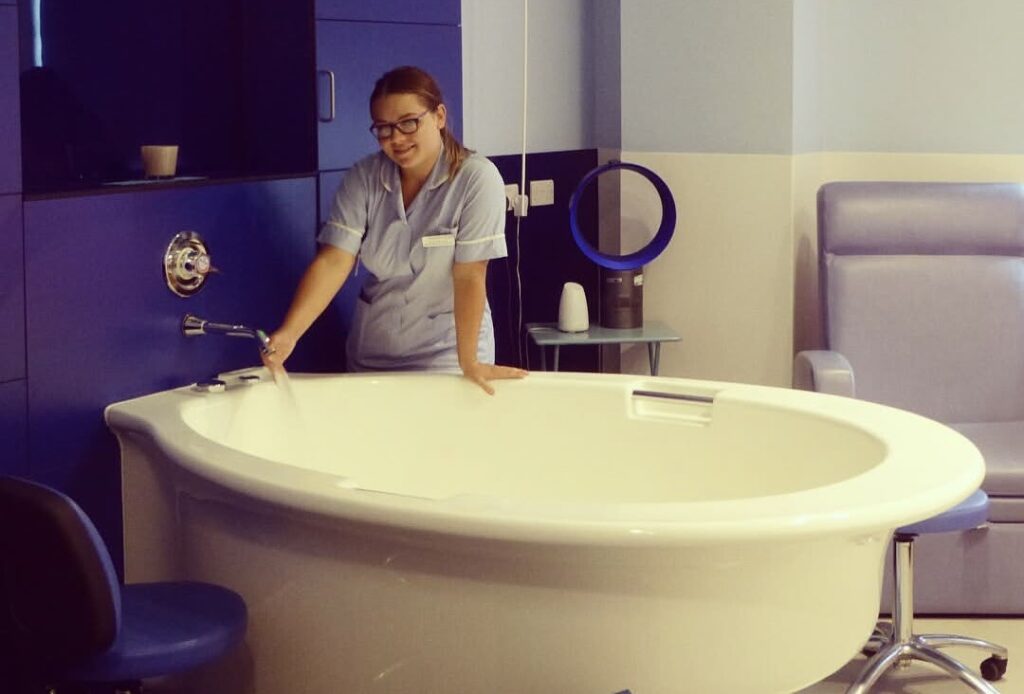
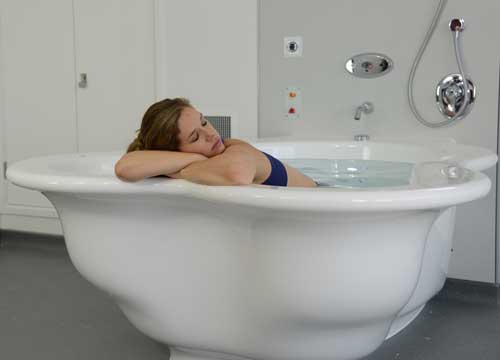
The core purpose of a water birth pool is straightforward: to provide a safe, hygienic, ergonomically designed vessel for water immersion during labour and birth. Active Birth Pools describes its products as professional water birth pools for hospitals, birth centres and maternity units, and describes the Venus model as a hospital-grade water birth pool whose dimensions and depth are designed to facilitate free movement and maximise the benefits of water immersion during labour.3
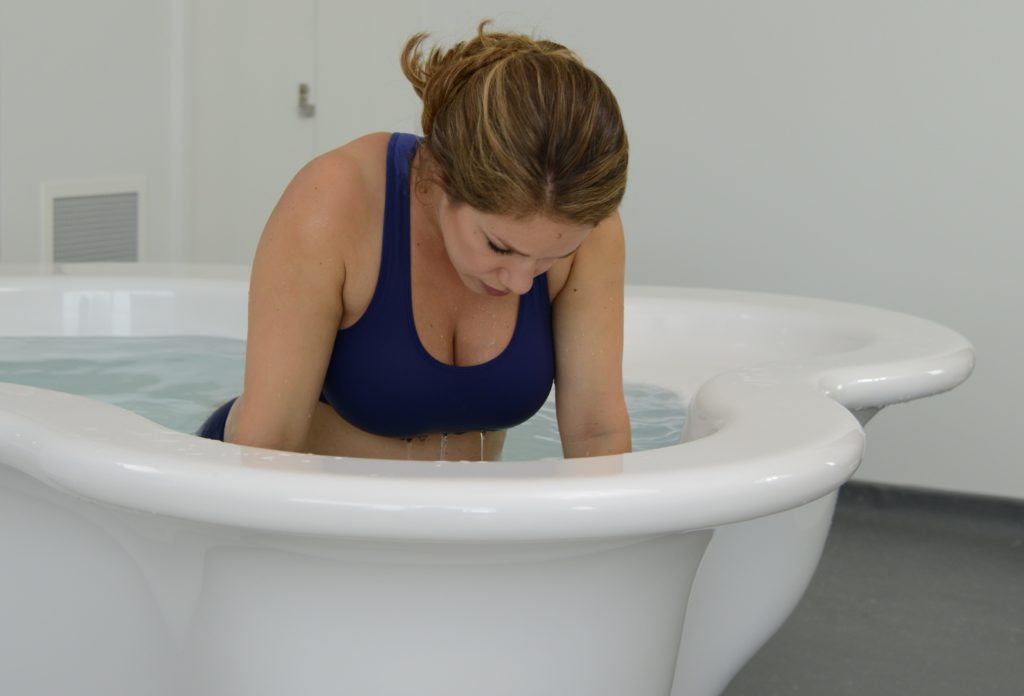
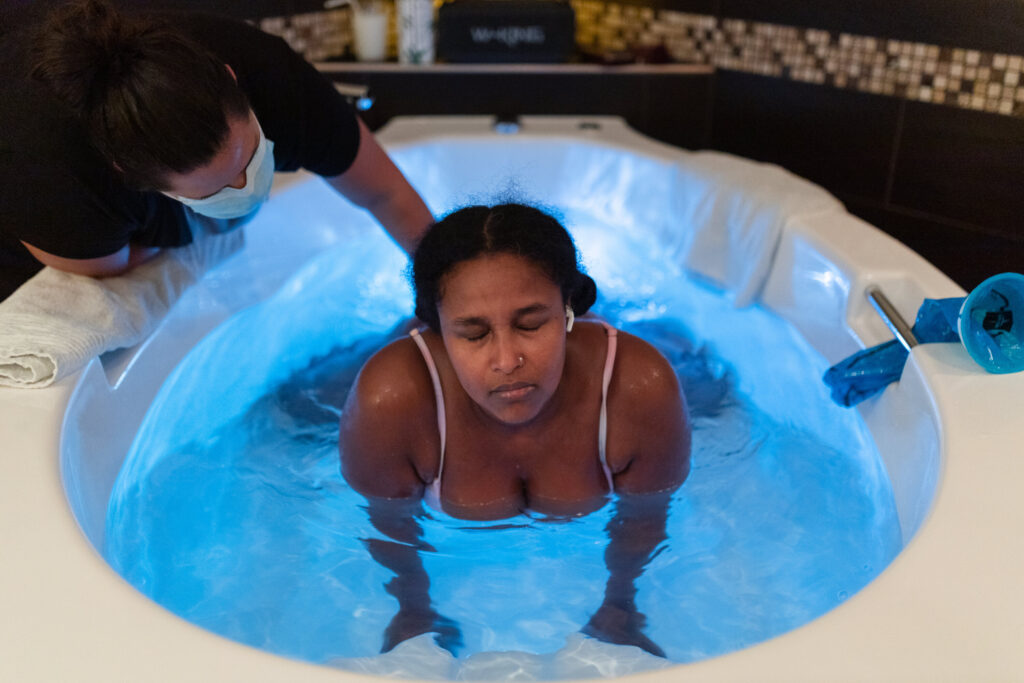
Water immersion may help women feel more comfortable, mobile, relaxed and supported during labour, but the pool itself does not diagnose, monitor, prevent or treat a disease or injury. It does not administer medication. It does not modify anatomy or physiology through a medical action. It is a passive item of sanitary equipment that holds water.4
This distinction is important. Many items are used in healthcare environments without being medical devices. Hospital baths, sinks, taps, toilets, showers, basins, sanitary fittings and clinical furniture may all contribute to patient care, but they are not automatically medical devices. They are specified, installed, cleaned and maintained as part of the built environment and hygiene infrastructure of a healthcare facility. A water birth pool belongs in this same category.
Customs classification supports sanitary-ware status
The Harmonised System classification for plastic baths and similar sanitary ware supports this interpretation. HS heading 3922 covers baths, shower-baths, sinks, washbasins, bidets, lavatory pans, seats and covers, flushing cisterns and similar sanitary ware of plastics. Subheading 3922100000 covers baths, shower-baths, sinks and washbasins of plastics.5
This is significant because customs classification reflects the essential character of the goods. A water birth pool made from specialist composite or plastic materials has the essential form and function of a bath: it is filled with water, used for immersion, drained, cleaned and disinfected between uses. The fact that the bath is designed for maternity environments does not change its essential nature as sanitary equipment. It is a professional, hospital-grade bath, but it remains sanitary ware.
The NMPA decision confirms the principle
The classification decision issued by China’s National Medical Products Administration (NMPA) for the Venus Water Birth Pool is particularly important. The decision letter identifies the product as “Active Birth Pool” / “Venus Water Birth Pool” and states: “NMPA decided that your device is not a medical device.”6
That decision is consistent with the product’s intended purpose and mode of action. A water birth pool does not perform a medical function in the way that a monitor, infusion pump, surgical instrument or diagnostic apparatus does. It is used to support the environment in which care is provided, rather than to provide medical treatment itself. A product can be important to safe maternity care without being a medical device.
The SABER certificate treats the product as sanitaryware
The Saudi SABER certificate also supports classification as sanitary equipment. It describes the model and product name as “Plastic bathtub”, with the trade mark “active birthpools”, country of origin “United Kingdom”, and manufacturer “Design & Form Limited”. It records a conformity assessment decision of “Product Approved”.7
Most importantly, the certificate places the product under the “Technical Regulation for Building Materials – Part 4: Bricks, Tiles, Ceramics, Sanitaryware and Related Products”. That is a building-materials and sanitaryware route, not a medical-device route.8
This aligns with how water birth pools are procured and installed in hospitals. They are part of the maternity room’s sanitary infrastructure, requiring appropriate materials, plumbing, drainage, cleaning access, infection-control features and durability. These are sanitary and building-performance considerations, rather than medical-device performance claims.
Infection control is a sanitary-design requirement
Infection control is one of the main reasons hospital water birth pools must be designed as professional sanitary equipment. A birth pool must be easy to clean, resistant to disinfectants, free from unnecessary joints and fittings, and designed to avoid areas where microorganisms can accumulate. Materials, surface finish, drainage design and the avoidance of recirculating pipework are critical.9
Active Birth Pools’ published cleaning information states that Ficore is resistant to disinfection with 10,000 ppm hypochlorite and that seamless one-piece construction, together with the absence of surface-mounted metalwork, denies microorganisms the environment they need to propagate.10
These features do not make the pool a medical device. They make it better sanitary equipment. The same principle applies to hospital sinks, clinical baths and other sanitary installations: infection control is essential, but that does not convert sanitaryware into a medical device. It means the sanitaryware must be properly designed for a healthcare environment.
Hospital-grade does not mean medical device
The phrase “hospital-grade” should refer to strength, durability, hygiene, cleanability, safe access, ergonomic design, resistance to disinfectants and suitability for repeated use in a clinical setting. It should not be taken to mean that the product has a medical mode of action or requires medical-device classification.
A hospital-grade birth pool is a specialised sanitary product for maternity settings. Its performance should be judged by sanitary-ware standards, infection-control requirements, building and plumbing regulations, material safety, durability and user safety.
Why correct classification matters
Correct classification protects hospitals, distributors, regulators and manufacturers. If a water birth pool is incorrectly treated as a medical device, purchasers may be led into the wrong regulatory pathway. That can create unnecessary cost, confusion and delay without improving safety. It may also distract attention from the standards that matter most: sanitary design, cleanability, water safety, plumbing safety, manual handling, durability and infection prevention.
Conversely, classifying a water birth pool as sanitary equipment ensures that it is assessed according to its true risks and real-world use. The key questions are:
- Does the pool diagnose, monitor or treat a medical condition? No.
- Does it administer medication or act on the body by medical means? No.
- Does it provide a hygienic vessel for water immersion? Yes.
- Is its essential character that of a specialist bath or sanitary fixture? Yes.
That is why the correct classification is sanitary equipment.
Conclusion
Water birth pools are used in maternity care, but they are not medical devices. They are specialised sanitary equipment designed for hospitals, birth centres and maternity units.
Their purpose is to provide a safe, durable, hygienic and comfortable vessel for water immersion during labour and birth. Their critical performance requirements relate to sanitary design, cleanability, infection control, plumbing safety, durability and ergonomics.
The HS sanitary-ware classification, the NMPA decision that the Venus Water Birth Pool is not a medical device, and the SABER certificate identifying the product as a plastic bathtub under sanitaryware-related building materials regulation all support the same conclusion. A professional water birth pool should therefore be specified, procured and regulated as hospital-grade sanitary equipment – not as a medical device.
Notes
- Classification should be based on intended purpose, design and mode of action. The healthcare setting is relevant context, but it is not determinative by itself.
- The MHRA describes medical-device purposes as including diagnosis, prevention, monitoring, treatment or alleviation of disease; diagnosis, monitoring, treatment, alleviation of or compensation for injury or handicap; investigation, replacement or modification of anatomy or a physiological process; or control of conception. A passive water-containment bath does not naturally fall within those medical purposes.
- Active Birth Pools’ website says the company has focused since 1987 on designing professional water birth pools for hospitals, birth centres and maternity units. The Venus product page describes the model as hospital-grade and designed for free movement and water immersion during labour.
- This article distinguishes between clinical benefits associated with water immersion and the regulatory character of the pool itself. The product provides the vessel/environment; it does not itself perform a medical act.
- HS 3922 is the international customs heading for plastic sanitary ware; 3922100000 is for baths, shower-baths, sinks and washbasins of plastics. This supports sanitary-equipment classification. Note: the uploaded SABER certificate records HS Code 392290000001, which is also within heading 3922 for plastic sanitary ware, rather than a medical-device heading.
- NMPA Decision Letter of Medical Device Official Classification, Acceptance No. W20200222, Decision Letter No. 20200331003. The product is identified as Active Birth Pool / Venus Water Birth Pool and the decision states that it is not a medical device.
- SABER Certificate of Conformity for Regulated Products, Certificate No. 69797-109-24-1490492, issue date 30 July 2024, expiry date 30 July 2025. Page 1 describes the product as Plastic bathtub, trade mark active birthpools, country of origin United Kingdom.
- SABER certificate, page 2: Technical Regulation for Building Materials – Part 4: Bricks, Tiles, Ceramics, Sanitaryware and Related Products; Manufacturer name Design & Form Limited; conformity assessment decision Product Approved.
- Infection prevention is a central requirement for sanitary equipment used in clinical environments. It is not, on its own, evidence of a medical-device function.
- Active Birth Pools’ cleaning guidance states that Ficore is immune to the effects of disinfection with 10,000 ppm hypochlorite and that seamless one-piece construction and the absence of surface-mounted metalwork deny microorganisms the environment they need to propagate.
References
- Active Birth Pools, homepage. https://activebirthpools.com/
- Active Birth Pools, Venus II / 360 Birth Pools product page. https://activebirthpools.com/products/venus-birth-pools/
- Active Birth Pools, Cleaning and Care. https://activebirthpools.com/cleaning-care/
- Active Birth Pools, Delivery and Installation / Cleaning and Disinfection Guidelines. https://activebirthpools.com/installation-manual/
- UK Medicines and Healthcare products Regulatory Agency, Medical devices: how to comply with the legal requirements. https://www.gov.uk/guidance/medical-devices-how-to-comply-with-the-legal-requirements
- Tariff Number, HS Code 39221000 – Baths, shower-baths, sinks and washbasins, of plastics. https://www.tariffnumber.com/2026/39221000
- TARIC Support, Heading 3922 – Baths, shower-baths, sinks, washbasins and similar sanitary ware of plastics. https://www.taricsupport.com/nomenclature/en/3922000000.html
- UK Government tariff notice 19, Shower-baths: classification under CN code 3922 10 00. https://www.gov.uk/guidance/shower-baths-tariff-notice-19
- Saudi Standards, Metrology and Quality Organization, Technical Regulation for Building Materials – Part 4: Bricks, Tiles, Ceramics, Sanitary Ware and Related Products. https://saso.gov.sa/en/Laws-And-Regulations/Technical_regulations/Documents/TR%20-%20Building%20Materials%20-%20Part%204%20Bricks%20Tiles%20Ceramics%20Sanitary%20Ware%20and%20Related%20Products.pdf
- NMPA Decision Letter of Medical Device Official Classification, Active Birth Pool / Venus Water Birth Pool, Acceptance No. W20200222, Decision Letter No. 20200331003. Uploaded file: Decision Letter of Medical Device Official Classification-EN.pdf
- SABER Certificate of Conformity for Regulated Products, Certificate No. 69797-109-24-1490492. Uploaded file: Saber Certificate.pdf
Regulatory caveat
This article is a classification and positioning brief based on the sources listed above. It is not legal advice. Local regulatory classifications can depend on precise intended-use claims, labelling, market, product configuration and the view of the competent authority.